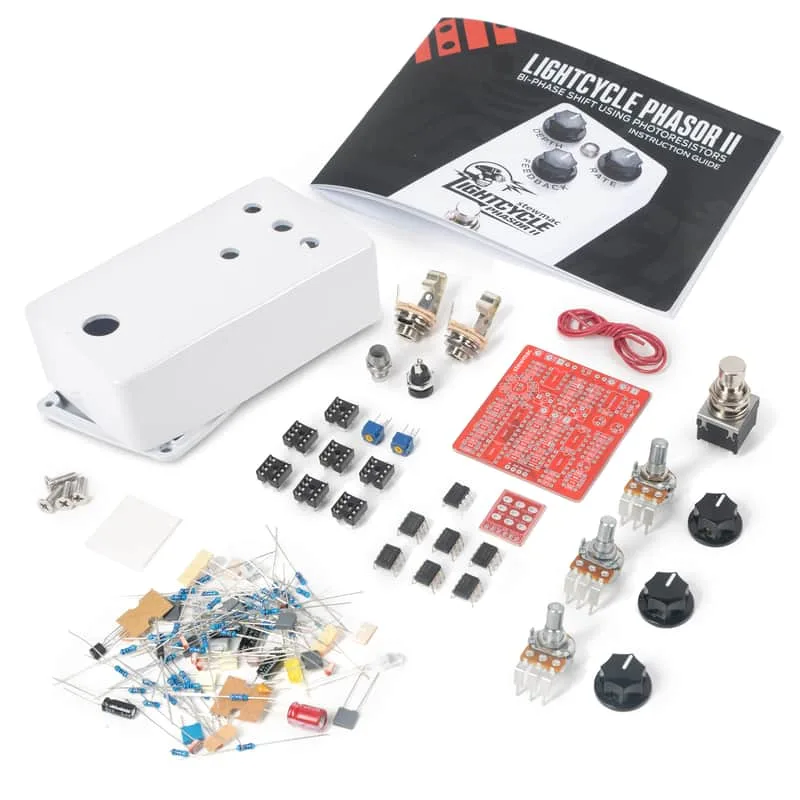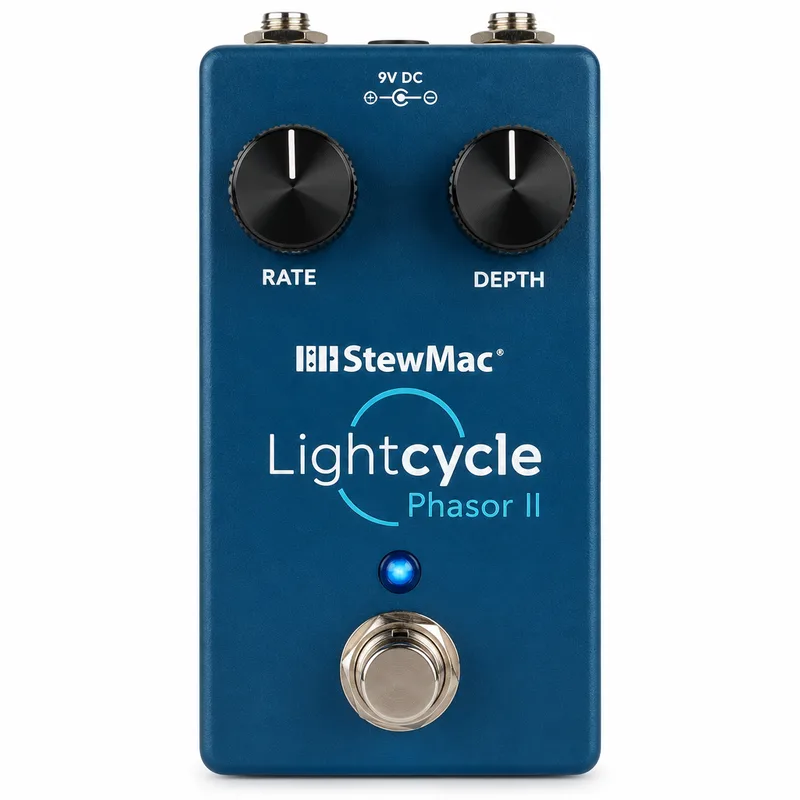


The StewMac Lightcycle Phasor II is a pre-built DIY optical phaser, a three-knob pedal built around the circuit of the 1970s Mu-Tron Phasor II. Pedal of the Day describes it as bringing vintage tone into the modern era, "combining vintage tone with modern reliability," with swirling, psychedelic textures at its core1. Although it comes from StewMac's DIY line, it arrives assembled: "now, no soldering required!! Just plug in, stomp, and step back in time"1.
Where the circuit comes from
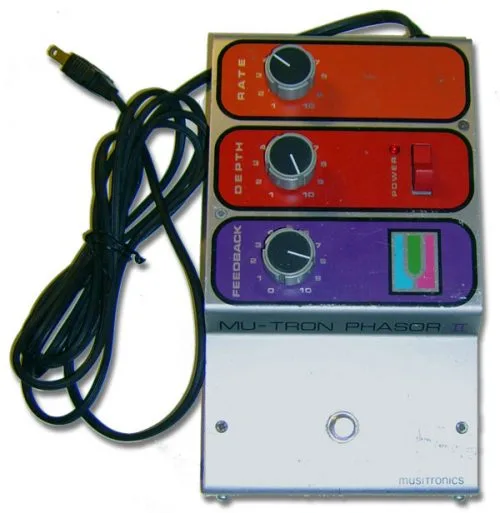
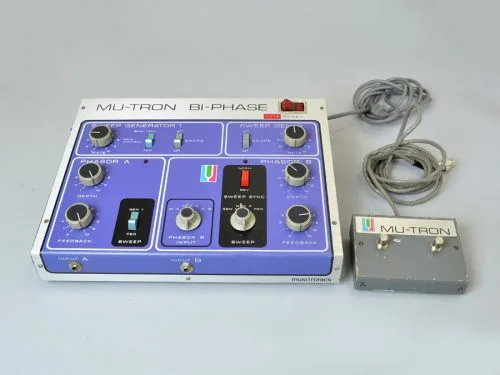
The Mu-Tron Phasor II appeared in the 1970s and, as Pedal of the Day puts it, "rewrote what a phaser could be"1. Musitronics Mu-Tron, the company behind the original, says the design was "made possible by adapting the advanced electronic technology developed for the revolutionary Mu-tron Bi-Phase"2. Aion FX, which builds its own take on the circuit, puts it more directly: "The Phasor II is essentially one-half of a Bi-Phase, with a nearly identical LFO and phase-shift topology"3.
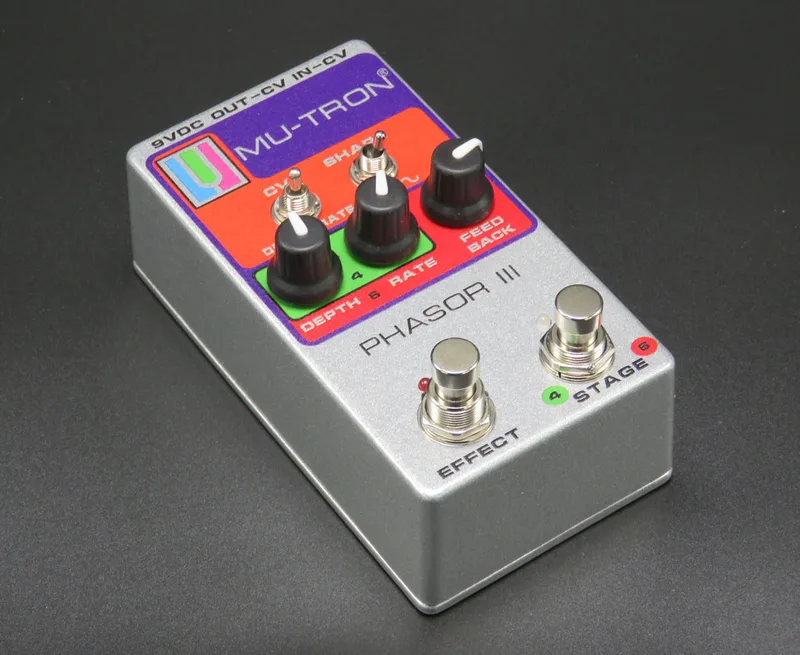
The original's design drew on earlier work. Aion FX notes that Musitronics "drew inspiration from the Uni-Vibe and replicated its LDR and lamp setup," adding two extra phase stages, using op-amps instead of transistors, swapping the incandescent lamp for an LED, and redesigning the LFO3. The Phasor II was also the successor to the Phasor I3. Musitronics Mu-Tron highlights the original's "modular optical design which allows for consistency across units" and its "ability to externally select between 4 and 6 stages of lush, optical phasing"4. StewMac's version carries that optical approach forward as "a studio-quality optical circuit that gave players precise control over lush, dynamic textures right at their feet"1.
For players comparing options, Musitronics Mu-Tron later released the Phasor III, an optical analog phaser in the same family5. See the Phaser Pedals page for how optical phasers sit alongside other phaser designs.
Controls and specifications
Pedal of the Day calls it "this three knob gem"1. The Depth control "adjusts the intensity of the phasing effect"1.
| Specification | Value |
|---|---|
| Max input level | -10 dBm1 |
| Noise floor | -68 dBm1 |
| Input impedance | 1MΩ1 |
| Output impedance | 560Ω1 |
| Current draw | 61.3mA1 |
| Enclosure | 121.5mm x 66mm x 40mm, powder-coated with printed logo1 |
Power
The Lightcycle Phasor II has no battery option and must not be fed more than 9VDC. At 61.3mA, it draws more current than many low-draw pedals, so a daisy chain shared with several pedals may not have the headroom for it.
The pedal runs on 9VDC through a standard 2.1mm negative center input, and StewMac's warning is explicit: "Do not exceed 9VDC"1. There is no battery option1.
Videos
Premier Guitar
TheGuitarGeek
DylanTalksTone
Questions
Does the StewMac Lightcycle Phasor II require soldering?
No. Although it comes from StewMac's DIY pedal line, the Lightcycle Phasor II is sold pre-built, and Pedal of the Day notes that no soldering is required. The pedal arrives ready to use: plug in, stomp, and play. That makes it a way to get a hand-assembled style circuit without owning an iron or having build experience.
Is the Lightcycle Phasor II true bypass?
Yes. Pedal of the Day lists the Lightcycle Phasor II as true bypass, so when the effect is off your guitar's signal passes straight through to the output without going through the phasing circuit.
Can the Lightcycle Phasor II run on a battery?
No. Pedal of the Day states there is no battery option. The pedal runs only from an external 9VDC supply with a standard 2.1mm negative center connector, and StewMac warns not to exceed 9VDC.
What power supply does the Lightcycle Phasor II need?
A 9VDC supply with a standard 2.1mm negative center plug. The pedal draws 61.3mA, so check that your supply or daisy chain can spare that current, and do not exceed 9VDC. There is no battery option.
What is the input impedance of the Lightcycle Phasor II?
Pedal of the Day lists the input impedance at 1MΩ, with an output impedance of 560Ω. A 1MΩ input is high enough that the pedal will not load down your guitar's pickups.
Which Mu-Tron pedal is the Lightcycle Phasor II based on?
The Mu-Tron Phasor II from the 1970s. Pedal of the Day describes the Lightcycle Phasor II as bringing that vintage design into the modern era, and Aion FX notes the Phasor II was essentially one-half of a Mu-Tron Bi-Phase, with a nearly identical LFO and phase-shift topology.
Sources (5)
- StewMac Lightcycle Phasor II Pre-Built DIY Optical Phaser, Pedal of the Day, 2025-11-22
- Mu-Tron Phasor II, Musitronics Mu-Tron (mu-tron.com)
- Hexatron Optical Phaser / Mu-tron Phasor II, Aion FX, 2026-07-03
- Phasor II, Musitronics Mu-Tron
- Mu-Tron Phasor III Optical Analog Phaser, Pedal of the Day, 2019-08-26