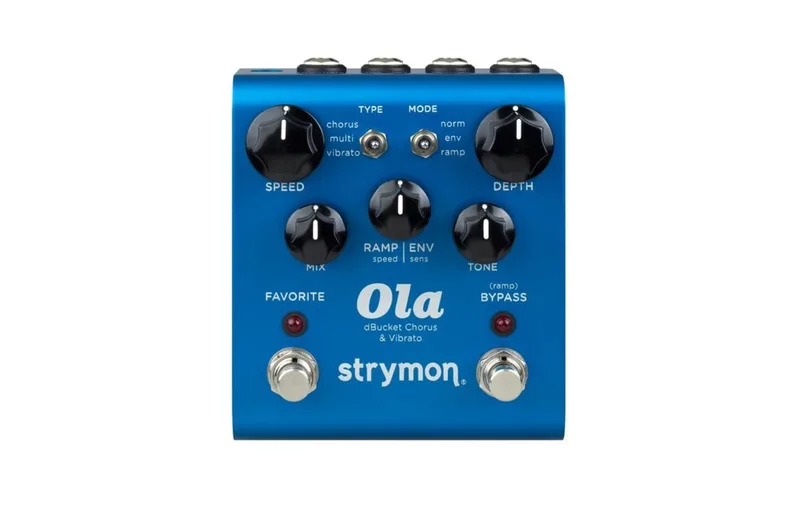


The Strymon Ola is a compact chorus and vibrato stompbox from Strymon, built around the company's dBucket algorithm: a hand-crafted DSP routine that reproduces every stage of an analog bucket brigade chip, the device that gave classic analog chorus pedals their character1. Strymon's pitch for the pedal was "gorgeous analog chorus and vibrato sounds, exceptional DSP versatility, and high-end audio quality, all in a compact stompbox"2. It is a discontinued product: Strymon's product page for the Ola carries a note saying exactly that1.
The pedal offers three modulation types, three dynamic modes, stereo input and output, true bypass, and a Favorite footswitch for saving one go-to setting1. Premier Guitar described it as "a feature-full pedal" with "chorus and vibrato tones based upon the company's dBucket DSP algorithm, with stereo ins and outs"3.
A dBucket chorus and vibrato
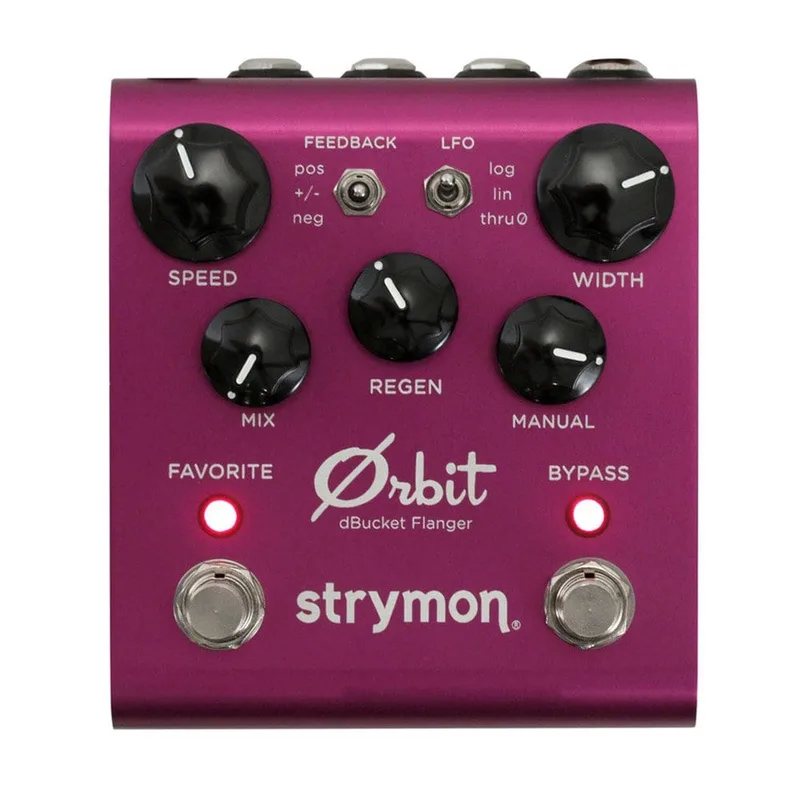
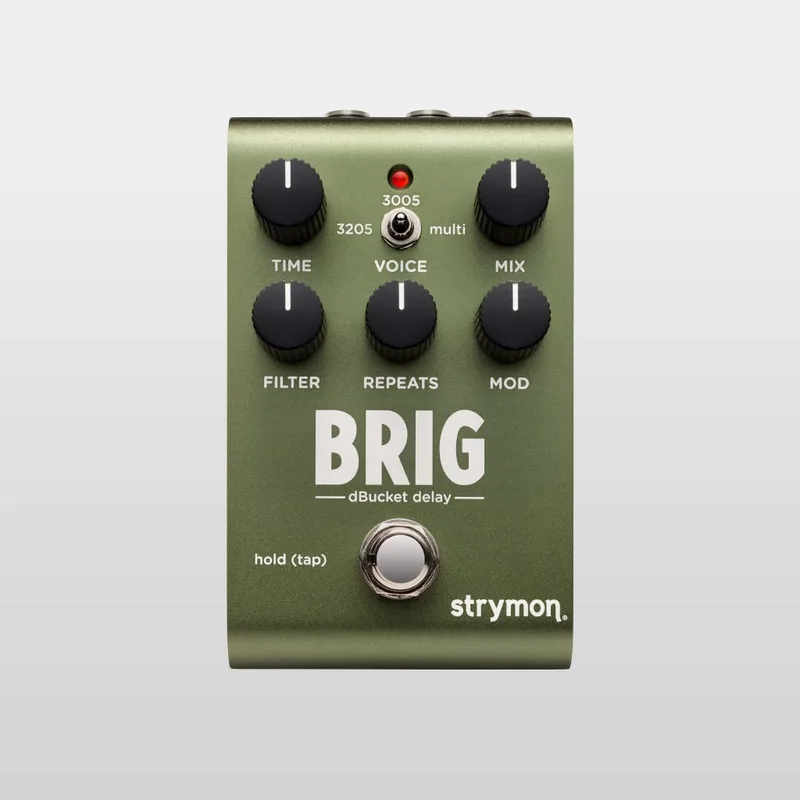
The Ola's core is the dBucket algorithm, Strymon's DSP model of a bucket brigade chip, the delay-line device at the heart of analog chorus and vibrato circuits. Strymon says the algorithm is "hand crafted" for "highly accurate reproduction of every stage of an analog bucket brigade chip"1, and that it "delivers all of the warmth and sonic complexities of analog choruses and vibratos"1. The same algorithm family appears elsewhere in the Strymon line: the company's own delay buying guide lists the TimeLine, Ola, Orbit and Brig as pedals that use or include the dBucket algorithm6.
Guitar.com's chorus buying guide framed the Ola as a bridge between old and new: "Faithfully recreating the sound of analogue, bucket brigade electronics whilst adding in the unprecedented levels of control associated with modern effects, the Strymon Ola is a do-it-all chorus and vibrato pedal"7.
The Type knob selects between three modulation types1:
| Type | What it does |
|---|---|
| Chorus | A traditional single delay-line chorus1 |
| Multi | A studio three-phase multi-delay-line chorus1 |
| Vibrato | A vintage vibrato circuit1 |
Guitar.com's take on the same control: "The 'type' switch lets you go from vintage correct tones right through to modern digital variations"7.
Controls and modes
The front panel follows the usual Strymon layout of a few knobs doing several jobs depending on the switch positions1.
| Control | What it does |
|---|---|
| Type | Selects single delay-line chorus, three-phase multi chorus, or vintage vibrato1 |
| Speed | Adjusts the chorus LFO speed1 |
| Depth | Adjusts the chorus LFO depth1 |
| Tone | Adjusts treble of the wet signal: boost at max, cut at min, flat at 12:001 |
| Mix | Dials in the intensity of the modulation1 |
| Ramp / Env | In Ramp mode, sets ramp speed (faster clockwise); in Env mode, sets sensitivity to your playing1 |
| Mode switch | Selects normal on/off, envelope-controlled, or ramp operation1 |
| Bypass footswitch | Engages and disengages the effect; always true bypass; hold in ramp mode to ramp in the effect1 |
| Favorite footswitch | Saves your favorite setting1 |
The three dynamic modes are where the Ola goes beyond a standard chorus pedal1:
- Normal: ordinary on/off operation1.
- Envelope: the effect reacts to your playing level, with behavior that differs per modulation type1. Guitar.com described it as wet level controlled by playing dynamics: "set the Ola so that as you play harder the effect increases, or alternatively decreases"7.
- Ramp: press and hold the bypass footswitch and the effect ramps in, at a speed set by the Ramp knob1.
Premier Guitar's reviewer found the Favorite footswitch earns its place precisely because of this versatility: "Because the pedal is so versatile, the Favorite footswitch is included here, too, so you can save your go-to setting"8.
Power and connections
The Ola runs on a maximum of 9 volts DC, center negative, with a minimum of 250mA current, and Strymon includes the 9V center negative DC supply in the box1.
At 250mA, the Ola needs more current than most compact analog pedals. A small daisy chain designed for low-draw analog stomps may not keep up, so plan on a supply or isolated output rated for the full draw.
Connections are stereo on both sides. The left input takes your instrument and acts as a mono input when only one channel is used; the right input takes a second instrument channel. The left and right outputs each connect to an amp or mixing board, with the left output acting as mono when only one channel is used1. Bypass is true bypass through an electromechanical relay1.
Where it came from
Strymon showed the Ola at NAMM in January 2010, describing it in a pedalboard photo as "the Ola dBucket chorus / vibrato," one of "2 gorgeous little blue additions to our 2010 pedal lineup"9. The pedal went on sale that June at $299 (US), sold in North America through the Strymon online store and select authorized dealers2. Sound designer Pete Celi, who Strymon credits on the product page as taking "an in-depth tour of Ola," is the designer named with the pedal1.
The page's own review section opens with a strong claim about the pedal's place in the line: "If there's a pedal in the Strymon line that really showcases how in tune the company is with stellar products of yesteryear, it's the Ola"8.
What reviewers and players said
Premier Guitar's review, which lists the direct price as $299, praised the pedal's "versatility and classic tones" and called the ramp feature "useful," noting it "inspired creative moments"8. The buying-guide roundups were similarly positive: Premier Guitar's affordable-chorus feature highlighted the dBucket tones and stereo ins and outs3, and Guitar.com called it "a do-it-all chorus and vibrato pedal"7.
Strymon's own demo video with Ethan Tufts walks through "a wide range of chorus tones: dark, bright, shallow and deep choruses," with Multi and Vibrato modes and the Ramp and Envelope features covered in follow-up videos4.
One documented player is Killian Gavin of Boy & Bear, in a 2014 Strymon rig feature. He used the Ola mainly for vibrato, and recorded the guitars on "Real Estate" and "Stranger" with it10. In his own words:
"My Ola I mainly use for vibrato. It sounds fantastic at every setting, but I have one favourite sound saved for live use, a fast speed and lower depth setting."
Older and newer Ola designs
Strymon's support pages draw a line between older and newer Ola pedal designs. The designs are different and parts are not interchangeable between them, and there is no way to install the newer silent switches on an older Ola11. Anyone buying a used Ola is effectively choosing between the two designs, since a switch retrofit is off the table.
Where it sits among Strymon modulation pedals
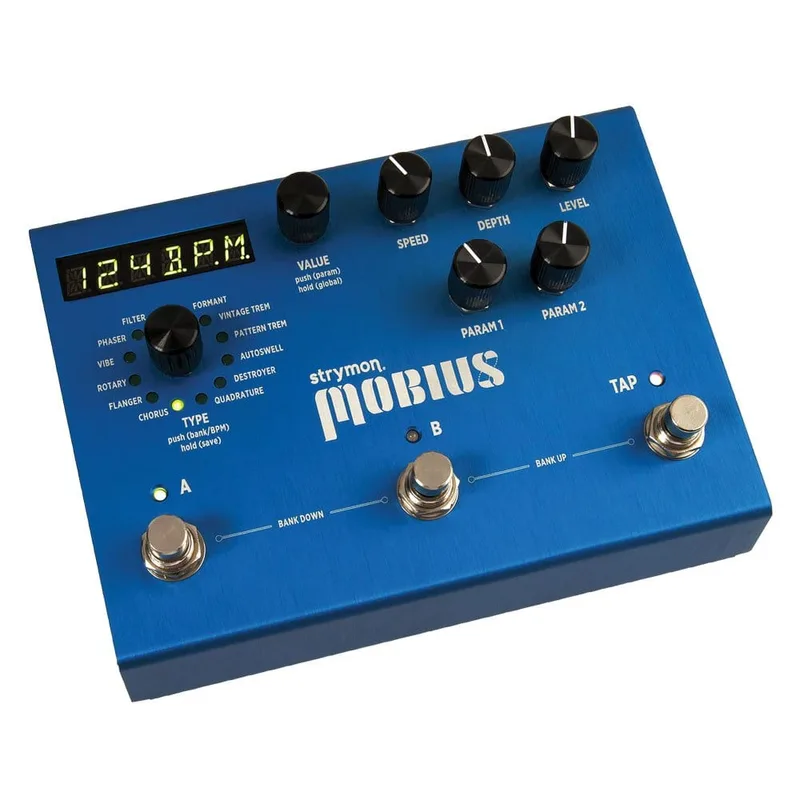
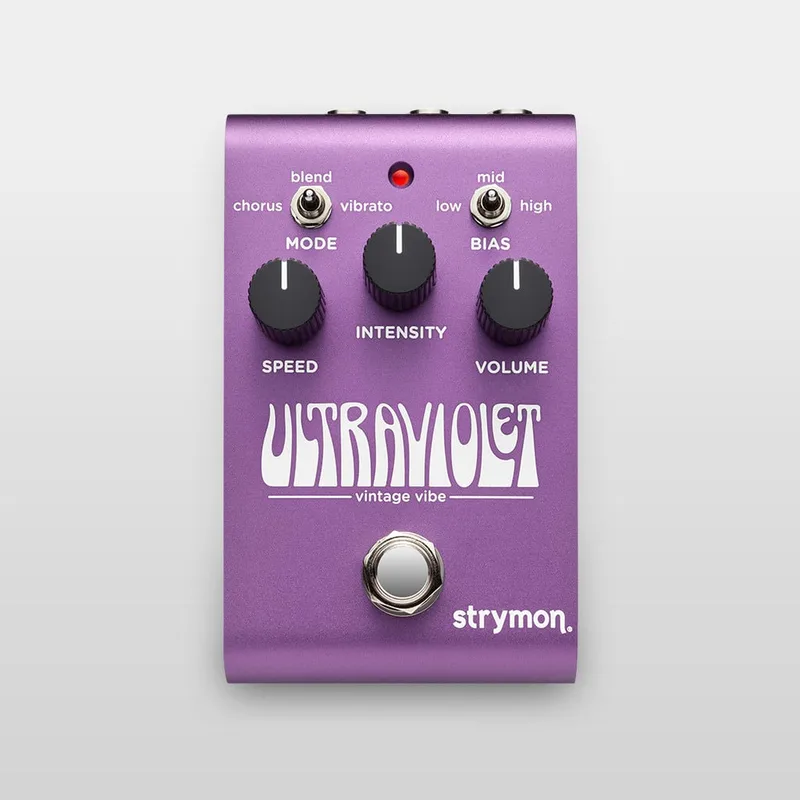
The Ola is discontinued, but Strymon's modulation line has moved on. The Strymon Mobius covers a wide range of modulation types in one box, and the Strymon UltraViolet is a later compact digital vibe pedal with chorus, vibrato and blend modes. For players shopping the used market, the Ola remains the company's dedicated dBucket take on chorus and vibrato in a single stompbox16.
Videos
strymon
strymon
strymon
Questions
Is the Strymon Ola discontinued?
Yes. Strymon's own product page for the Ola carries a note that it is for a discontinued product1. The pedal was announced at NAMM in January 2010 and went on sale that June for $299 in the US92.
Is the Strymon Ola stereo?
Yes. The Ola has a high impedance stereo input and a stereo output1. The left input acts as a mono input when only one channel is used, and the left output acts as a mono output in the same way, so it works on a mono board too1.
Does the Strymon Ola come with a power supply?
Yes. Strymon lists a 9V center negative DC supply as included, with a 250mA current draw1. That draw is well beyond what a 9V battery or a small daisy chain can deliver, so the included supply or an equivalent isolated output is the practical way to run it.
Can I fit silent switches to an older Ola?
No. Strymon's support article states there is no way to install the new silent switches on the older Ola pedal designs, because the designs are different and parts are not interchangeable11.
Is the Strymon Ola analog or digital?
It is digital, with an analog front end and output section. Processing is 32-bit floating point on a SHARC DSP, and the dBucket algorithm models every stage of an analog bucket brigade chip, with 24-bit 96kHz converters on the way in and out1.
Sources (11)
- Ola Brochure, Strymon, 2025-01-31
- Strymon Ola dBucket Chorus & Vibrato Effect Pedal Now Available, Strymon, 2010-06-10
- 10 Affordable Chorus Pedals for Guitar, Premier Guitar, 2024-02-14
- Ola Chorus & Vibrato, www.strymon.net, 2010-05-27
- What are the dimensions of my pedal?, Strymon, 2021-07-20
- Which Strymon Delay Pedal Is Right For Me?, Strymon, 2023-08-30
- 15 best chorus pedals to buy in 2019, Guitar.com, 2019-09-24
- Strymon Pedal Reviews: Brigadier, Orbit, Blue Sky, Ola, Premier Guitar, 2010-06-16
- NAMM 2010 pedalboard shot, Strymon, 2010-01-20
- Pedalboard Feature: Boy & Bear's Killian Gavin, Strymon (www.strymon.net), 2014-06-03
- Can I have my old design Ola modded with silent switches?, Strymon, 2015-11-12
 Steve Lukather
 Jerry Cantrell