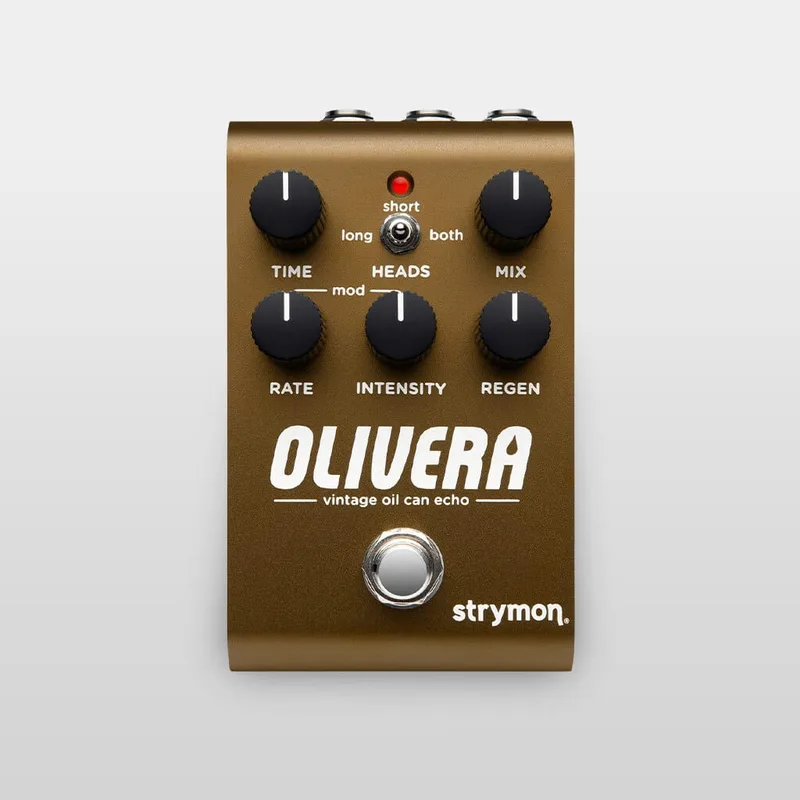


The Strymon Olivera is a compact delay pedal from Strymon that emulates vintage oil can echo units, the oddball machines that used a motorized rotating can and lubricating oil to create repeats. Strymon describes it as "the first pedal emulation that truly captures the mechanical yet wildly organic nature of these oddball machines," promising "the vintage syrupy warble of a true oil can echo"1. It is a digital pedal with an analog JFET front end, priced at $259.001.
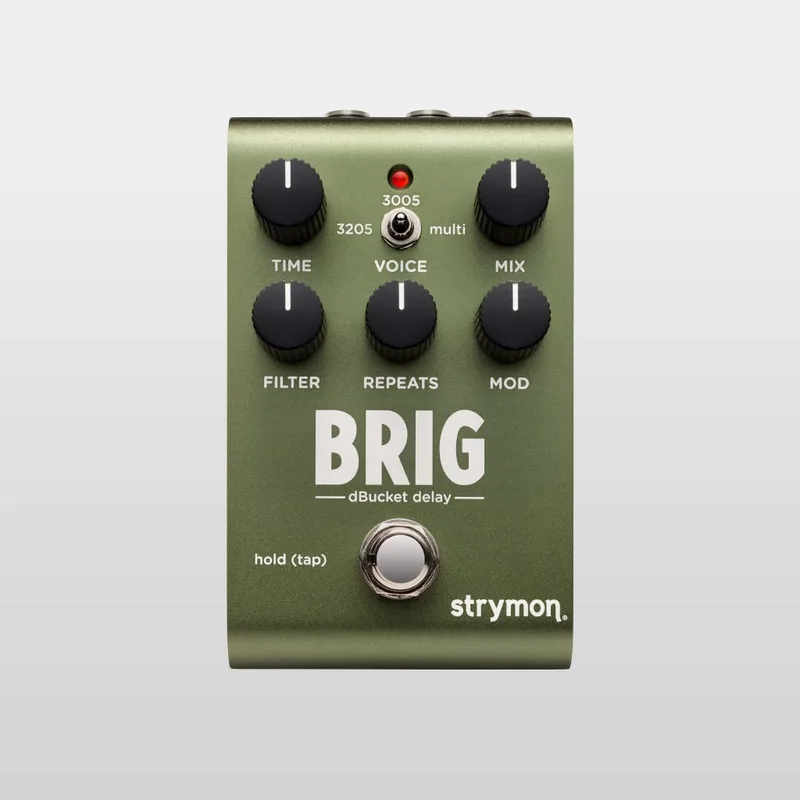
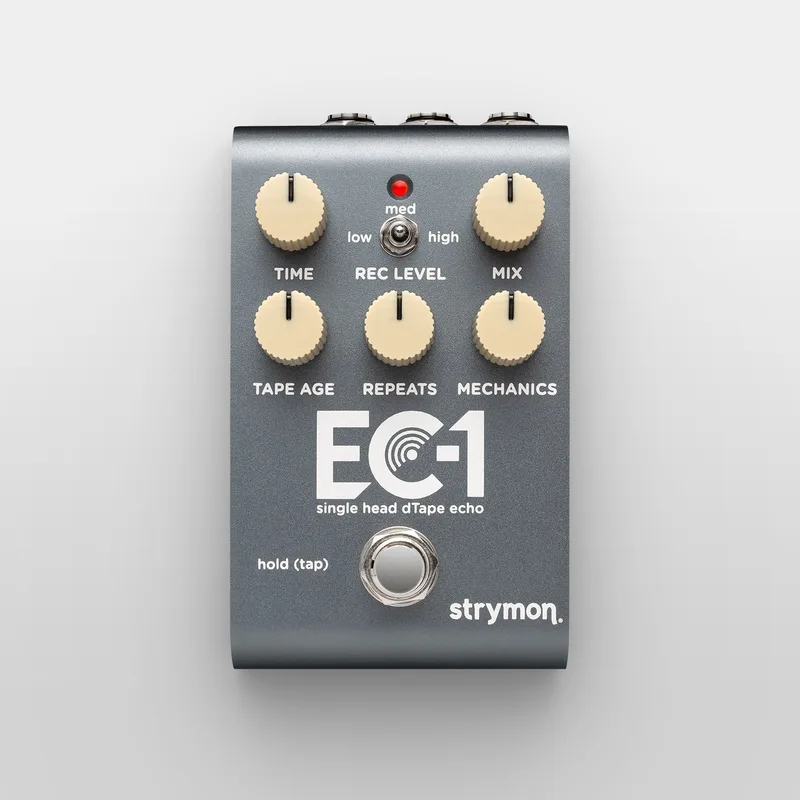
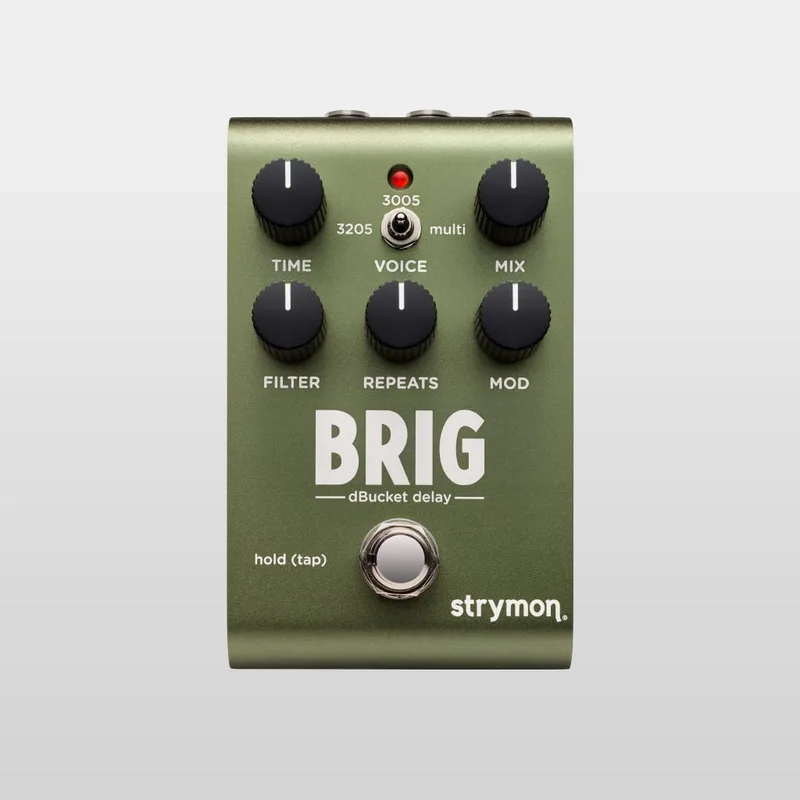
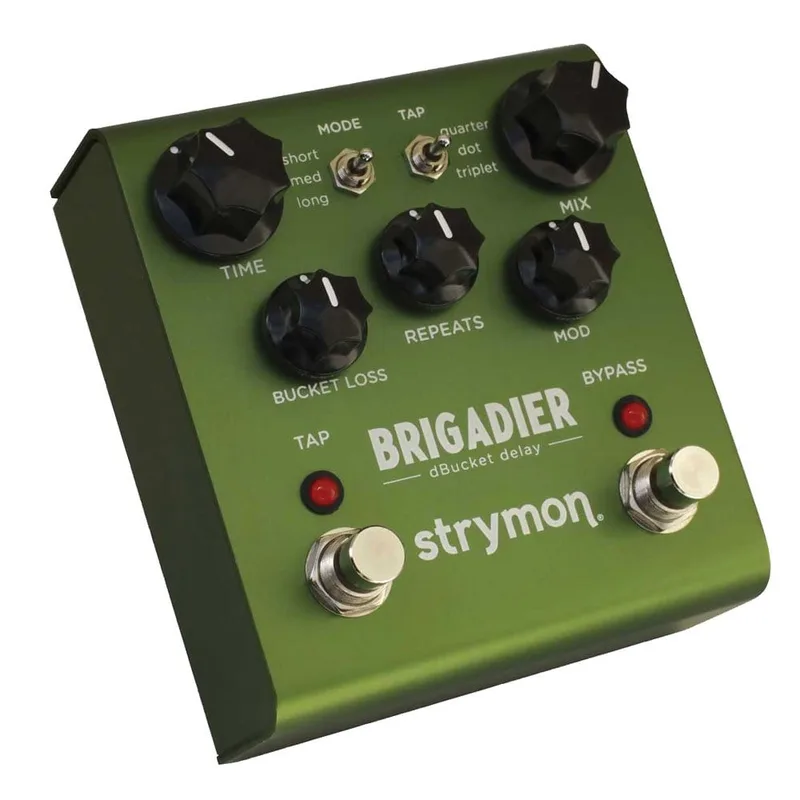
Where a tape echo drags tape across heads, an oil can echo spun a metal can coated in oil, and the physics of that arrangement gave the repeats a dark, modulated, unstable character. Strymon says the Olivera ranges "from dark and modulated repeats to sustaining textures that approach the sound of classic spring reverb tanks"1. It sits in Strymon's compact delay line alongside the Brig and EC-1, following what guitar.com's reviewer called "the compact format of its Brig and EC-1 delays, with the same five knobs and three-way mode switch"2.
A digital oil can echo
Under the hood the Olivera is a high-resolution digital design. It uses a 520MHz ARM Superscalar processor with 32-bit floating point processing, and 24-bit 96kHz A/D and D/A converters, with a typical signal to noise ratio of 116dB and a 20Hz to 20kHz frequency response14. The analog front end is a premium JFET preamp feeding a high impedance, ultra low noise discrete Class A input14.
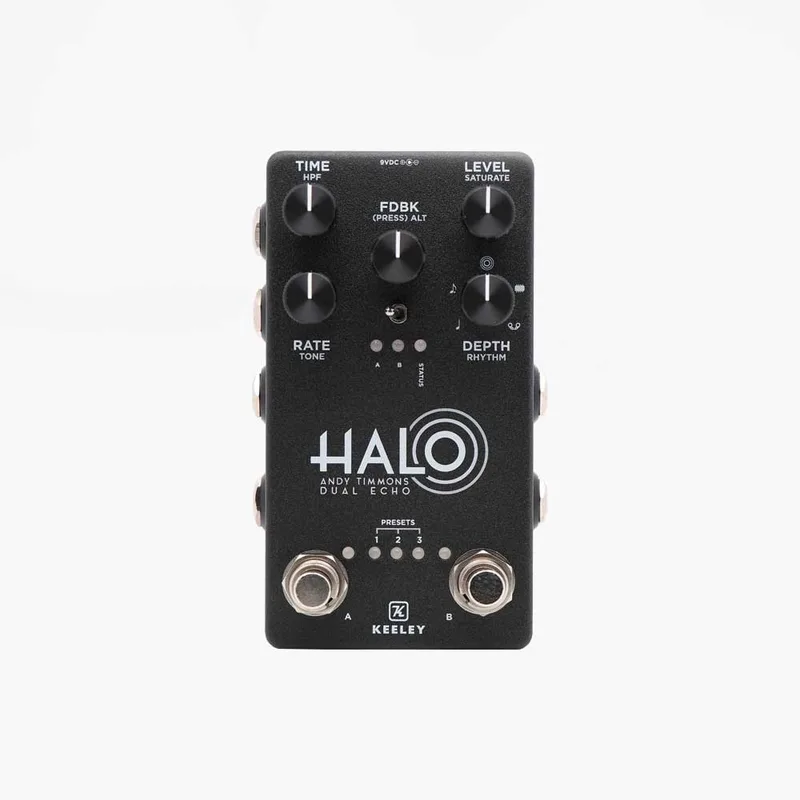
The pedal is effectively a two-head delay. As Guitar Pedal X's Stefan Karlsson described it, it is "a sort of 2-Head Delay, but with one permanently short, and one permanently long" head, with the heads switch selecting between them5. He noted the approach uses "a similar technique to what Andy Timmons Halo Delay does"5.
The controls and expression assignment
The front panel carries five knobs and a three-way mode switch2, with the modulation section offering controls for Rate and Intensity6. The single footswitch engages and disengages the effect, with a red LED at the top of the pedal indicating the effect is engaged1.
A TRS expression pedal plugged into the EXP jack can remotely control any of the Olivera's knobs, and by default it is set up to control the MIX knob7. Assigning a knob to the expression pedal follows a hold-and-rock procedure:
- Press and hold the footswitch for at least 3 seconds, until the LED blinks green7.
- Rock the expression pedal to the heel position; the green LED stops blinking and stays lit. Set the knob or knobs to the desired heel settings7.
- Rock the expression pedal to the toe position; the LED turns red. Set the knobs to the desired toe settings7.
- Press and release the footswitch to exit and store the setup7.
One thing to keep in mind: the expression pedal assignment is saved per preset, not globally, so each of the 300 presets can carry its own assignment17.
The dry signal path has three modes: Digital Mode, Analog Mode, and Kill Dry Mode8.
Power and connections: 9V, 250mA
The Olivera requires a power supply providing 9V DC, center negative, at a minimum of 250mA, through a 2.1mm barrel jack13.
The 250mA current requirement rules out a battery, and the pedal needs a dedicated or adequately rated output on a power supply rather than a casual daisy chain.
Connections on the pedal are full stereo: TRS stereo input and TRS stereo output, with incoming stereo signals processed independently1. The EXP/MIDI jack carries full MIDI implementation, so the pedal can be controlled from a MIDI controller, and the USB-C jack on the back handles MIDI from a computer as well as firmware updates149. Firmware updates are done with Strymon's Update software: install it, connect the powered pedal with a USB-C data cable, and the software detects the pedal automatically and offers the install if a newer version exists; when the installed version matches the available version, the pedal is up to date9.
A factory reset is a powered-up procedure using the footswitch and the RATE (FACTORY RESET) knob10:
- Press and hold the footswitch for at least 2 seconds while powering up the Olivera. Release it once the LED flashes red10.
- Press and hold the footswitch again, and while holding it, sweep the RATE (FACTORY RESET) knob from minimum to maximum and back twice. The LED shows amber on turns from minimum to maximum and red on turns from maximum to minimum10.
- On the fourth turn, from maximum to minimum, release the footswitch immediately: the LED flashes red and the Olivera resets and restarts10.
The reset restores the pedal to its factory default power up functions and replaces all stored presets with their factory default settings10.
Oil can echo roots and a new algorithm
Oil can echoes like the classic Tel-Ray units used a motorized rotating can and lubricating oil to generate their repeats, a mechanical approach quite different from tape11. Emulating that in a pedal was not straightforward: Pedal of the Day reported that "the sheer number of variables in the design made authentic emulation challenging, requiring a ton of research and a brand new algorithm"4. Guitar World reported that the units were digitized with "an all-new algorithm built from the ground up to emulate every mechanical quirk"12.
The algorithm came from Strymon co-founder and DSP designer Pete Celi11. In Strymon's launch announcement, Premier Guitar quoted Celi on the character of the original machines:
"Oil can echoes like the classic Tel Rey® units actually used a motorized rotating can andlubricating oil to generate the"
Delay times
The two head settings give the Olivera its delay time ranges13:
| Head setting | What it does |
|---|---|
| Short Head | One of two delay heads, permanently short131 |
| Long Head | The second delay head, permanently long5 |
The Olivera works as a sort of 2-Head Delay, with one head permanently short and one permanently long5.
Those ranges sit squarely in vintage echo territory rather than long digital delay, which fits the character of the original oil can machines.
What reviewers said
guitar.com's Richard Purvis reviewed the Olivera in February 2026 and gave it 8 out of 10, noting its compact format shared with the Brig and EC-12. MusicRadar's Jonathan Horsley covered the launch, reporting the pedal priced at $259 and available now14. Delicious Audio's Paolo De Gregorio covered the pedal's Rate and Intensity modulation controls in his December 2025 write-up6.
Videos
Andertons Music Co
strymon
strymon
Questions
What is an oil can delay?
An oil can echo is a vintage delay design that used a motorized rotating can coated in lubricating oil to record and play back the signal, instead of tape. The oil and motor gave the repeats a dark, warbling, unstable character. Strymon based the Olivera on units like the classic Tel-Ray, emulating those mechanical quirks digitally.
Is the Strymon Olivera stereo?
Yes. The Olivera has full stereo input and output via TRS jacks, and it processes incoming stereo signals independently. The input is a high impedance discrete Class A JFET TRS stereo input at 1M Ohm, and the output is a low impedance TRS stereo output at 100 Ohm.
Does the Olivera have MIDI?
Yes. The Olivera has full MIDI implementation and 300 presets, controllable through the EXP/MIDI jack or over USB from a computer. The USB-C jack on the back also handles firmware updates through the Strymon Update software.
Can the Olivera be set to true bypass?
Yes. True bypass is the default, using an electromechanical relay-switched bypass for an untouched signal when the pedal is off. You can instead select Strymon's premium buffered bypass, which preserves high frequencies on long cable runs.
How do you factory reset the Strymon Olivera?
Power up while holding the footswitch for at least 2 seconds, releasing it when the LED flashes red. Then hold the footswitch again and sweep the RATE (FACTORY RESET) knob from minimum to maximum and back twice, releasing the footswitch on the fourth turn. The reset restores factory defaults and replaces all stored presets.
What is the delay time range of the Olivera?
The Short Head setting runs from 72ms to 290ms, and the Long Head setting runs from 155ms to 620ms. The heads switch selects between them, and the pedal is effectively a two-head delay with one permanently short head and one permanently long head.
Sources (14)
- Olivera Vintage Oil Can Echo, Strymon, 2026-03-04
- Strymon Olivera review, guitar.com, 2026-02-02
- What are Olivera's power requirements?, Strymon
- Strymon Olivera Vintage Oil Can Echo, Pedal of the Day, 2025-10-14
- Guitar Pedal X, Guitar Pedal X, 2025-10-15
- Strymon Olivera Oil Can-Style Delay, Delicious Audio, 2025-12-04
- How can I use an Expression Pedal with Olivera?, Strymon
- How do I set the DRY SIGNAL mode on Olivera?, Strymon
- How can I update the firmware on Olivera?, Strymon
- How do I factory reset Olivera?, Strymon
- Strymon Introduces New Olivera Vintage Oil Can Echo, Premier Guitar, 2025-10-14
- Strymon's Olivera pedal recreates oil can delays, Guitar World, 2025-10-17
- What are the delay time ranges on Olivera?, www.strymon.net
- “The first pedal emulation that truly captures the mechanical yet wildly organic nature of these oddball machines”: Strymon's Olivera is a vintage oil can delay without the oil, without the mechanics, and with a lot more control over your tone, MusicRadar, 2025-10-15