The oil can delay is one of the strangest branches of delay history: an electromechanical echo circuit, born in the late 1950s, that stored your guitar signal as a static electrical charge on a spinning metal disc bathed in oil. Instead of magnetic tape, it used a can of oil and a rotating disk, and the repeats it produced were dark, band-limited, and wobbly in a way no other delay type quite matches123.
Ray Lubow, co-founder of the Tel-Ray company, submitted the patent for the electro-static delay apparatus on June 30, 1959, and Tel-Ray's first oil can echoes appeared that same year45. The design was licensed to some of the biggest amplifier makers of the era, and the original hardware was manufactured until 1989, though it was mainly produced in the 1960s and 1970s64. Today the circuit survives mostly as a sound to be emulated, in digital pedals from Strymon, JHS, Source Audio and others.
Where the oil can delay came from
The oil can delay was born in the late 1950s and rose in popularity over the following decade, harkening back to the earliest days of guitar echo7. Ray Lubow was granted a patent for an electro-static delay apparatus on June 30, 1959, which is known today as the oil can delay6. Strymon's history of the circuit credits Lubow, co-founder of Tel-Ray, with creating it, and notes that the first oil can echoes were made by the Tel-Ray company in 195952.
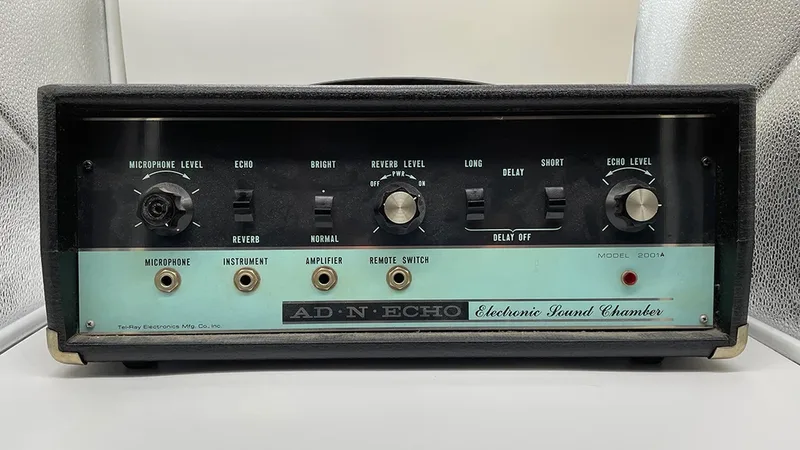
The units were sold under the Tel-Ray name as various Ad-n-Echo and Organ Tone models2. On JHS Pedals' YouTube history of the circuit, Josh Scott traces the lineage plainly: the design comes from 1959, when Tel-Ray patented an electrostatic mechanism style delay, and Tel-Ray later turned into Morley, while the technology was also licensed to very large companies8.
That licensing is a key part of the story. Ray Lubow began licensing the oil can delay technology to amplifier companies including Fender, Gibson, and Rickenbacker4, and the technology appeared in products such as the Fender Echo Reverb, the Fender Dimension IV, and the Gibson Reverb Echo2. So while Fender never invented an oil can delay, Fender-branded oil can hardware existed.
How it works: a charge on a spinning disc
An oil can delay is an electrostatic machine, not a magnetic one. The signal path, as Strymon describes it, works like this: inside a drum is a rotating disk coated with oil, and that oil can store a charge electrostatically. The charge is the AC audio signal. A conductive wiper delivers the signal onto the disk as it spins, and a second wiper reads the stored charge back some distance around the rotation. That recovered signal is amplified and mixed with the input signal, and the time it takes the disc to carry the charge from the write wiper to the read wiper is the delay2.
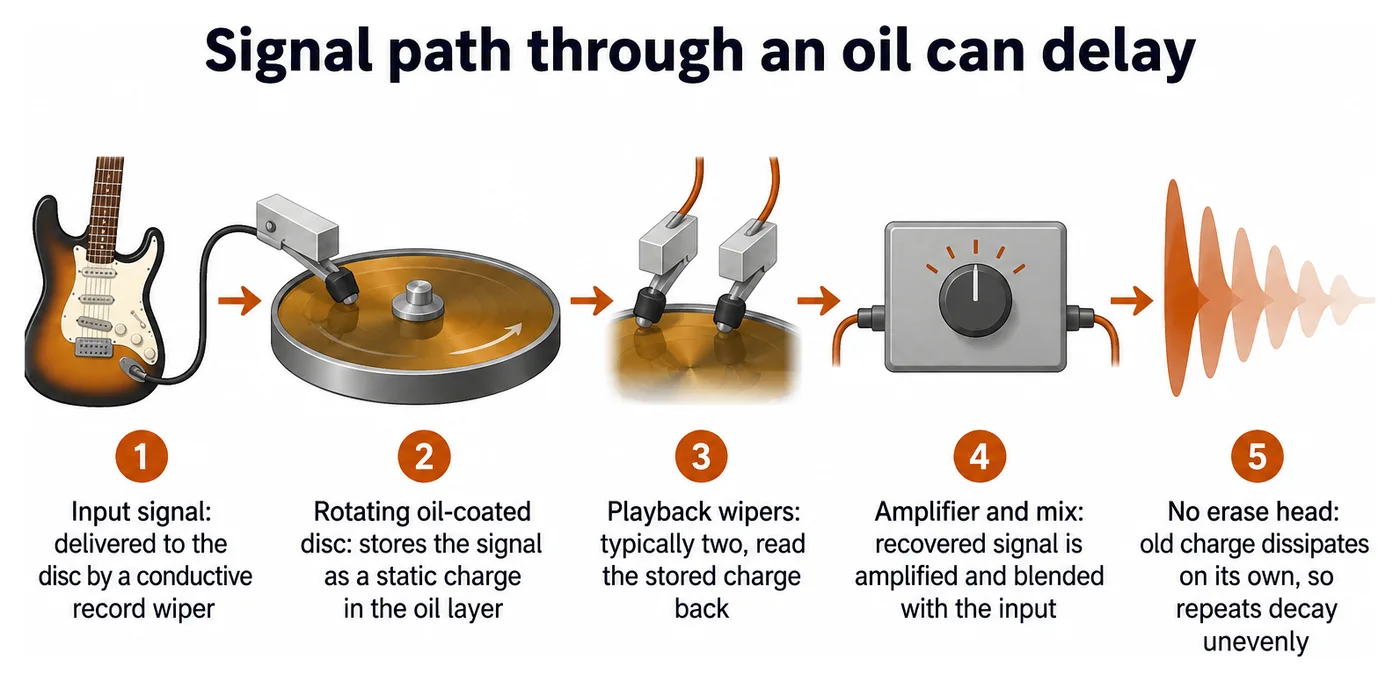
The physical construction, as JHS Pedals describes the original units, was oil held in a tuna-can shaped drum, moved by a belt mechanism that turned the drum while the signal was written and read through rubber wiper heads4. Strymon's own product page for its Olivera pedal sums up the principle: the repeats are achieved "by writing a static charge to a small rotating disk inside a can, using oil as a lubricating dielectric"5. Gearnews makes the contrast with conventional echo machines explicit: instead of using magnetic tape, Tel-Ray's device wrote a static charge onto a small rotating disk housed inside a can, with the oil acting as a lubricating dielectric3.
Two details of the design shape the sound more than anything else:
- No erase head. The units have a record head and typically two playback heads, but generally no erase head. Because nothing wipes the disc clean, the stored charge dissipates on its own, allowing what Strymon calls "some dissipating character" in the repeats1.
- Self-regeneration. The static charge has its own decay time constant, which creates a regenerating repeat even when no feedback is applied from the playback heads1.
Delay time was tied directly to rotation speed. A majority of original oil can units had a fixed rotation speed, hence a fixed delay time and fixed vibrato time, with a maximum delay time of 80 to 120ms9. That is short: these were slapback-and-texture machines, not long-delay devices.
Why the repeats sound dark and warbly
The characteristic oil can sound comes straight out of the physics. Strymon's support article on the circuit is blunt about the frequency response125:
"The resultant delay signal is very band limited, creating a murky sounding echo."1
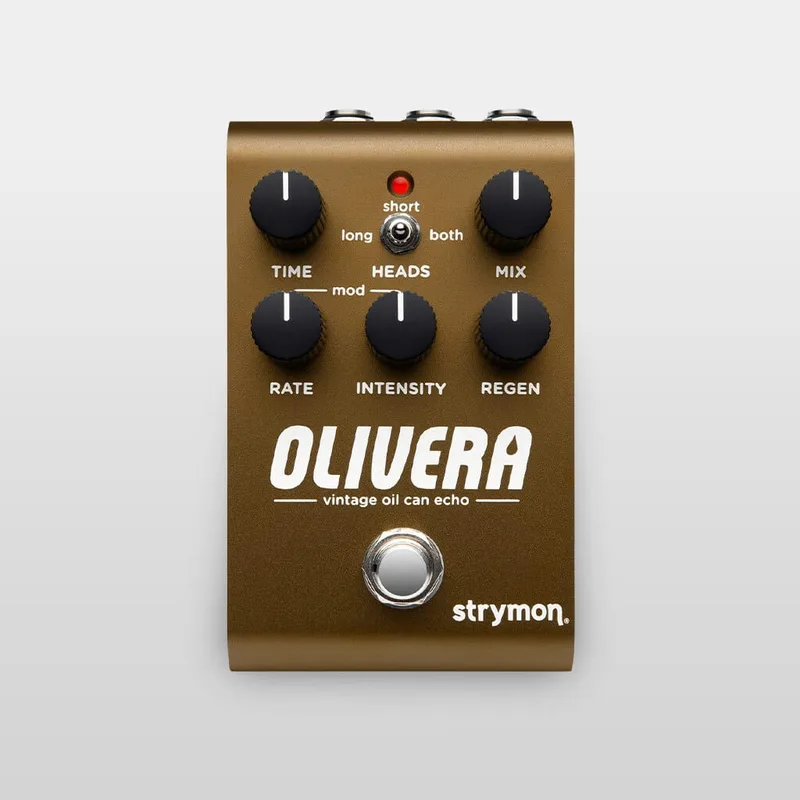
MusicRadar's review of the Strymon Olivera quotes Strymon sound designer Pete Celi on the same point, describing the original units as having a rotating disk in a can filled with oil to charge the disk10. Strymon's earlier history of the circuit describes the result as "a dark, warbly, pitch vibrato drenched delay," produced by the interaction of the spinning disc, the wipers, and the oil2.
The wobble has a mechanical cause: the disc's rotation is never perfectly even, and the charge sits in a fluid medium, so the recovered signal shifts in pitch and level as it decays. The oil itself is part of the voice. Strymon notes that the sonic output of the process can vary substantially depending on the condition of the unit and the oil2, which is why two vintage units of the same model can sound quite different.
For comparison, analog bucket brigade delays are also traditionally dark, but for different reasons: filtering used to reduce aliasing artifacts, plus grunge and noise from charge loss between stages, which Strymon's Pete Celi has described as a "water spilling" effect11. The oil can delay's darkness comes instead from the band-limited electrostatic readout and the uneven decay of the charge.
Modern makers reach for the same adjectives when they chase the sound. Delicious Audio describes the oil can's repeats as "syrupy, dark, and wobbly"12, and Source Audio's Collider pedal includes an Oil Can delay engine it calls "dark, jangly, warbling and distorted"13.
Tel-Ray, Morley and the licensed versions
The corporate history is tangled but short. Tel-Ray, founded by the Lubow brothers, made the original units under names like Ad-n-Echo and Organ Tone2. The company later turned into Morley, and Morley manufactured oil can delays up until 19894. Morley's own history page confirms the timeline: according to Ray, they continued to manufacture these devices up until 1989, but they were mainly produced in the 1960s and 1970s6.
The Oil Can was released in many different versions, and Morley's history hails the EVO-1 Echo Volume as the most advanced of them, noting that the Oil Can produced a unique "warble" character6.
Alongside the Morley-branded units, the licensed versions carried the technology into amplifier products428:
| Where it appeared | What it was |
|---|---|
| Fender Echo Reverb | Fender product using licensed Tel-Ray oil can technology2 |
| Fender Dimension IV | Fender product using licensed Tel-Ray oil can technology2 |
| Gibson Reverb Echo | Gibson product using licensed Tel-Ray oil can technology2 |
| Rickenbacker | Amplifier company licensed the oil can delay technology4 |
The technology even echoes into modern multi-effects: Behringer's DEEPMIND 6 synthesizer includes a TEL-RAY ECHO DELAY effect in its FX engine, inspired by original 1960s Tel-Ray gear, with knobs that allow delay, echo, chorus, vibrato and reverb type effects in one device14.
Oil can delay versus tape echo
Tape echo was the first type of delay in the audio world, originally done by putting a second copy of the signal to tape after a pause and repeating the process15. The classic tape machines, like the Echoplex, record magnetically onto moving tape, with erase, record and playback heads in the chain. The oil can delay shares the electromechanical idea of a moving storage medium, but the medium and the mechanism are entirely different:
| Tape echo | Oil can delay | |
|---|---|---|
| Storage medium | Magnetic tape | Static charge on a rotating metal disc1 |
| Lubricant / carrier | None, dry tape | Oil as a lubricating dielectric5 |
| Heads | Erase, record, playback | Record plus typically two playback, generally no erase1 |
| Character | Wow and flutter from tape transport1012 | Band-limited, murky, warbly repeats1 |
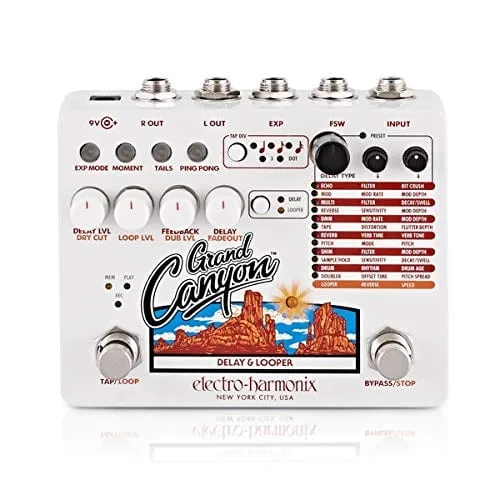
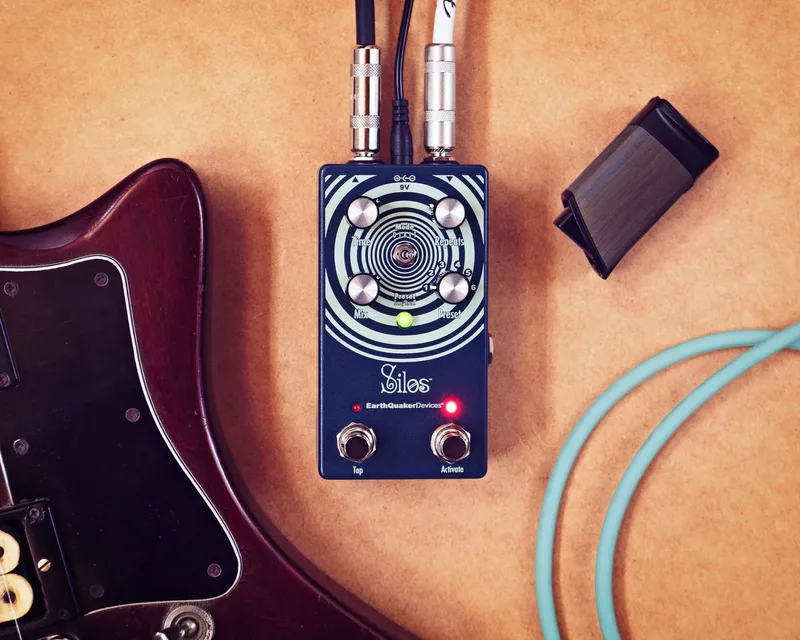
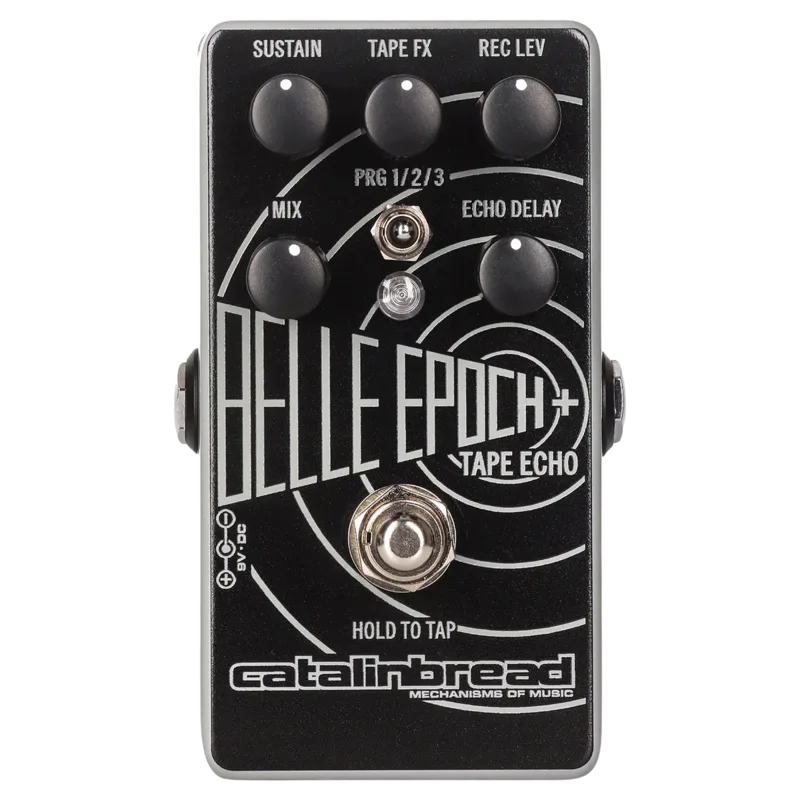
The distinction shows up in how makers voice their pedals. Catalinbread's Belle Epoch Plus, a tape echo character pedal, points to the "wow and flutter" found in tape echoes as what separates them from a normal delay16. Electro-Harmonix's Grand Canyon includes a Tape mode simulating an analog tape echo machine including tape distortion, wow and flutter17. EarthQuaker Devices' Silos, by contrast, offers a Tape mode "reminiscent of a well-loved tape delay with just a hint of oil can delay vibes mixed in"18, and Jed's Pedals pitches its Gekyume at players who like "murky-sounding oil can delays or warbly old-school tape echo machines" rather than crisp and clean delays19.
The sound today: pedals that recreate it
Original oil can units are decades out of production, so the circuit lives on in emulations. The main modern options64:
- Strymon Olivera. An oil can-style delay pedal that models the vintage units, with a Time knob that adjusts the virtual rotation speed of the oil can, roughly 200ms to 800ms total delay time5. Premier Guitar's announcement describes it as based on vintage oil can echo units such as the classic Tel-Ray units20.
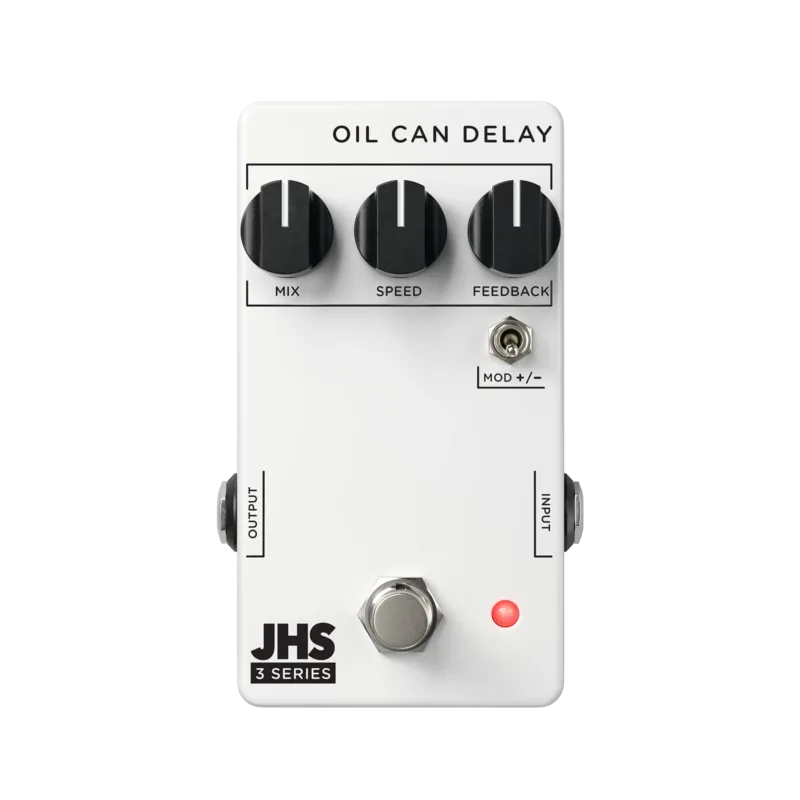
- JHS 3 Series Oil Can Delay. A digital delay voiced after the vintage oil can delay21, born from a request by Wilco's guitarist Nels Cline12. Its Speed knob controls delay time from 100ms to 330ms, and Feedback controls the amount of repeats4. A Blackout limited edition of 1,000 units was released at $9922, and the same circuit was later released in the regular 3 Series in a white case21.
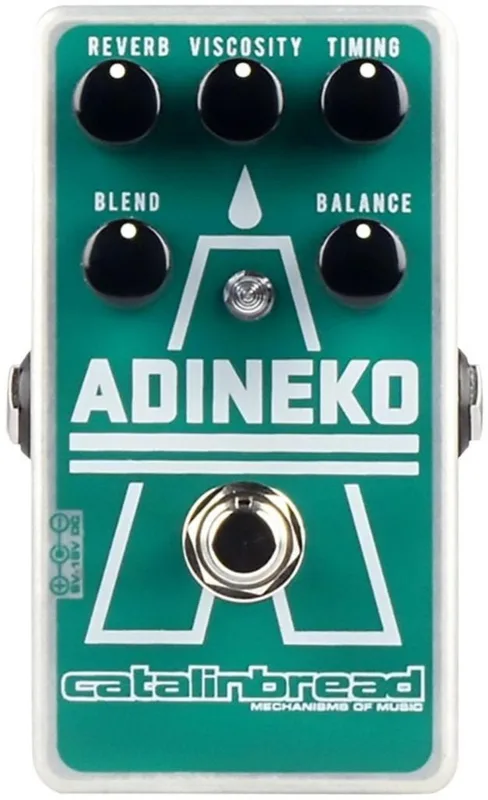
- Catalinbread Adineko. Descends from the original oil can delay units, extending what were fixed rotation speed, fixed delay time and fixed vibrato time on the originals into adjustable controls9.
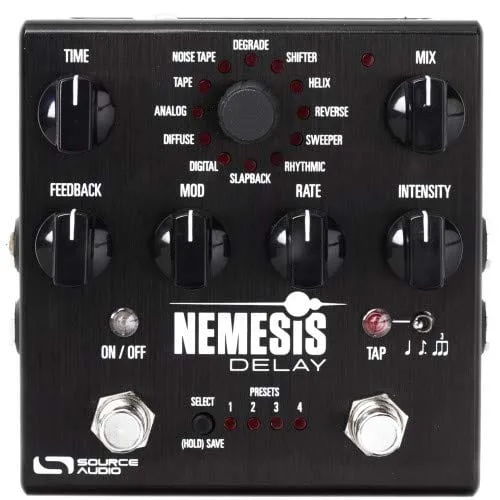
- Source Audio Nemesis and Collider. The Nemesis includes an Oil Can engine that captures the sound of a 1950s Tel-Ray Electronics Sound Chamber oil can delay23, and the same engine appears on the Collider as a dark, jangly, warbling and distorted delay13.
On JHS's demo video for the Blackout edition, Josh and Belle describe the original technology as "a mechanical fluid based echo using physical oil in a physical can," whose inventors eventually created the company Morley22.
FAQ
Who invented the oil can delay?
Ray Lubow, co-founder of the Tel-Ray company. He submitted the patent for an electro-static delay apparatus on June 30, 1959, and the first oil can echoes were made by Tel-Ray that same year456. The design was later licensed to amplifier companies including Fender, Gibson, and Rickenbacker4.
Do oil can delays have an erase head?
Generally no. The units have a record head and typically two playback heads, but generally no erase head, which allows the stored charge to dissipate gradually and unevenly rather than being wiped clean between passes1.
Does the oil in an oil can delay need replacing?
The oil is a working part of the circuit, not just a lubricant. Strymon notes that the sonic output of the process can vary substantially depending on the condition of the unit and the oil2, so the state of the oil in a vintage unit directly affects its sound.
Did Fender make an oil can delay?
Fender sold products built on the technology, but did not invent it. Tel-Ray licensed the oil can delay technology to amplifier companies including Fender, Gibson, and Rickenbacker4, and it appeared in products such as the Fender Echo Reverb and the Fender Dimension IV2.
What is the difference between an oil can delay and a tape echo?
A tape echo records the signal magnetically onto moving tape24. An oil can delay writes a static charge onto a rotating metal disc, using oil as a lubricating dielectric to keep the charge from leaking into the air before a pickup plays it back13. There is no tape, and usually no erase head.
When did they stop making oil can delays?
Morley, the company Tel-Ray became, manufactured oil can delays up until 1989, though they were mainly produced in the 1960s and 1970s46.
Pedals on this page
News
Questions
Who invented the oil can delay?
Ray Lubow, co-founder of the Tel-Ray company. He submitted the patent for an electro-static delay apparatus on June 30, 1959, and the first oil can echoes were made by Tel-Ray that same year. The design was later licensed to amplifier companies including Fender, Gibson, and Rickenbacker.
Do oil can delays have an erase head?
Generally no. The units have a record head and typically two playback heads, but no erase head. Because old charge is never wiped clean, repeats dissipate gradually and unevenly, which is a big part of the circuit's murky, self-regenerating character.
Does the oil in an oil can delay need replacing?
The oil is a working part of the circuit, not just lubricant, and its condition matters. The sonic output of the process can vary substantially depending on the condition of the unit and the oil, so a vintage unit's sound depends partly on how well its oil has survived.
Did Fender make an oil can delay?
Not under its own invention. Tel-Ray licensed the oil can delay technology to amplifier companies including Fender, Gibson, and Rickenbacker, and the technology appeared in products such as the Fender Echo Reverb and the Fender Dimension IV.
What is the difference between an oil can delay and a tape echo?
A tape echo records the signal magnetically onto moving tape. An oil can delay writes a static electrical charge onto a rotating metal disc, using oil as a lubricating dielectric to stop the charge leaking away. No tape, no magnetic heads, and usually no erase head.
When did they stop making oil can delays?
Morley, the company Tel-Ray became, manufactured oil can delays up until 1989, though they were mainly produced in the 1960s and 1970s. Modern pedals from JHS, Strymon, Catalinbread, Source Audio and others recreate the sound digitally or in analog.
Sources (24)
- How does an oil can delay work?, Strymon
- This Week’s Preset: TimeLine, Strymon, 2017-02-16
- Strymon Olivera: Oil Can Delay with a Vintage Voice, gearnews.com, 2025-10-14
- 3 SERIES OIL CAN DELAY, JHS Pedals
- Olivera Vintage Oil Can Echo, Strymon, 2026-03-04
- The Morley History, Morley (www.morleyproducts.com), 1959-06-30
- Strymon's Olivera pedal recreates oil can delays, Guitar World, 2025-10-17
- 3 Iconic Vintage Effects On A Budget (Oil Can, Rotary Chorus, Tape Delay), JHS Pedals (YouTube), 2025-02-17
- Adineko ('70s Collection) B-Stock, Catalinbread Effects
- “The first pedal emulation that truly captures the mechanical yet wildly organic nature of these oddball machines”: Strymon's Olivera is a vintage oil can delay without the oil, without the mechanics, and with a lot more control over your tone, MusicRadar, 2025-10-15
- The Sound of Strymon: Sound Designer Pete Celi, Strymon (www.strymon.net), 2015-11-12
- JHS 3 Series Oil Can Delay, Delicious Audio, 2025-06-30
- Collider Delay + Reverb, Source Audio
- DEEPMIND 6, Behringer
- STE-10 | Echo Pedal | CNZ Audio, CNZ Audio
- Belle Epoch +, Catalinbread Effects
- Grand Canyon, Electro-Harmonix
- Silos Multi-Generational Time Reflection Device, EarthQuaker Devices
- Gekyume | DIY Guitar Effects Pedal Kits, Jed's Pedals (jedspeds.co.uk)
- Strymon Introduces New Olivera Vintage Oil Can Echo, Premier Guitar, 2025-10-14
- New Pedal: JHS 3 Series Oil Can Delay (Blackout Edition), Delicious Audio, 2023-11-17
- Reverb Black Out / Line 6, JHS Pedals, Earthquaker Devices, Walrus Audio, Death By Audio, Old Blood, JHS Pedals (YouTube), 2023-11-17
- Nemesis Delay ADT, Source Audio
- Behind the Echoes of the Classic Roland Tape Delay, Premier Guitar, 2024-09-10