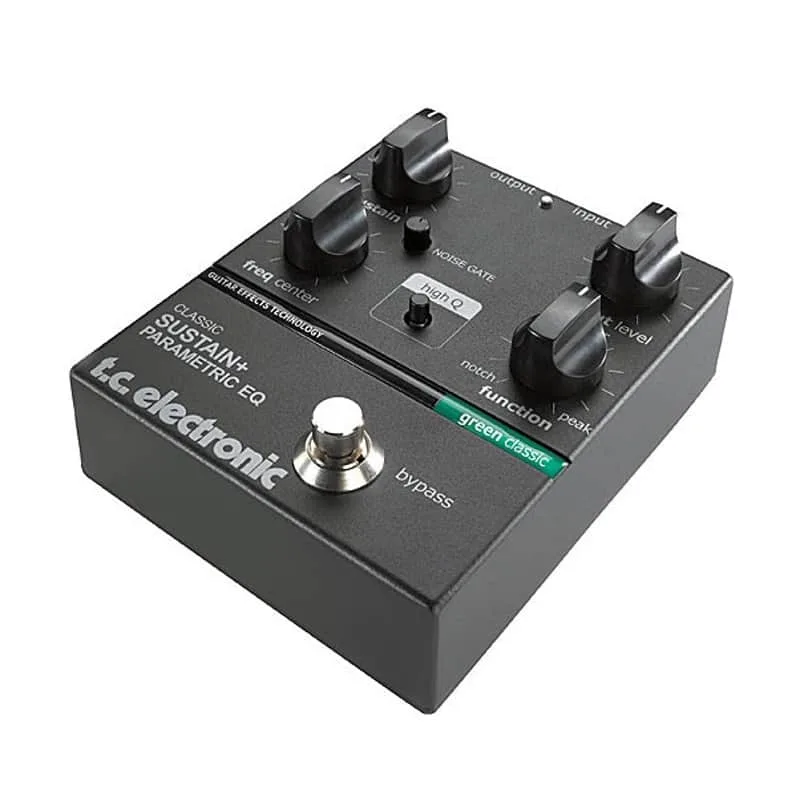


The TC Electronic Classic Sustain + Parametric EQ is a compressor pedal with a parametric EQ and a noise gate built in, part of TC Electronic's Classic Series reissue line of Seventies pedals. The line was introduced to bring back the company's famous classic sound by reissuing some of its earlier designs1. It combines three jobs in one box: compression with a sustain control, a single-band parametric EQ for shaping tone, and a gate for keeping things quiet.
MusicPlayers.com's reviewer, Derek Davodowich, tested the pedal between a Mesa/Boogie Lone Star amplifier, a Gibson Les Paul Standard, and a Fender Stratocaster Eric Johnson model, and found it "extremely clean, partially due to the Noise Gate feature within the unit"1.
The controls
The pedal carries five controls on its face, labeled in white lettering over a dark gray metal housing, plus a High-Q switch and a footswitch. The On/Off control is a standard Carling-style metal foot switch, and a bright blue LED on the face indicates activation status1.
| Control | What it does |
|---|---|
| Sustain | Sets the amount of time you want a note to ring out1 |
| Output | Provides the amount of gain level the unit produces1 |
| Freq center | A parametric EQ, letting the user dial into specific frequencies or an area of frequencies for adjustment1 |
| Function | Lets the user either increase (peak) a selected frequency or decrease (notch) a selected frequency1 |
| Noise Gate | Controls elimination of unwanted noise, providing control only over the Threshold point for gate response; the gate is post-compression in the signal path1 |
| High-Q switch | Controls the Q value in relation to two different frequency curve widths: out position gives a narrow curve width for the notch filter, in position gives a wider curve width of frequencies1 |
The combination of sustain and EQ in one pedal means a player can set how long notes ring out and then shape the compressed tone in the same box. The Function knob's peak and notch settings, together with the High-Q switch's two curve widths, cover both broad tonal shaping and narrow surgical cuts1.
The Noise Gate has no off switch. The only way to effectively disable it is to set the Threshold to its most minimal point, and the gate's Attack and Release are fixed internally with no user control1.
Power and connections
All connection points sit on the back edge of the unit: the 1/4 inch input and output jacks and the AC power supply connection1. The power connection is not hard wired and accepts a standard cannon style power plug as well as a 9V battery supply, accessed through a hinged battery access door1.
Documentation from TC Electronic covers connections and control functionality to get the user acquainted with the pedal, but no sample settings are included. The company's website provides a demo with initial settings instead1.
What reviewers said
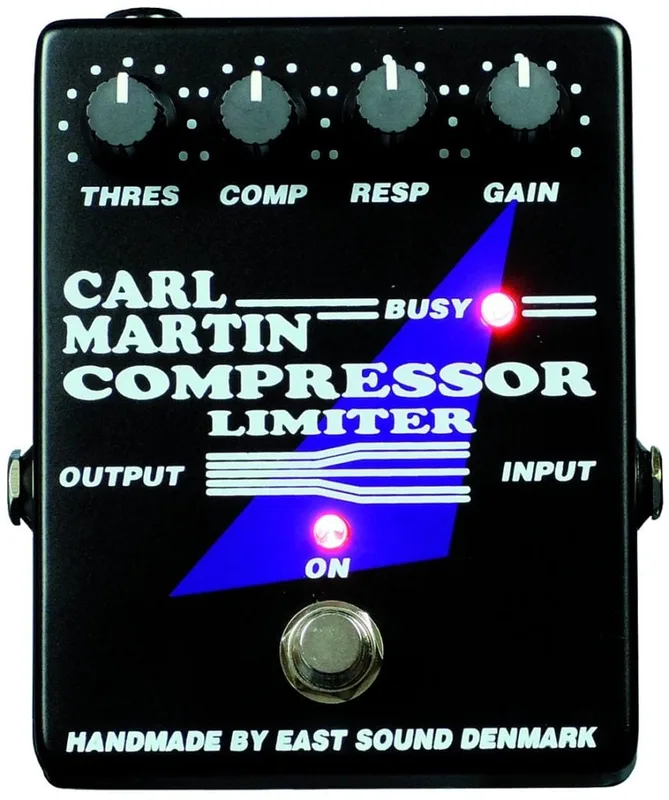
MusicPlayers.com reviewed the pedal in June 2007 and judged that it "lives up to the expectation and provides a very desirable compression effect"1. The reviewer's short list for comparison included the Carl Martin Compressor/Limiter and the Maxon CP9Pro + Compressor/Limiter1.
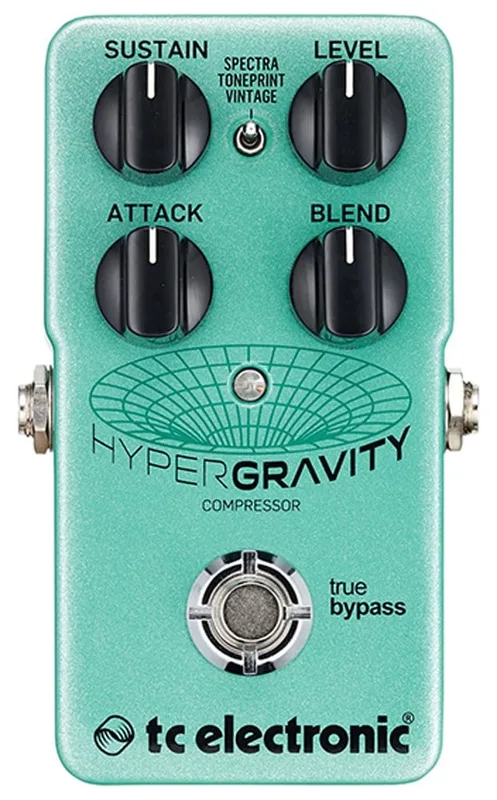
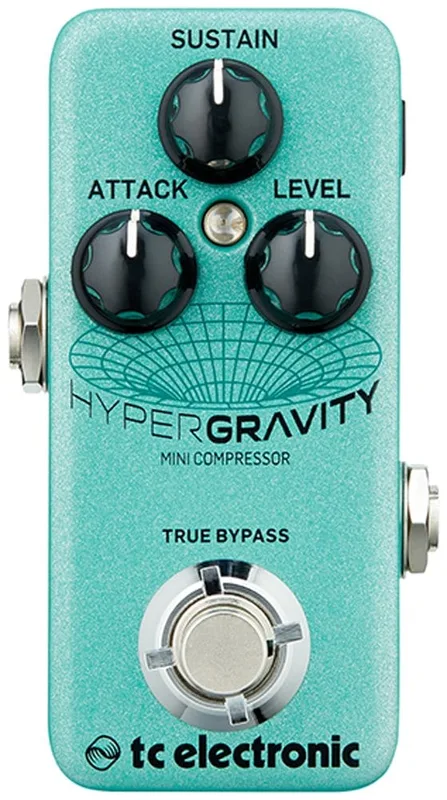
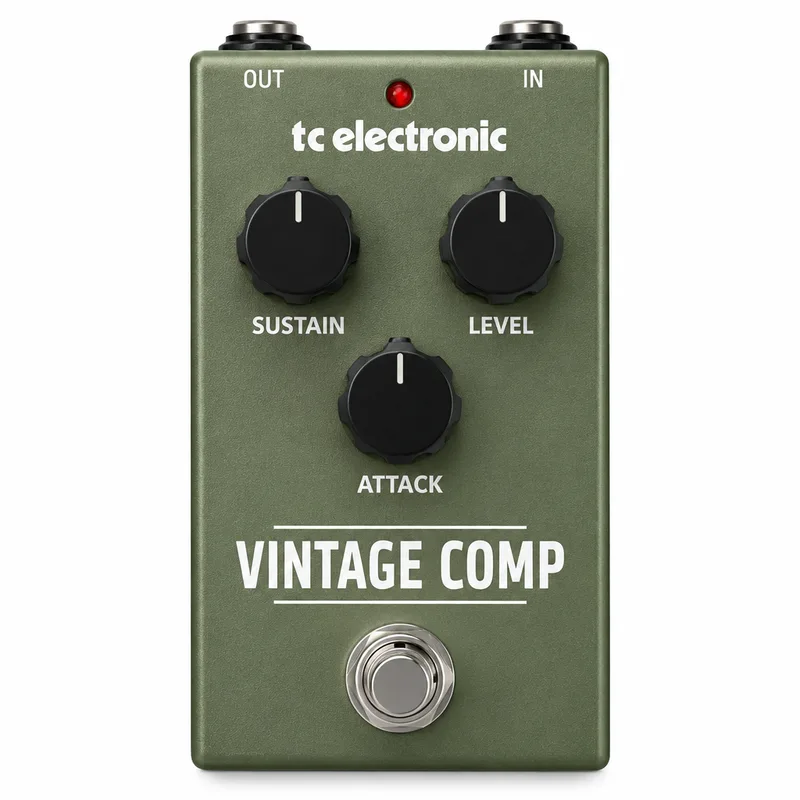
For players looking at TC Electronic's newer compressors, the company's current range includes the TC Electronic Hypergravity, the Hypergravity Mini, the Vintage Comp and the Nova Dynamics, and the modern Sustain + Parametric EQ carries a similar name. An introduction to the wider category is on the Compressor Pedals page, and the gate function alone is covered under Noise Gate Pedals.
Videos
gearwire
Aaron Thornhill
Jazz Rock Fusion & Synthesizer Music
Questions
Does the TC Electronic Classic Sustain + Parametric EQ run on a battery?
Yes. The pedal accepts a 9V battery supply through a hinged battery access door, and it also accepts a standard cannon style power plug. The power connection is not hard wired, so the unit is not dependent on a single supply type. All connection points, including the AC power supply connection, sit on the back edge of the unit.
Can you turn off the noise gate on the Classic Sustain + Parametric EQ?
No. There is no off switch for the Noise Gate function. The only way to effectively disable it is to set the Threshold to its most minimal point. The Noise Gate knob itself provides control only over the Threshold point for gate response, and the gate sits post-compression in the signal path.
What does the High-Q switch do?
The High-Q switch controls the Q value in relation to two different frequency curve widths. In the out position it gives a narrow curve width for the notch filter, useful for targeting a specific frequency. In the in position it gives a wider curve width of frequencies, so the EQ affects a broader area around the selected frequency.
Can you adjust the noise gate attack and release?
No. The noise gate lacks user control over Attack and Release parameters. It has fixed settings internally, so the only adjustment available to the player is the Threshold, set with the Noise Gate knob on the face of the unit.
How much does the Classic Sustain + Parametric EQ cost?
At the time of MusicPlayers.com's 2007 review, the pedal carried an MSRP of $395 USD and could be found online for approximately $299. As a reissue from TC Electronic's Classic Series line, its current availability and pricing may differ from those 2007 figures.
What is the difference between peak and notch on a parametric EQ?
On this pedal, the Function knob lets the user either increase (peak) a selected frequency or decrease (notch) a selected frequency. Peaking boosts a chosen frequency area, for example to bring out a note's fundamental. Notching cuts it, which players often use to remove a problem frequency such as a harsh resonance.
Sources (1)
- TC Electronic Classic Sustain + Parametric EQ, MusicPlayers.com, 2007-06-07