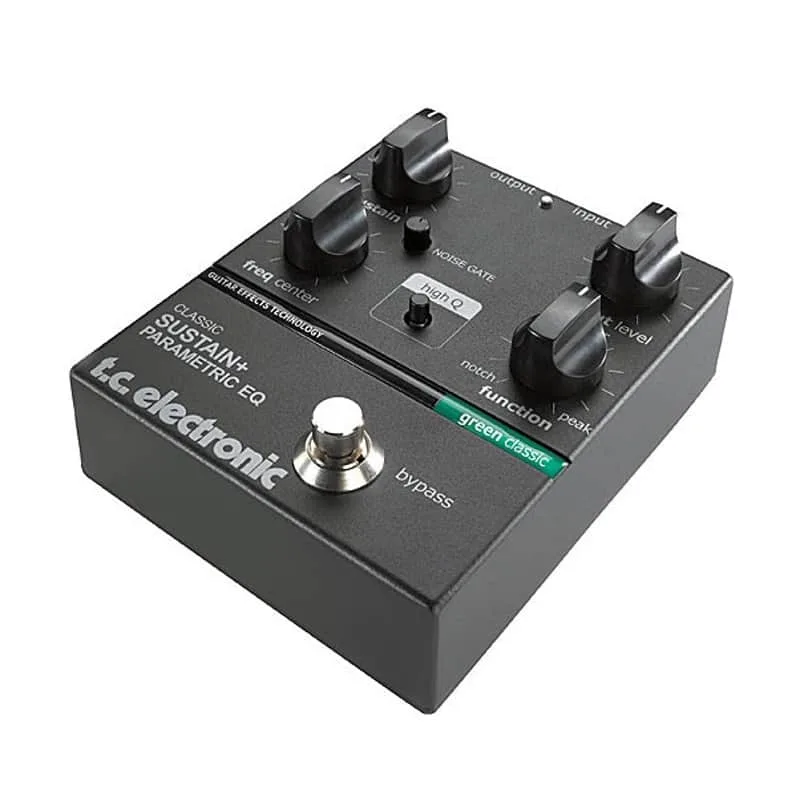


The TC Electronic Sustain + Parametric EQ is a compressor pedal with a one-band parametric EQ and a noise gate built in, made by TC Electronic. It exists in two forms: a very old original version and a later reissue, the TC Electronic Classic Sustain + Parametric EQ, which was part of TC Electronic's Classic Series line reissuing their Seventies pedals12. The pedal is discontinued, and this page covers both versions, noting where they differ.
Compressor, parametric EQ and noise gate
The pedal does three jobs in one box. The compressor section provides sustain, and it works hard: Ovnilab's reviewer found the threshold is very low and the ratio is fixed and very high, guessed around 20:1, with the only not-totally-squashed sustain setting found near minimum1. That puts it in the same heavy-compression territory as the Analogman compressor that Tony Levin uses, which Ovnilab cites as a typical squasher for Tony-Levin style heavy compression1.
The EQ section is a single parametric band. Ovnilab's reviewer found it good for a corrective bump or notch, getting good results bumping low mids or bumping high mids1. The noise gate sits post-compression in the signal path, and on the reissue its knob controls only the Threshold point for gate response, with no user control over Attack and Release, which are fixed internally2.
Ovnilab reports that the noise gate function on their reviewed original unit was broken, with the knob doing nothing1. On the reissue there is no off switch for the gate other than setting the Threshold to its most minimal point2.
The controls
The reissue's control set, as documented by MusicPlayers.com, breaks down as follows2:
| Control | What it does |
|---|---|
| Sustain | Sets the amount of time a note rings out |
| Output | Provides the amount of gain level the unit produces |
| Freq center | Parametric EQ control for dialing into specific frequencies or an area of frequencies |
| Function | Increases (peak) or decreases (notch) the selected frequency |
| High-Q | Switches the "Q" value between two frequency curve widths: out gives a narrow curve for the notch filter, in gives a wider curve |
| Noise Gate | Controls the Threshold point for gate response |
On the original, the sustain knob increases the gain of your signal past the threshold, and Ovnilab's reviewer found the only usable not-totally-squashed setting was near minimum1. The original also carries a distortion switch, which the reviewer found adds a very subtle "fur" with a soft vintage quality rather than a buzzy or gritty distortion1:
"What it does is adds a very subtle 'fur' so that your tone sounds like it's wearing a fuzzy warm scarf."
MusicPlayers.com found the reissue extremely intuitive and easy to operate, laid out in a very accessible manner, with basic documentation covering connections and control functionality, though no sample settings were included2.
Power and bypass
The two versions differ in how they power. The original takes 9V DC through a male 1/8" plug, not the usual Boss barrel type, which matters for anyone hoping to run it off a standard pedalboard power supply1. The reissue is not hard wired and accepts a standard cannon style power plug as well as a 9V battery supply, accessed through a hinged battery door2. Neither version is true bypass, though Ovnilab found the bypass quite clean1.
What reviewers said
Ovnilab's review of the original version was positive on tone. There is almost no noise, and while cranking the sustain knob amplifies background noise, the reviewer found it does so less than most other sustainers1. On tone:
"This pedal doesn't do everything you might want from a compressor, but what it does do it does brilliantly."
The reviewer found no loss of highs or lows, though the high end sounds dark and sometimes a bit muffled, with the low end big and full, and an overall tone that is warm yet clean, not very colored, with a soft or smooth quality1.
The reissue fared much worse. Ovnilab's separate review of the reissue reports that these reissue Sustain+Para pedals were made by a low-budget outsourced factory, not by TC themselves, and that the techs at TC Denmark think the whole batch seems to have "gone bad"3. The reviewer's verdict on the reissue was blunt:
"just avoid this reissue pedal, do not buy it"
The same reviewer liked the sound quality of the original version so much, and reported that broken pedals are nearly impossible to fix, with TC charging a minimum of $100 USD for repairs13. Customer service experiences described in the review included TC Americas not responding for weeks and TC Denmark having no information beyond confirming the old design had been discontinued3.
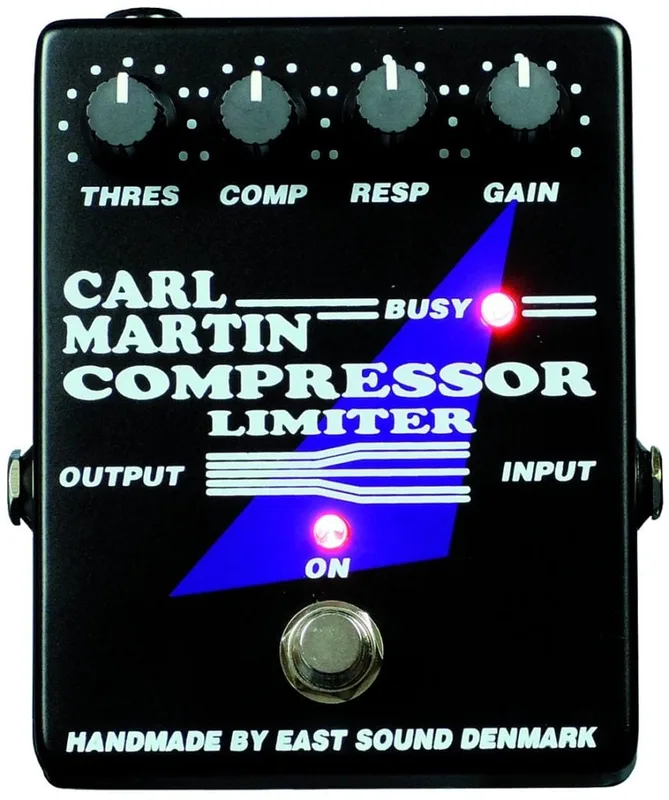
MusicPlayers.com tested the reissue between a Mesa/Boogie Lone Star amplifier, a Gibson Les Paul Standard, and a Fender Stratocaster Eric Johnson model, comparing it against the Carl Martin Compressor/Limiter and the Maxon CP9Pro + Compressor/Limiter, and concluded it provides a very desirable compression effect2.
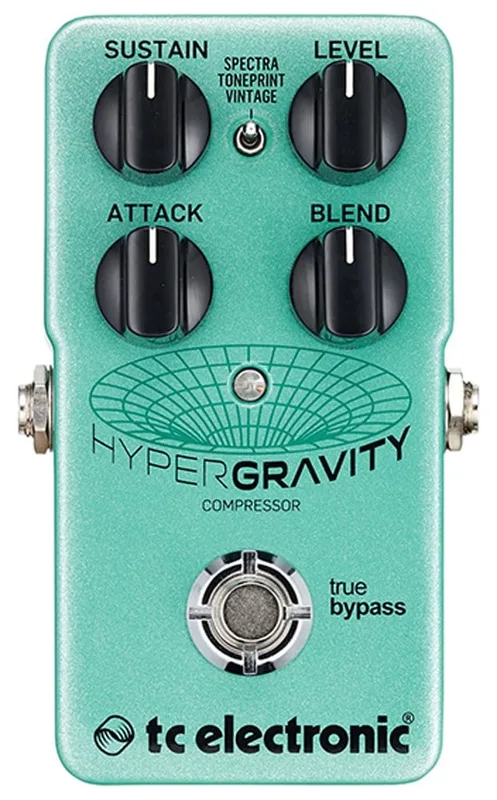
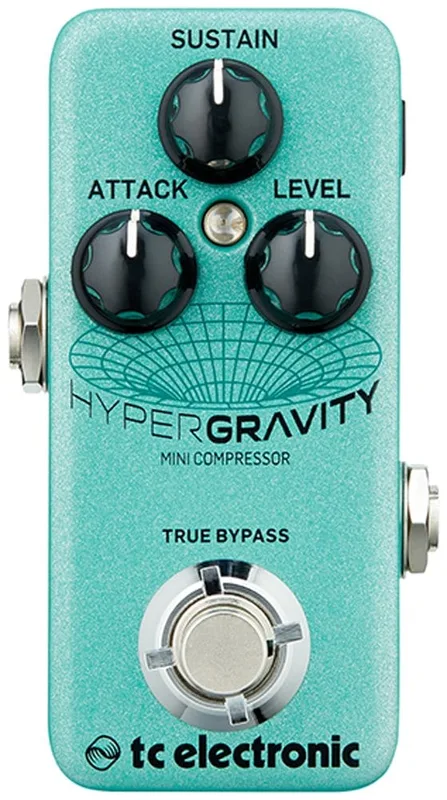
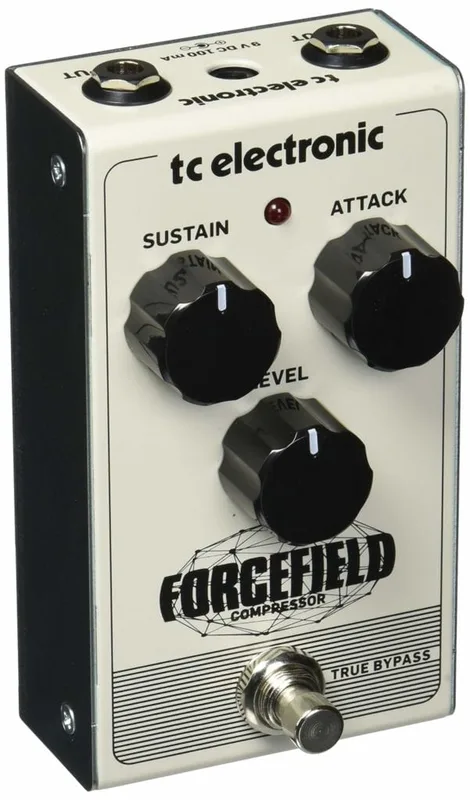
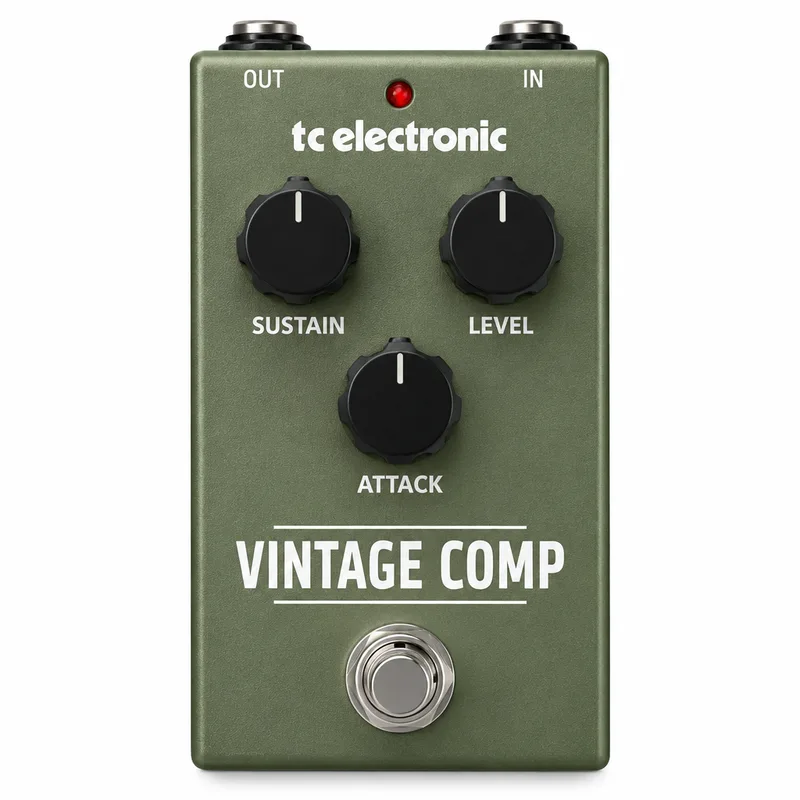
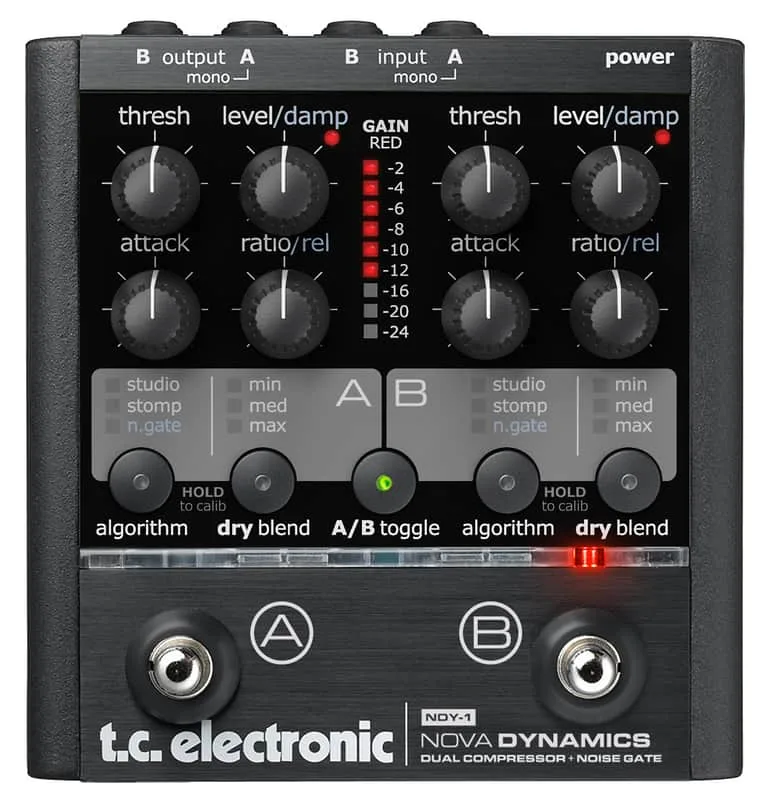
For a current TC Electronic compressor, the company's modern lineup includes the TC Electronic HyperGravity, the TC Electronic Hypergravity Mini, the TC Electronic Forcefield, the TC Electronic Vintage Comp and the TC Electronic Nova Dynamics.
Videos
gearwire
Aaron Thornhill
Jazz Rock Fusion & Synthesizer Music
Questions
Is the TC Electronic Sustain + Parametric EQ true bypass?
No. Ovnilab's reviewer found the footswitch is not true bypass, but reported that the bypass is quite clean, so it should not noticeably degrade your tone when the pedal is switched off.
Does the TC Electronic Sustain + Parametric EQ run on a battery?
The Classic Series reissue accepted a 9V battery supply through a hinged battery access door, alongside an external power plug. The original version's power arrangement is not documented in the same detail.
What kind of power plug does the Sustain + Parametric EQ use?
The original version takes 9V DC through a male 1/8 inch plug, not the usual Boss barrel type, so standard pedalboard power supplies will not connect without an adapter. The reissue accepted a standard cannon style power plug.
Is the TC Electronic Sustain + Parametric EQ discontinued?
Yes. Ovnilab reports the pedal was discontinued a couple of years before their reissue review, and TC Denmark confirmed it was an old design that had been discontinued. It survives only on the used market.
What does the High-Q switch do on the Classic Sustain + Parametric EQ?
It selects between two frequency curve widths for the EQ. In the out position you get a narrow curve width suited to the notch filter, and in the in position a wider curve width of frequencies is affected.
What is the compression ratio of the TC Sustain + Parametric EQ?
The ratio is fixed rather than adjustable, and Ovnilab's reviewer describes it as very high, guessing around 20:1. That puts it in heavy, squashing compressor territory rather than subtle leveling.
Sources (3)
- TC Electronic Sustain + Parametric EQ, ovnilab.com
- TC Electronic Classic Sustain + Parametric EQ, MusicPlayers.com, 2007-06-07
- TC Electronic Sustain + Parametric EQ, ovnilab.com