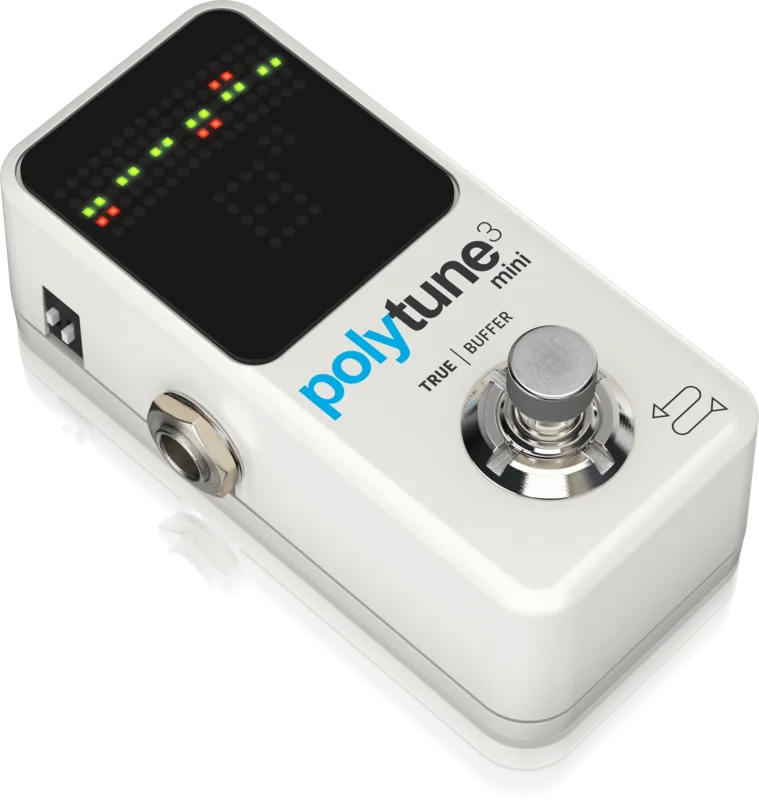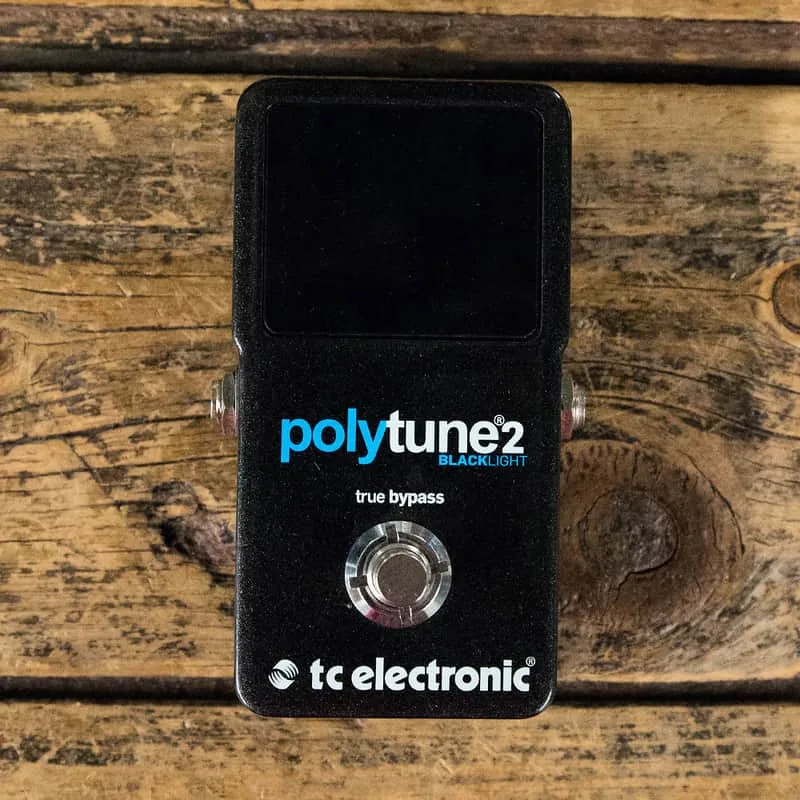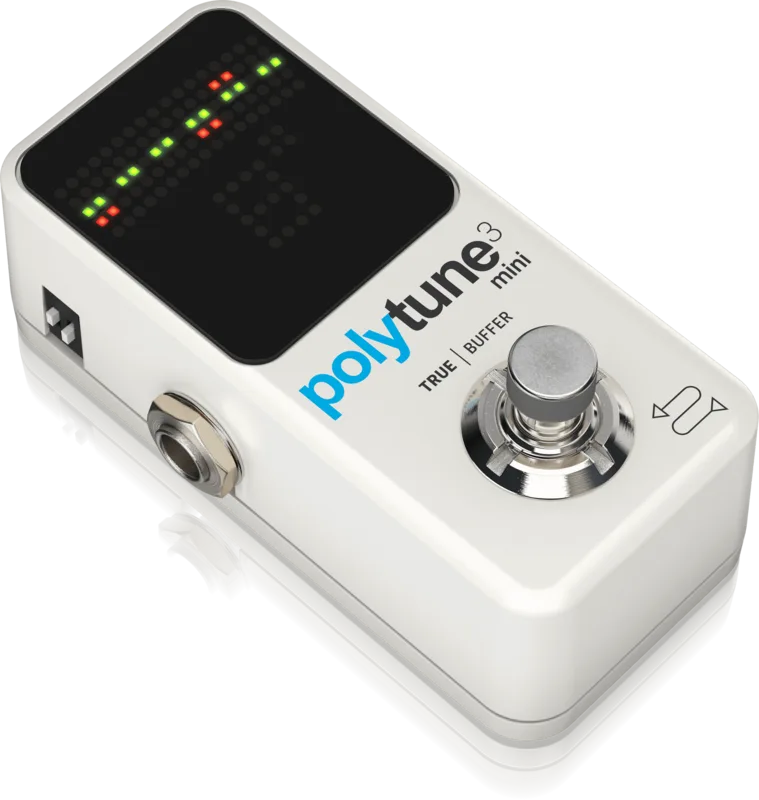


The TC Electronic PolyTune Mini is a polyphonic tuner pedal introduced at NAMM 2012, two years after TC Electronic first brought polyphonic tuning to the world with the original PolyTune1. It is, in Premier Guitar's words, "essentially a standard PolyTune model that's shrunken for the space-conscious player," built on the exact same technology as the original but at a third of the size, so it fits on any pedalboard12.
What makes it polyphonic is that you can strum all six strings at once and the pedal shows you the tuning state of every string simultaneously, instead of picking each string in turn. It measures 51mm wide by 93mm front-to-back, and MusicRadar described its look as a design that "wouldn't look out of place in the Apple Store"3.
Polyphonic tuning at a third of the size
The core idea carried over from the original PolyTune: the pedal automatically switches between chromatic and polyphonic modes depending on whether you strum all strings at once or pick each string individually1. The display uses six LED "columns," one for each string, to detect your tuning: green is in tune, above is sharp, below is flat3.
TC's guitar product manager said the company's goal with the shrink was that "we didn't want to compromise on features in any way"1. Guitar World's reviewer, Chris Gill, found that goal largely met in practice: "The bright display and Polyphonic mode let you tune up astonishingly quickly and accurately"6.
Tuning modes: polyphonic, needle and stream
Beyond polyphonic mode, the Mini carries two separate chromatic tuning modes, which Guitar World described as catering to individual preferences and needs: needle mode and stream mode7. Chromatic tuning runs at 0.5 cent accuracy2.
The Mini also shipped with the new version of the PolyTune software, which added Capo Tuning and what Premier Guitar called "a massively requested Drop-D mode"2. Drop-D support had first come to the original PolyTune in 2011 through a free software update, which TC described as meeting "the single most demanded feature"8. The reference pitch can be set to your preference and ranges from 435Hz to 445Hz7.
All of the tuning modes are accessed from a small gray button on the top right side of the pedal2.
| Mode | What it does |
|---|---|
| Polyphonic | Strum all strings at once; six LED columns show each string's tuning state13 |
| Needle (chromatic) | Traditional needle-style display for tuning one string at a time7 |
| Stream (chromatic) | Streaming display for one-string-at-a-time tuning7 |
| Drop-D | Tuning mode for dropped-D setups2 |
| Capo | Capo Tuning mode2 |
Power: 9V, no battery, no power output
The Mini requires a 9V power supply at all times, drawing 100mA, so batteries are not an option and the supply is not included253. Two conveniences of the full-size pedals were cut along with the size: the Mini has no daisy-chain power output jack, so you cannot use it to feed power to your other pedals, and it cannot be updated over USB because there is no USB socket23.
Plan for a dedicated 9V supply. The Mini has no battery compartment, no power output for other pedals, and no USB socket for software updates23.
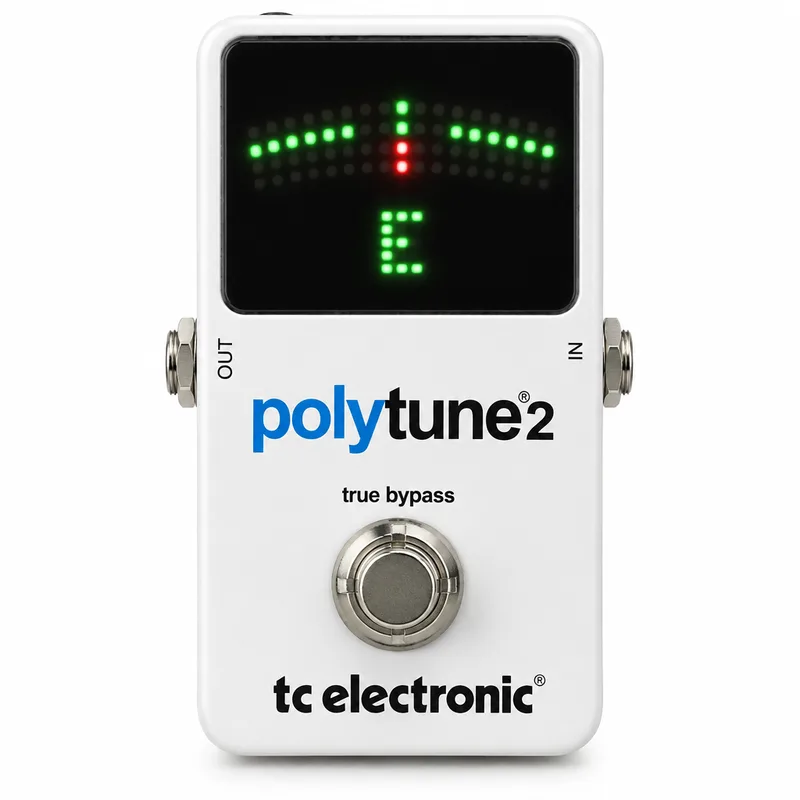
By comparison, the full-size PolyTune 2 can run on a nine-volt battery or a power adapter, and it includes a nine-volt DC output for powering other pedals910.
From the original PolyTune to the PolyTune 3 Mini
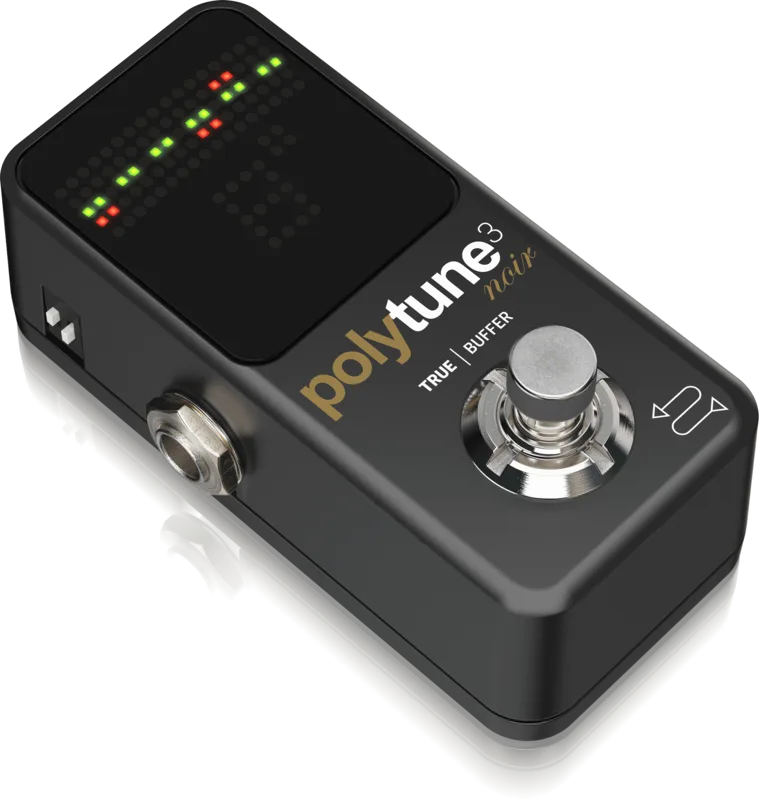
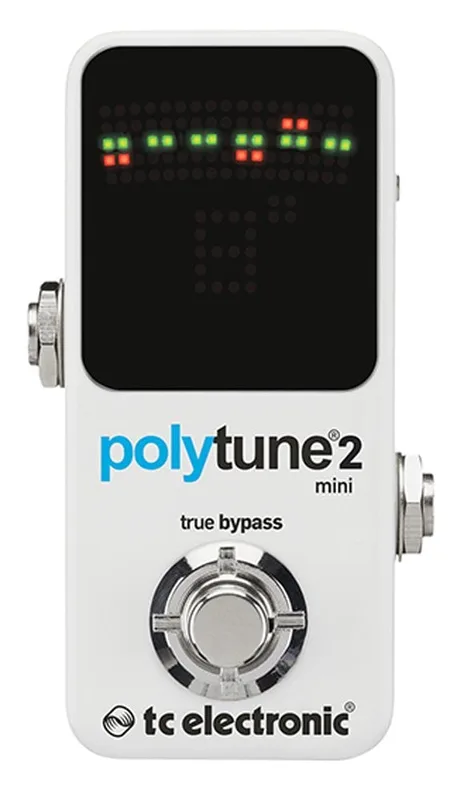
The Mini line continued after the 2012 original. A limited-edition PolyTune Noir version followed in late 2012, with the same drop-D and capo modes and true-bypass circuitry11. In 2014 TC announced the PolyTune 2 Mini, which kept the original Chromatic Tuning Mode and True Bypass12; Premier Guitar's review called it "Bright, fast, accurate, small, and inexpensive" and concluded "the PolyTune 2 Mini is a winner"13. That Pedal Show later listed the PolyTune 2 Mini among pedals in one of its videos, noting it is no longer made.
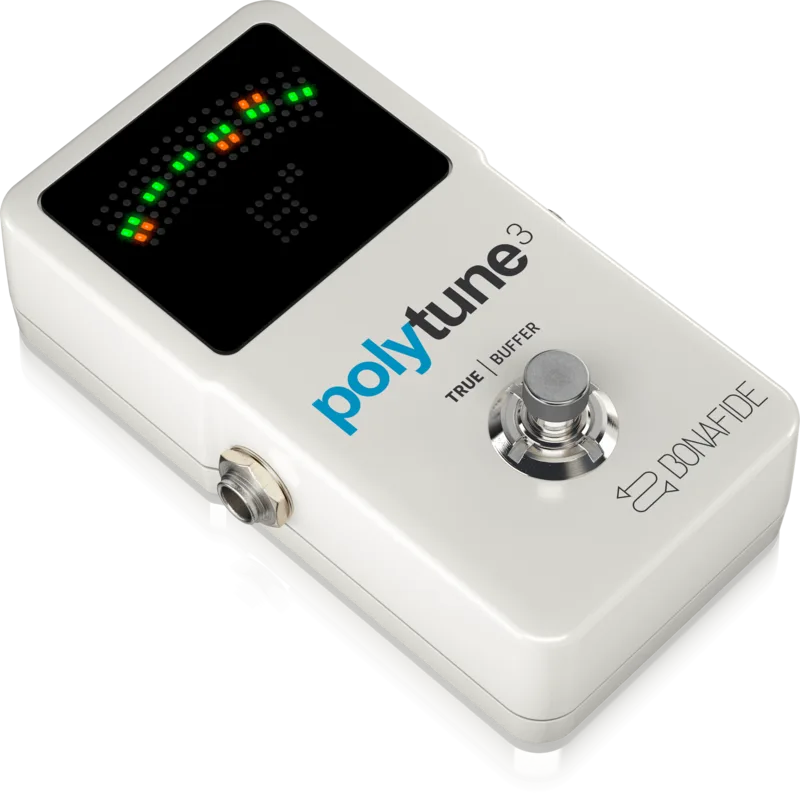
In April 2019 TC announced the PolyTune 3 Mini, taking cues, as Guitar World put it, from the major-league success of the previous PolyTune Mini1415. It shares the feature set of the larger PolyTune 3, including polyphonic, chromatic and strobe modes, a built-in switchable "studio-grade" buffer, and two small dipswitches on the side used to toggle between True or Buffered Bypass and a new always-on mode1416. Its launch price was listed as TBA at the time of the announcement17.
What reviewers said
MusicRadar's reviewer found the Mini "jumps seamlessly between the two modes" of polyphonic and chromatic tuning, and despite the lack of a daisy-chain power output and USB socket, concluded "it's still the cutest, best value tuner we can think of for the price"3. Premier Guitar noted the trade-offs of the small format, the removed power jack and the mandatory power supply, but highlighted the retained feature set, including chromatic tuning with 0.5 cent accuracy and the Drop-D and Capo modes2. Guitar World's Chris Gill summed up the appeal for board builders: the Mini puts "the PolyTune pedal's features in a box that's about half the size of the already compact original"6.
Videos
Guitar World
TC Electronic
sonicstate
Questions
Does the PolyTune Mini take a battery?
No. The Mini requires a 9V power supply at all times and has no battery option, unlike the full-size PolyTune, which can run on a 9V battery. The power supply is not included with the pedal.
Can the PolyTune Mini power other pedals?
No. The daisy-chain power output jack found on some larger tuners was removed on the Mini, so it cannot feed power to other pedals. The full-size PolyTune 2 does have a nine-volt DC output for powering other pedals.
Is the PolyTune Mini true bypass?
Yes. TC Electronic specified True Bypass for zero tone coloration, so the signal passes through unaffected when the tuner is disengaged. Later Mini versions, such as the PolyTune 3 Mini, offer switchable true or buffered bypass.
Does the PolyTune Mini have a Drop-D mode?
Yes. The Mini shipped with the updated PolyTune software that added Capo Tuning and a Drop-D mode, features TC had earlier delivered to the original PolyTune through a free software update.
Can you change the reference pitch on the PolyTune Mini?
Yes. The reference pitch can be set to your preference and ranges from 435Hz to 445Hz, so you can tune slightly above or below the standard 440Hz when a gig or a recording calls for it.
Sources (17)
- NAMM 2012: TC Electronic introduces PolyTune Mini, MusicRadar, 2012-01-19
- TC Electronic PolyTune Mini Tuner Review, Premier Guitar, 2012-01-25
- TC Electronic PolyTune Mini review, MusicRadar, 2012-02-02
- TC Electronic Announces the Polytune Mini, No Treble, 2012-01-26
- Walrus Audio’s Canvas Tuner is the tuner you want, Guitar.com, 2024-01-08
- Review: TC Electronic PolyTune Mini Tuner, Guitar World, 2012-04-16
- NAMM 2012: TC Electronic Introduces PolyTune Mini Tuner, Guitar World, 2012-01-20
- Musikmesse 2011: TC Electronic Polytune adds drop-D tuning, MusicRadar, 2011-04-04
- TC Electronic Announces PolyTune 2 Pedal, Guitar World, 2013-08-14
- TC Electronic PolyTune 2 Review, Premier Guitar, 2013-10-06
- TC Electronic to Offer “Noir” Version of PolyTune Mini, Vintage Guitar magazine, 2012-10-04
- TC Electronic announces PolyTune 2 Mini and PolyTune 2 Noir, Guitar Interactive Magazine, 2014-09-02
- Quick Hit: TC Electronic PolyTune 2 Mini Review, Premier Guitar, 2014-11-30
- TC Electronic unveils PolyTune 3 Mini & Noir, MusicRadar, 2019-04-17
- TC Electronic PolyTune 3 Mini review, Guitar World, 2021-12-14
- TC Electronic PolyTune 3 Mini review, MusicRadar, 2022-01-06
- TC Electronic adds Polytune 3 Mini and 3 Noir to its tuner range, Guitar.com, 2019-05-01