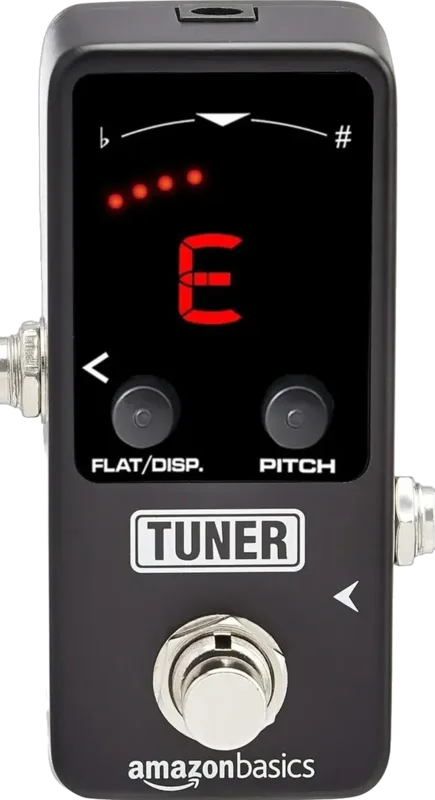
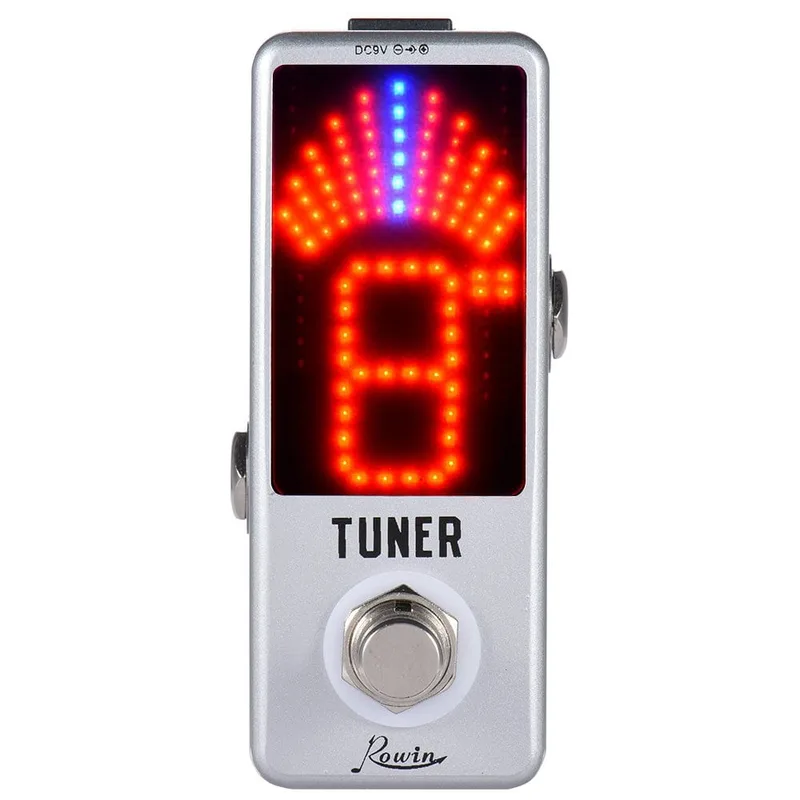
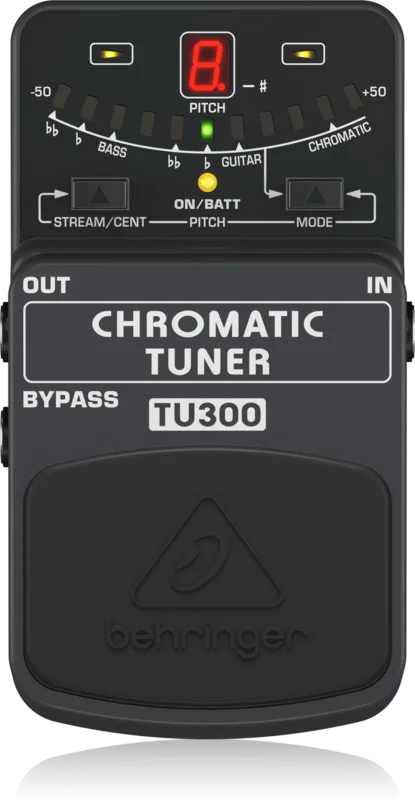
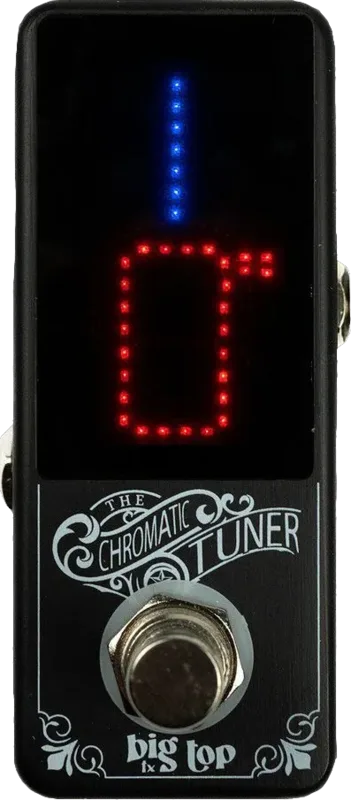
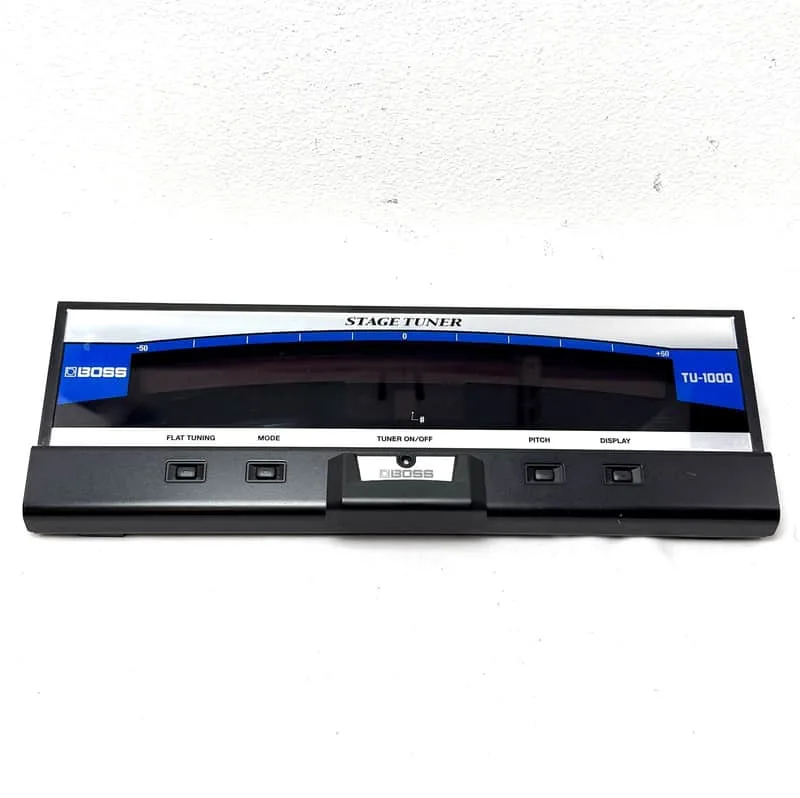
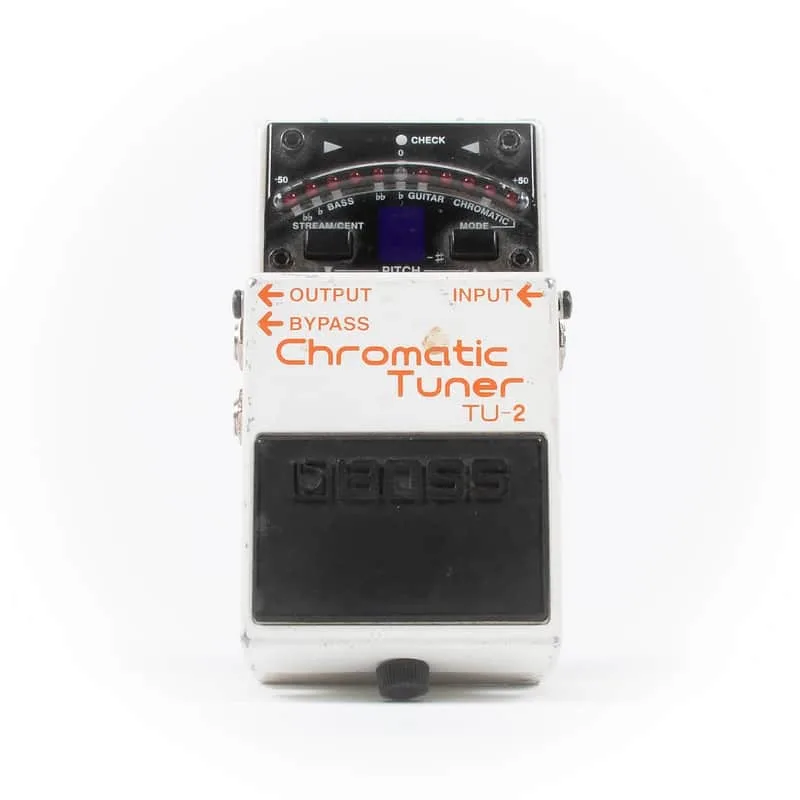
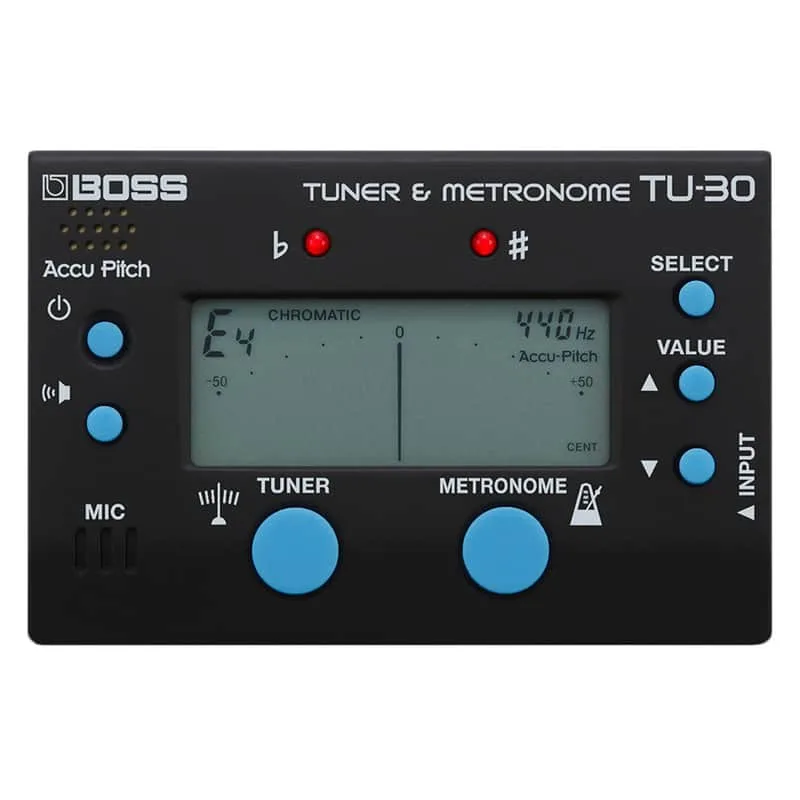
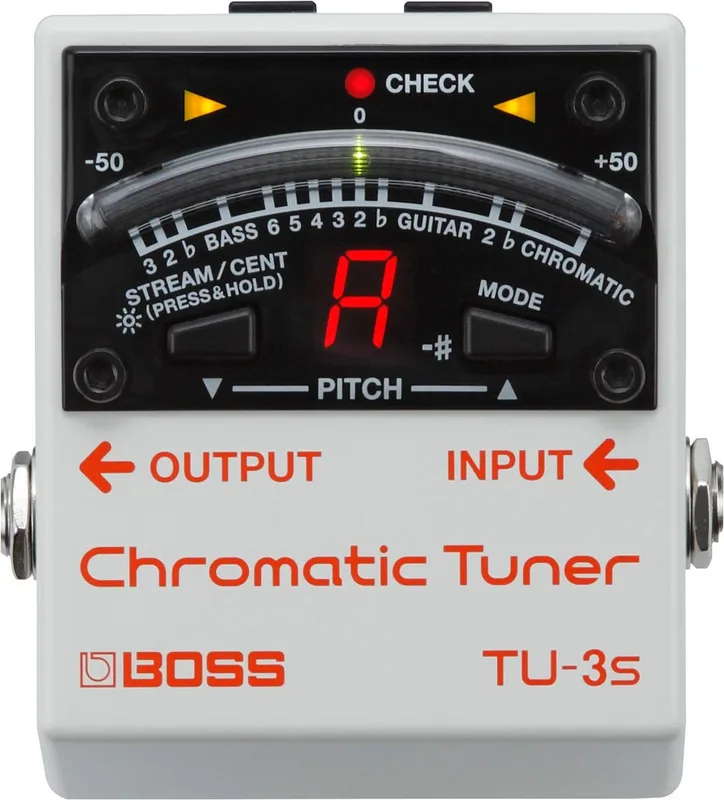
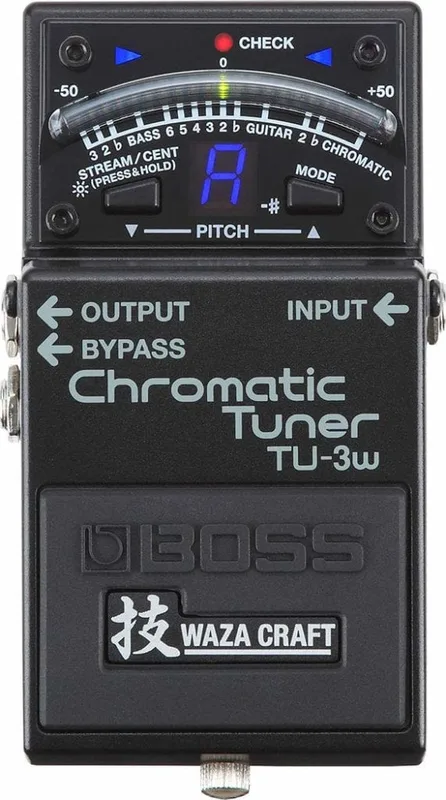
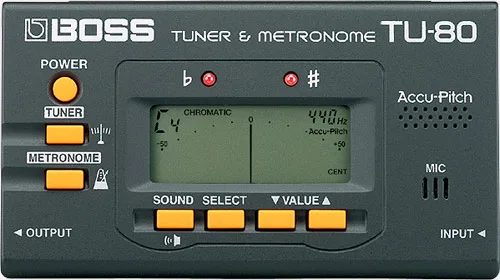
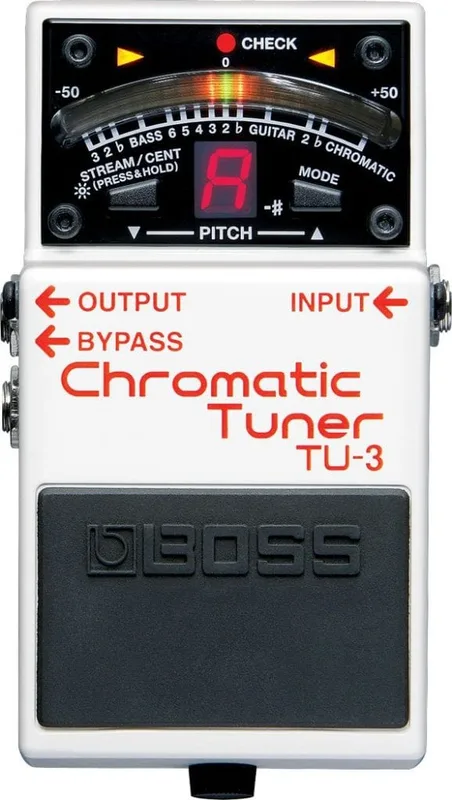
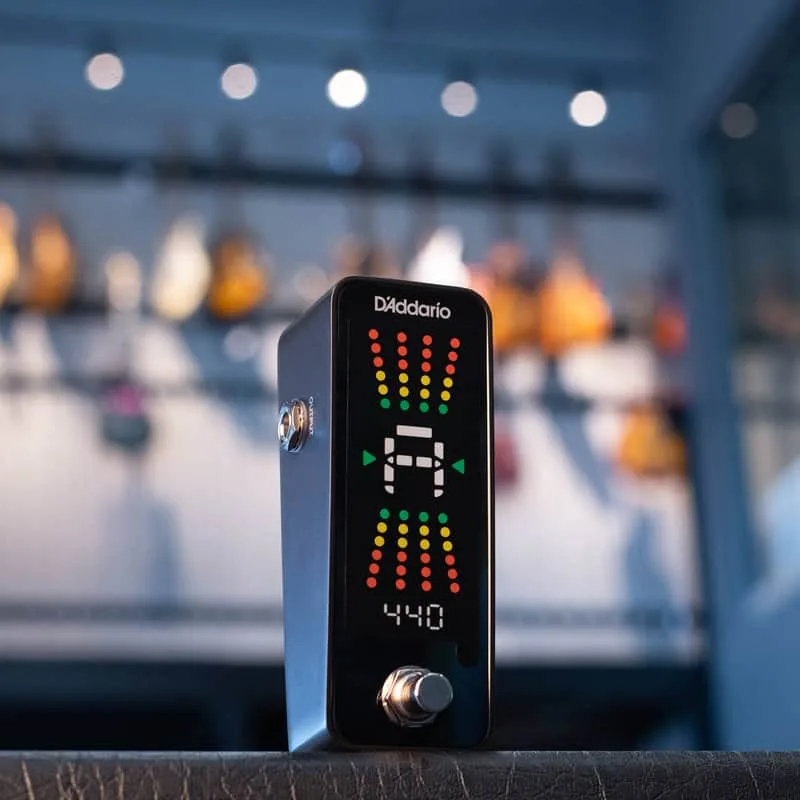
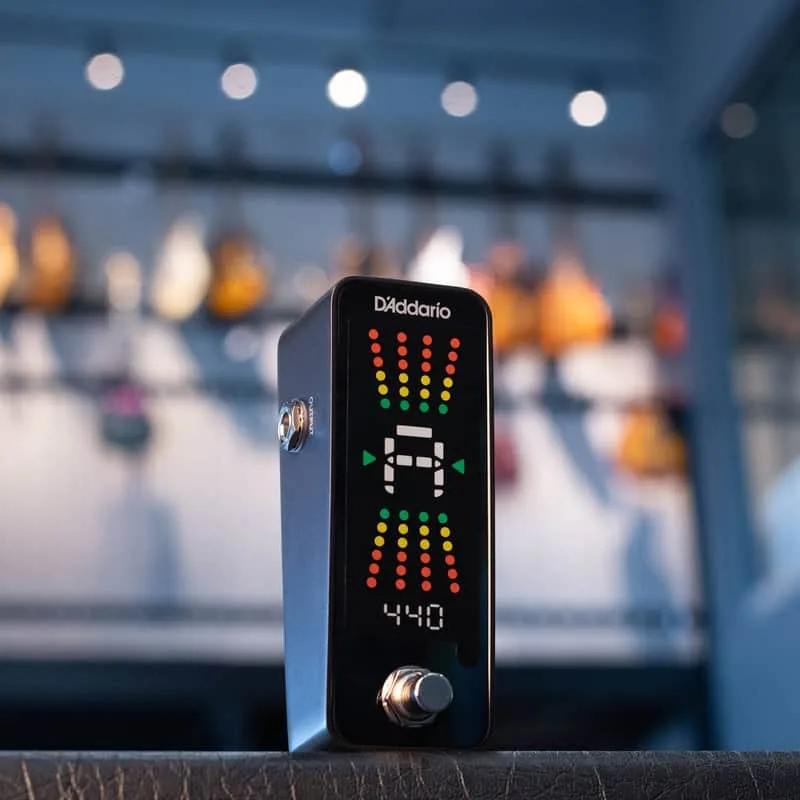
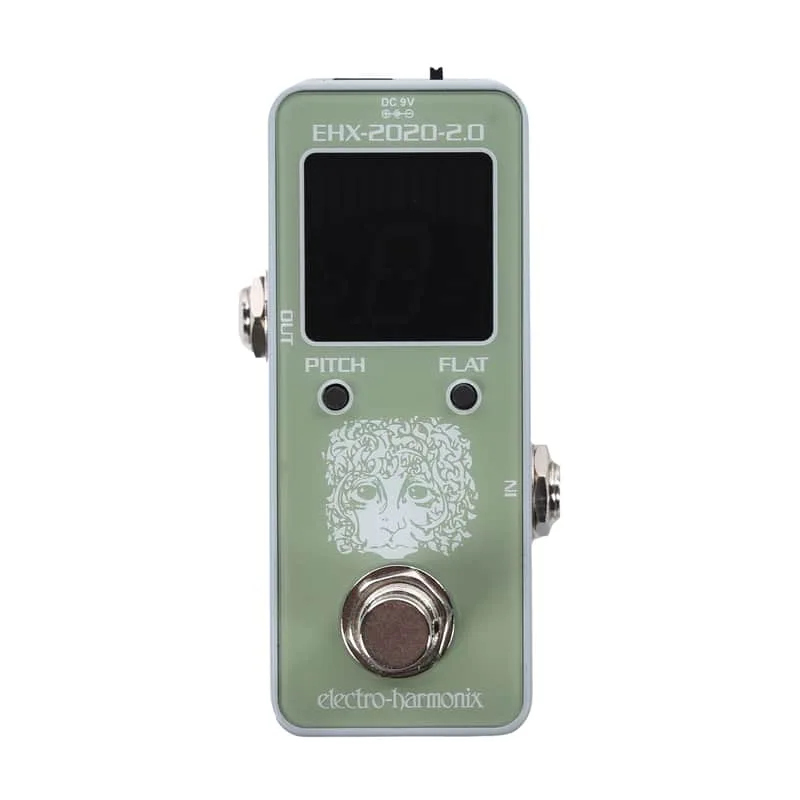
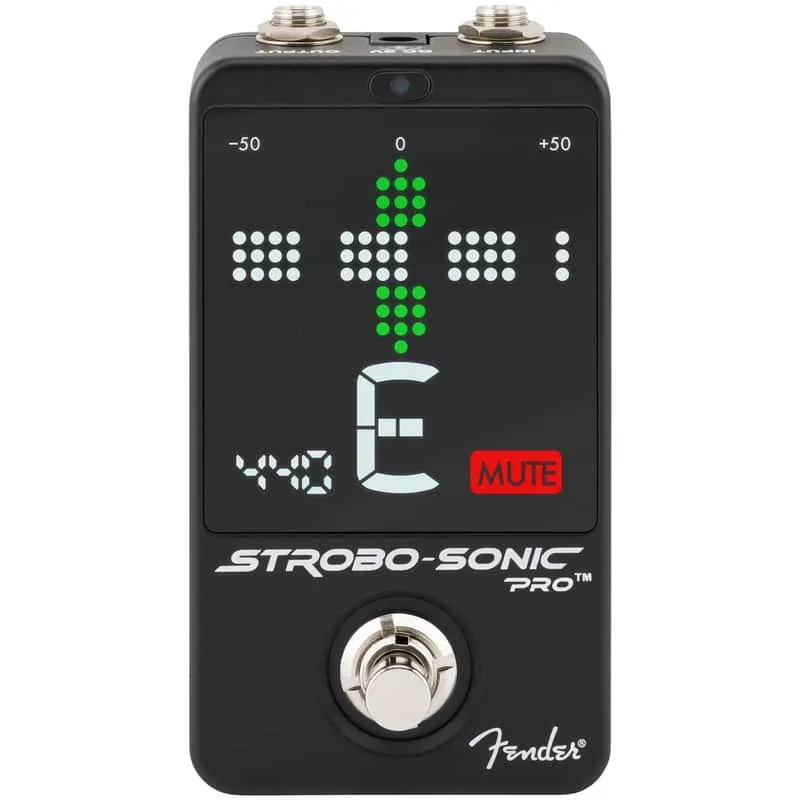
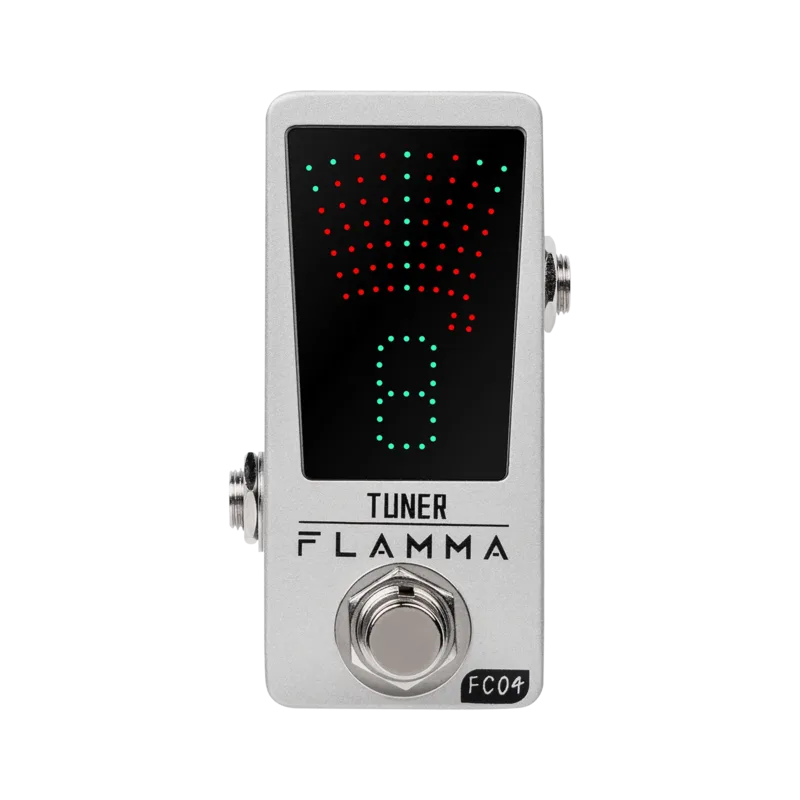
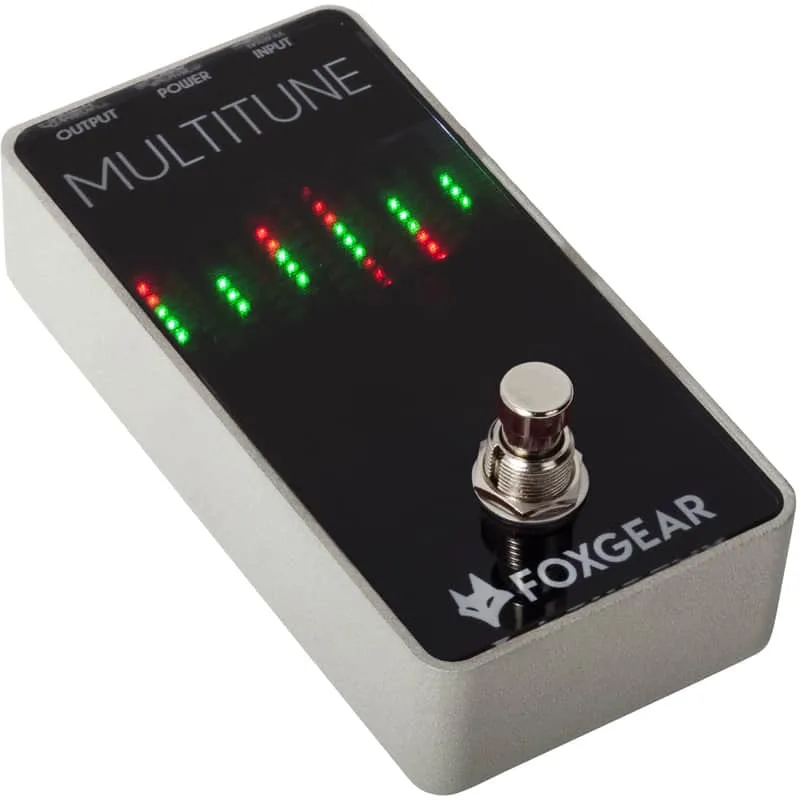
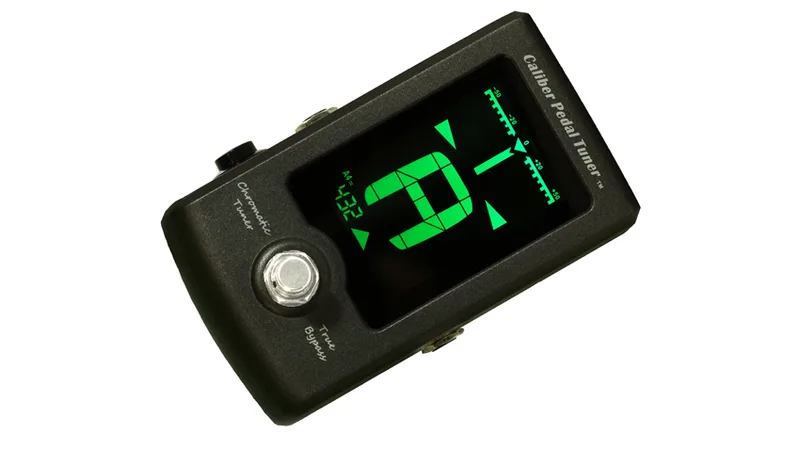
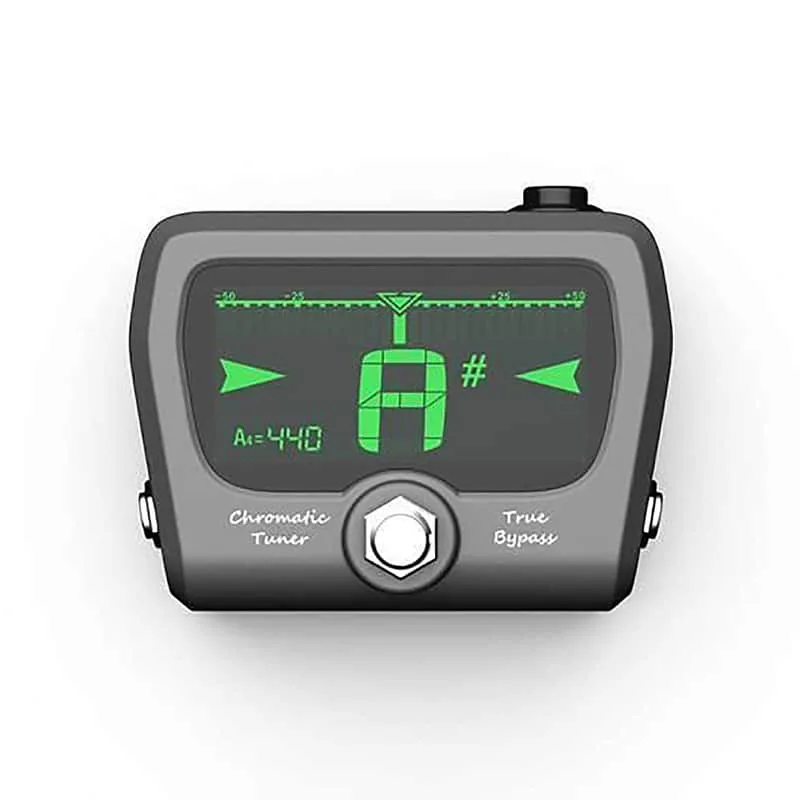
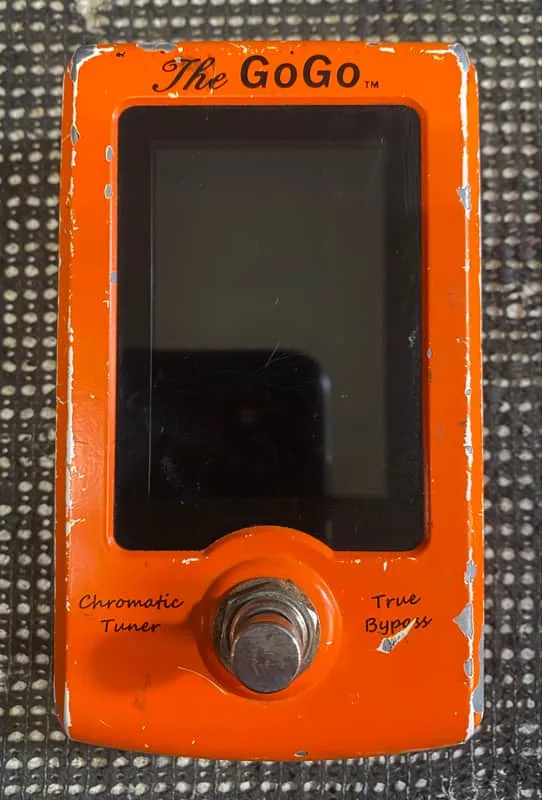


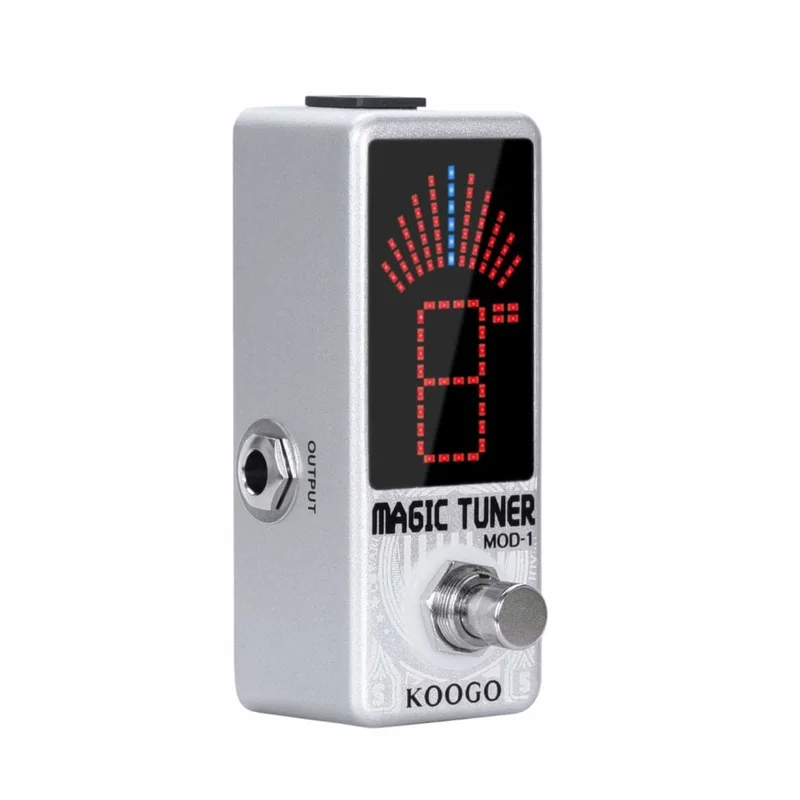
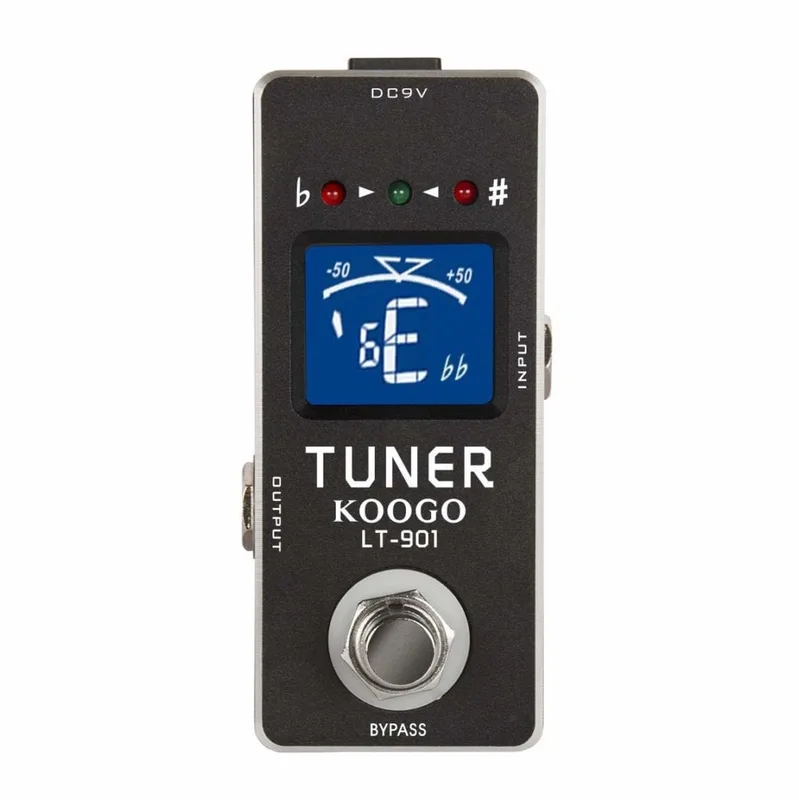
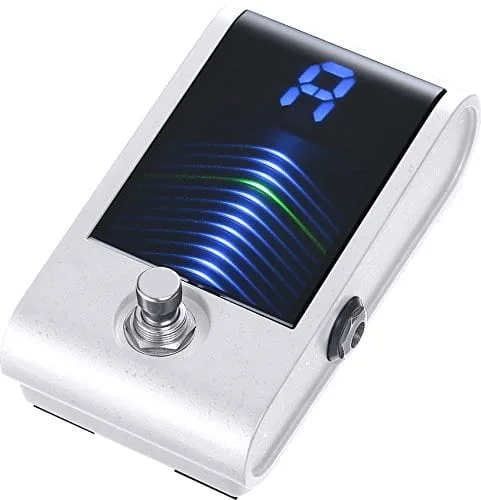
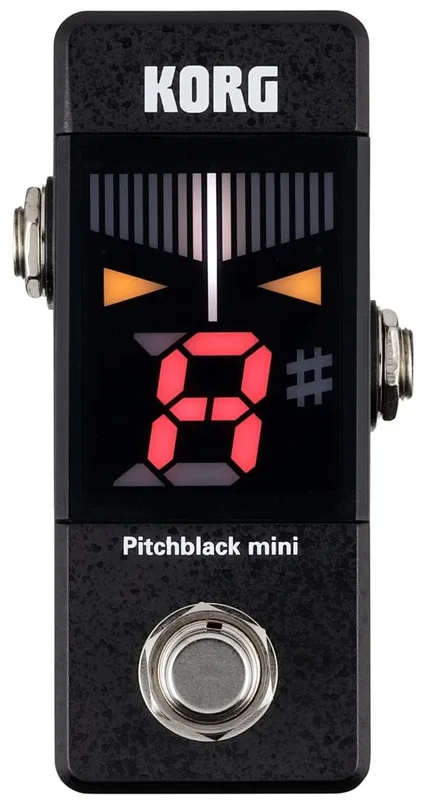
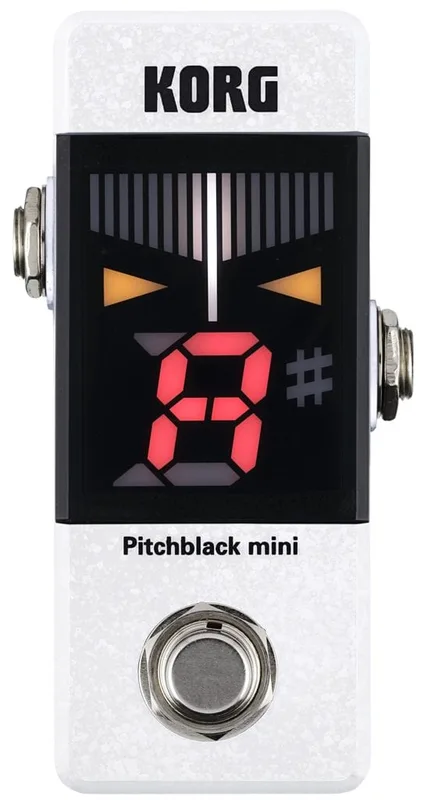
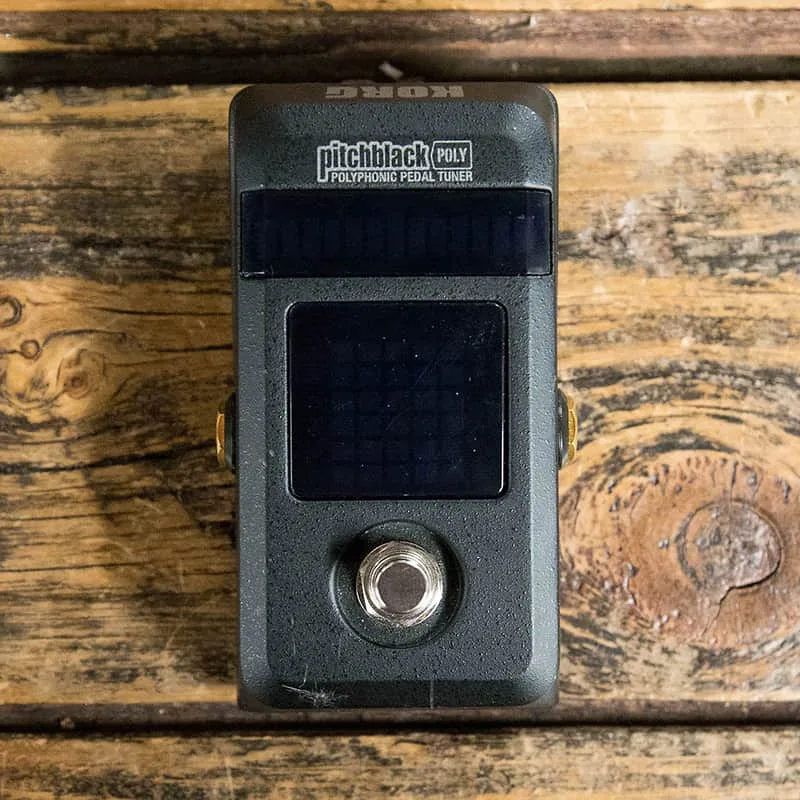
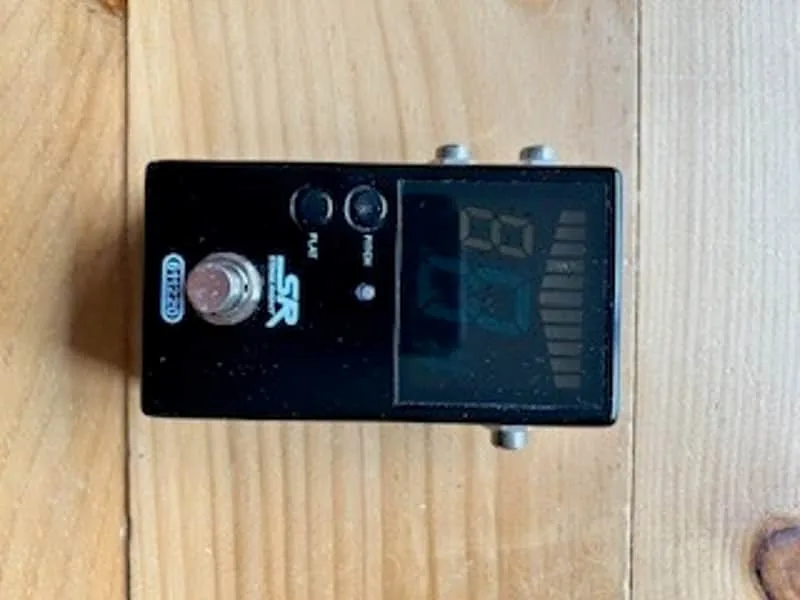
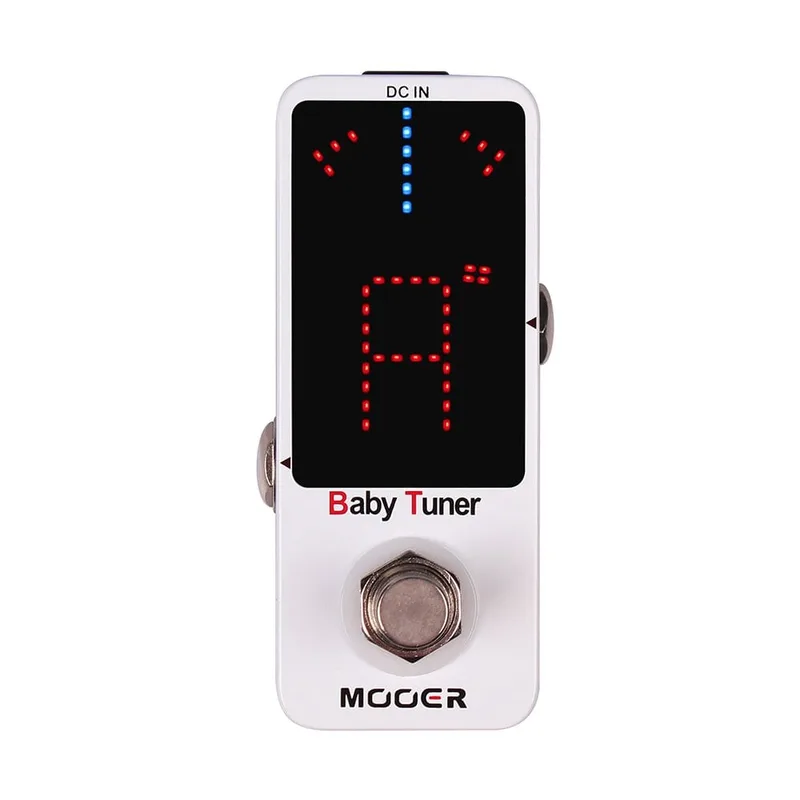
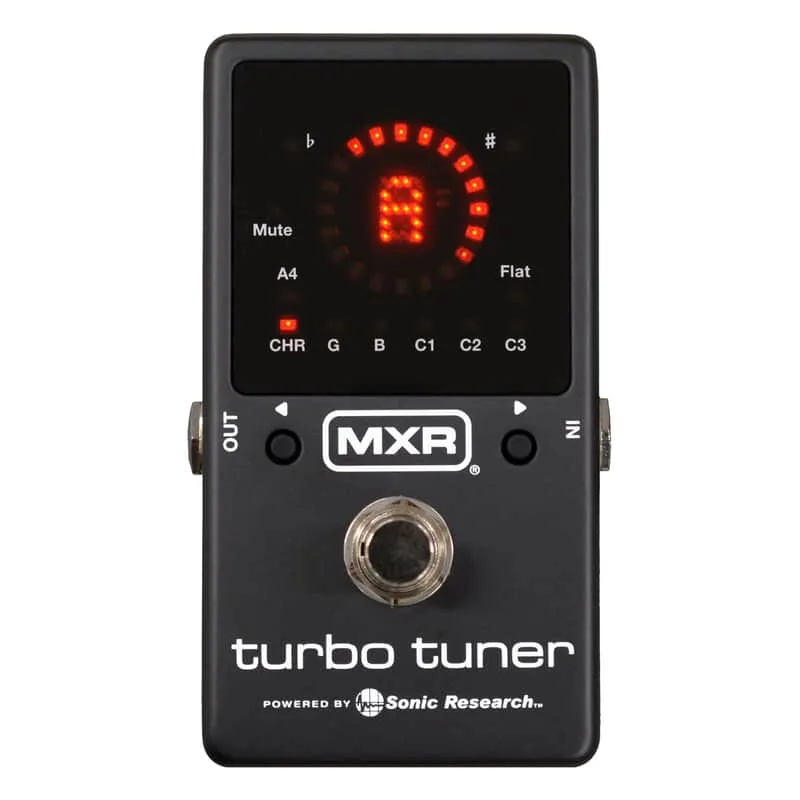
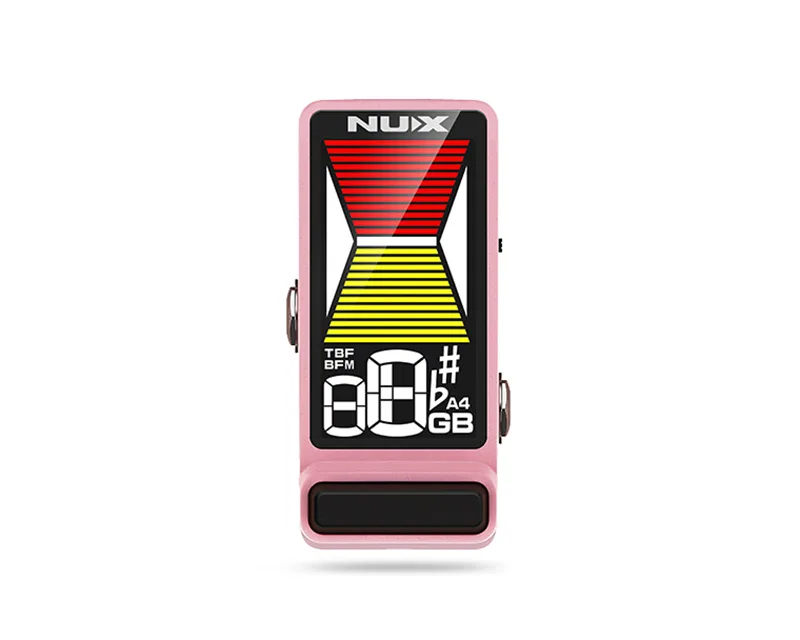
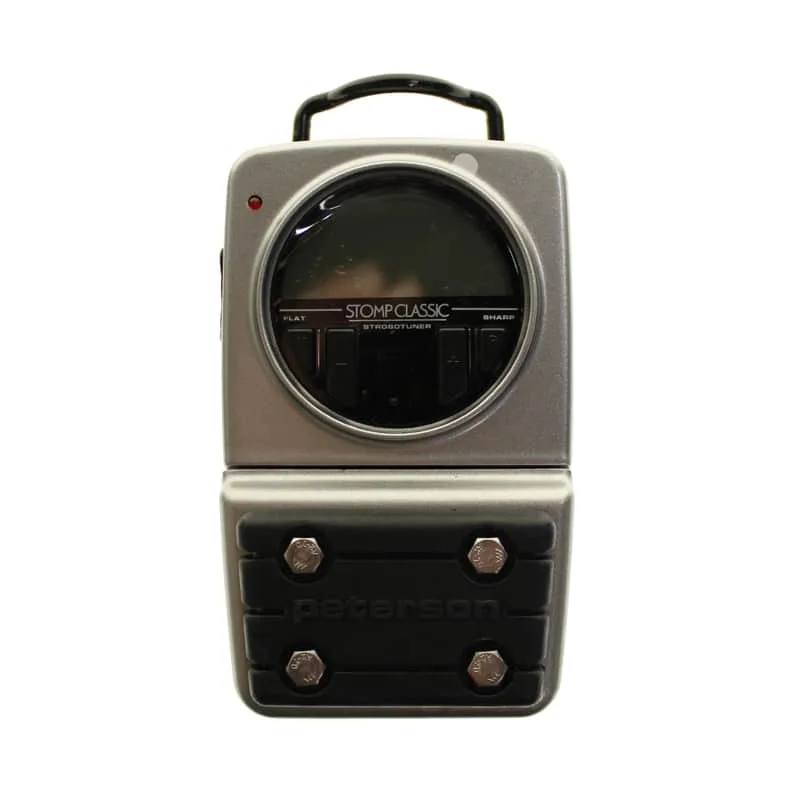
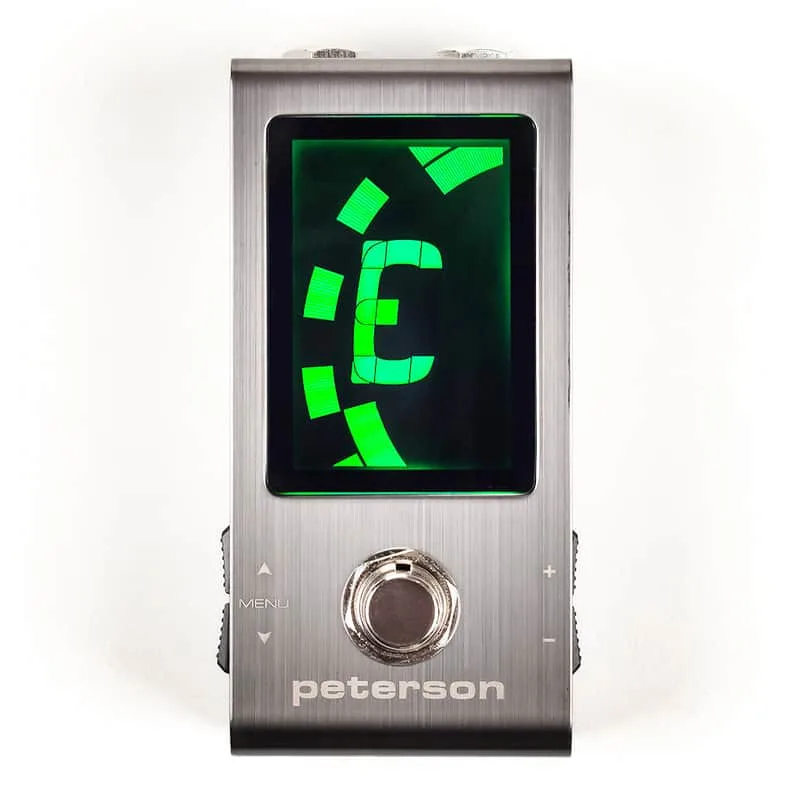
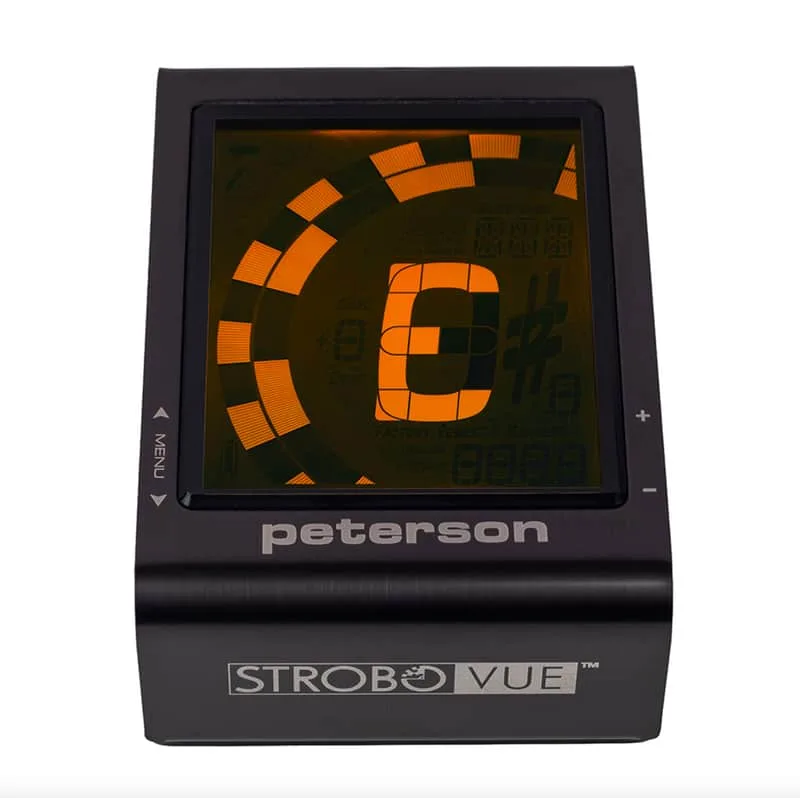
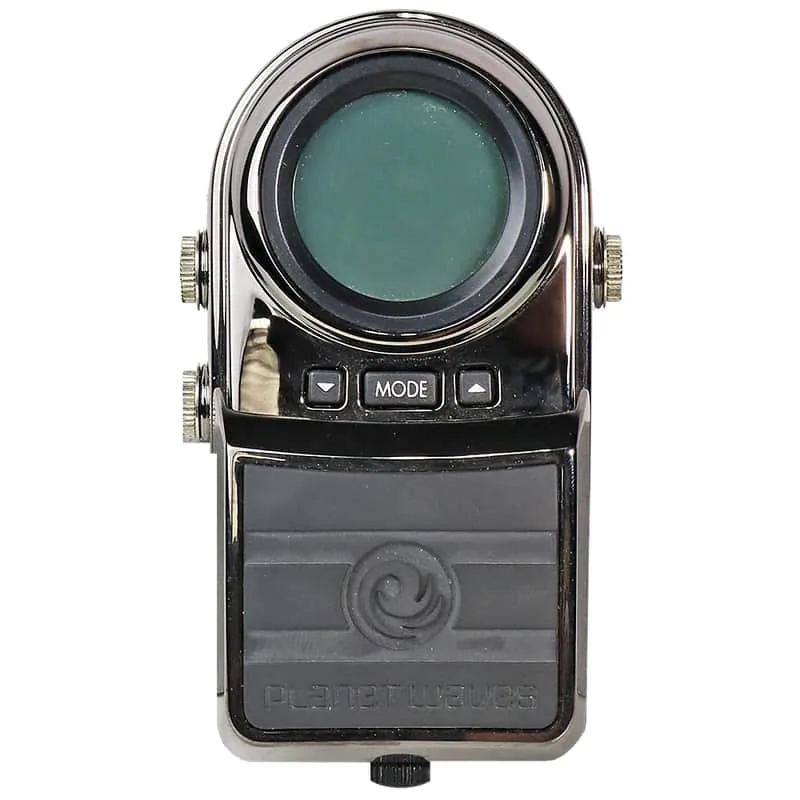
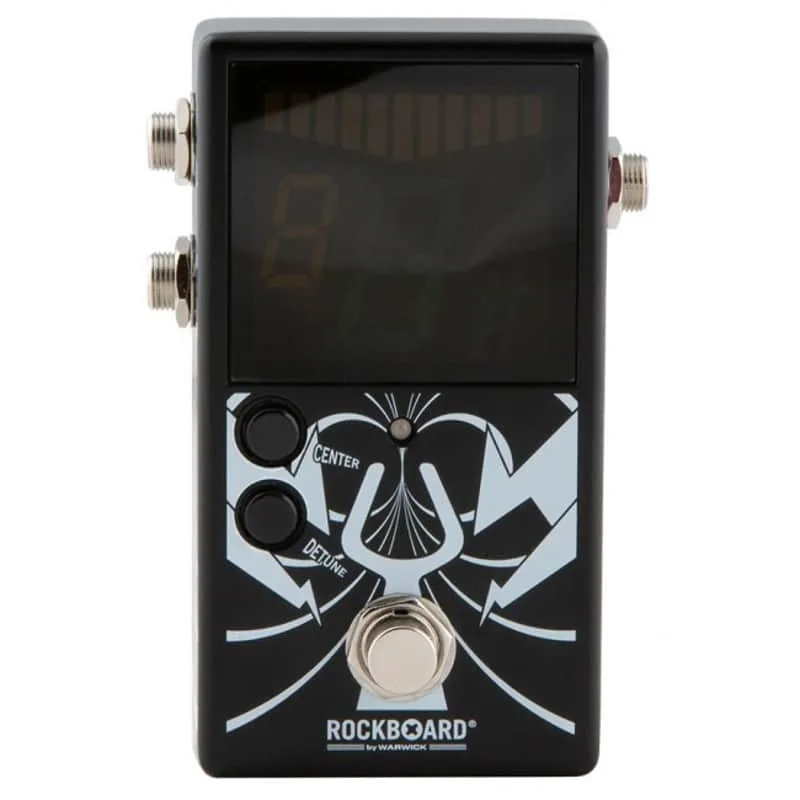
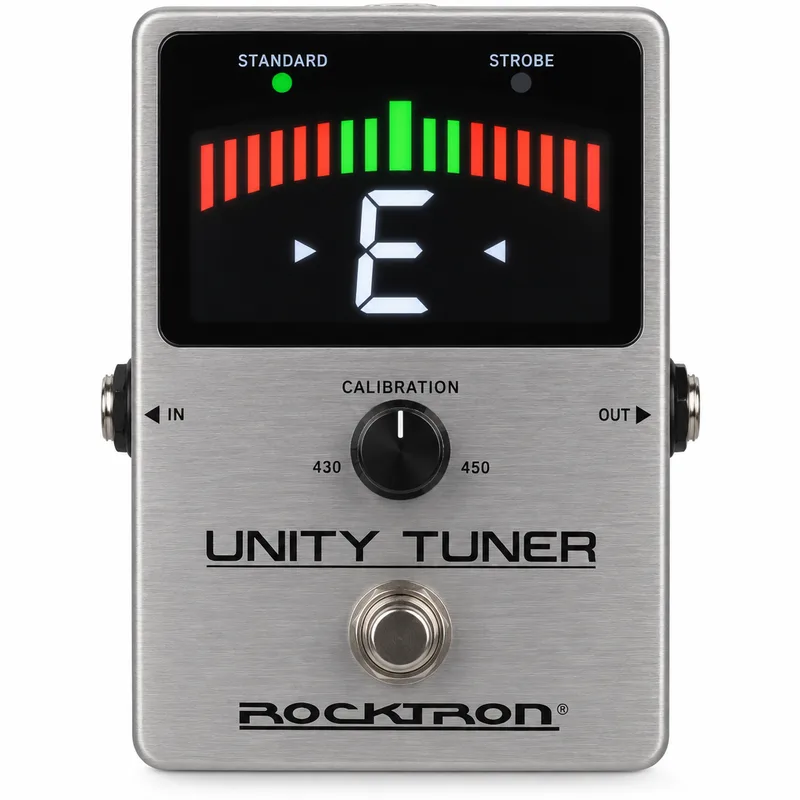
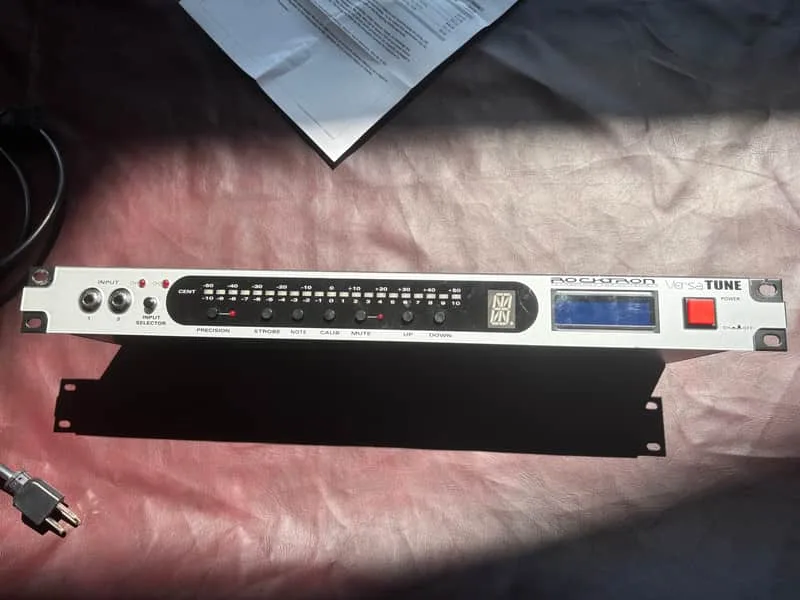
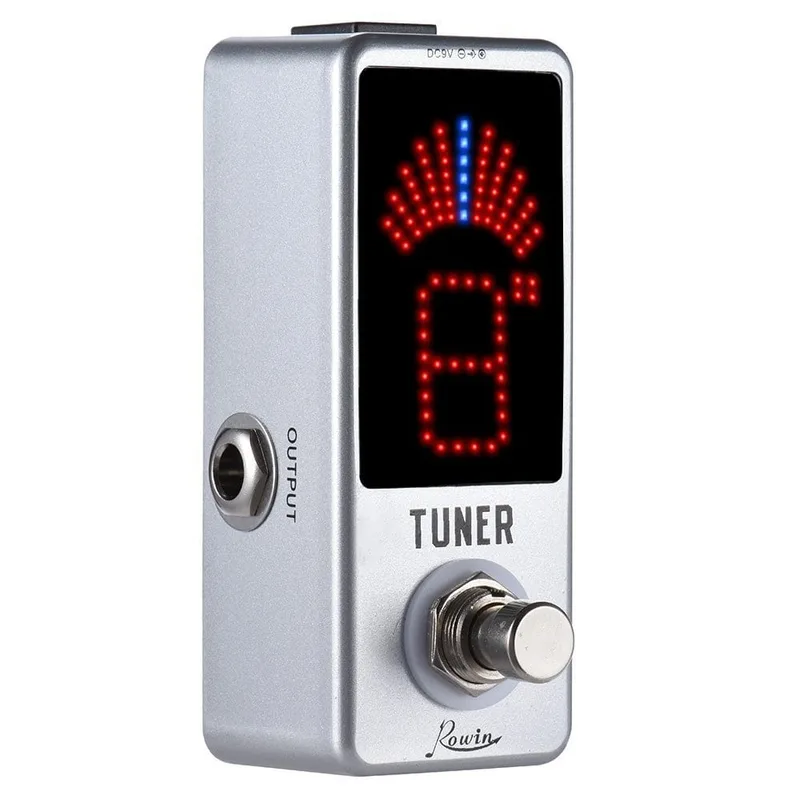
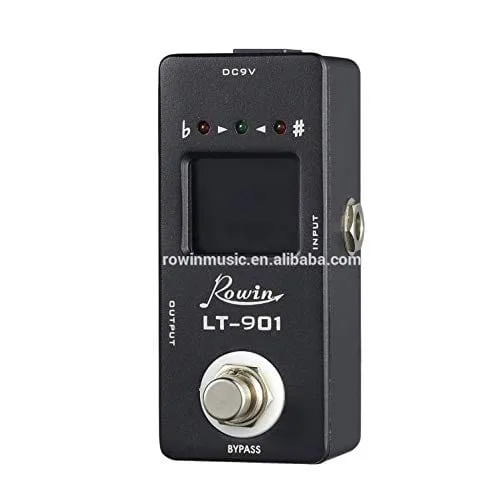
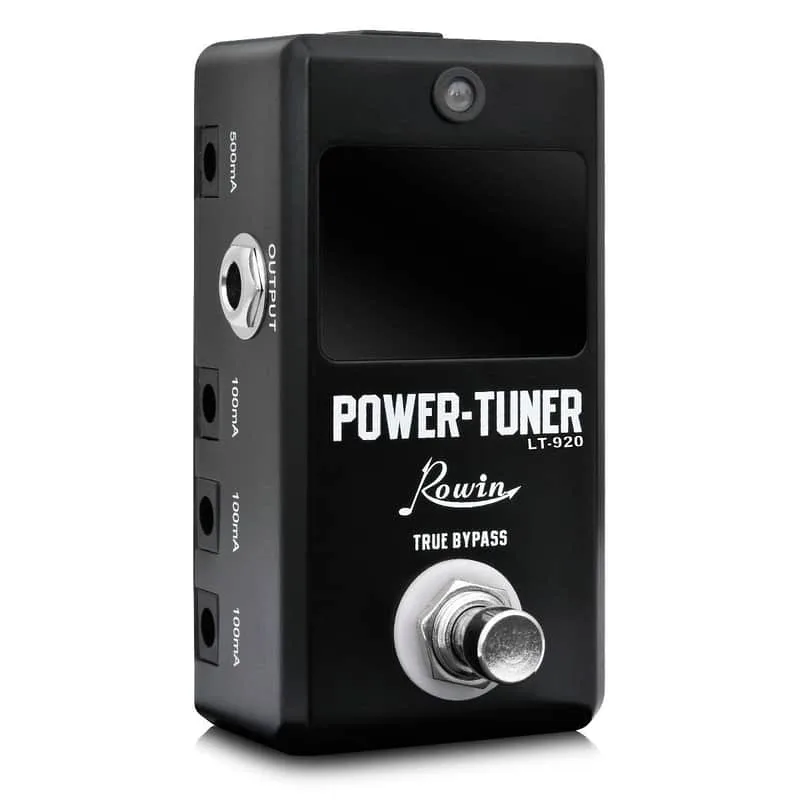
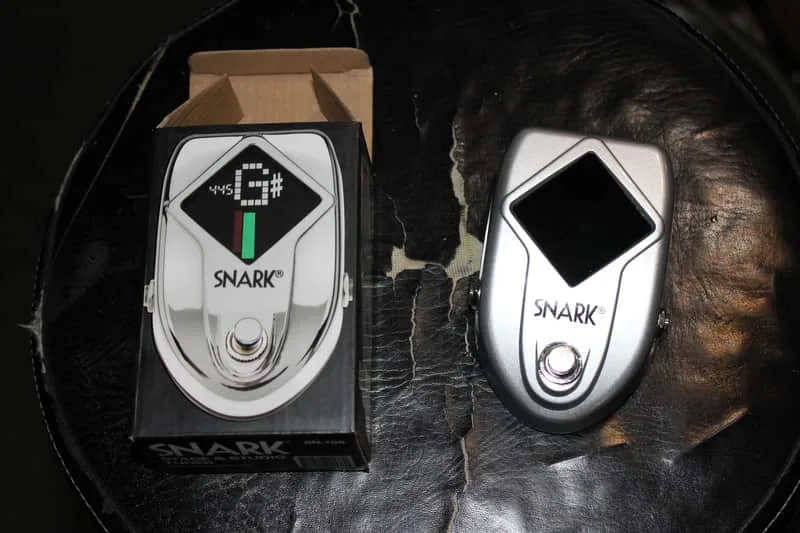

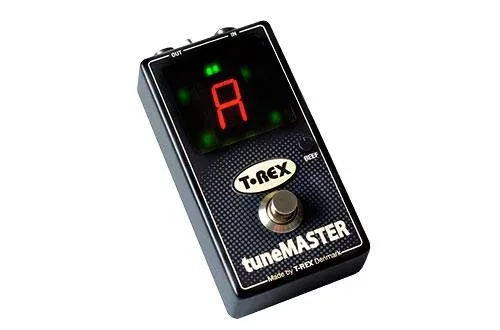
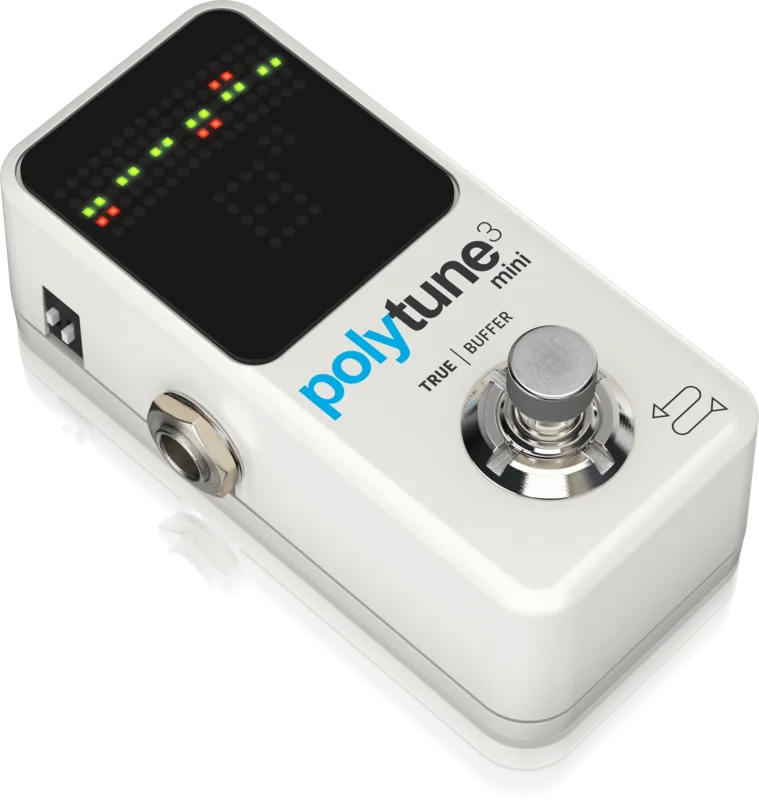
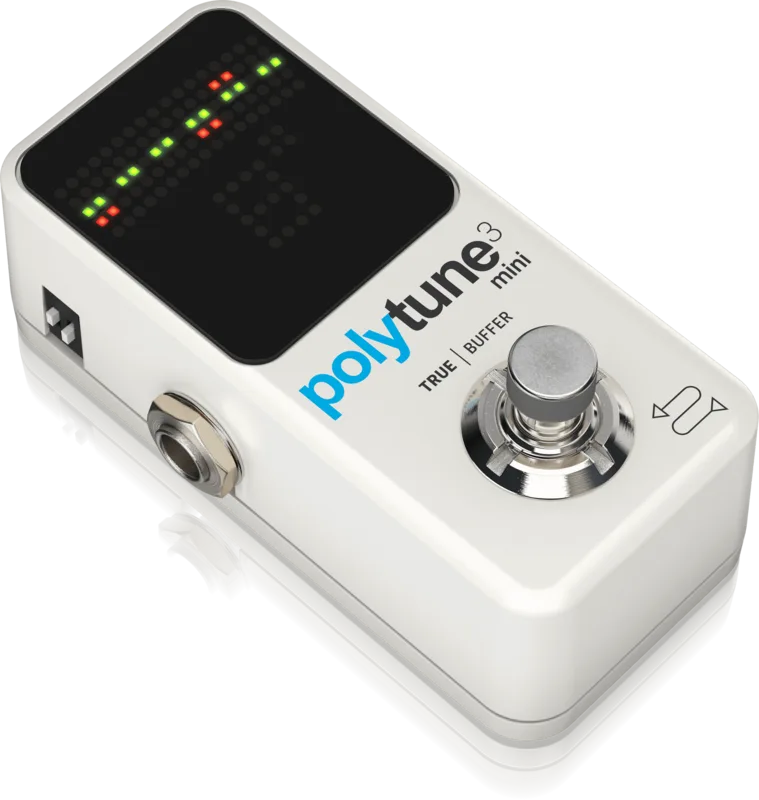
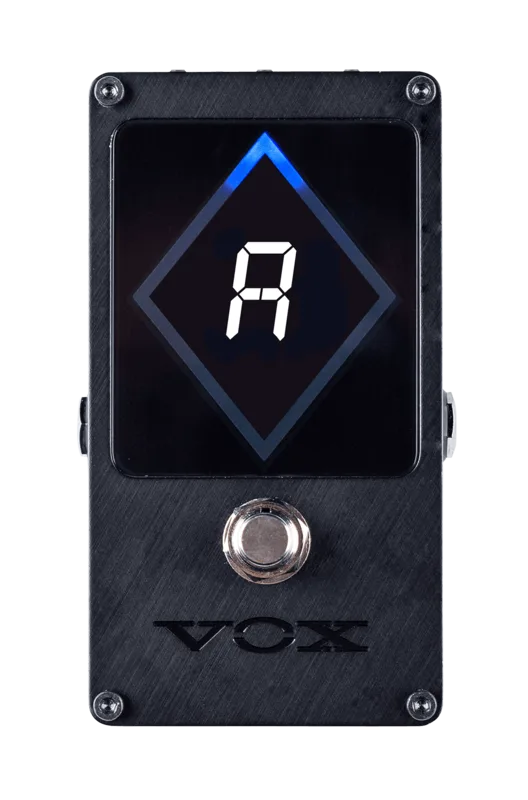
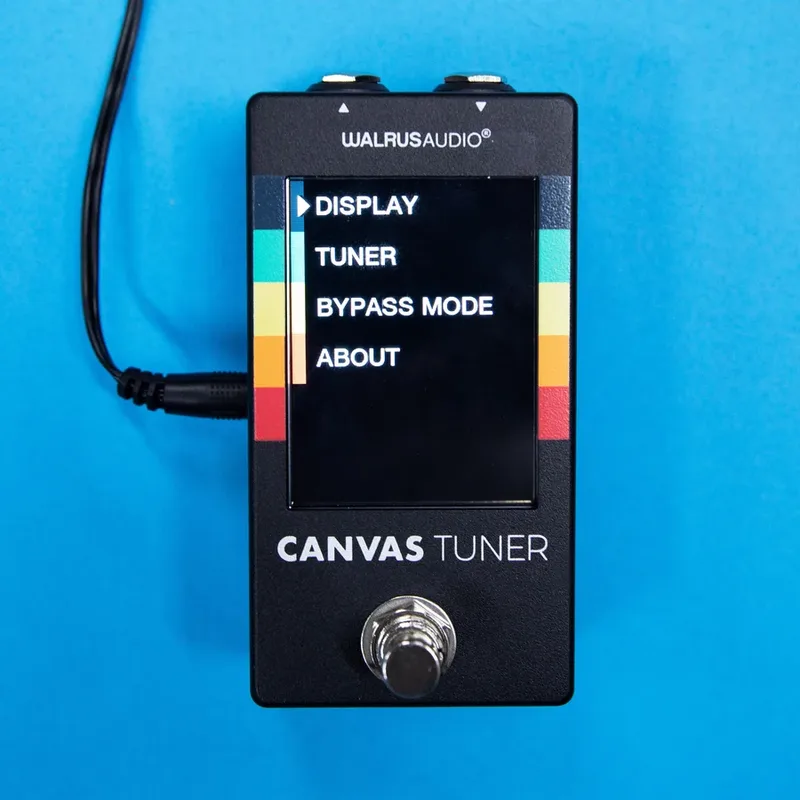
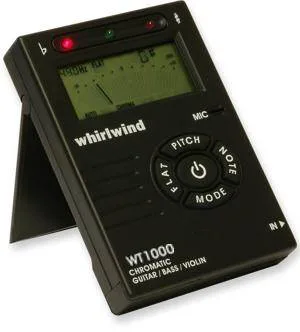
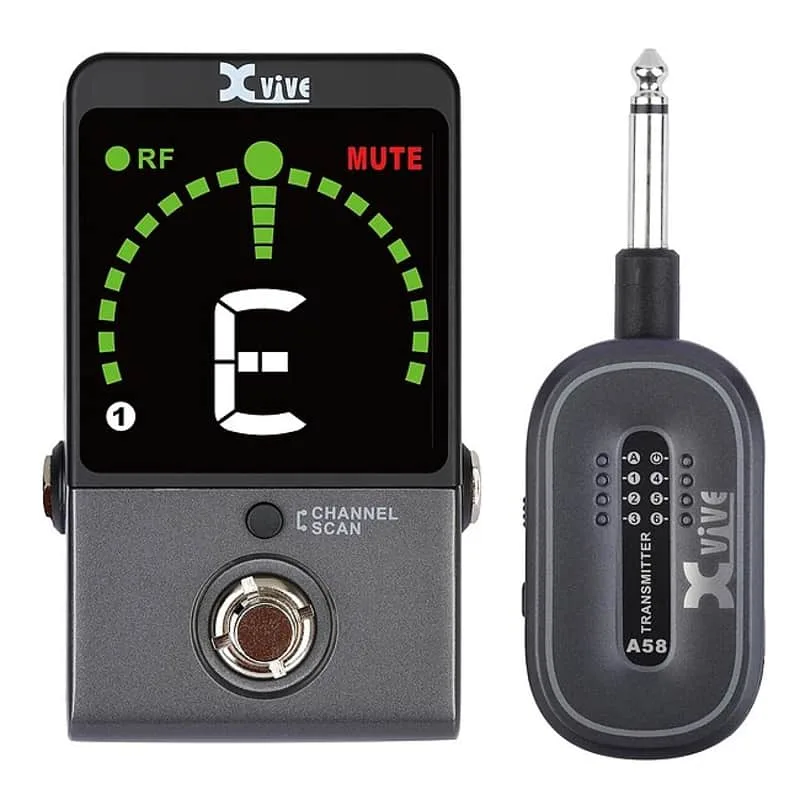
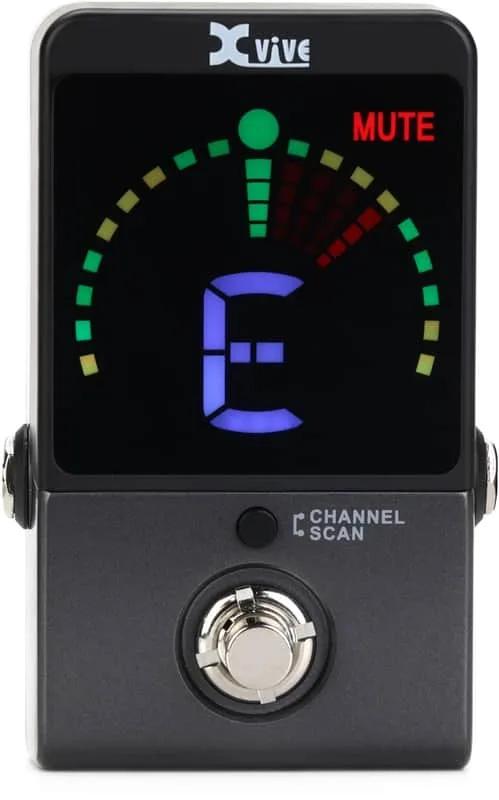
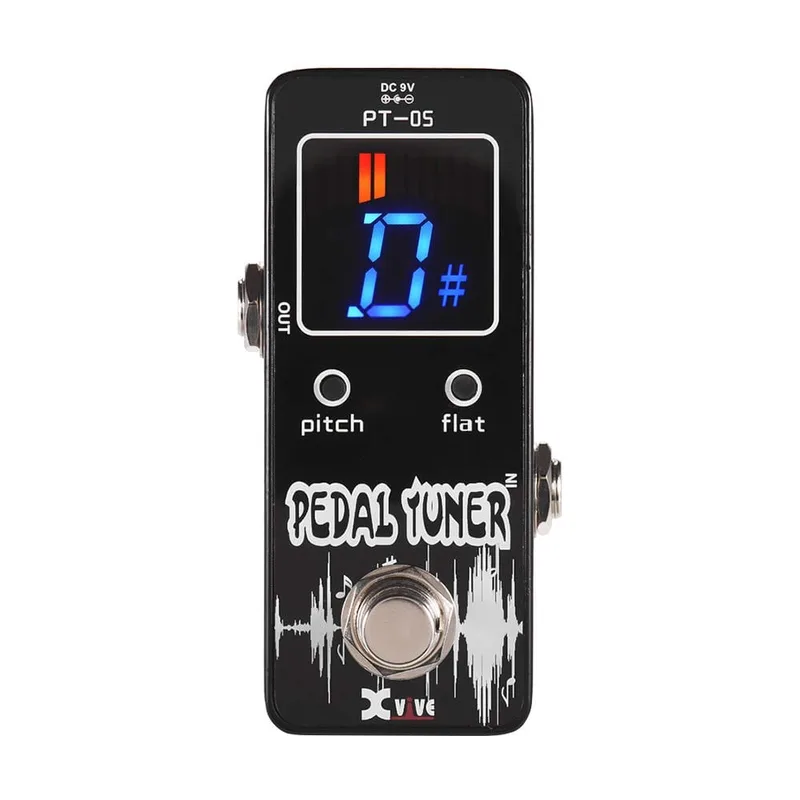
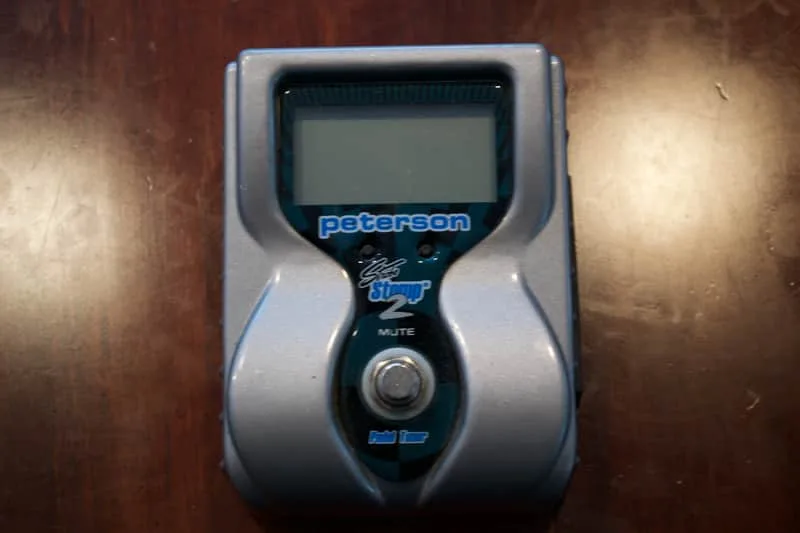
A tuner pedal is a floor unit that reads the pitch of each string and shows you whether it is sharp or flat, so you can get a guitar or bass in tune without unplugging or clipping anything onto the headstock. It sits on the pedalboard like any other stompbox, with an input, an output, a footswitch and a display. Most chromatic pedal tuners name any note on the chromatic scale, not just standard tuning, so they work for dropped tunings, open tunings and alternate tunings without changing any settings.
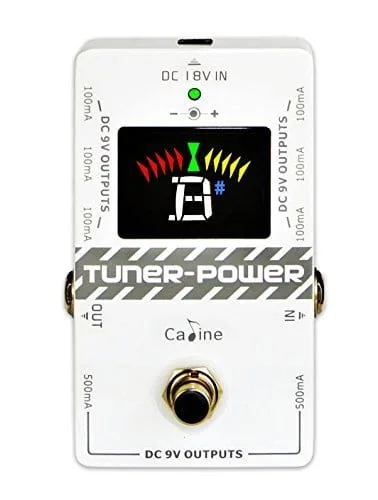
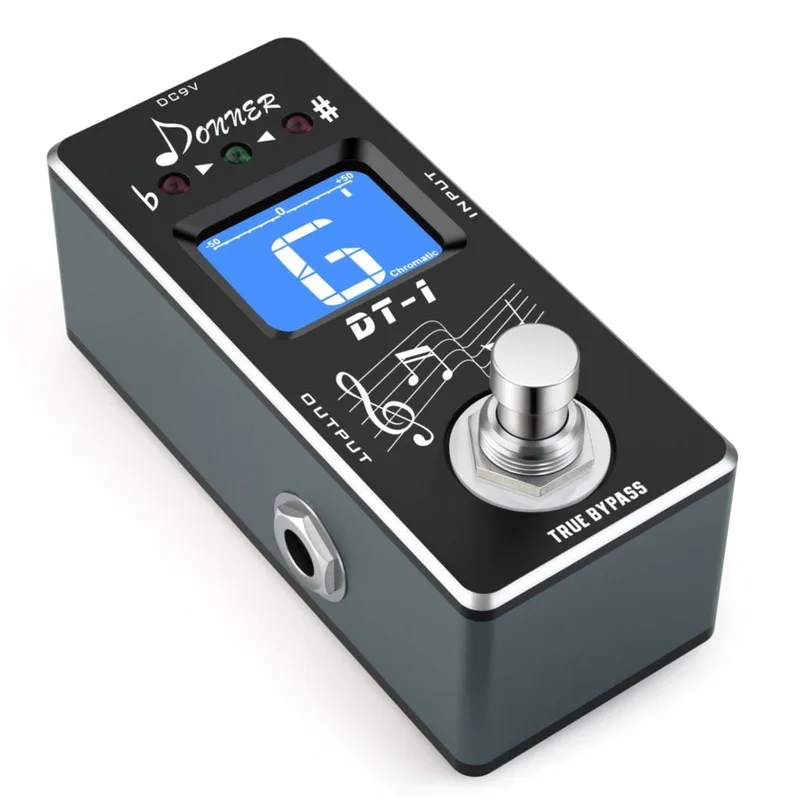
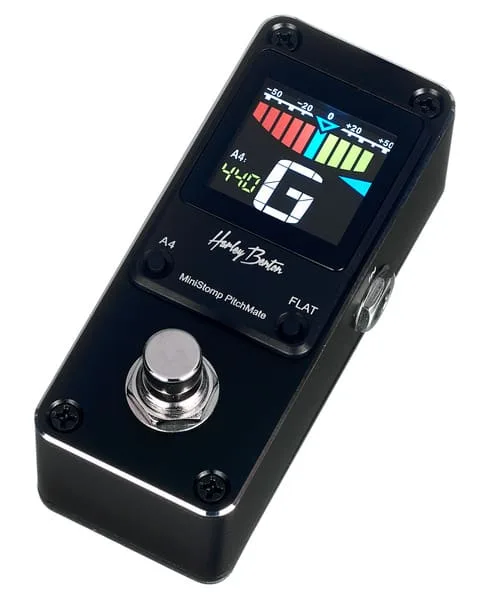
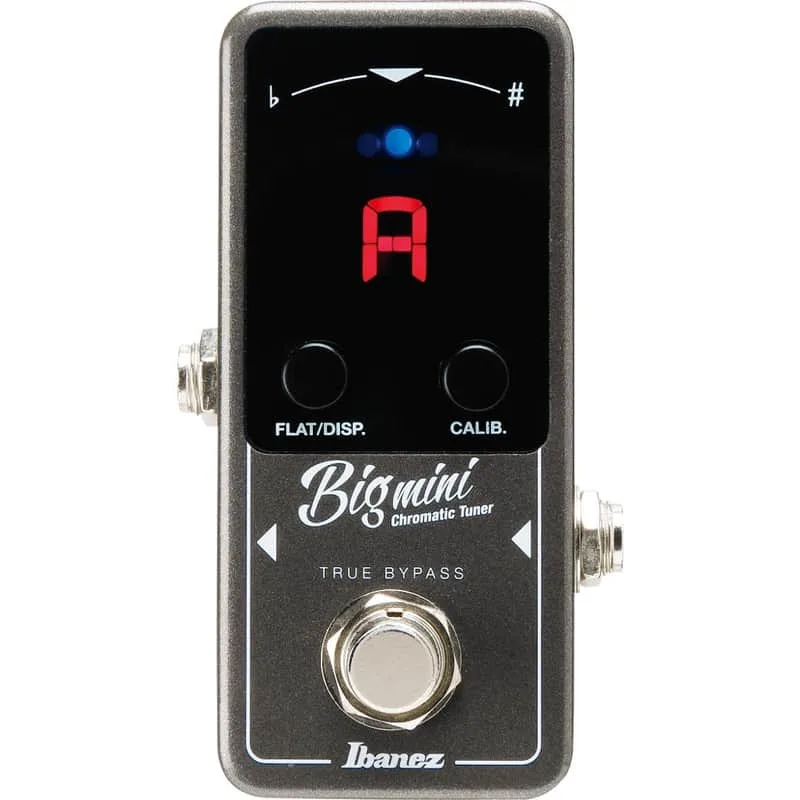
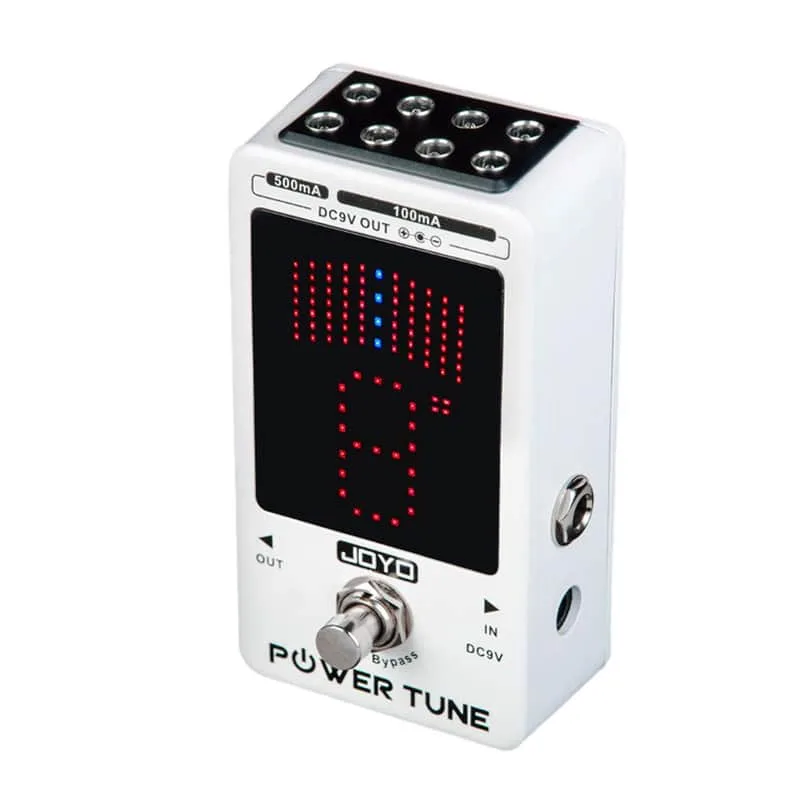
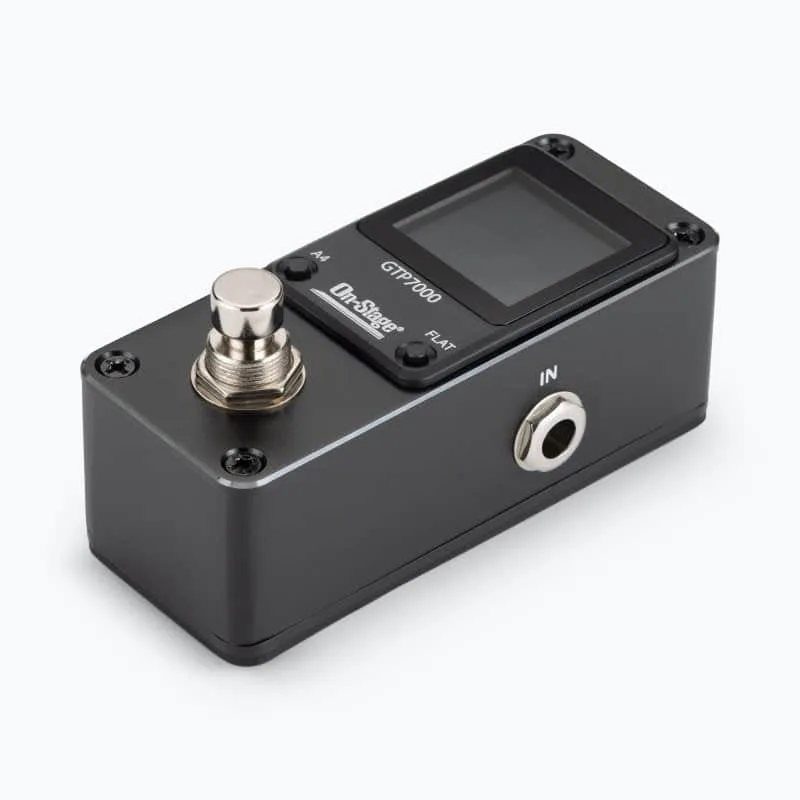
Pedal tuners come in a few shapes. The most common is a simple chromatic box like the Donner DT-1, which Donner describes as "a powerful and stable floor-to-ceiling pedal tuner"1. Some combine the tuner with another function to save board space: the Ernie Ball VPJR Tuner pairs a volume pedal with a chromatic tuner in one enclosure2, and the JOYO JF-18R Power Tune combines a power supply and a tuner into a single unit3. Others are mini-format boxes built to squeeze onto crowded boards, like the On-Stage GTP7000 Mini Pedal Tuner4.
What a tuner pedal is
At its simplest, a tuner pedal is a chromatic tuner in a stompbox enclosure. You plug your guitar into the input, connect the output to the rest of your board, and step on the footswitch when you want to tune. The display tells you the nearest note and how far off you are, and most units also cut the output signal while tuning so the audience does not hear you do it.
Makers package this basic job in several ways:
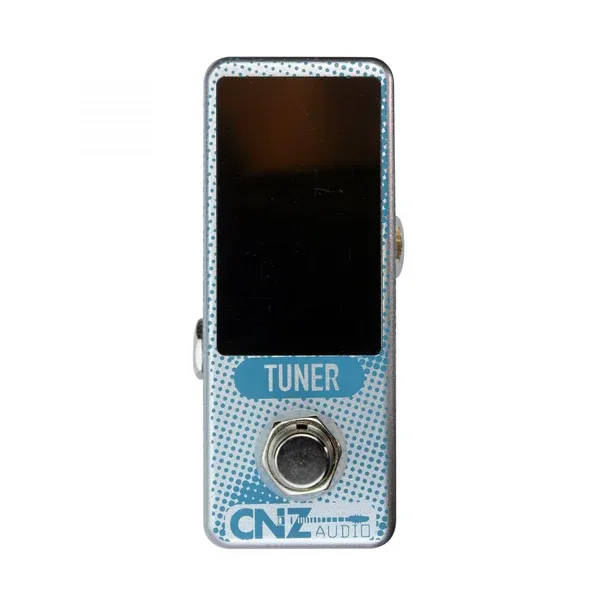
- Straight chromatic tuners, like the Donner DT-11, the D'Addario Chromatic Pedal Tuner5, the CNZ Audio TUN-511 and the Snark SN-10S1511.
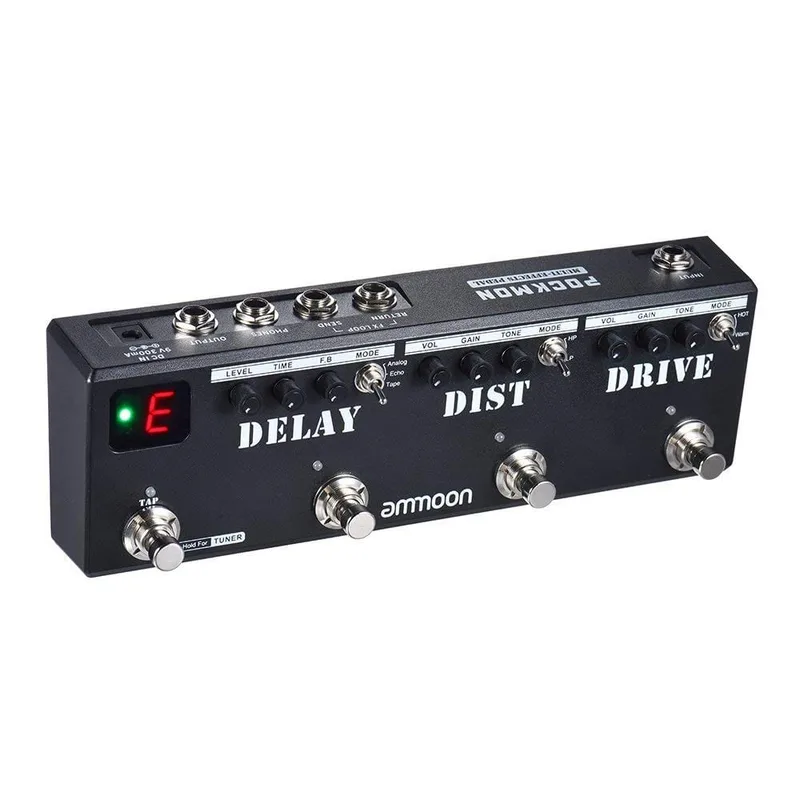
- Multi-function pedals, like the Sonicake Sonic Tuner, which Sonicake calls "a multi-functional tuner pedal that integrates various features"12.
- Tuner plus volume pedal hybrids, like the Ernie Ball VPJR Tuner, which Ernie Ball says combines its volume pedal with "an enhanced definition digital guitar tuner"2.
- Tuner plus power supply units, like the JOYO JF-18R Power Tune, which RockBoard describes as combining "both power supply and tuner into one amazing product, saving space"3.
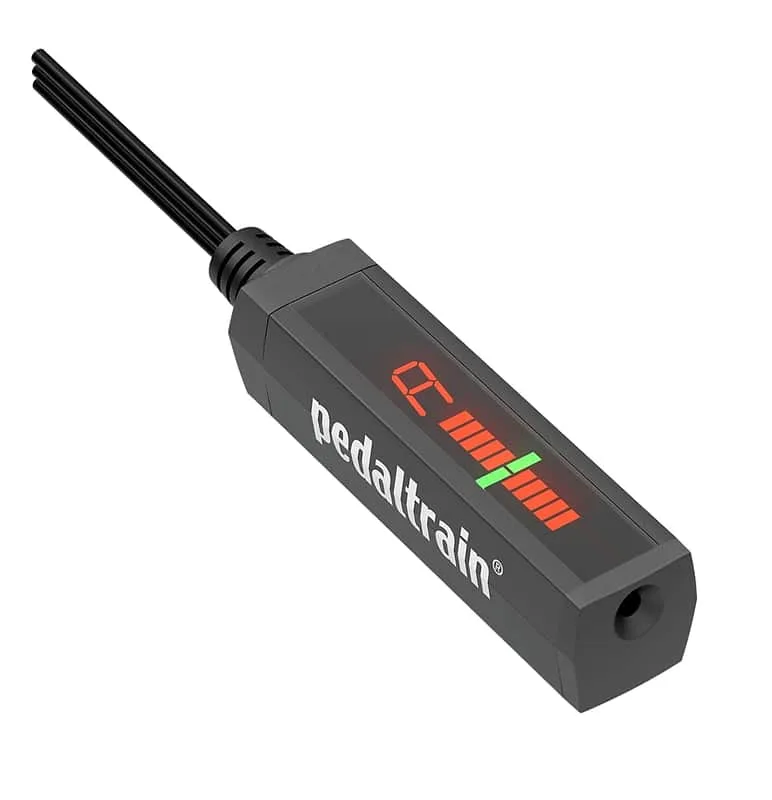
- Always-on displays, like the Peterson StroboVue, a strobe tuner designed to sit on the board and be read at a glance without muting anything13.
The variety matters because a tuner is usually the least glamorous thing on a board, and makers compete on size, display readability and how much other work the box can do at the same time.
How a pedal tuner reads pitch
A pedal tuner analyzes the electrical signal coming from your instrument and works out its fundamental frequency, then compares that frequency to the standard pitch for the nearest note. You do not need to know the math: the pedal shows the note name and whether you are flat or sharp, and you adjust the tuning machines until the display centers.
Pitch detection is not unique to tuner pedals. Other pedals track pitch for their own purposes: Gamechanger Audio's Motor Pedal "uses a real-time pitch tracker to analyze your instrument's output" and match a motor's rotation to the fundamental frequency you play14, and pitch-shifting pedals like the DigiTech MonoNeon Whammy use pitch tracking to drive their shifting15. A tuner pedal is the simplest use of the same idea: it reads the pitch and displays it instead of processing the audio.
This is also why placement matters for accuracy. BOSS's effects ordering guide puts it plainly:
"Logically, the purer and cleaner that signal, the more accurately the tuner can detect the pitch."10
A signal that has already passed through overdrive, modulation or other effects is a harder thing to analyze than a clean string, which is one reason the conventional chain position for a tuner is at the very front.
Landmark tuner pedals
A few designs have stuck around long enough to become reference points.
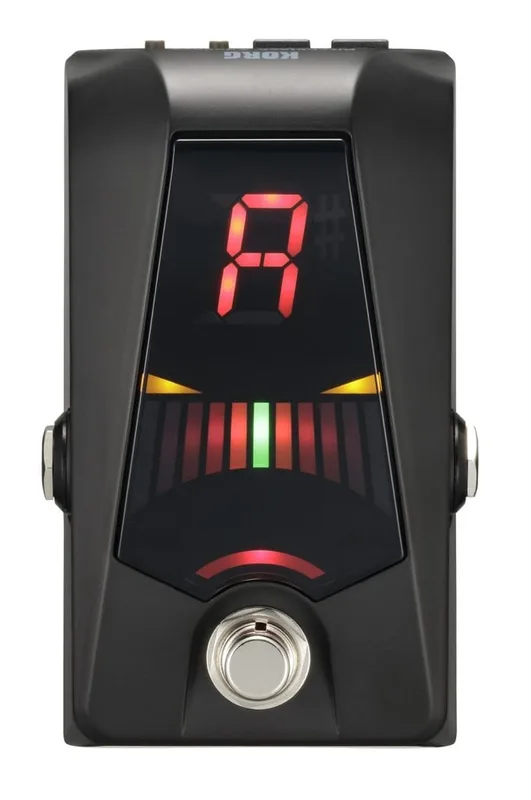
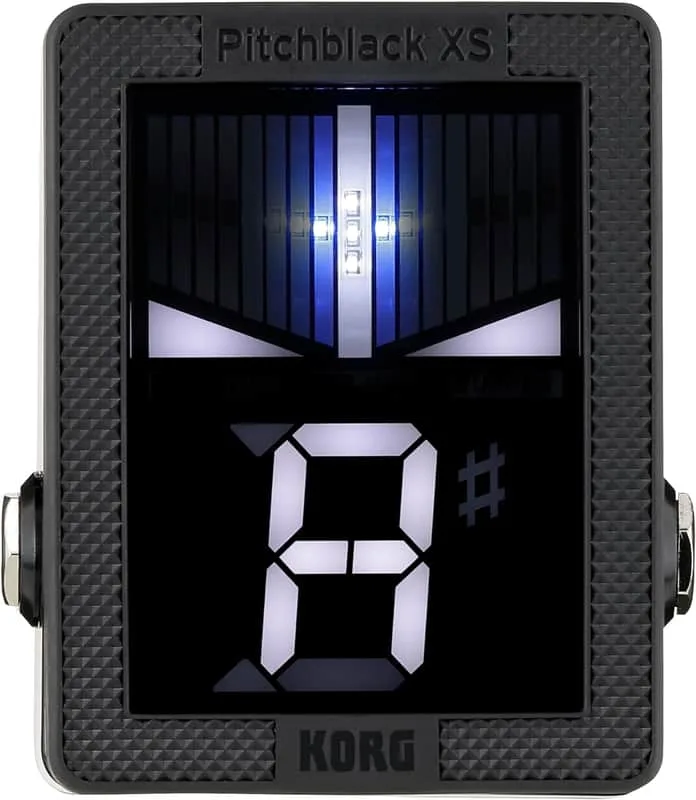
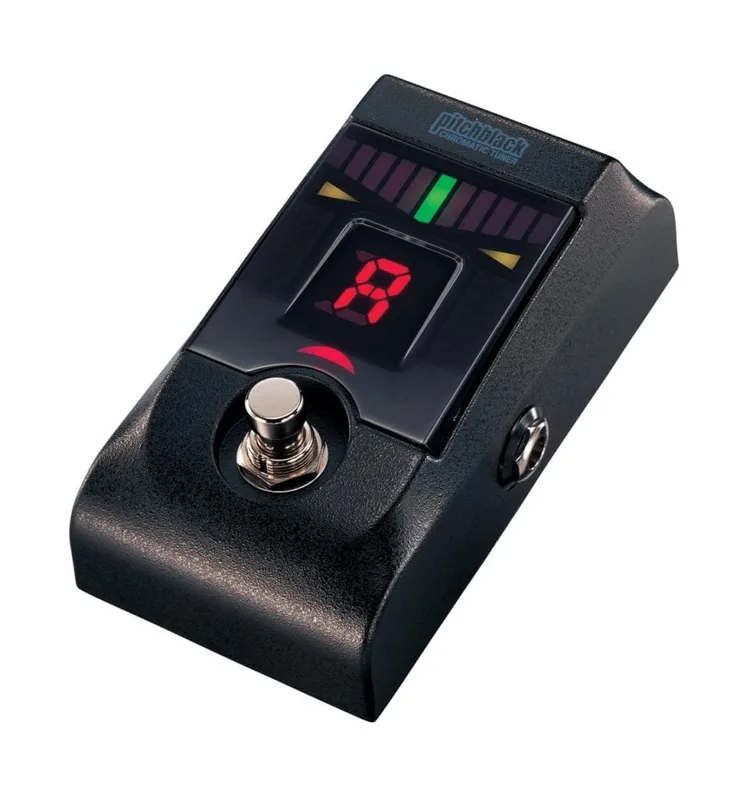
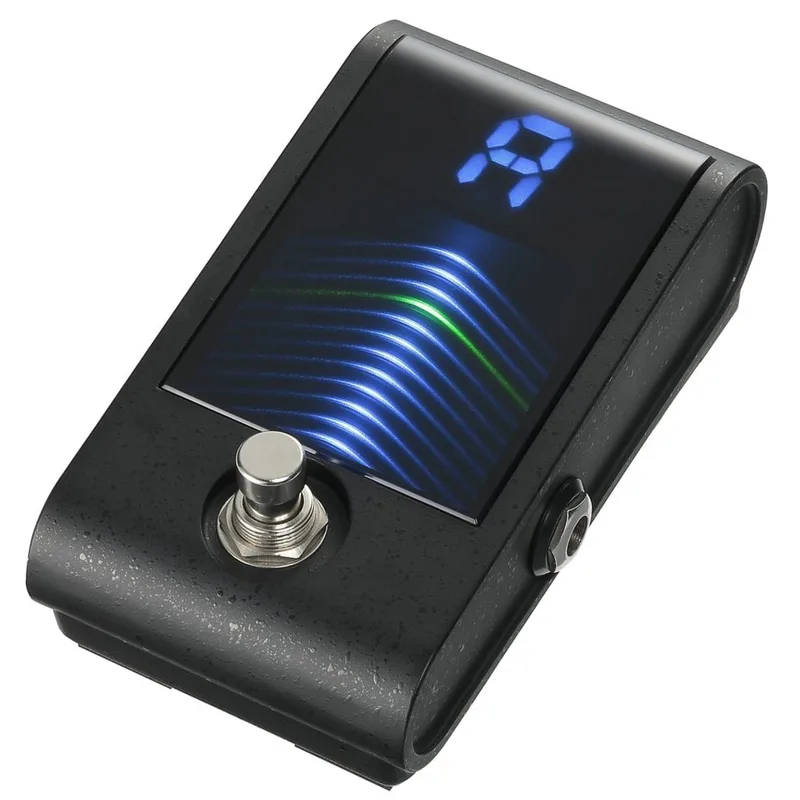
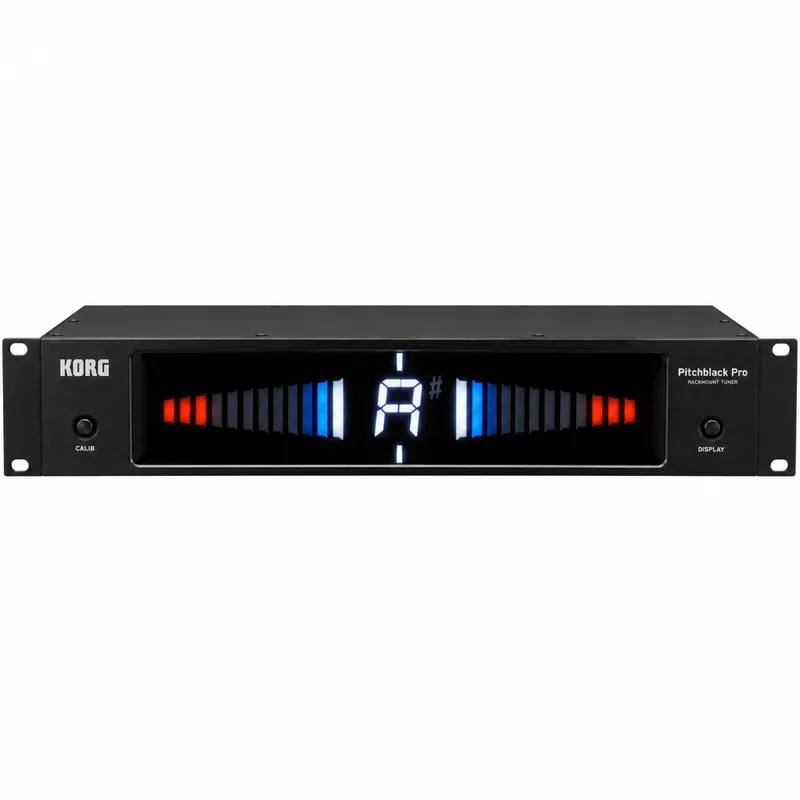
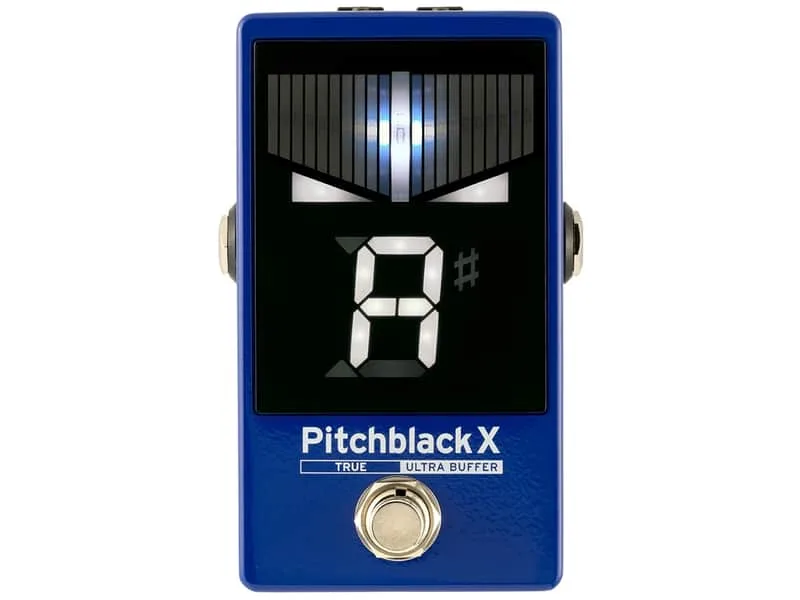
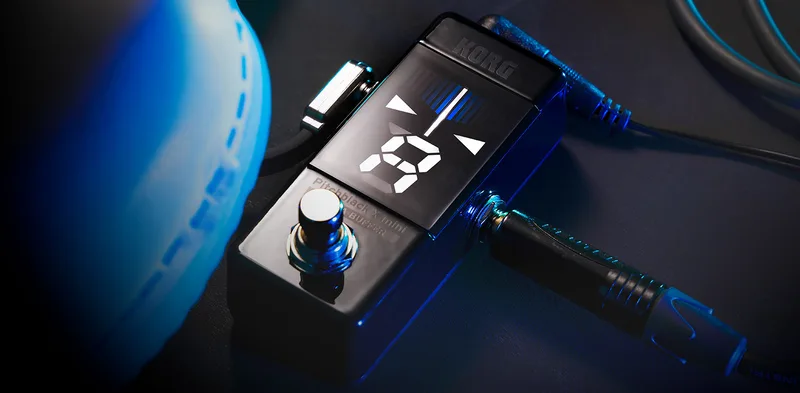
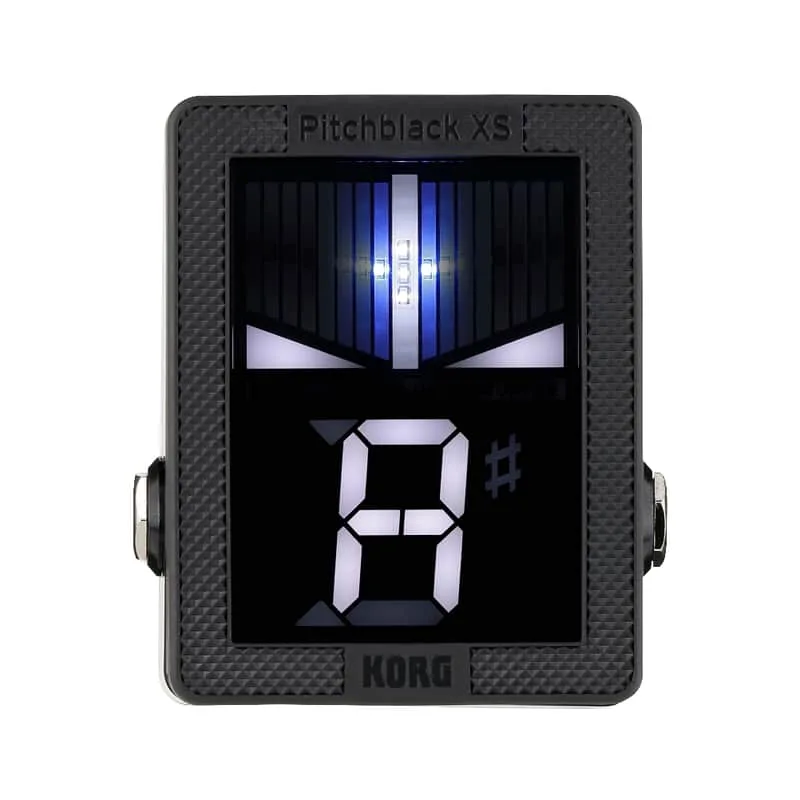
Korg Pitchblack series. Korg describes the Pitchblack as "the clear standard in pedal tuners for the guitarist or bassist, loved by professionals and amateurs around the world"16. The line has grown into a family: the Pitchblack Advance17, the Pitchblack X, which Korg calls a "next-gen pedal tuner" with its ULTRA BUFFER technology17, plus Custom, Mini and rackmount Pro versions. Korg's own comparison page for the Pitchblack X series lists it as a chromatic pedal tuner alongside the rest of the range18.
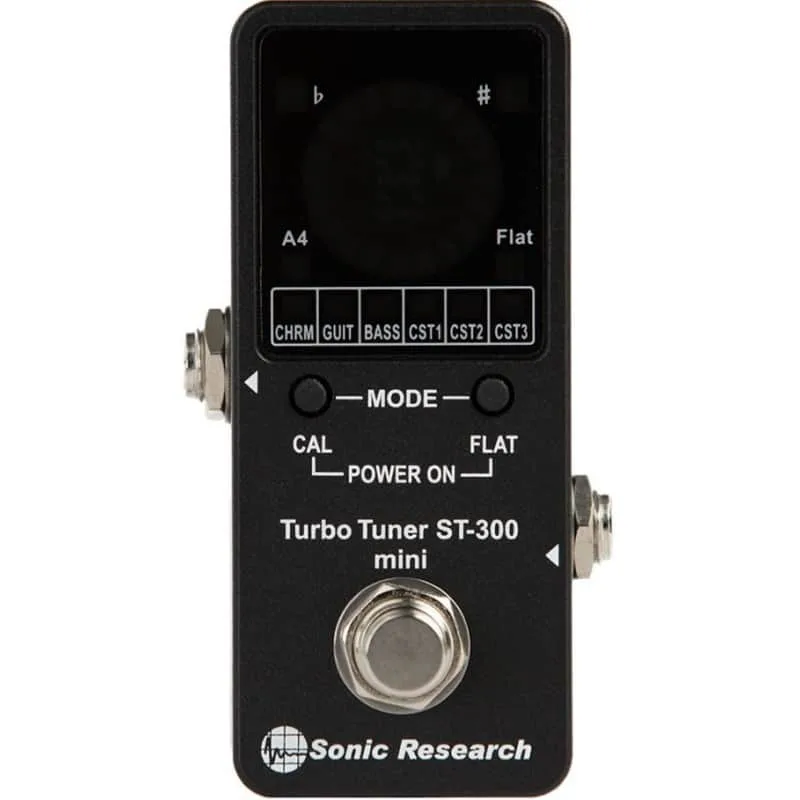
Sonic Research Turbo Tuner. The Turbo Tuner, sold in versions like the ST-300 Mini, uses rotating LEDs as its display. Molten Voltage calls it "the best pedalboard tuner we've found because of its rotating LEDs that are easy to read and understand"1920. That rotating display is a strobe-style presentation, which is covered below.
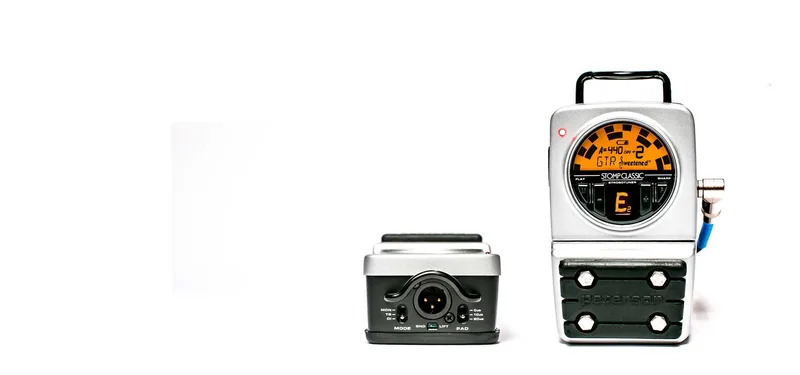
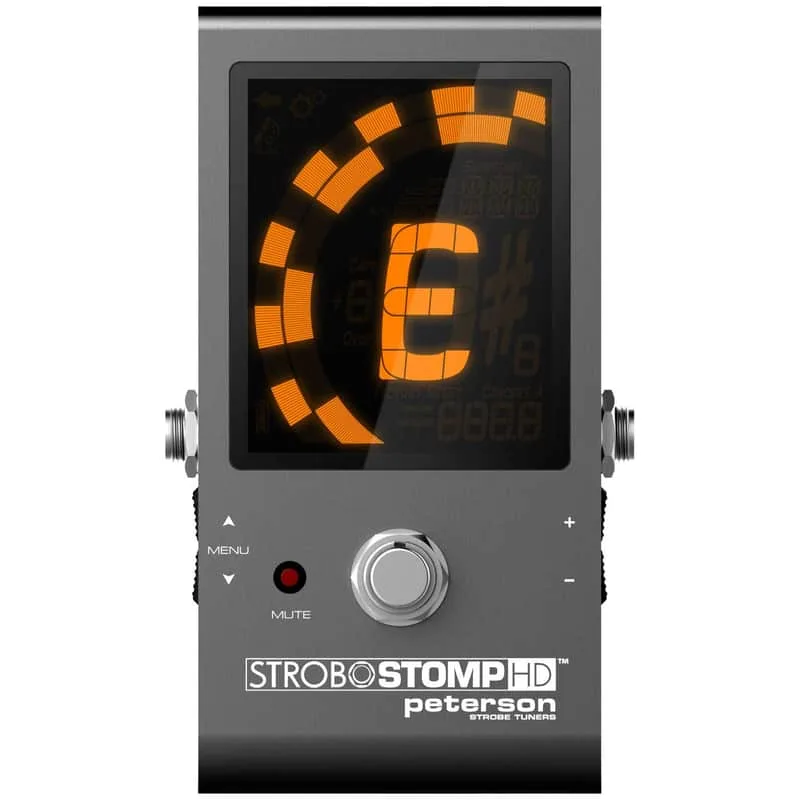
Peterson strobe pedals. Peterson has a long history with strobe tuning, and its pedal line includes the StroboStomp HD, the StroboStomp Mini and the StroboVue, an always-on board display13.
Budget and compact tuners. The entry level is crowded: Donner's DT-11, JOYO's JF-326 Irontune, which JOYO calls "a high precision pedal tuner in the most compact design" for guitar or bass8, the Gogo Chromatic Pedal Tuner6, the Ashdown Dr Green TuneUp, a "high visibility tuner pedal for guitar and bass"186, and mini units like the On-Stage GTP7000186.
Modified and hybrid designs. Shnobel Tone takes a Dunlop DVP5 volume pedal and combines it with a TC Electronic PolyTune 3, relocating the footswitch to the side "so you can mute the signal or hold it for drop d tuning mode," with independent inputs and outputs for the tuner and volume sections21. JHS Pedals offers a modification for the Ernie Ball volume pedal, arguing that "the pedal in its stock condition is drastically hurting your tone (even when your not using the tuner out)"22. These products exist because players often want tuning and volume control in one footprint, and stock designs do not always get the routing or the tone right.
Strobe and needle-style tuners
Pedal tuner displays fall into two broad families.
Needle and LED displays show a pointer or a row of lights that centers when the string is in tune. The Korg Pitchblack series uses a large LED meter16, and most compact tuners work this way. They are fast to read and cheap to build, which is why they dominate the budget end of the market.
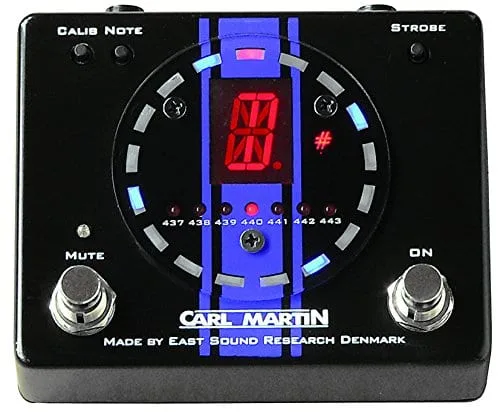
Strobe displays show a pattern that appears to rotate when the note is off and to stand still when it is exactly in tune. Because the pattern's motion is proportional to the pitch error, a strobe display makes very small deviations visible. The Peterson StroboVue is "an always-on pedalboard strobe tuner designed for clear, at-a-glance tuning without muting your signal chain"13, and the Sonic Research Turbo Tuner's rotating LEDs work on the same principle19.
The practical difference for a player is precision at a glance. A needle display tells you "close enough" quickly; a strobe display shows you how fast you are drifting and lets you stop exactly on pitch. Strobe pedals historically cost more, though the gap has narrowed.
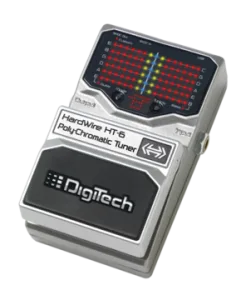
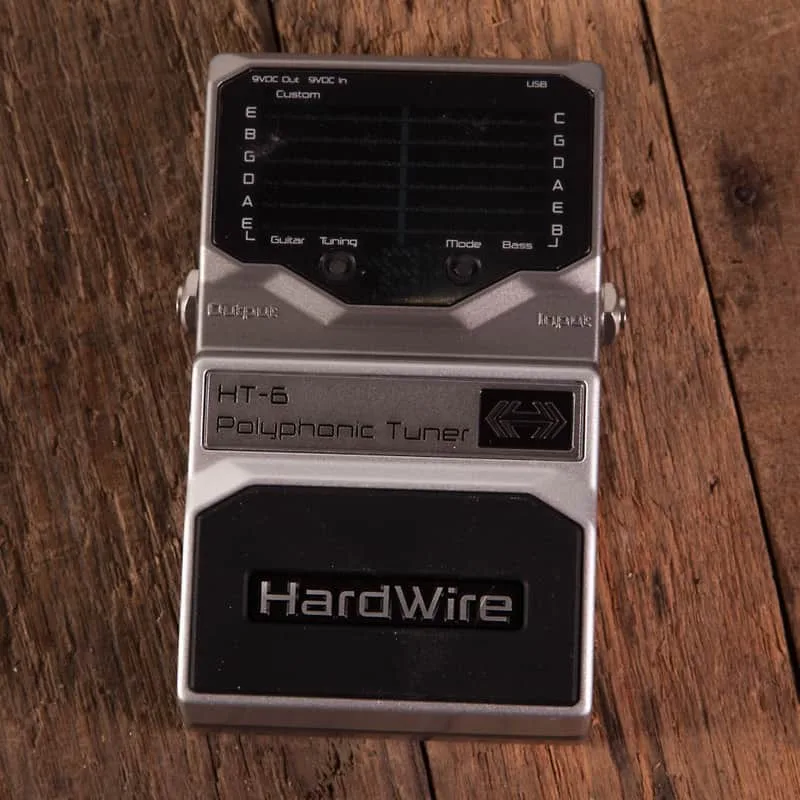
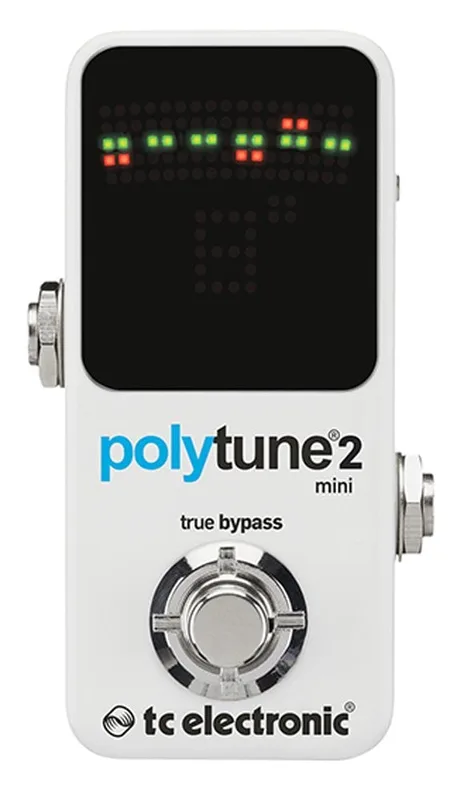
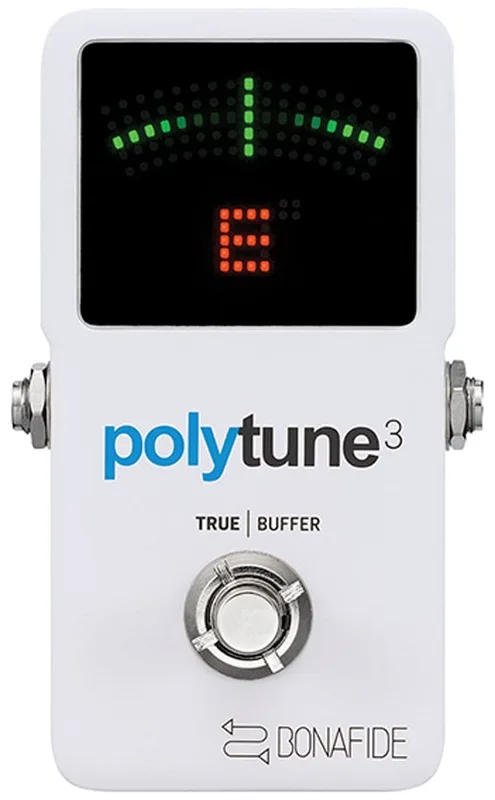
Some pedals offer both. Hybrid designs like the Shnobel Tone DVP5 mod build in a PolyTune circuit21, and polyphonic tuners, which read all six strings at once from a single strum, are their own branch of display thinking, seen in the TC Electronic PolyTune family and the HardWire HT-6.
Display modes, calibration and the usual controls
Across makers, a pedal tuner's controls tend to cover the same ground:
| Control | What it does |
|---|---|
| Display mode | Switches between different presentations where the pedal supports more than one, as on the Vox VXT-1, which offers Strobe, Diamond and Vertical display modes23 |
Not every pedal has all of these. A basic chromatic box may have nothing but the footswitch and the display1, while a hybrid or premium unit adds routing and buffer options1. The mute behavior deserves attention when comparing pedals: most players want the output silenced on stage, but always-on designs like the StroboVue deliberately skip muting so the tuner is always readable13.
Why the tuner goes first in the signal chain
The standard advice is to put the tuner at the very start of the chain, before everything else. BOSS's signal chain guide states it directly: "The solution is always to put the tuner first and use buffered bypass pedals that protect the quality of the tone all down the line"10. The same guide places the wah "directly after the tuner and before the drive section"10, which tells you how firmly the tuner's front position is assumed in conventional ordering.
Two reasons sit behind it:
- Pitch accuracy. The tuner reads a clean, unprocessed signal most accurately, before drive and modulation pedals have reshaped the waveform10.
- Signal integrity. A tuner with a buffer at the front of the chain drives the long cable runs and true bypass pedals that follow, reducing cumulative signal loss10.
Origin Effects' chain placement guide adds a nuance for players who use compressors: the compressor usually goes first in the chain so it works on the raw tone, but "any pedals that don't work with buffers, certain vintage fuzz and wah pedals, should go before buffered tuners and before the compressor"24. In other words, the tuner is first by default, but a buffered tuner can be pushed back down the chain by a buffer-intolerant fuzz.
True bypass, buffers and power needs
Bypass design is where tuner pedals differ most, and it interacts with the rest of your board.
True bypass disconnects the tuner's circuit completely when the pedal is off, so it cannot color your tone. The D'Addario Chromatic Pedal Tuner is a 32-bit true bypass design5, and both Gogo tuner pedals are listed as true bypass67.
Buffered bypass leaves a small amplifier, a buffer, in the signal path at all times. A buffer converts the signal to low impedance so it survives long cable runs and many true bypass pedals in series without losing brightness. JHS's buffer explainer covers the trade-off in detail25, and Korg has made buffering a selling point of the Pitchblack X's ULTRA BUFFER17.
The catch is fuzz. JHS states the rule plainly:
"In general, placing a buffer before a fuzz pedal will cause the fuzz to sound thin or weak."25
Fuzz circuits are designed to see a high impedance signal at the input, and a buffer, including the one inside a buffered tuner, changes that. JHS's advice is "it's generally best to place buffers or buffered-bypass pedals after fuzz pedals in your signal chain"25. So a player with a vintage-style fuzz faces a choice: use a true bypass tuner first, or put the fuzz before a buffered tuner and accept that the tuner then sees a fuzzed signal.
If you run a vintage-style fuzz or wah, check whether it dislikes buffers before putting a buffered tuner in front of it. A true bypass tuner avoids the problem entirely525.
Power needs vary by design and are worth checking against your power supply before buying, since a tuner that shares a daisy chain with other pedals can add noise or misbehave. Tuner plus power supply hybrids like the JOYO JF-18R Power Tune flip the relationship entirely and supply power to the rest of the board3.
Questions to ask when choosing a tuner pedal
A short checklist, drawn from how the makers themselves describe their products:
- Does it track bass? Makers that name bass explicitly, like On-Stage for the GTP70004, JOYO for the Irontune8 and Ashdown for the TuneUp9, are the safe bet for bass players.
- True bypass or buffered? True bypass keeps the off-tone untouched567; a buffer protects long chains576. Decide based on what else is on your board.
- Does it mute while tuning? Most do; the StroboVue deliberately does not13. If you tune silently between songs, you want the mute.
- How readable is the display in the dark? Ashdown sells the TuneUp on "high visibility"9, and rotating LED strobe displays are praised specifically for being easy to read19.
- Does it need to save space? Mini formats like the GTP7000 exist to fit crowded boards4, and hybrids like the VPJR Tuner fold two pedals into one footprint2.
- Do you need drop tunings? Look for flat or drop modes, like the hold-for-drop-D function on the Shnobel Tone DVP5 mod21.
- Could it do double duty? A tuner plus power supply unit like the Power Tune3 or a tuner plus volume pedal like the VPJR Tuner2 can free up real estate.
Questions
Should a tuner pedal go first on a pedalboard?
Yes, in most setups. A tuner tracks pitch more accurately on a clean, unprocessed signal, and BOSS's guidance is to put the tuner first and use buffered bypass to protect tone down the line. The main exception is vintage fuzz or wah pedals that dislike buffers, which some makers advise placing before a buffered tuner.
Does a tuner pedal affect tone when it's off?
It depends on the bypass. A true bypass tuner, like the D'Addario Chromatic Pedal Tuner or the Gogo pedals, disconnects its circuit entirely when off. A buffered tuner leaves a buffer in the path, which preserves signal over long cable runs but can change how some fuzz pedals react.
What is the difference between a strobe tuner and a regular tuner?
A regular pedal tuner shows pitch with LEDs or a needle-style display that indicates how far you are from the note. A strobe tuner, like the Peterson StroboVue, uses a rotating or simulated strobe pattern that appears to stop moving when the string is exactly in tune, which makes very small pitch errors easier to see.
Can a guitar tuner pedal tune a bass?
Many can. The On-Stage GTP7000, JOYO Irontune, and Ashdown TuneUp are all described by their makers as tuners for guitar and bass. Low bass strings are harder for some tuners to track, so a maker that specifically names bass is the safer choice.
Should a tuner go before a fuzz pedal?
If the fuzz is a vintage-style design that needs to see a high impedance signal, put the fuzz first. JHS advises that a buffer before a fuzz makes it sound thin or weak, so a buffered tuner should sit after such pedals. With a true bypass tuner this is less of a concern.
Do tuner pedals mute the signal while tuning?
Most pedal tuners have a mute function so tuning is silent on stage, but not all do. The Peterson StroboVue is specifically an always-on design that does not mute your signal chain, and some volume pedal tuner hybrids route the tuner separately so the main signal keeps flowing.
Sources (25)
- Donner DT-1 2-Mode Tuner Pedal with LCD Screen for Guitar Bass, Donner (us.donnermusic.com)
- VPJR Tuner Pedal, Ernie Ball
- JF-18R Power Tune by JOYO, RockBoard (PedalPedia), 2026
- GTP7000 Mini Pedal Tuner by On-Stage, RockBoard (rockboard.de PedalPedia), 2026
- Chromatic Pedal Tuner, D'Addario (www.daddario.com)
- THE GOGO TUNERS THE GOGO CHROMATIC PEDAL TUNER, Gogo Tuners
- THE GOGO PEDAL TUNER BLACK CHROMATIC PEDAL TUNER, Gogo Tuners
- JF-326 Irontune_JOYO, JOYO
- TuneUp - Ashdown Engineering, Ashdown Engineering
- The Ultimate Guide to Guitar Effects Pedal Order and Signal Chain, BOSS (articles.boss.info), 2023-03-01
- TUN-5 | Tuner Pedal | CNZ Audio, CNZ Audio
- Sonic Tuner, Sonicake
- StroboVUE by Peterson, RockBoard PedalPedia, 2026
- MOTOR Pedal, Gamechanger Audio, 2025-09-30
- MonoNeon Whammy, DigiTech, 2026-01-02
- Pitchblack Advance, KORG
- Pitchblack X, KORG (USA)
- Comparison Chart, KORG (www.korg.com)
- Molten Voltage™ presents Starship Kaom .:. the Modern MIDI PedalBoard, Molten Voltage
- Sonic Research Turbo Tuner ST-300 Mini review, MusicRadar, 2017-01-17
- Dunlop DVP5 + Tuner Mod, Shnobel Tone
- ERNIE BALL ACTIVE NO LOSS MOD, JHS Pedals
- VXT-1 Strobe Pedal Tuner, Vox Amps (voxamps.com), 2026-08-13
- Tech Tips: Where in the Chain, Origin Effects, 2024-05-17
- UNDERSTANDING BUFFERS, JHS Pedals