The Temple Audio Studio MOD is an active DI and reamp device in one, made to be installed in a Templeboard pedalboard. In the studio it does two jobs: it records your dry guitar signal while you keep playing through your pedals and amp, and it later reamps that recording into different amps, so you do not have to commit to a sound on tracking day. Temple Audio puts it as "capture crisp tones today and refine your sound tomorrow"1.
The two modes: record/play and reamp
A mode switch selects between the Studio MOD's two functions2.
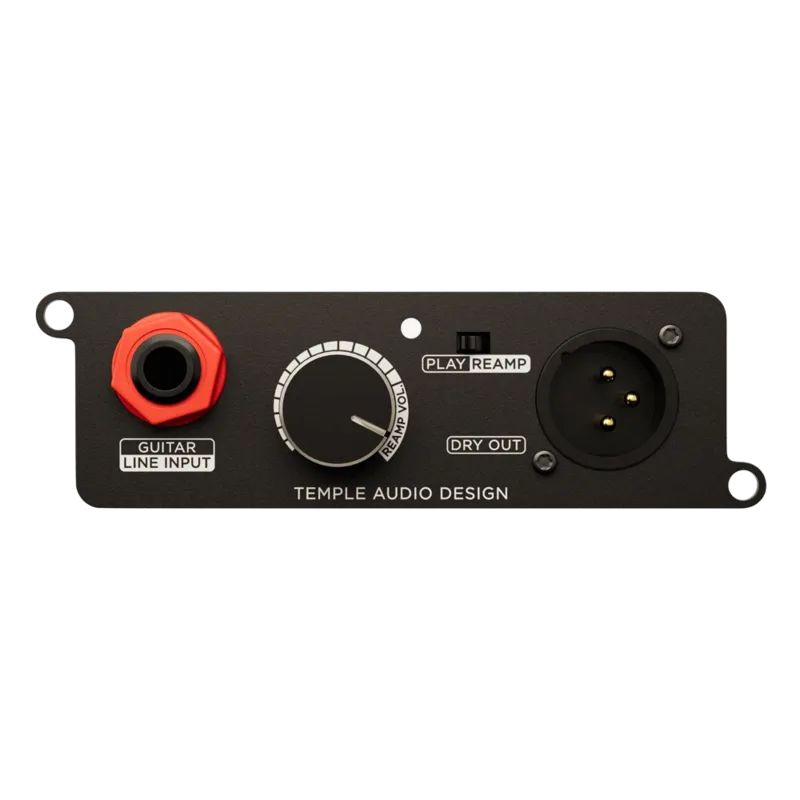
Record/play mode is the tracking side. You plug your guitar into the front INPUT jack, a 1/4" unbalanced input. The input is buffered by what Temple Audio calls a "top spec, studio-grade opamp," with an input impedance of 1.1 megohms in play mode. In this mode the unit sends a buffered unbalanced signal over the rear 1/4" jack, which runs on to your pedals and amp, and a balanced dry signal over the XLR DRY OUT, which connects to the mic preamp on your recording interface. The result is a recorded dry track plus your amped sound, captured at once2.
Reamp mode is the playback side. You plug your recording interface into the front 1/4" unbalanced TRS input, and the unit sends an unbalanced, transformer-isolated signal out of the rear 1/4" jack into your pedals or amp. A VOLUME control adjusts the reamp playback level to match guitar level for natural dynamics2.
A volume dial also adjusts recorded signal levels for optimal dynamics response with various pedals, according to Temple Audio's product page1.
Controls and jacks
| Control / jack | What it does |
|---|---|
| A - INPUT (front, 1/4" unbalanced) | Plug your guitar in here2 |
| B - VOLUME | Adjusts reamp playback to match guitar level for natural dynamics2 |
| C - MODE SWITCH | Selects record/play or reamp mode2 |
| D - DRY OUT (balanced XLR) | Connects to the mic preamp on a recording interface2 |
| H - REAR 1/4" JACK | Unbalanced buffered signal from your guitar in record/play mode; unbalanced, transformer-isolated signal from the recording interface in reamp mode2 |
Power and installation
The Studio MOD is an active device, so it needs power: 9 to 18V DC at 50mA, with a center pin negative power supply2.
Because the Studio MOD is active, it needs a powered supply on your board. Temple Audio specifies a center pin negative supply at 9 to 18V and 50mA2.
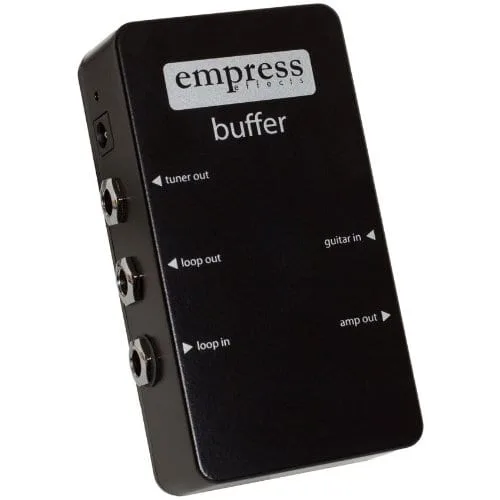
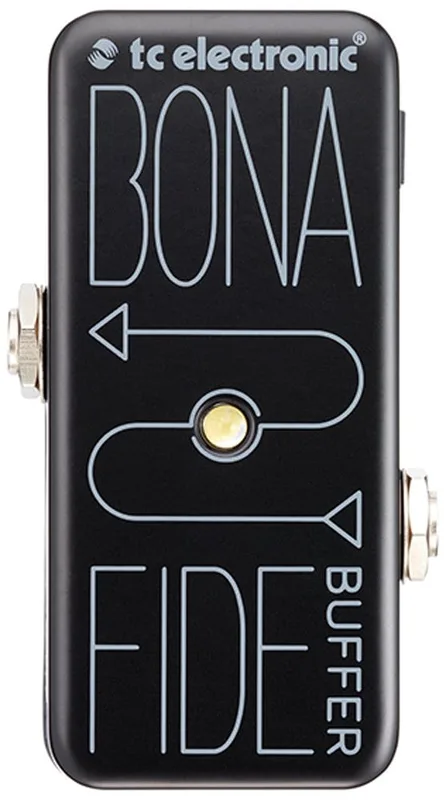
The unit is made to be a permanent part of the board rather than something patched in for a session. Temple Audio's setup guide states: "The studio MOD is designed to stay installed in your Templeboard"2. That places it alongside other board-mounted utility units such as the Temple Audio 2X MOD Pro, and it differs from standalone buffer pedals like the Empress Effects Buffer or TC Electronic Bonafide Buffer by adding the DI and reamp functions. For more on buffers as a type, see Buffer Pedals.
Questions
What is reamping?
Reamping means recording your dry guitar signal while you play through your pedals and amp, then later feeding that recording back through different amps or pedals to re-record the part. Temple Audio describes the Studio MOD as letting you record your dry guitar with a thru to your pedals and amp, then use it to later re-record into different amps, so you do not have to commit on tracking day.
Does the Temple Audio Studio MOD need power?
Yes. The Studio MOD is an active device and needs a 9 to 18V power supply that delivers up to 50mA, with a center pin negative jack. Because it is active, it will not run from a battery or without power.
What is the polarity of the Studio MOD's power jack?
The power jack is center pin negative, according to Temple Audio's setup guide. It accepts 9 to 18V at up to 50mA.
Can the Studio MOD stay on a pedalboard permanently?
Yes. Temple Audio's setup guide says the Studio MOD is designed to stay installed in your Templeboard, so it can remain part of the board as a permanent fixture rather than something patched in only when recording.
What is the input impedance of the Studio MOD?
In play mode, the Studio MOD's input impedance is 1.1 megohms, according to Temple Audio's setup guide. The input is buffered by a studio-grade opamp.
Does the Studio MOD have an XLR output?
Yes. The DRY OUT is a balanced XLR output that connects to the mic preamp on a recording interface, sending a balanced dry signal in record/play mode.
Sources (2)
- Temple Audio, Temple Audio
- STUDIOMOD Setup v4, Temple Audio, 2026