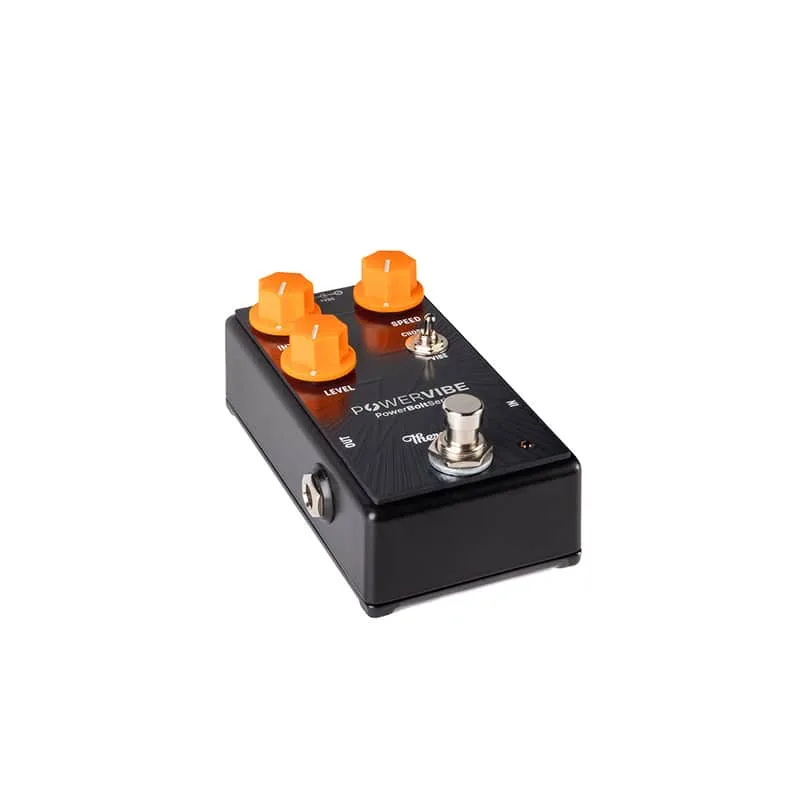


The Thermion PowerVibe is a compact chorus and vibe pedal from Thermion, built in Spain as part of the company's PowerBolt series. Thermion describes it as capturing the magic of the classic UniVibe in a compact pedal, with two modes, Chorus and Vibe, that it says cover everything from a fluid, spatial effect to a darker, more expressive sound1. It is priced at €125 / $145 as of December 20252.
What it does and where it came from
The PowerVibe draws on the Uni-Vibe, the photocell-based modulation effect that MusicRadar's Alex Lynham traces back to a unit manufactured and distributed by Univox in North America from 1968 onwards3. RockBoard's PedalPedia describes the PowerVibe as inspired by classic rotating speaker and photocell-based modulation circuits, focusing on smooth pitch modulation rather than amplitude tremolo4. Thermion says it is designed to deliver the immersive, three-dimensional sound that defined an era1.
On the original design, the chorus and vibrato modes work differently: in chorus mode the pedal blends the dry signal from the preamp and wet signal to create its distinctive phased sound, while vibrato mode outputs only the wet signal, which comes out thinner and quieter with more pronounced pitch warble3. The PowerVibe's mode selection switch chooses between Chorus and Vibe1.
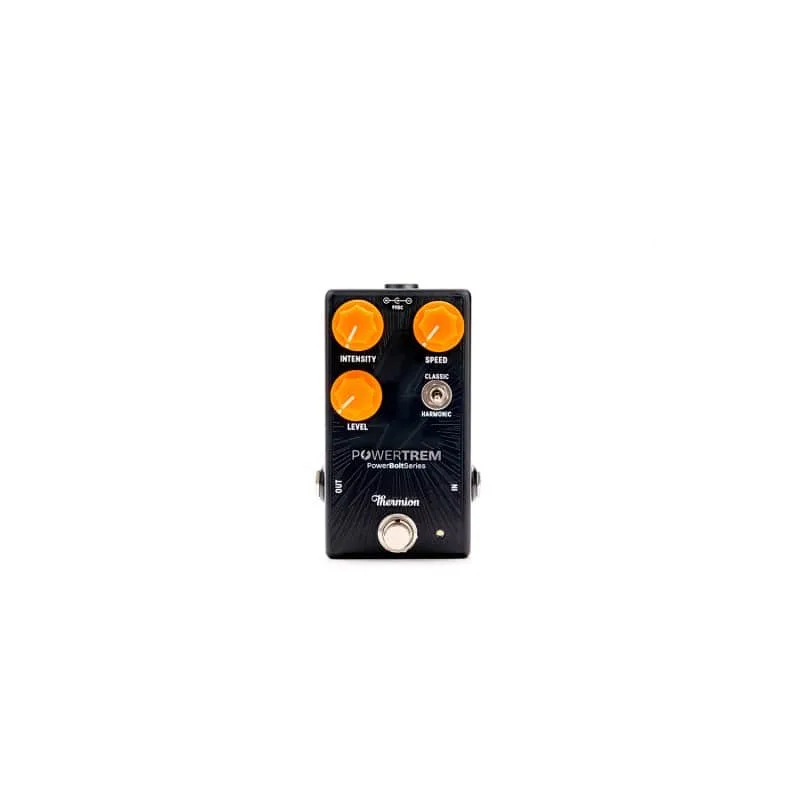
Thermion launched the PowerBolt series in May 2025 with two modulation pedals, the PowerTrem and the PowerVibe, according to Guitar Pedal X's Stefan Karlsson5.
Controls and specifications
| Item | Detail |
|---|---|
| Mode selection switch | Chorus or Vibe mode1 |
| Speed, depth and shape | adjustable, per Thermion's description of the intuitive controls1 |
| Input impedance | >1MΩ1 |
| Output impedance | <1kΩ1 |
| Dimensions (WxHxD) | 7x11x5cm1 |
| Weight | 235gr1 |
The metal enclosure is suitable for pedalboard use, per RockBoard's PedalPedia4.
Power
The PowerVibe runs on standard pedal power: 9V center negative through a 2.1mm DC jack, with a maximum current consumption of 50mA1. Thermion lists built-in protection against polarity inversion, AC connection and momentary overvoltage1.
At 50mA maximum draw the PowerVibe is within reach of most multi-output pedal supplies, but a daisy chain shared with higher-draw digital pedals may not leave enough headroom. Give it its own output if you can.
Analog or digital?
Here the accounts differ. Thermion's product page describes the PowerVibe as having 100% analog circuitry1. Guitar Pedal X's Stefan Karlsson, in his December 2025 buying guide, took a different view:
"Great affordable take on the Uni-Vibe - obviously DSP-based - but one of those really expressive algorithms2."
Stefan Karlsson, Guitar Pedal X, December 20255
He nonetheless called the two Thermion PowerBolt pedals quite superb overall2. Since the maker and the reviewer disagree on this point, both positions are given here as stated.
On the board
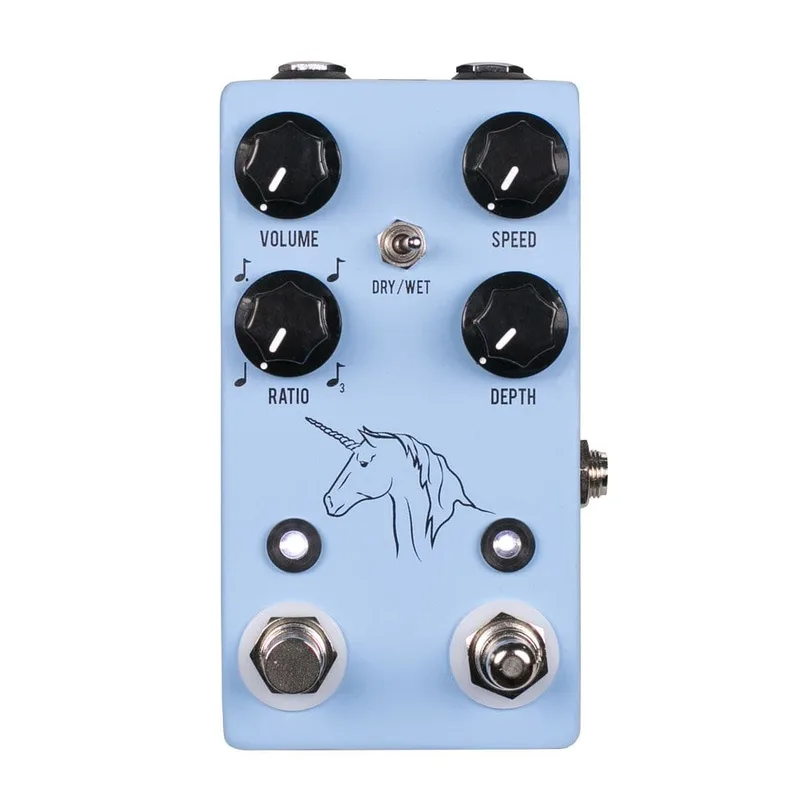
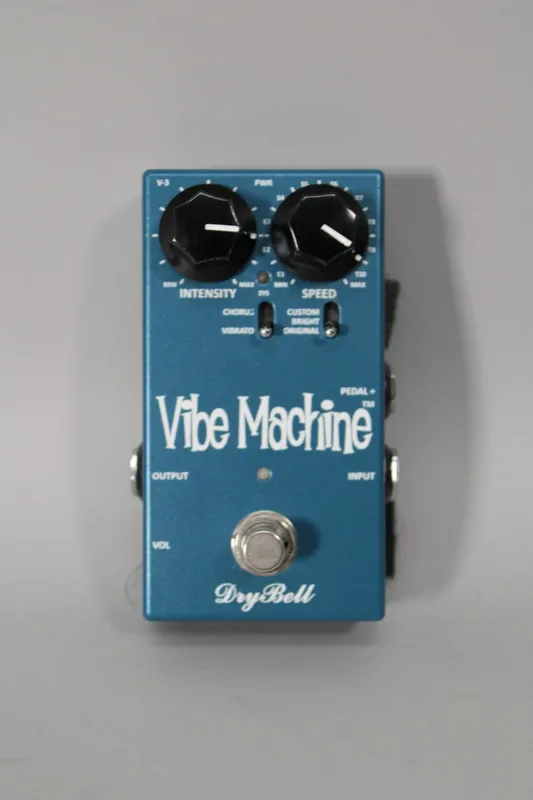
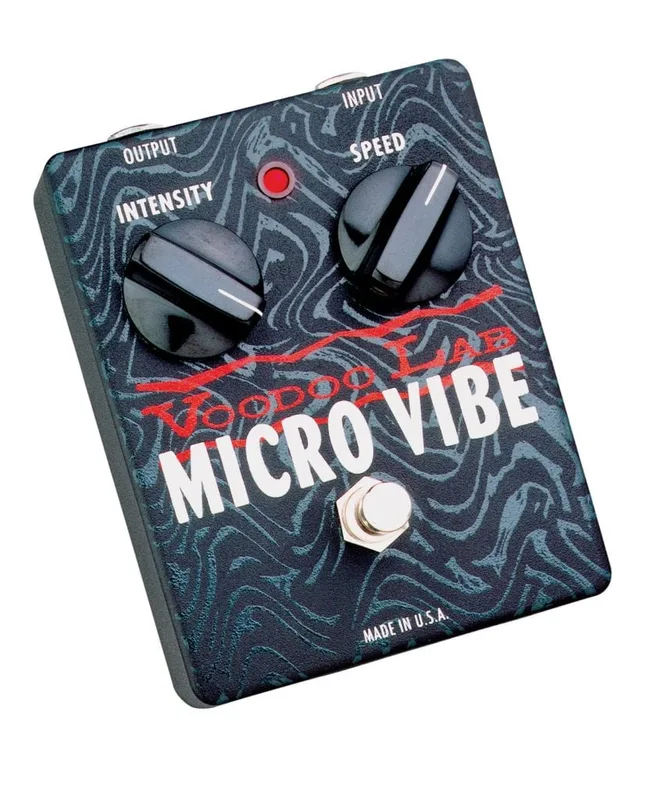
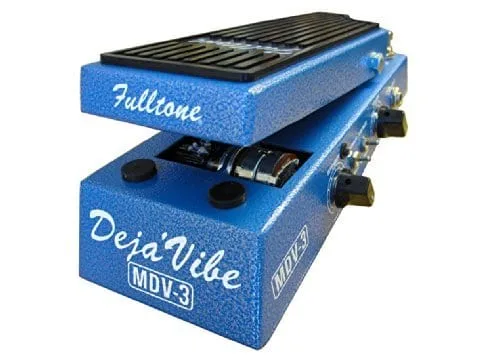
Thermion says the PowerVibe works great with fuzz, overdrives, and delays1, which makes it easy to place before or after your dirt pedals depending on how you like your modulation to sit in the chain. Players comparing vibe pedals in this space might also look at the JHS Pedals Unicorn V2, the DryBell Vibe Machine V-2, the Voodoo Lab Micro Vibe or the Fulltone MDV3, among the many Uni-Vibe-inspired designs on the market.
Videos
Thermion
Thermion
TL Toneworks
Questions
Is the Thermion PowerVibe true bypass?
Yes. Thermion lists the PowerVibe as true bypass, so when the pedal is off your guitar signal passes through without the circuit loading it. Combined with its high input impedance of over 1 megohm and low output impedance under 1 kilohm, it is designed to sit on a pedalboard without noticeably changing your clean tone when switched out.
Is the Thermion PowerVibe analog?
Thermion describes the PowerVibe as having 100% analog circuitry. Reviewer Stefan Karlsson at Guitar Pedal X, writing in December 2025, called it a great affordable take on the Uni-Vibe and described it as DSP-based but with a really expressive algorithm. The two accounts disagree on this point, so it is worth hearing the pedal for yourself if the distinction matters to you.
What power supply does the Thermion PowerVibe need?
The PowerVibe runs on standard pedal power: a 9V center-negative supply with a 2.1mm DC jack, drawing a maximum of 50mA. Thermion also lists built-in protection against polarity inversion, AC connection and momentary overvoltage. There is no battery option mentioned, so plan a dedicated output or a daisy chain with enough current headroom.
Does the PowerVibe have both chorus and vibe modes?
Yes. A mode selection switch chooses between Chorus and Vibe. Thermion says the two modes cover everything from a fluid, spatial effect to a darker, more expressive sound. On the original Uni-Vibe design the pedal draws on, chorus mode blends dry and wet signals while vibrato mode outputs only the wet signal, which is thinner and quieter with more pronounced pitch warble.
Where is the Thermion PowerVibe made?
Thermion builds the PowerVibe by hand in Spain, Europe, as part of its PowerBolt series. The company says the Spanish build ensures the highest quality, and the pedal sits alongside the PowerTrem in the series Thermion launched with two modulation pedals.
Sources (5)
- PowerVibe, Thermion
- Guitar Pedal X, Guitar Pedal X, 2025-12-09
- The FX files: Uni-Vibe, MusicRadar, 2019-04-10
- Powervibe by Thermion, RockBoard PedalPedia, 2026
- Guitar Pedal X, Guitar Pedal X, 2026-04-28