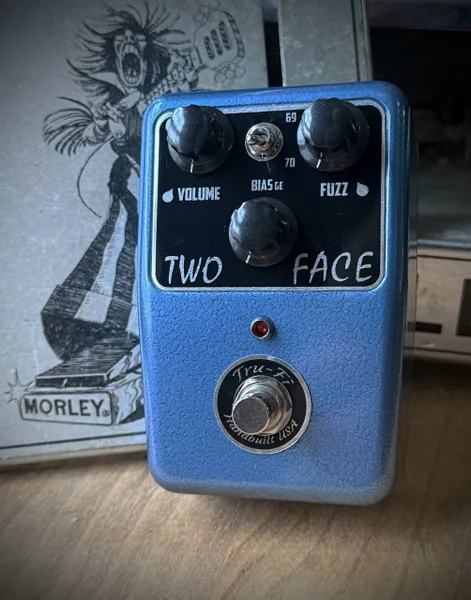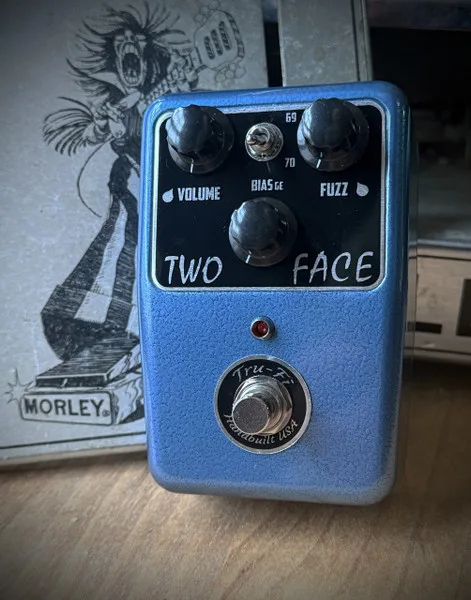


The Tru-Fi Two Face Fuzz Mini PBF is a compact fuzz pedal that puts two complete Fuzz Face-style circuits in one box: a germanium-transistor circuit and a silicon-transistor circuit, switchable between them. Tru-Fi describes the result as "two pedals basically in ONE"1. It is the miniaturized version of the company's Two Face Fuzz, rebuilt in a smaller, modern enclosure with the jacks on top, and Tru-Fi says it ships in one day1.
The design follows the two eras of the original Fuzz Face. Tru-Fi traces the lineage to "the early one's 1966-1969 which had germanium transistors in them, and then 1970 they used temperature tolerant silicon" transistors2. Rather than asking a player to choose one flavor, the Two Face gives you both, with a switch to move between them.
Germanium and silicon fuzz in one pedal
The two sides of the pedal have distinct characters. In Tru-Fi's own words, "The germanium is warm, fatter and darker, the silicon is brighter some say a tad harsher"1. RockBoard's PedalPedia entry describes the same split: the germanium-transistor circuit gives "a warm, dark vintage fuzz" while the silicon-transistor circuit delivers "a brighter, more aggressive fuzz"3.
| Side | Transistors | Character | Bias |
|---|---|---|---|
| Germanium | Germanium, as in 1966 to 1969 Fuzz Face units | Warm, fatter, darker1 | External Bias control on top1 |
| Silicon | Temperature tolerant silicon, as in the 1970 Fuzz Face | Brighter, some say a tad harsher1 | Set internally to 4.5V, no adjustment needed1 |
The silicon side needs no attention: Tru-Fi says "the silicon is inside and set to 4.5V no need to move it - it is pretty solid"1. The germanium side is the one you tune, which is where the Bias control comes in.
Controls
The pedal carries the controls you would expect from a Fuzz Face-style circuit, plus Tru-Fi's additions3.
| Control | What it does |
|---|---|
| Fuzz | Sets the fuzz amount; maxed fuzz, especially on the '70 silicon setting, adds noise and swirls, and backing off the Fuzz setting makes it go away1 |
| Volume | Sets the output level3 |
| Bias | Tweakable at any time to set the germanium bias for the right tone, or under-bias it for fluttering motorboat tones1 |
| Input | External on the Mini PBF, as on Tru-Fi's Vintage Series; helps with wahs and taming the pedal1 |
The external Input control is a change from the original Two Face Fuzz, where the input control was an internal knob. On that version, Tru-Fi described it as stock fully clockwise, with a counter-clockwise turn lowering the overall gain a tinge, brightening the sound and making the pedal play better with wahs2. On the Mini PBF that adjustment has moved to the outside of the enclosure1.
"for that I put a Bias control on top you can tweak at anytime for the right tone ORRRRRRR under bias it and get crazy unique fluttering motorboat tones."
The PBF enclosure
PBF stands for Pedalboard Friendly, and it is the label Tru-Fi uses for its compact builds. The Mini PBF version of the Two Face Fuzz keeps the two-circuit design of the full-size pedal but moves it into a smaller, modern enclosure with the jacks on top, shrinking the footprint on a board1. Tru-Fi also offers the Two Face line in lots of colors, like all its pedals2.
The original Two Face Fuzz could be ordered with a Tonebender 1.5 circuit in place of the Fuzz Face germanium side, built with OC75 Mullard transistors and the correct resistors2. Tru-Fi's mini pedal page does not state whether that option carries over to the Mini PBF.
Where the design comes from
Tru-Fi calls the Two Face "the pedal everyone has been waiting for us to build, based on the classic Fuzz Face of the late 60s and Jimi tones"2. RockBoard frames it as "a reinterpretation of the classic Fuzz Face-style fuzz pedal, built by Tru-Fi Pedals"3. The two-transistor-era approach is the core idea: the early 1966 to 1969 units used germanium transistors, and in 1970 the design switched to temperature tolerant silicon, so a pedal that covers both eras in one switchable unit covers the full run of the original circuit2.
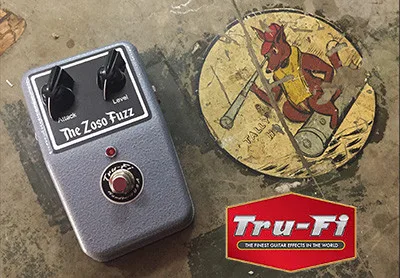
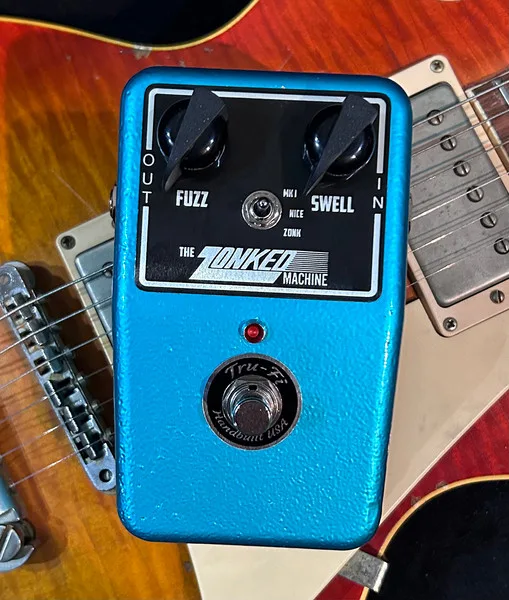
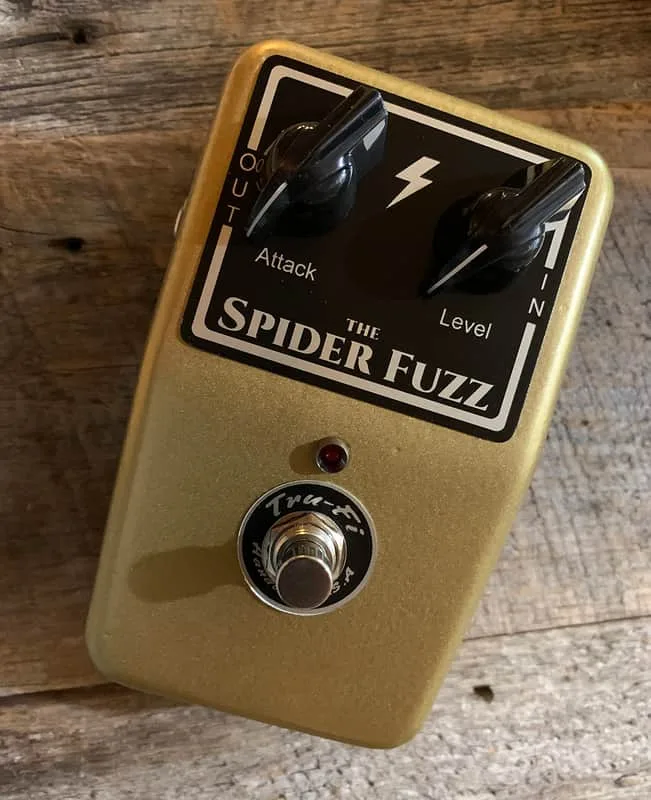
Tru-Fi notes that "this is a 50 year old Fuzz Design"1, and the company builds a wide range of vintage-derived fuzzes alongside it, including the Zosa Fuzz, Zonked Machine, Spider Fuzz, Supa Fuzz and Floyd Fuzz.
Videos
gilmourish
Anthony J. Wilkerson
Philip Czarnecki
Questions
What is the difference between the germanium and silicon sides of the Tru-Fi Two Face Fuzz?
The germanium side is warm, fatter and darker, following the 1966 to 1969 Fuzz Face units. The silicon side is brighter, and some players find it a touch harsher, matching the 1970 Fuzz Face redesign that used temperature tolerant silicon transistors. The silicon bias is set internally to 4.5V and needs no adjustment, while the germanium side has the external Bias control.
Does the Two Face Fuzz Mini PBF run on a battery?
Yes. Tru-Fi states that all of its mini pedals, including the Two Face Fuzz Mini PBF, run on a 9V power supply or a 9V battery. RockBoard's listing for the Two Face Fuzz gives the power spec as 9V DC, center negative.
What does the Bias control do on the Two Face Fuzz Mini PBF?
The Bias control sits on top of the pedal and lets you tweak the germanium transistor bias at any time to dial in the right tone. Tru-Fi also says you can under-bias it for fluttering motorboat tones. It only affects the germanium side; the silicon circuit is set internally to 4.5V.
What does PBF stand for on the Tru-Fi Two Face Fuzz Mini?
PBF stands for Pedalboard Friendly. It marks the compact version of the Two Face Fuzz, built in a smaller, modern enclosure with the jacks on top so it takes up less room on a pedalboard.
Where are the jacks on the Two Face Fuzz Mini PBF?
On top of the pedal. The PBF Pedalboard Friendly enclosure moves the jacks to the top of the box, which shrinks the footprint on a pedalboard compared with the larger original Two Face Fuzz.
Sources (3)
- Tru-Fi Two Face Fuzz Pedalboard Mini Version Guitar Pedal, Tru-Fi
- Two Face Fuzz, tru-fi.com
- Two Face Fuzz by Tru-Fi Pedals, RockBoard PedalPedia, 2026