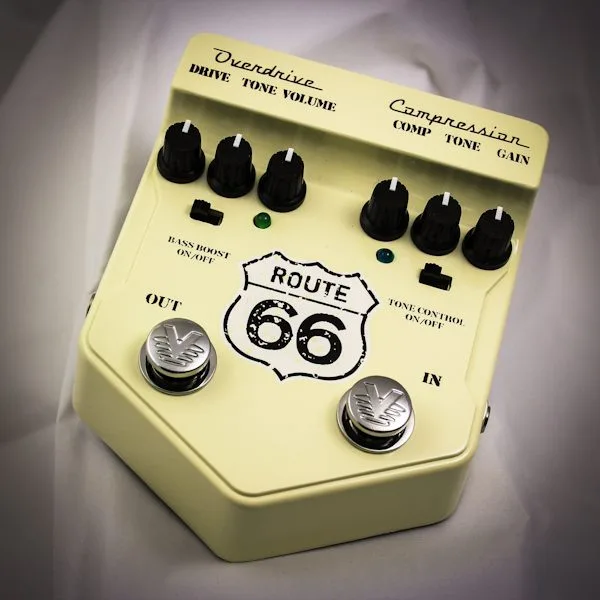


The Visual Sound Route 66 is a two-in-one pedal that puts an overdrive and a compressor in the same box, each with its own footswitch. Premier Guitar described it plainly: "The Route 66 pairs a potent overdrive with a great-sounding compressor."1 First introduced in 1999, it is now in its third version, and its maker, Visual Sound, changed its company name to Truetone in 2015, so later versions appear under the Truetone name.213
Truetone describes the pairing as "an overdrive that covers everything from mild boost to cranked amp sounds; a compressor that players often leave on as a permanent tone enhancer."4 The V3 was also reported to work well beyond guitar: the dual pedal "can enhance the sound of guitar or bass, and even keyboards and other electronic instruments," and Delicious Audio found the overdrive "particularly solid as a bass effect as it is as a guitar effect."56
An overdrive and compressor in one pedal
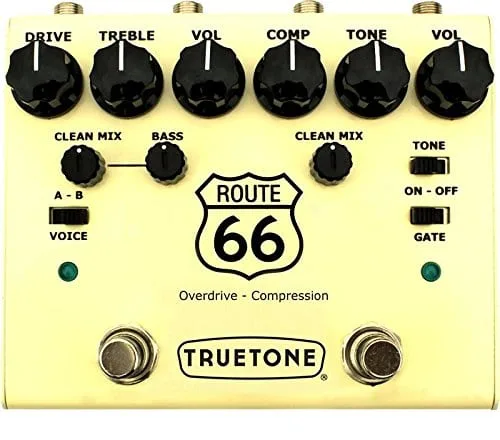
The Route 66's two halves are fully independent circuits. The compressor side handles everything from tightening up your sound to the heavy parallel compression used by today's pros, according to the V3 announcement, and it carries a mix knob and a switchable noise gate.15 The overdrive side has standard drive, treble and volume controls plus two mini knobs for clean mix and bass, and an A/B switch for different voicings.1
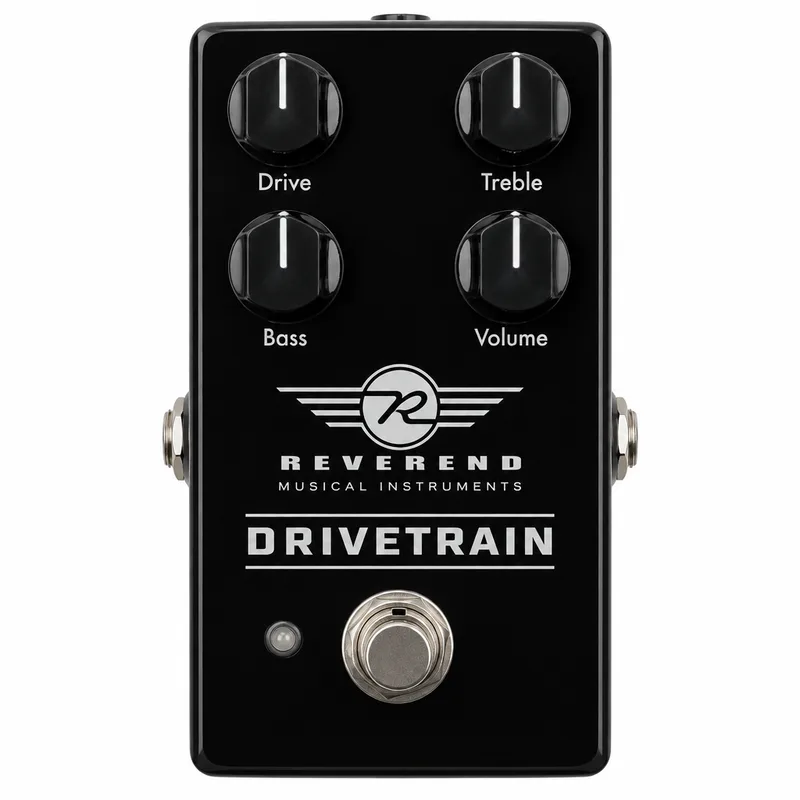
The V3 overdrive circuit is based on the classic Reverend Drivetrain circuit developed by Bob Weil and Joe Naylor, with an added Clean Mix control that blends overdrive and dry signal.58 A two-position Voice switch varies the overdrive tone between bright and open, or more saturated.58
| Control | Side | What it does |
|---|---|---|
| Drive, Treble, Volume | Overdrive | Standard overdrive controls1 |
| Clean Mix (mini knob) | Overdrive | Blends overdrive and dry signal8 |
| Bass (mini knob) | Overdrive | Sets low-end content1 |
| A/B switch | Overdrive | A gives throaty midrange presence, B is a bit more scooped1 |
| Voice switch (V3) | Overdrive | Bright and open, or more saturated5 |
| Mix | Compressor | Blends in compressed signal for subtlety1 |
| Noise gate | Compressor | Switchable on the compressor side1 |
Separate inputs, outputs and buffers
What sets the Route 66 apart from most two-in-one pedals is its routing. Premier Guitar noted that "the addition of separate inputs and outputs for each effect makes the Route 66 a true two-in-one," and listed switchable internal buffers among its pros.1 The Truetone V3 carries front-mounted jacks with separate inputs and outputs per channel.7
For a player, that means:
- Run the overdrive and compressor in series inside the pedal, or feed each side from a different source17.
- Put one side in a loop or a different point in the chain while the other stays in line1.
- Switch the internal buffers on or off depending on the rest of the pedalboard1.
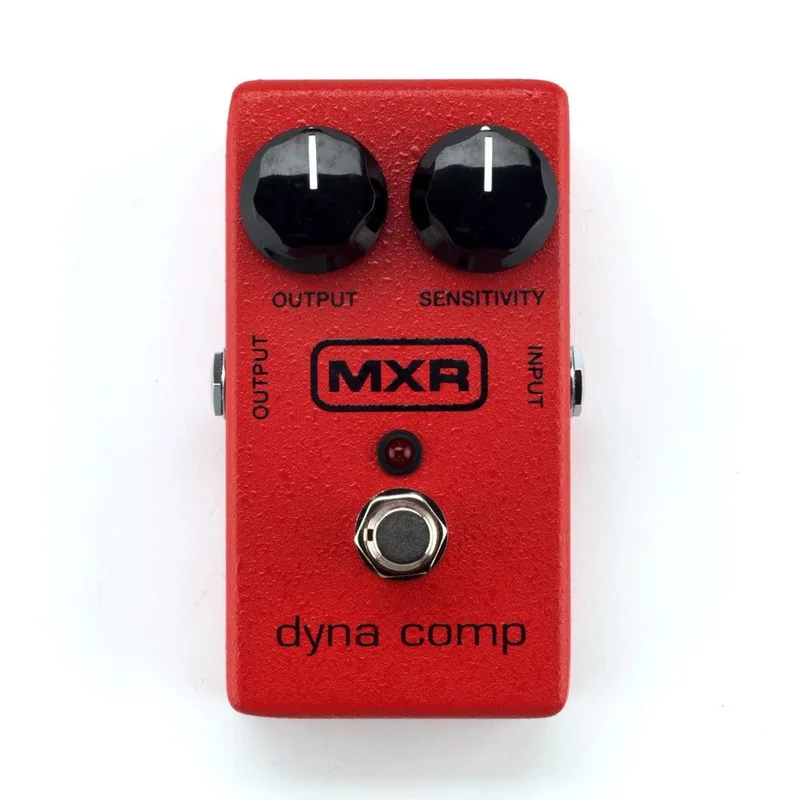
The compressor itself is not a transparent one. Premier Guitar's reviewer wrote that "the Route 66 isn't a completely transparent compressor, think of an old Ross or MXR Dyna Comp, but it can achieve subtlety" through its mix knob.1
The third version and its circuit
The Route 66's history runs from 1999 through three versions. The original overdrive had Tube Screamer-esque roots and used the 4558 op amp, the chip associated with that circuit family.12 The V3 overdrive moved to a redesigned circuit based on the Drivetrain II that Visual Sound designed for Reverend.1
The enclosures changed too. V1 and V2 were pentagonal, like home plate, and Delicious Audio called that highway-sign design "a nuisance on a pedalboard."6 The V3 Route 66 American Overdrive + Compressor shipped in a more traditional rectangular casing.6
The V3 was developed by Visual Sound's Bob Weil and Chief Engineer R.G. Keen, and carried a lifetime warranty.5 Keen had been the company's chief engineer since the earlier V2 series era.9
What reviewers said
Premier Guitar's roundup review summed up the V3's strengths and weaknesses:
"Pros: Flexible routing options. Switchable internal buffers. Great value. Cons: Treble control could be more effective."1
The same reviewer found the treble sweep "a bit subtle and thought it could use a more dynamic top end," but on value the verdict was strong: "At roughly $90 per effect, the Route 66 is a contender for the bang-for-buck championship belt."1 On noise, the reviewer found that "at stage volume the Route 66 was comfortably quiet."1
Delicious Audio called the V3, at $179, "reasonably priced for a dual switch overdrive pedal with loads of options for tone control, particularly factoring in the lifetime warranty."6
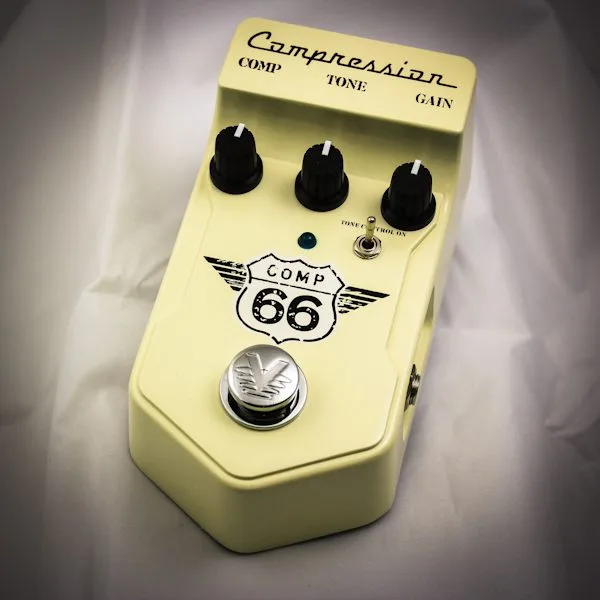
The compressor side also earned its own following. Premier Guitar noted that "since its introduction in 1999, fans of Visual Sound's Route 66 stomp box have been requesting the compressor channel as a single pedal," which led to the standalone Comp 66, reviewed as competitive with Keeley, Diamond and Demeter compressors.2
Who made it
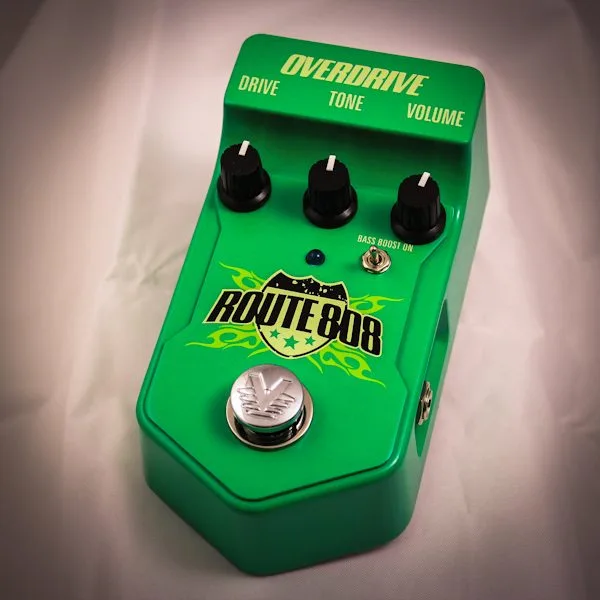
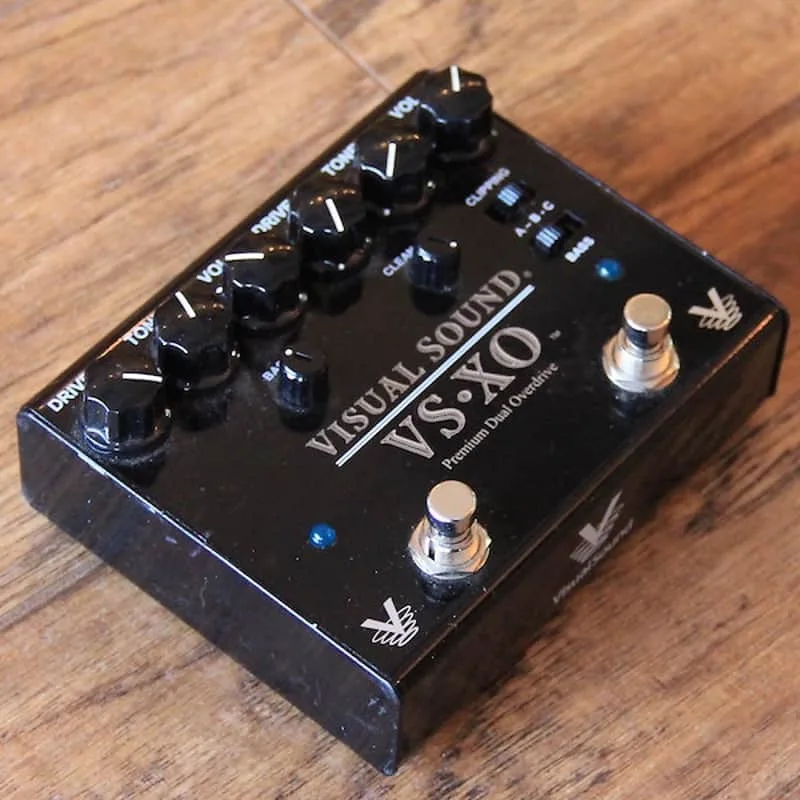
The Route 66 was made by Visual Sound and introduced in 1999.2 It has since reached its third version, described as a feature-packed, two-headed monster.3 The Route 66 line continues under the Truetone name as the Truetone V2 Route 66 and Truetone V3 Route 66. Related Visual Sound dual pedals include the Route 808 and the VS-XO.
Videos
Anarchy Audio
Truetone
Shawn Tubbs
Questions
Is the Visual Sound Route 66 an overdrive or a compressor?
It is both. The Route 66 is a dual-channel pedal with an overdrive on one side and a compressor on the other, each with its own footswitch. The overdrive covers everything from mild boost to cranked amp sounds, and the compressor is the kind players often leave on as a permanent tone enhancer.
Can I use the Route 66 overdrive and compressor separately?
Yes. The two channels are independent, with separate footswitches, and the pedal has separate inputs and outputs for each effect, which makes it a true two-in-one. You can run one side alone, both together, or route them differently thanks to the separate jacks.
What does the A/B switch do on the Route 66?
The A/B switch selects between two overdrive voicings. The A setting provides a throaty midrange presence, while B is a bit more scooped. Combined with the drive, treble and volume controls and the clean mix and bass mini knobs, it lets the overdrive side cover a lot of tonal ground.
Does the Route 66 have a noise gate?
Yes, the compressor side has a switchable noise gate. On the Truetone V2 version the noise reduction circuit is channel-independent and activates automatically, and reviewers found the pedal comfortably quiet at stage volume.
Is the Route 66 based on a Tube Screamer?
The original Route 66 overdrive had Tube Screamer-esque roots and used the 4558 op amp, the chip associated with that circuit family. The V3 overdrive moved to a redesigned circuit based on the Drivetrain II that Visual Sound designed for Reverend, with an added Clean Mix control.
Who made the Route 66 after Visual Sound changed its name?
Visual Sound changed its company name to Truetone in 2015, and the Route 66 carried the Truetone name afterward. The V2 and V3 Route 66 pages are now published by Truetone, the successor company to Visual Sound, which was founded by Bob Weil.
Sources (9)
- Overdrive Overload: 6-Pedal Review Roundup, Premier Guitar, 2015-05-13
- Visual Sound V2 Comp 66 Pedal Review, Premier Guitar, 2008-10-15
- Visual Sound Dual Tap Delay, Pedal of the Day (pedal-of-the-day.com), 2016-01-07
- V2 Route 66, Truetone, 2026
- Visual Sound Launches V3 Route 66 American Overdrive, Premier Guitar, 2014-11-21
- New Pedals: Visual Sound V3 Route 66 American Overdrive + Compressor, Delicious Audio, 2015-01-16
- V3 Route 66, Truetone, 2026
- Visual Sound Launches V3 Route 66 American Overdrive, Vintage Guitar magazine, 2014-11-27
- Visual Sound’s Route 808, Visual Volume, and Comp 66, Vintage Guitar magazine, 2010-04-13