The Walrus Audio Bellwether is a bucket-brigade analog delay pedal with tap tempo, made by Walrus Audio12. Where most analog delays of its era asked you to dial in delay time by hand, the Bellwether adds a dedicated tap tempo footswitch and a Tap Division knob, so you can lock repeats to the tempo of the song and chop them into quarter notes, eighth notes, dotted eighth notes or triplets2. It offers up to 1000ms of delay time from an analog circuit1.
The pedal is discontinued. Walrus Audio's product page states plainly that "This product is discontinued and no longer available"1, so anyone wanting one today is looking at the second-hand market.
An analog bucket-brigade delay with tap tempo
Bucket-brigade delay means the audio signal is handed off along a chain of capacitor stages inside BBD chips, which is how classic analog delays worked. The repeats are not digitized, and the circuit naturally rolls off high frequencies and saturates as it repeats. Walrus Audio says the pedal offers "analog circuity and up to 1000ms of lush delays" and "ushers in a rich soundscape of long and short trails"1.
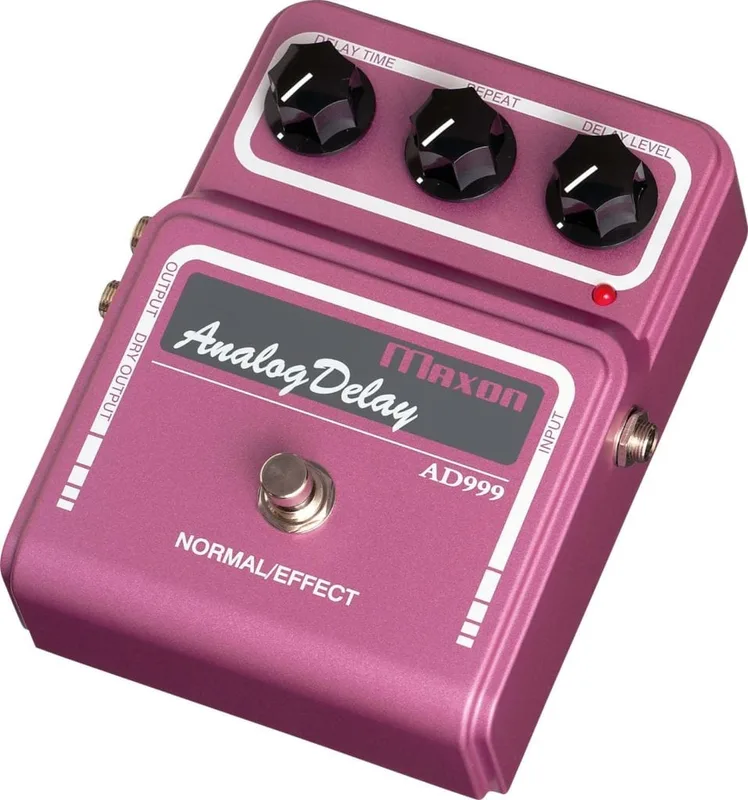
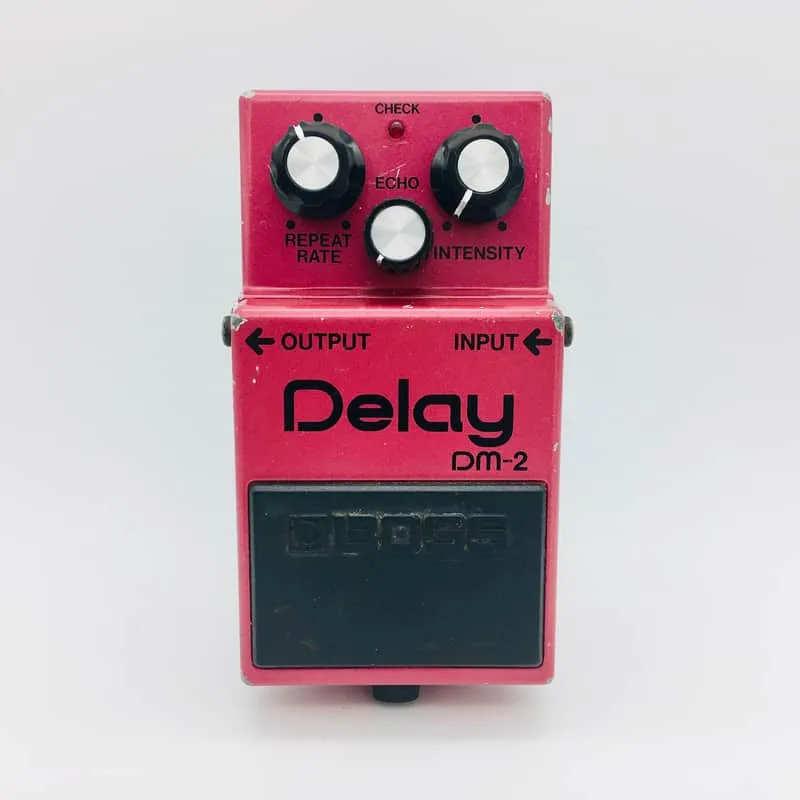
The press release at launch positioned it against two well-known analog delays, saying it "can achieve the warm saturated sounds found in delays like the Maxon AD999 and the coveted Boss DM-2"2. Pedal of the Day's reviewer made the same comparison from the playing side, writing that the Bellwether "gives those machines a real run for their money"3.
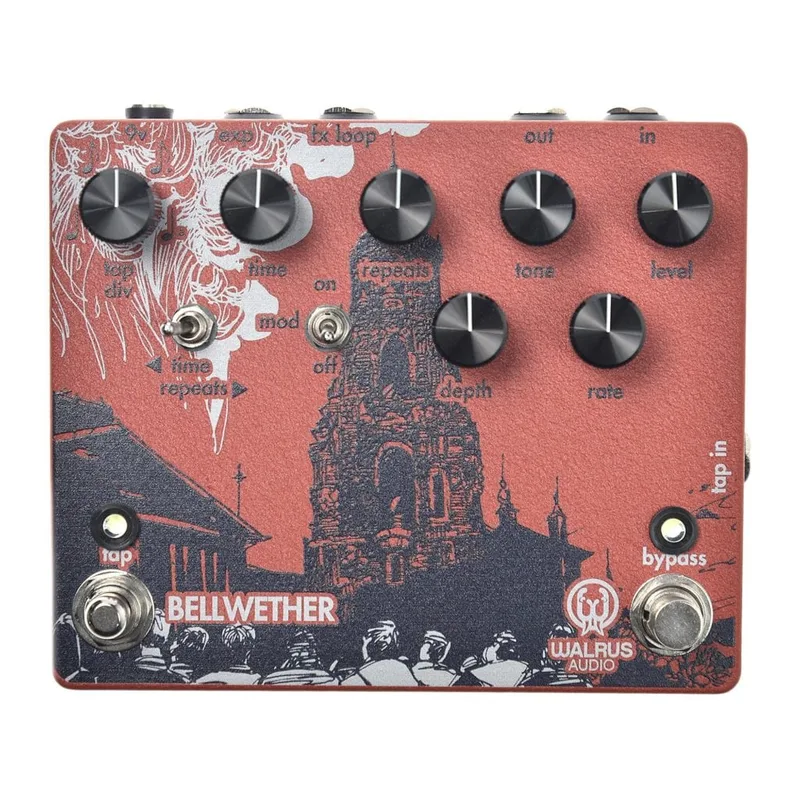
The Bellwether comes in a telephone red texture enclosure with original artwork of onlookers gazing at a bell tower amid burning buildings, sized at 5 ⅝" x 4 ⅝" x 1 ½", and carries two heavy duty footswitches: one for effect on/off and the other controlling the tap tempo2.
The controls and tap divisions
The control surface splits into two groups: five knobs for the delay itself, and two more for the modulation section.
| Control | What it does |
|---|---|
| Tap Division | Selects quarter notes, eighth notes, dotted eighth notes or triplets, working with the Time control or tap tempo32 |
| Time | Sets the overall delay time, with a range up to 1000ms3 |
| Repeats | Sets how many times the delay echoes3 |
| Tone | High-cut control that balances the highs and lows of the delayed signal only, leaving the dry guitar tone untouched23 |
| Level | Sets how much of the pedal's output is mixed with the dry signal23 |
| Depth | Sets the amount of modulation from the Analog Chorus Engine23 |
| Rate | Sets the speed of the LFO wave for the modulation3 |
Two heavy-duty footswitches sit on the front: one for effect on/off and one for tap tempo2. MusicRadar's review highlighted the rhythmic side of the pedal, noting that "you can quickly chop your repeats into quarter notes, eighth notes, dotted eighth notes and triplets"4.
Chorus on the repeats
The Bellwether's modulation section, which Walrus Audio calls the Analog Chorus Engine, applies chorus only to the delay trails rather than the whole signal2. A Mod On/Off switch turns it off entirely, and the Depth and Rate knobs set the amount and speed of the modulation3. The launch press release described it as letting you "manipulate the depth and rate of the chorus effect applied to your trails; creating a deep soundscape of ambient modulation"2.
Pedal of the Day's reviewer, Mike B, was positive about it:
"This fantastic-sounding option lets you blend in as much or as little modulation to your delays as you'd like, giving the repeats that vintage chorus sound, and filling the room with lush, warm, analog delay."
Jacks: stereo outputs, effects loop and expression
The pedal carries five 1/4 inch jacks on the top of the enclosure: input, two outputs, an effects loop, and expression control2. The two outputs give you stereo delay3.
The effects loop lets you insert another effect into the repeats only, so a pedal placed in the loop processes each echo rather than your dry signal. Pedal of the Day noted this works via a TRS-Y cable3.
The expression jack takes a TRS input and lets an expression pedal manipulate either time or repeats, with the choice made by a toggle on the front of the pedal23. That means you can sweep delay time for pitch-bending tape-style effects, or push the repeats up for swelling feedback, without bending down mid-song.
Power and build
The Bellwether requires 9VDC at 100mA minimum2. That is a heavier draw than many compact analog pedals, so a small daisy chain supply may not have enough current to spare for it.
The enclosure is a telephone red texture finish with original artwork of onlookers gazing at a bell tower amid burning buildings, sized 5 5/8" x 4 5/8" x 1 1/2", and the launch press release said it "can more than hold up to the demands of touring"2.
What reviewers said
MusicRadar's review team was emphatic about the pedal, calling it "a monster" and praising its on-the-fly controllability as beyond what is expected from analog delay overall4. Pedal of the Day's Mike B found it "produces warm, vintage, analog delay sounds with ease, and offers a bunch of modern options as well"3, and suggested players "just might be swapping out a pedal or two on your board" after trying it3.
Where it sits among Walrus Audio delays
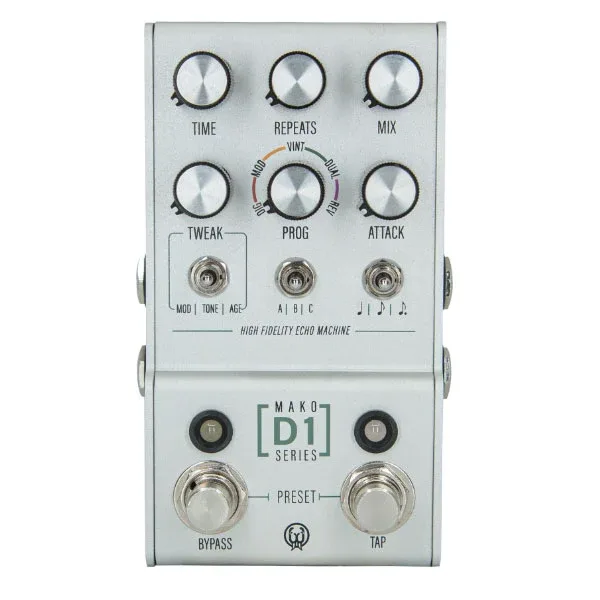
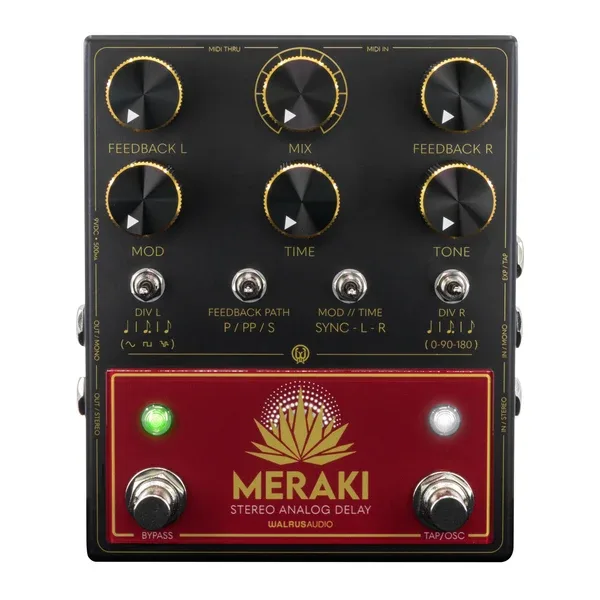
Since the Bellwether was discontinued, Walrus Audio's delay lineup has moved in several directions. The Mako Series D1 covers high-fidelity digital delay, later updated as the Mako Series MkII D1, while the Meraki Stereo Analog Delay carries the analog banner forward in stereo. At the budget end, the Fundamental Lo-Fi Delay was announced in 2026 with three delay modes and tap tempo. For players who specifically want the bucket-brigade character the Bellwether delivered, the second-hand market remains the place to look.
Questions
Is the Walrus Audio Bellwether discontinued?
Yes. Walrus Audio's own product page states the pedal is discontinued and no longer available. It was introduced in 2015 and remains in circulation on the second-hand market, but it is not part of the maker's current lineup.
What is the maximum delay time on the Bellwether?
Up to 1000ms, or one full second. Walrus Audio describes the pedal as offering analog circuitry and up to 1000ms of delays, and reviewers noted the Time control's range goes all the way to 1000ms, enough for long ambient trails as well as short rhythmic repeats.
What power supply does the Walrus Bellwether need?
It runs on 9VDC with a minimum of 100mA. That current requirement is higher than many compact analog pedals, so it is worth checking that a power supply or daisy chain can deliver at least 100mA before plugging one in.
Does the Bellwether have chorus on the repeats?
Yes. It has an Analog Chorus Engine with Rate and Depth controls that applies chorus only to the delay trails, plus a Mod On/Off switch. Reviewers described it as giving the repeats a vintage chorus sound, with as much or as little modulation as you want blended in.
Is the Walrus Audio Bellwether analog or digital?
It is an analog delay. Walrus Audio describes it as a bucket brigade delay pedal with analog circuitry, meaning the repeats pass through bucket-brigade device chips rather than being digitized, which is the same basic approach as classic analog delays.
Does the Bellwether have tap tempo?
Yes. It has a dedicated tap tempo footswitch, one of two heavy-duty footswitches on the pedal, and a Tap Division knob offering quarter notes, eighth notes, dotted eighth notes and triplets that work with the tap tempo or the Time control.
Sources (4)
- Bellwether Analog Delay with Tap Tempo, Walrus Audio
- Walrus Announce Release of New Pedal The Bellwether Analog Delay, Guitar Interactive Magazine, 2015-07-01
- Walrus Audio Bellwether Analog Delay, Pedal of the Day (www.pedal-of-the-day.com), 2015-10-15
- Walrus Audio Bellwether review, MusicRadar, 2016-01-30