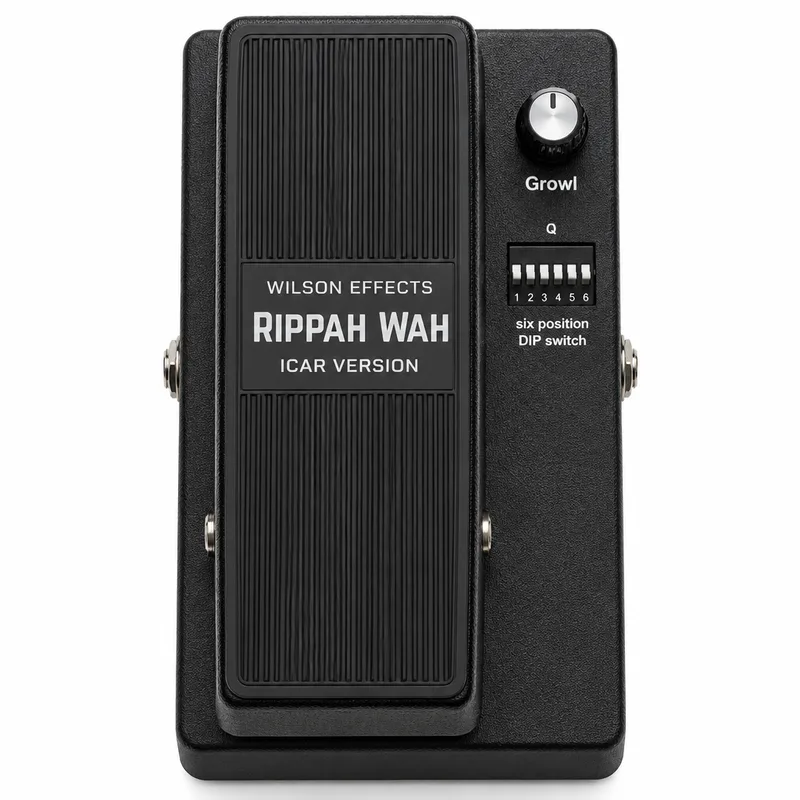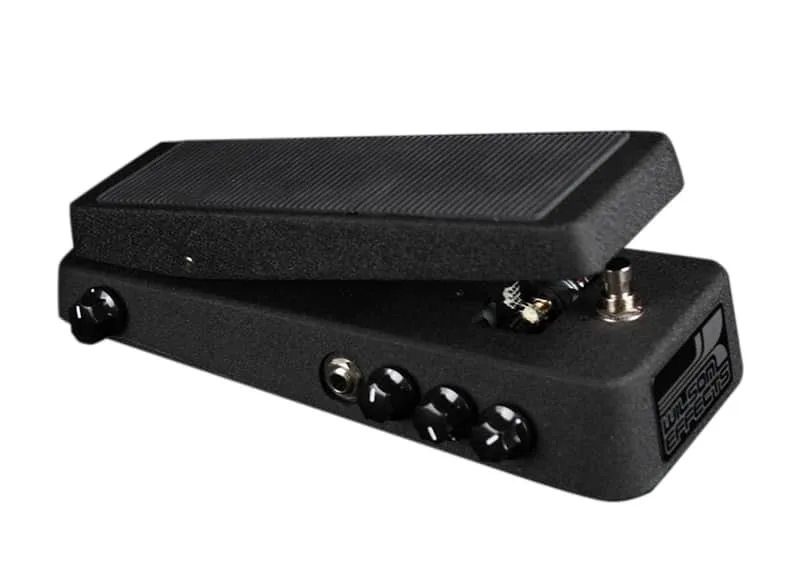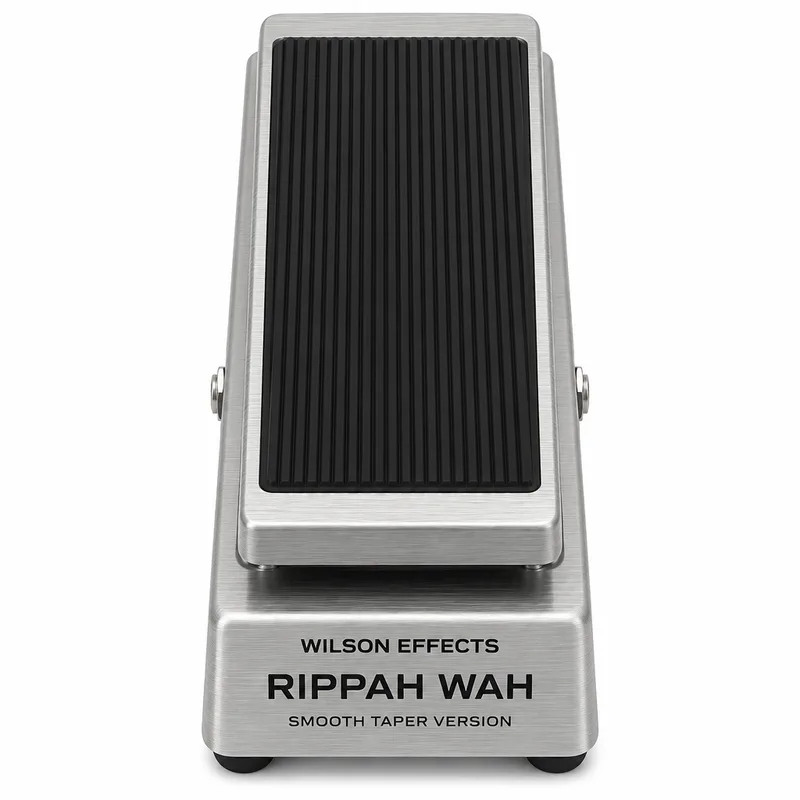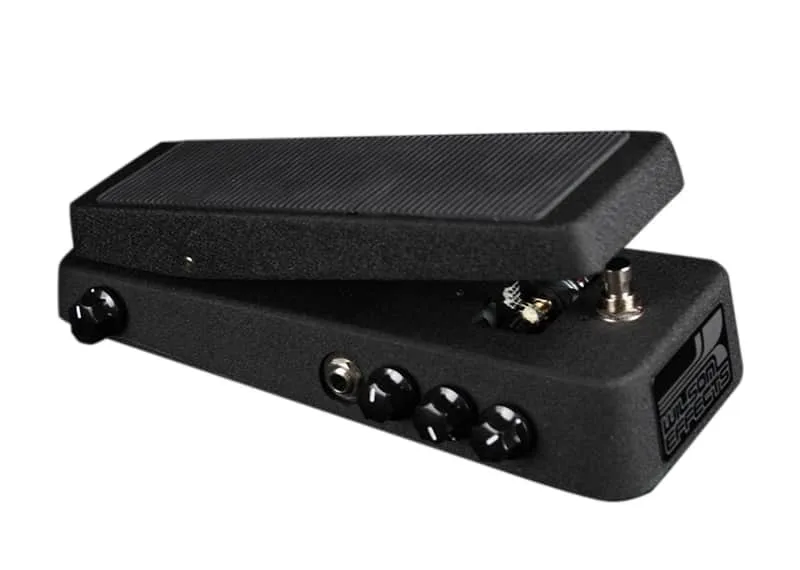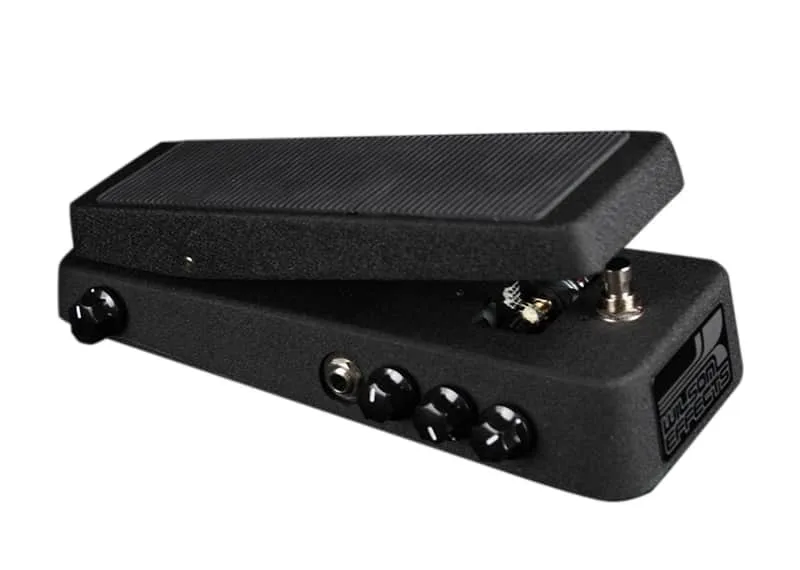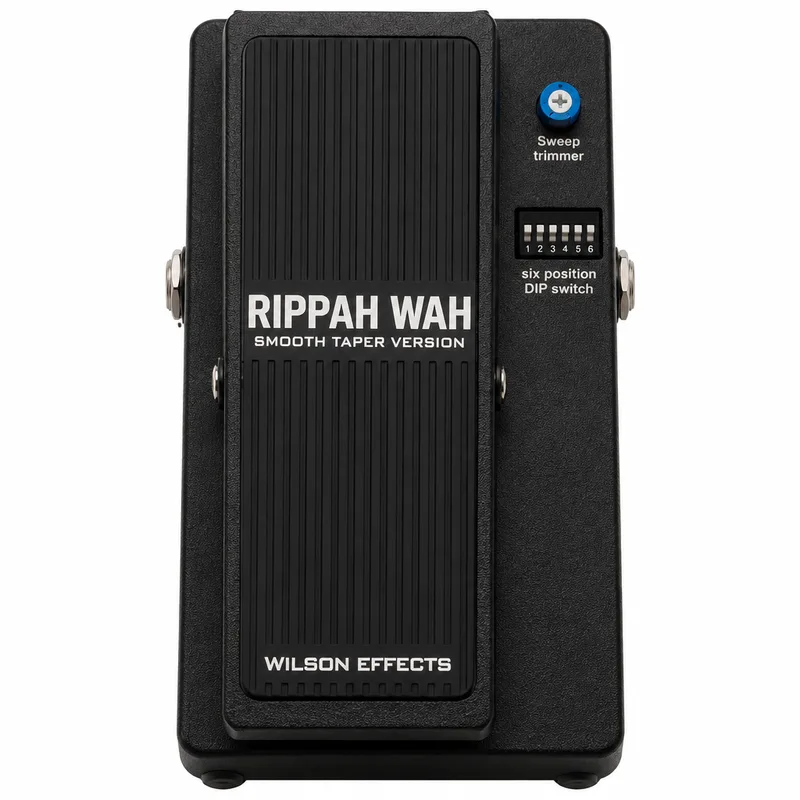
The Wilson Effects Rippah Wah Smooth Taper Version is a wah pedal from Wilson Effects built around the vintage Maestro Boomerang wah circuit. Wilson Effects describes it as a faithful reproduction of the Boomerang with the controls inside, so you can set it and forget it1. The Smooth Taper version is one of two pot options in the Rippah line: it uses a smooth taper pot that keeps the transition through the sweep of the Q range smoother, where the ICAR version uses a pot modeled after a vintage ICAR taper pot1.
A wah based on the Maestro Boomerang
The core circuit of the Rippah Wah is based around the vintage Maestro Boomerang wah, a circuit Wilson Effects calls legendary, delivering what the maker describes as classic tone with modern features12. Where a classic wah leaves you with whatever sweep the factory pot gives you, the Rippah puts the tuning inside the pedal: internal trimmers set the sweep, the growl, and the output level, and a DIP switch moves the Q around1.
The Smooth Taper pot is the defining feature of this version. Wilson Effects says the smooth taper option allows the pedal to maintain a smoother transition through the sweep of the Q range1. The same pedal is also offered with a Wilson Effects vintage taper wah pot, precisely modeled after a vintage ICAR taper pot, for players who want that older sweep and response1. Both pot options come in either the traditional Black Powder finish or a Brushed Aluminum finish, the latter sold as the Brushed Aluminum Rippah Wah Smooth Taper Version1.
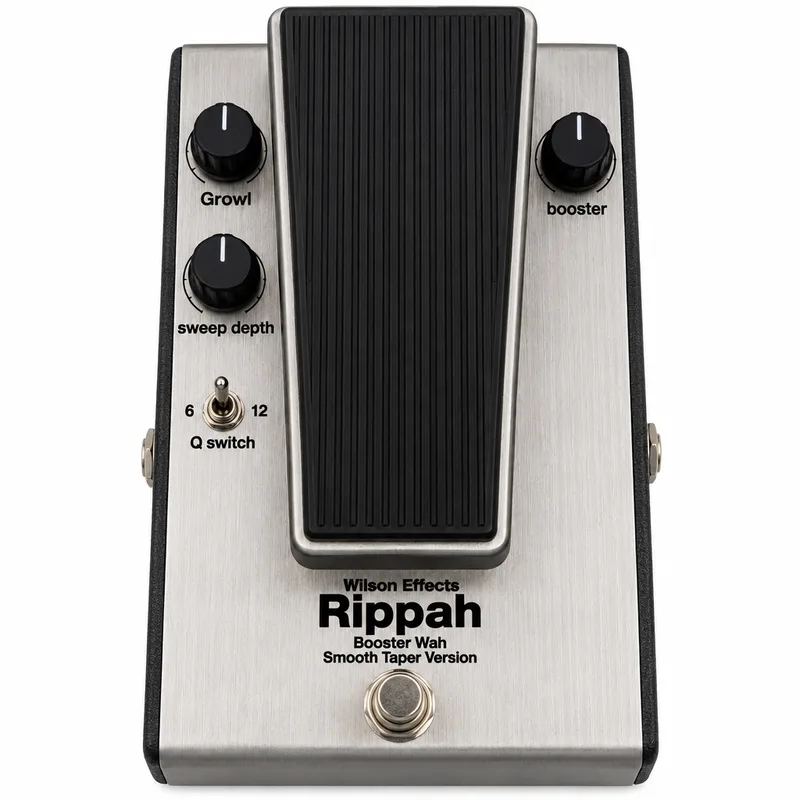
A related model, the Rippah Booster Wah, adds a boost stage to the same Boomerang based circuit4.
The controls
Wilson Effects puts three blue trimmers, or trim pots, inside the Rippah Wah, adjustable with a small flathead or Phillips screwdriver, each tuning a different parameter of the wah2. The maker describes what each one does:
| Control | What it does |
|---|---|
| Sweep trimmer | Controls the range or depth of the sweep. Broadening the spectrum adds more throat; thinning it focuses the wah on upper and mid-range frequencies2 |
| Growl trimmer | Controls the amount of bass and gain, or growl, in the circuit. Turning it down removes bass and gain for a smoother, funky feel1 |
| Boost trimmer | Compensates for any volume drop when adjusting the Growl control, and can push the front end of a tube amp for enhanced presence in a mix1 |
On the main board there is also a six position DIP switch. This adjusts the Q position of the wah, and Wilson Effects says the positions range from very subtle to very drastic adjustments1. The pedal comes set to a stock setting with position one on, so it works out of the box, and you can experiment from there1.
"The smooth taper option allows the pedal to maintain a smoother transition through the sweep of the Q range."
Fuzz friendliness and power
The Rippah Wah Smooth Taper Version features a fuzz friendly output buffer. Wilson Effects says this allows the wah to work seamlessly with most fuzz and overdrive pedals, avoiding the common impedance issues that come up when a wah feeds a fuzz pedal12. For players who run a fuzz after the wah, that buffer is the difference between a pedal that loads down and one that behaves.
Power comes from either a high quality 9VDC battery or a regulated 9VDC 2.1mm center negative power supply3. The standard 2.1mm center negative connector means it drops straight onto most pedalboard power supplies.
Versions and warranty
The Rippah Wah line is available in two pot options, ICAR and Smooth Taper, each in a Black Powder or Brushed Aluminum finish1. Every pedal is hand-built in the U.S.A. and includes a one-year warranty on parts and labor1. Wilson Effects gives the same one-year warranty on parts and labor across the Rippah versions325.
Questions
What is the difference between the Smooth Taper and ICAR Taper Rippah Wah?
The two versions share the same Maestro Boomerang based circuit, controls, and fuzz friendly buffer. The difference is the wah pot: the ICAR Taper version uses a pot modeled after a vintage ICAR taper pot, while the Smooth Taper version uses a pot that keeps the transition through the Q range smoother as you rock the pedal.
Does the Rippah Wah Smooth Taper run on a battery?
Yes. Wilson Effects says the Rippah Wah is powered by a high quality 9VDC battery or a regulated 9VDC 2.1mm center negative power supply, so it works either way on a pedalboard.
Does the Rippah Wah work with fuzz pedals?
Yes. Wilson Effects fits a fuzz friendly output buffer in the pedal, which the maker says lets the wah work seamlessly with most fuzz and overdrive pedals and avoids the impedance problems that often come up when a wah feeds a fuzz.
What does the DIP switch do on the Rippah Wah?
The six position DIP switch on the main board adjusts the Q position of the wah, from very subtle to very drastic changes. The pedal ships with position one on as the stock setting, and you can experiment from there.
What warranty does Wilson Effects give on the Rippah Wah?
The Rippah Wah Smooth Taper Version is covered by Wilson Effects' standard one-year warranty on parts and labor.
Sources (5)
- Rippah Wah, Wilson Effects
- Rippah Wah ICAR Version, Wilson Effects
- Rippah Wah Smooth Taper Version, Wilson Effects
- Rippah Booster Wah, Wilson Effects
- Rippah Booster Wah Smooth Taper Version, Wilson Effects