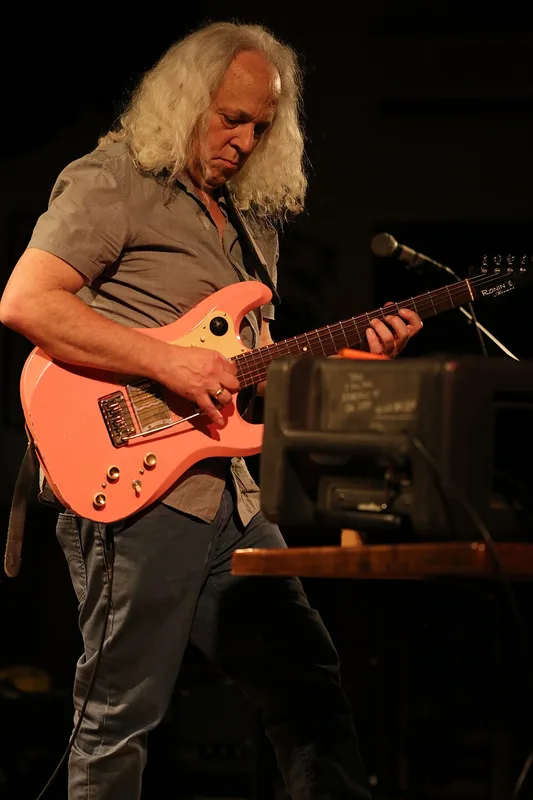
David Torn is an experimental guitarist and soundtrack composer whose credits include David Bowie, k.d. lang, John Legend, Tori Amos, Bill Bruford, Mick Karn, David Sylvian, Meshell Ndegeocello and Don Cherry1. He is also a builder's collaborator: his attention drew Paul Trombetta's work, and he and Trombetta went on to conspire on a pedal built to suit Torn's needs1. He plays down-tuned guitars and asked Benson Amps for more bass on tap in his personal pedal, mostly for amplifying the sub frequencies of those instruments2.
Benson Amps calls him one of the most famous and discerning users of the original 60s Tone Bender MK1 circuit2, and Guitar World credits the former Bowie guitarist with lending Benson a number of vintage fuzzes to compare and contrast when developing a fuzz of their own3.
Rack delays and loopers
Torn is not just a user of advanced rack delays and loopers, he is a programmer of them. Chris Buono, writing for the Stompbox Book after visiting Torn's studio in December 2019, puts it plainly:
"You can add firmware designer to Torn's list of skills as he had a heavy hand in programming most of these units."
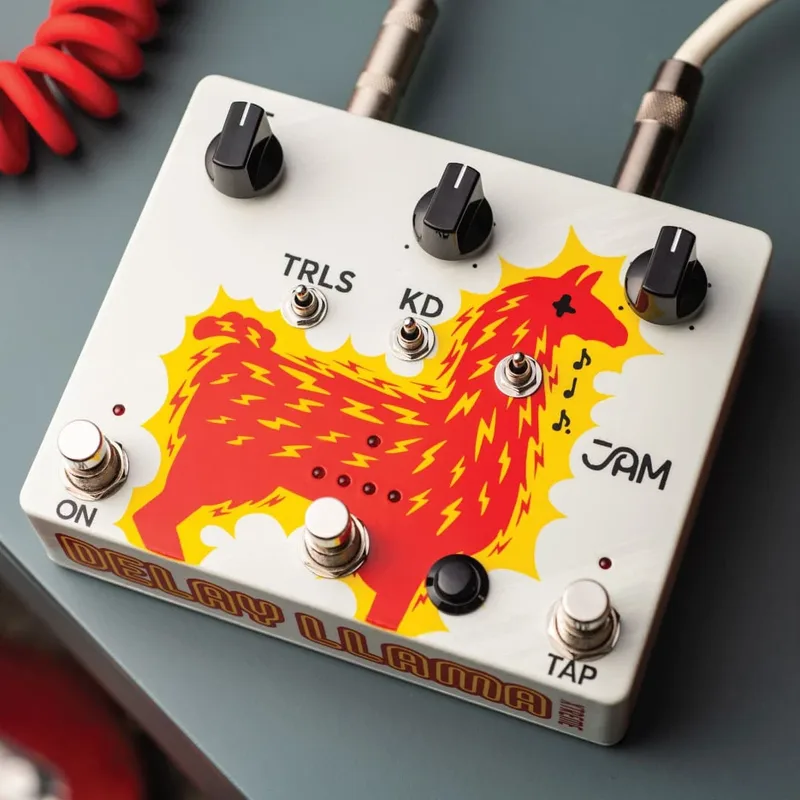
On the current pedalboard side, Torn is an artist on the JAM Pedals roster5, and appears in a JAM Pedals video lending a hand with the company's pedals5. Of the Delay Llama XTREME he says:
"The Delay Llama XTREME is just ridiculously good; it's on everything I'm recording!"
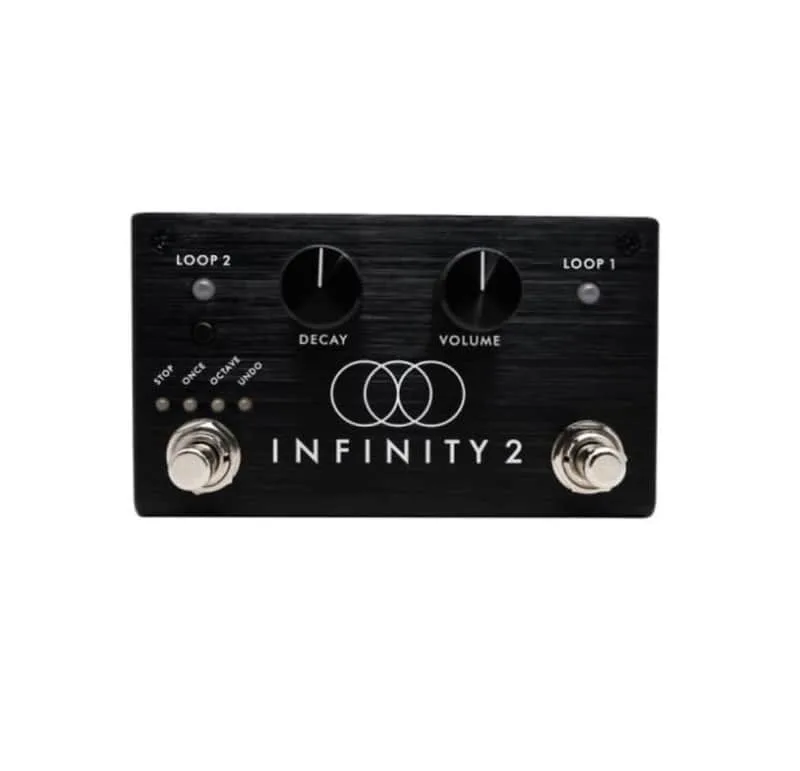
His place in looping is widely noted by the press. A GuitarPlayer review of the Pigtronix Infinity 2 groups him with Robert Fripp as the avant-garde guitarists whose ambient style loopers have traditionally been used for, before a generation of newer artists took them into traditional composition work8. BOSS's guide to loop pedals names him alongside Ed O'Brien as a player who uses loopers to create atmospheres9.
Fuzz pedals and prototypes
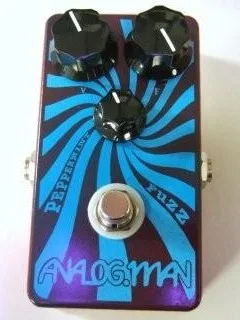
Torn's fuzz collection runs deep into small-builder territory. On display during the Stompbox Book visit were deep cuts and prototypes from four builders4:
| Builder | Pedals |
|---|---|
| John Lyons, Basic Audio | Fuzz Mutant, Bye-Bias, Pirk |
| Tom Cram, Spiral Electric FX | Black Spiral, Aurora |
| Mike Piera, Analog Man | Peppermint Fuzz |
| Paul Trombetta, Paul Trombetta Design | Tornita, Velocitine |
Some of these pedals are prototypes, not production models, and some were gifts from the builders, including one with a hand-etched image of one of Torn's album covers on the enclosure4.
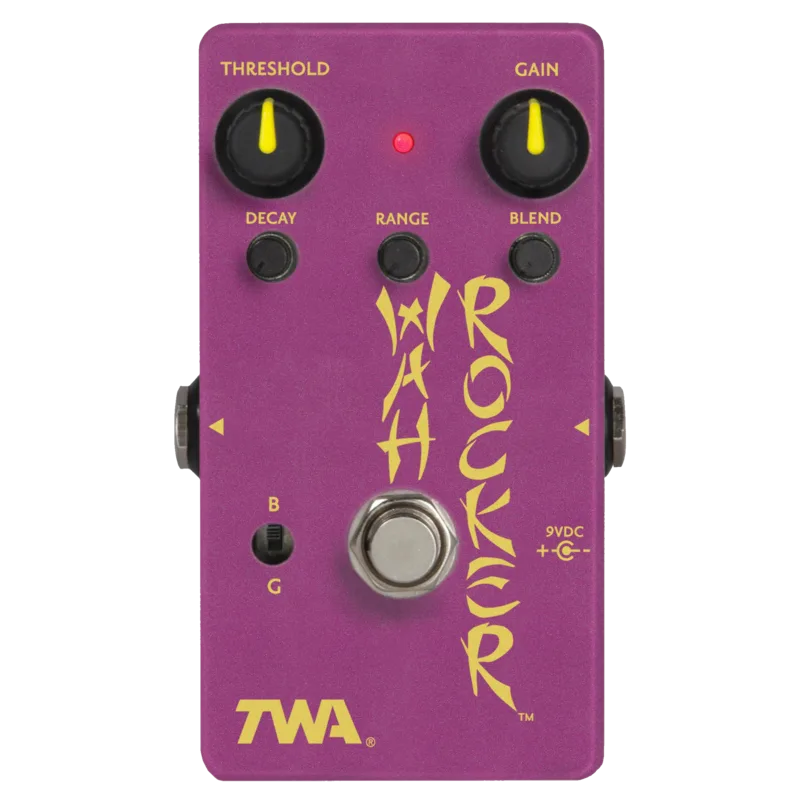
Analog Man also counts him among the purchasers and users of the Z.Vex Fuzz Factory10. Beyond fuzz, Godlyke lists him with his TWA WR-03 Wah Rocker, a wah descended from the Guyatone Wah Rocker11.
Germanium vs silicon
During the Stompbox Book visit there was a teaching moment where Torn schooled the visitors on the difference between germanium and silicon transistors4, and he held court on the origins of fuzz circuits, citing the Maestro FZ1 and the pioneering iterations of the Sola Sound Tone-Bender as pivotal designs4.
The transistor choice he was explaining is one fuzz players still weigh. Dave Hunter, writing in GuitarPlayer, notes that silicon transistor-based fuzzes followed germanium units and are known for their slightly harder and more crisply defined tones12. Guitar World's fuzz buying guide puts the trade-off in practical terms: silicon transistors typically sound brighter, more controlled and more modern but can sit on the harsher side, while germanium transistors tend to sound warmer, with greater responsiveness to changes made using the guitar's volume knob, though they are more susceptible to temperature changes13. The classic example is the Fuzz Face: early models used PNP germanium transistors, argued to be the better sounding models, while some later models used NPN silicon14.
| Transistor type | Character, as described by the press |
|---|---|
| Germanium | Warmer, more responsive to the guitar's volume knob, more susceptible to temperature changes13 |
| Silicon | Brighter, more controlled, more modern, but can sit on the harsher side; harder and more crisply defined tones1213 |
Feedback and oscillation
Torn's reputation extends to the sounds most players try to eliminate. Benson Amps' builder notes, quoted by Delicious Audio, describe him as one of the pioneers of using self noise and oscillation in creative ways15. That same builder's account notes Chris Benson applied a misremembered idea from his lead tech, Carson McWhirter, described as an unconventional guitarist in his own right, in developing the fuzz that Torn's input helped shape15.
Cell Labs East in Woodstock
Torn works from Woodstock, New York, a town whose calming effect of nature is evident in its earth-tone clad ethos4. His workspace there is affectionately known as Cell Labs East4. In December 2019 the Stompbox Book team visited the studio to photograph him and gather material, with a full interview and photo of his chosen pedal slated for the book4.
Questions
What looper does David Torn use?
Torn is an artist on the JAM Pedals roster and endorses the Delay Llama XTREME, saying it is on everything he is recording. GuitarPlayer groups him with Robert Fripp as an avant-garde guitarist whose ambient style loopers have traditionally served, and BOSS's loop pedal guide names him alongside Ed O'Brien as a player who uses loopers to create atmospheres.
Did David Torn program his own rack delays?
Yes. In a 2019 interview with the Stompbox Book, Chris Buono writes that you can add firmware designer to Torn's list of skills, because he had a heavy hand in programming most of the advanced rack delays and loopers in his collection.
What fuzz pedals does David Torn own?
His collection includes fuzzes and prototypes from John Lyons of Basic Audio (Fuzz Mutant, Bye-Bias, Pirk), Tom Cram of Spiral Electric FX (Black Spiral, Aurora), Mike Piera of Analog Man (Peppermint Fuzz) and Paul Trombetta of Paul Trombetta Design (Tornita, Velocitine). He also owns a Z.Vex Fuzz Factory, and some pedals were gifts from builders.
Where is David Torn's studio?
His workspace is in Woodstock, New York, and is affectionately known as Cell Labs East. The Stompbox Book team visited it there in December 2019 for an interview and photo shoot.
What does David Torn say about germanium vs silicon fuzz?
During the Stompbox Book visit he schooled the visitors on the difference between germanium and silicon transistors, and held court on the origins of fuzz circuits, citing the Maestro FZ1 and the pioneering iterations of the Sola Sound Tone-Bender as pivotal designs.
How does David Torn use feedback and oscillation?
Benson Amps' builder notes, quoted by Delicious Audio, describe him as one of the pioneers of using self noise and oscillation in creative ways. That creative use of a pedal's own unruly behavior is part of what drew builders like Trombetta and Benson to work with him on designs.
Sources (15)
- Paul Trombetta Design Tornita! Pedal Review, Premier Guitar, 2011-07-19
- Störkn B0kš, Benson Amps
- Benson expands its temperate-controlled fuzz pedal range with the vintage '60s flavors of the Stonk Box, Guitar World, 2023-05-18
- Visiting David Torn, Stompbox Book (stompboxbook.com), 2019-12-01
- David Torn, JAM Pedals (www.jampedals.com)
- “Achenbach multi-head” Delay Llama XTREME, JAM Pedals (jampedals.com)
- “Relic” Delay Llama XTREME, JAM pedals (jampedals.com)
- Pigtronix Infinity 2 Double Looper Review, GuitarPlayer, 2020-08-19
- The Complete Guide to Loop Pedals for Electric Guitarists, BOSS (articles.boss.info), 2025-04-04
- Z.Vex Effects, Analog Man (analogman.com), 2015
- TWA WR-3 WAH ROCKER®, Godlyke Distributing, Inc.
- All about fuzz, overdrive, distortion and boost pedals, GuitarPlayer (www.guitarplayer.com), 2026-06-22
- Best fuzz pedals 2026: add some filth to your sound with these essential pedalboard effects, Guitar World, 2022-06-09
- Microsoft Word, Georgia Institute of Technology (hosted at guitarpcb.com), 2006-05
- Benson Amp Storkn Boks Fuzz, Delicious Audio, 2024-09-26