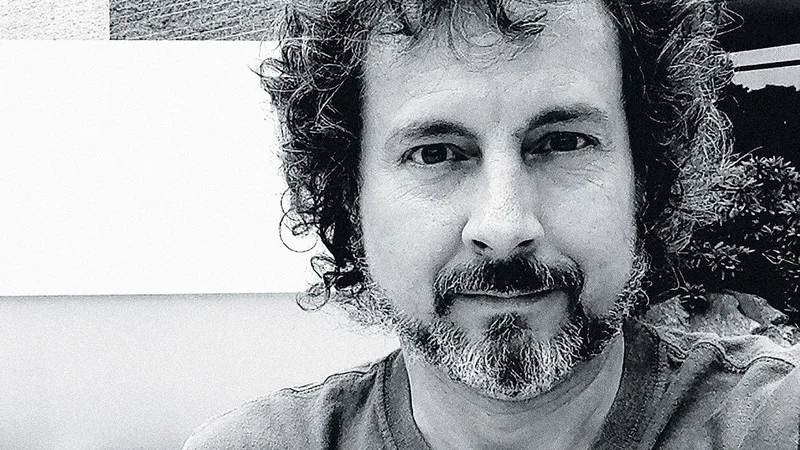
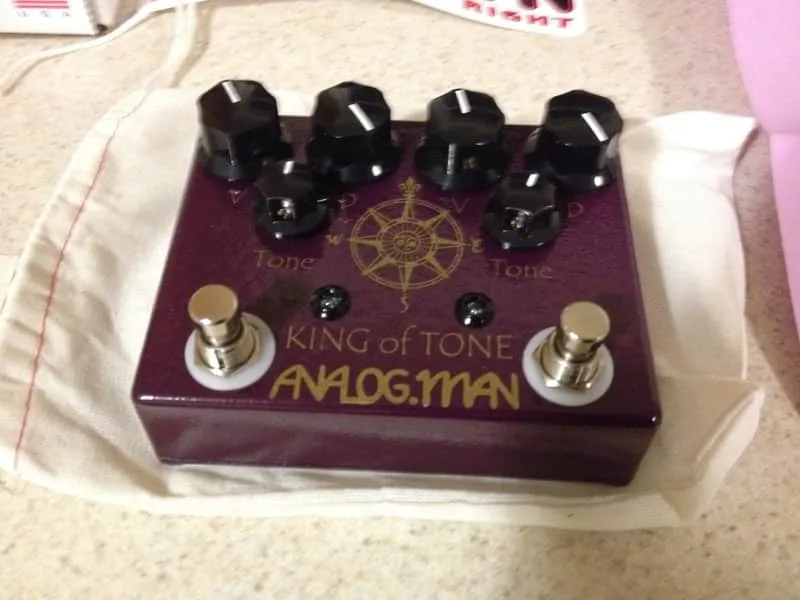
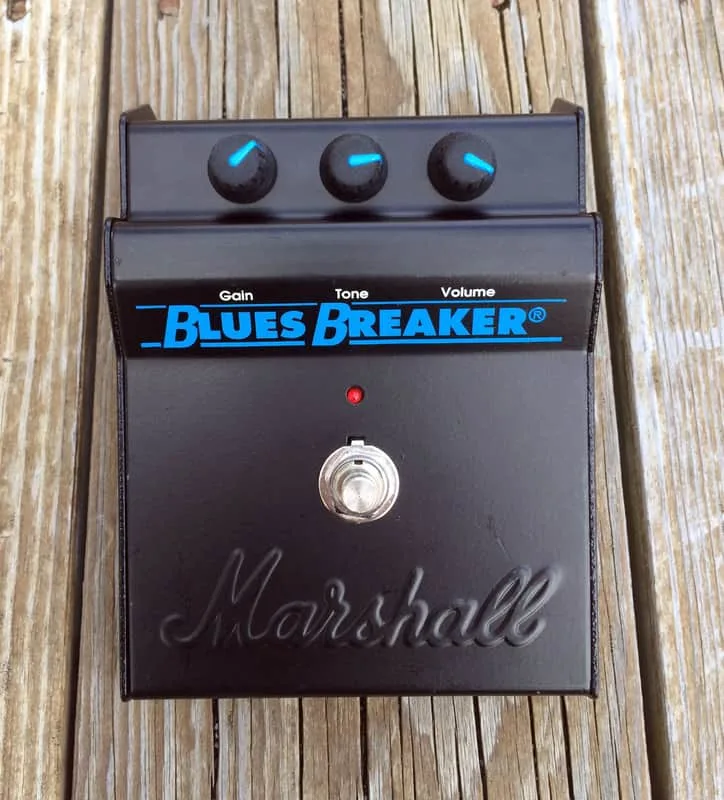
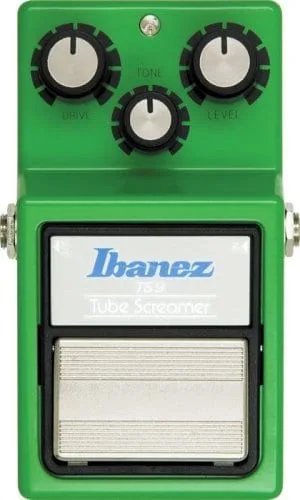
Mike Piera, better known as Analog Mike, is the founder of Analog Man Guitar Effects, the Connecticut company behind the King of Tone overdrive pedal. He is a designer and builder rather than a performer: he made his name modifying Tube Screamers and other classic pedals, created the market for modified TS9/808 pedals after Ibanez reissued the TS9, and went on to design his own circuits, most famously the King of Tone, a heavily modified Marshall Bluesbreaker123. Premier Guitar puts it plainly: "Analog Mike (aka Mike Piera) of Analog Man Guitar Effects does cool things."4
He established Analog Man in 1993 and has run it full-time since midway through 2000, hand-building pedals in the USA with a small crew5678. On That Pedal Show, Dan and Mick described his standing in the boutique pedal world:
"Mike is is a purist. Is he the OG? He's absolutely there as one of the OGs."
Analog Mike, the founder of Analog Man
Piera launched the company in the early days of the internet, back in the days of Usenet and early email, and he still has an aol address up on his site10. He sells pedals direct through the company's website, buyanalogman.com, with preferred exclusive retailers in the UK, Europe and Australia carrying certain product lines12.
His reputation rests on two things: modified classics and original designs built with a vintage flavor. Vintage Guitar notes that "Mike Piera, a.k.a. Analog Man, is known for creating pedals with a vintage flavor."13 The modification work came first. After Ibanez reissued the TS9, Piera's Tube Screamer mods created a whole market, and as he tells it on the company's own history page, "Since this modification market was created by Mike many people have jumped on the bandwagon and there are all sorts of mods being performed now all over the world."1 Pedal of the Day's take on his TS9 Silver mod: "Taking a classic pedal and making it better isn't always an easy task, but Analog Mike knows what's what, knocking this one out of the park for many years now."14 He also offered BD-2 mods through Analog Man15.
The original designs that followed include:
- King of Tone, an overdrive based on a Marshall Bluesbreaker that he modded and then redesigned3. Origin Effects describes its origin: "Mike Piera, the man we all lovingly know as Analog Man, released the first version of the now-legendary King of Tone: a modped Blues Breaker circuit."16
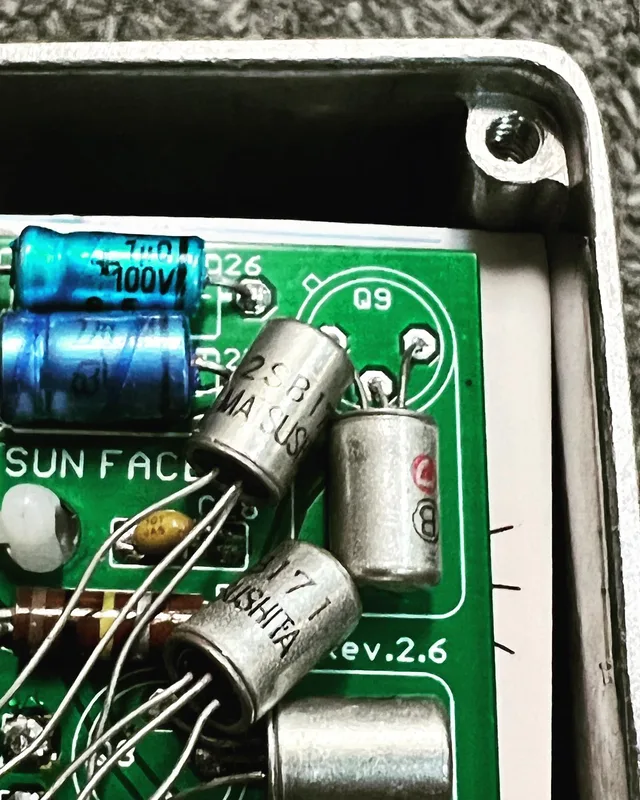
- Sun Face, a fuzz built on the company's own USA-made circuit board17
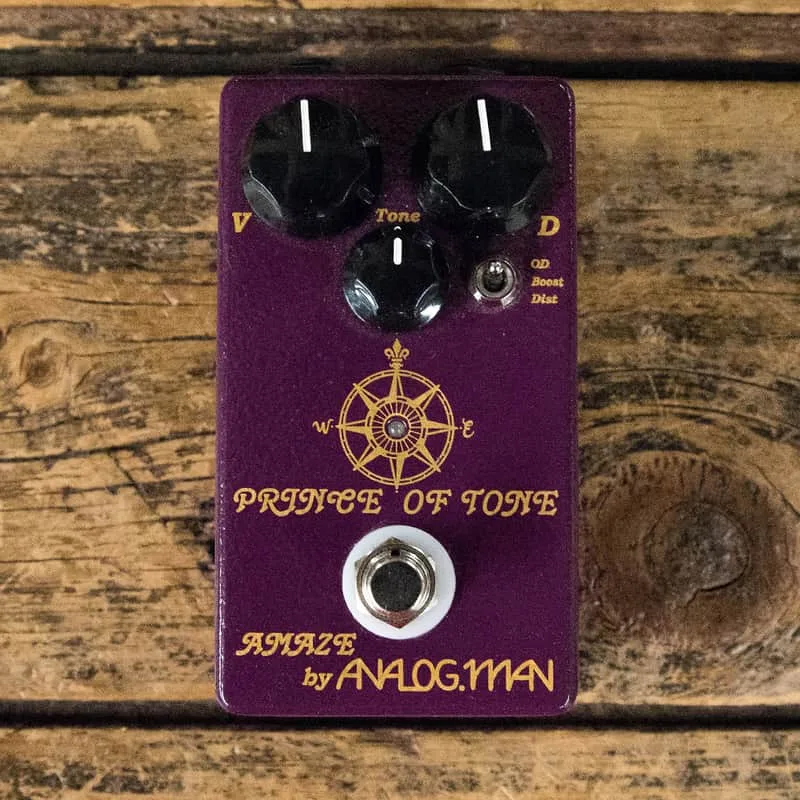
- Sun Bender fuzz, and the Bi-Comprossor, a compressor710
The King of Tone is the pedal most players know him for. Guitar World called it "the most trending and coveted overdrive around, despite its years-long waiting list"2, and because each one is hand-built by Piera and co., that waiting list has added to what Guitar World calls its quasi-mythical status7. MusicRadar notes its reach: "Analogue Man's King Of Tone is simply on too many pros' pedalboards to be a victim of hype, but its four-year waiting list isn't a myth either."18 Vintage Guitar reported in 2021 that Piera has a waiting list for the pedal19. His customer list has included Kenny Wayne Shepherd, Doyle Bramhall II, Carl Verheyen, Scott Henderson, and Gary Clark, Jr.20
The pedal's popularity has also brought counterfeits. Piera posted a picture of a smashed-up fake King of Tone that had been made in China and shipped to the US21.
From software engineer in Japan to full-time pedal builder
Piera's route into pedals ran through engineering and Japan. He earned a computer science degree from Rensselaer Polytechnic Institute in Troy, New York, studying electrical engineering along the way6. In 1985 he moved to Japan, where he worked as a software engineer on transistor test systems in Tachikawa for almost a year and visited Tokyo often1. JHS Pedals' history of his work pinpoints the start: "he got started in the mid '80s, around 1985, when he moved to Japan to be a software engineer."22
Looking back in an interview with Stompbox Book, he connected the day job directly to the gear obsession:
"I was a software engineer for a transistor testing company, I built transistor test equipment, I got turned on to the vintage guitar scene."
It was in Japan that he learned about American vintage guitars, through what he calls the fantastic shops and magazines there6. He also first started buying parts for Analog Man in the Akihabara markets in Japan7. His interest in effects goes back further still: he bought his first pedal, a Maestro phaser with SPEED and BALLS controls, around 1974, to make his Farfisa organ and Hagstrom-II sound better, and he still has it101.
Back in the US, he started tinkering, recreating rare effects and modifying things for friends22. Vintage Guitar's Tom Hughes observed that his background suited the work: "Peira's background as a software engineer with a degree in computer science made him ideally suited to explore the possibilities of the new medium."11
The timeline of the company:
- Around 1974: buys his first pedal, a Maestro Phaser10
- 1985: moves to Japan as a software engineer, gets into vintage guitars and effects226
- 1993: establishes Analog Man5
- Midway through 2000: goes full-time, launching Analog Man proper in Connecticut6
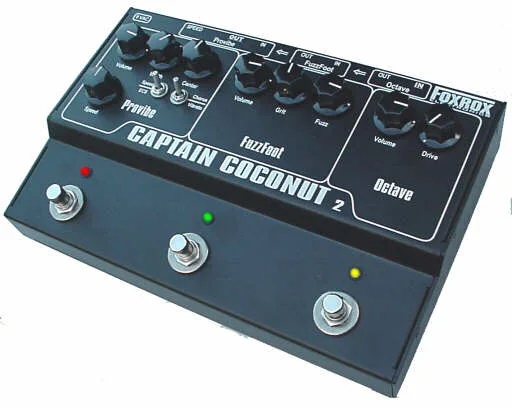
- Soon after 2000: begins a working relationship with Dave Fox of Foxrox Electronics, together perfecting Fox's Captain Coconut1
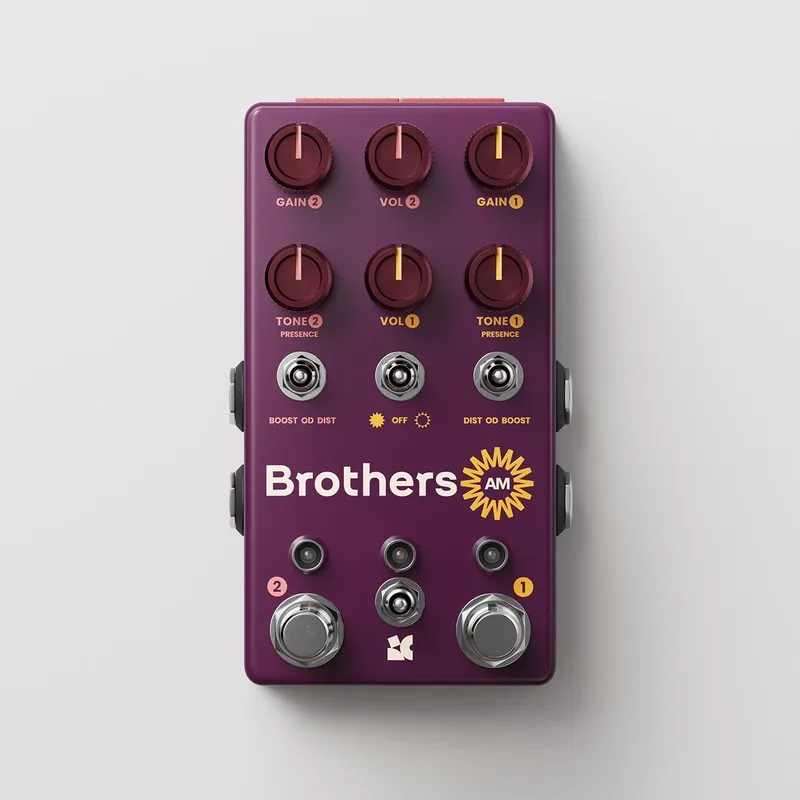
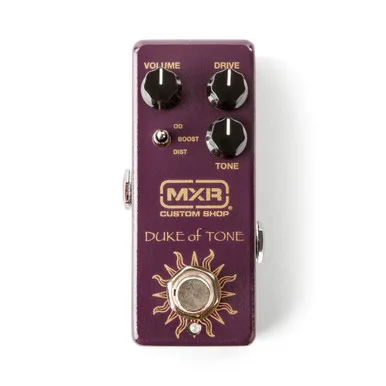
His influence extends beyond his own lineup. Stumpbox Pedals started as a hobby influenced by classic fuzz circuits "and the works of Analog.Man's Mike Piera in particular"23. In 2022 he collaborated with MXR on the Duke of Tone, and in the Chase Bliss Brothers AM he worked with Joel Korte, who came up with the overall idea and workflow while Piera was available for technical questions and sonic testing187.
A design rule: keep the guitar's tone and feel
Piera's design ethic, in his own words from a 2019 guitar.com interview:
"All of our pedals need to keep your tone and feel," he says, "unless it's something that's supposed to change it."
That rule shows up in how he works. For the MXR Duke of Tone, he drew out the schematic himself and chose the parts used24, then personally and rigorously tested the pedal to ensure identical thru-hole components were present3. Guitar World's overdrive buying guide notes that "All of the circuitry was created with Mike Piera's involvement too, so he tested every single component and gave it the go-ahead before the pedal was produced."25 He teamed with Jeorge Tripps and MXR to deliver, in MusicRadar's words, "half a KOT in mini form for the mass market - essentially a mini Prince Of Tone."18
His motive for the MXR collaboration was availability. As he said at the time:
"I was very happy working with [MXR], the reason being to get these out to the stores."
He also insists there are real, audible differences between op amps, a position Premier Guitar notes not everyone holds27. That attention to individual components runs through everything from his Sun Face fuzzes, which That Pedal Show covered in a comparison of germanium and silicon versions with Piera himself, to the King of Tone149.
In that video, Dan and Mick discuss Piera's standing as one of the OGs of the boutique pedal world and his single-minded commitment to analog pedals9. Guitar.com's review of the Brothers AM makes a similar point about his reach: "The Analog Man himself Mike Piera has already done that with the MXR Duke Of Tone, and it's a lot cheaper too."28
For players weighing his designs against the mass-market versions, the practical difference is straightforward: the hand-built Analog Man originals carry a waiting list, while the MXR Duke of Tone, designed in conjunction with Piera, represents a more affordable and available version of the King of Tone sound2419.
News
Questions
Who is Analog Mike?
Analog Mike is Mike Piera, founder of the pedal company Analog Man. He started by modifying Tube Screamers and other classic pedals, then built his own designs, most famously the King of Tone overdrive, a modded Marshall Bluesbreaker circuit. He is known as a purist committed to analog pedals, and each King of Tone is hand-built, which is why the pedal carries a long waiting list.
When did Mike Piera start Analog Man?
Mike Piera established Analog Man in 1993. He had been tinkering with and modifying effects for years before that, going back to the mid 1980s, but the company dates to 1993. He ran it alongside other work until midway through 2000, when he went full-time with the business.
Where is Analog Man based?
Analog Man is based in Connecticut, where Mike Piera works and lives. He launched the full-time version of the company there in 2000 and it remains in the same location today. The pedals are hand-made in the USA and sold direct through the company's website.
Did Mike Piera work as an engineer in Japan?
Yes. Mike Piera worked in Japan as a software engineer on transistor test systems in Tachikawa for almost a year in 1985, and visited Tokyo often. He had earlier earned a computer science degree from Rensselaer Polytechnic Institute, where he also studied electrical engineering.
When did Mike Piera go full-time with Analog Man?
Midway through 2000, Mike Piera decided to go full-time and launch Analog Man proper, in the same Connecticut location where the company remains today. Soon after, he began a working relationship with Dave Fox of Foxrox Electronics, together perfecting Fox's Captain Coconut design.
Sources (28)
- Analog Man, Analog Man (analogman.com), 2023
- Warm Audio Throne of Tone pedal review, Guitar World, 2025-10-17
- MXR partners with revered boutique builder Analog Man for the Duke of Tone, Guitar World, 2022-09-01
- Analog Man DS-1 Pro Midrange Mod Review, Premier Guitar, 2008-09-09
- Stompbox Classics: Tone Bender, Part 2, Premier Guitar, 2009-10-21
- "We don’t have our pedals on shelves ready to ship": Analog Man's Mike Piera on his customer-driven approach, guitar.com, 2019-08-13
- Joel Korte on making the Chase Bliss Brothers AM, Guitar World, 2025-09-01
- Could the Joyo R 20 King Of Kings be a poor man's Analog Man King Of Tone?, www.gearnews.com, 2021-10-27
- The New King Of Tone? Chase Bliss x Analog Man Brothers AM Plus Prince Of Tone & MXR Duke of Tone, That Pedal Show (YouTube), 2025-04-24
- Analog Man, Stompbox Book, 2019-10-20
- Analog Man’s Guide to Vintage Effects Pedals, Vintage Guitar magazine, 2006-05-25
- That Pedal Show, That Pedal Show, 2017-12-12
- Analog Man Bi-Comprossor, Vintage Guitar magazine, 2014-10-24
- aNaLoG.MaN Ibanez TS9 Tube Screamer (SILVER MOD), Pedal of the Day, 2023-01-20
- Boss overdrive pedals: the evolution of its essential stompboxes, Guitar World, 2021-09-28
- Green, Gold & Blue, Origin Effects, 2026-09-08
- Guitar FX Layouts: Analogman Sunface NKT275, tagboardeffects.blogspot.com (Guitar FX Layouts), 2013-03-01
- Our 11 favourite effects pedals of 2022, MusicRadar, 2022-12-22
- Analog Man’s King of Tone Overdrive, Vintage Guitar magazine, 2022-06-02
- Analog Man BC183 Sun Face, Vintage Guitar magazine, 2014-04-15
- Analog Man fumes as fake components slow King Of Tone production, Guitar.com, 2021
- ANALOG MAN'S BEST PEDALS, JHS Pedals
- Guitar Pedal X, Guitar Pedal X, 2024-05-17
- Duke Of Tone: MXR and Analog Man’s collab overdrive just $149, guitar.com, 2022-09-02
- Best overdrive pedals 2026: mid-hump to transparent tone, Guitar World, 2022-06-07
- MXR, Analog Man Team Up to Create New Duke of Tone Overdrive Pedal, GuitarPlayer (www.guitarplayer.com), 2022-09-01
- MXR Duke of Tone Guitar Pedal Review, Premier Guitar, 2022-09-01
- Chase Bliss Brothers AM review: can it live up to its price tag?, Guitar.com, 2025-07-07