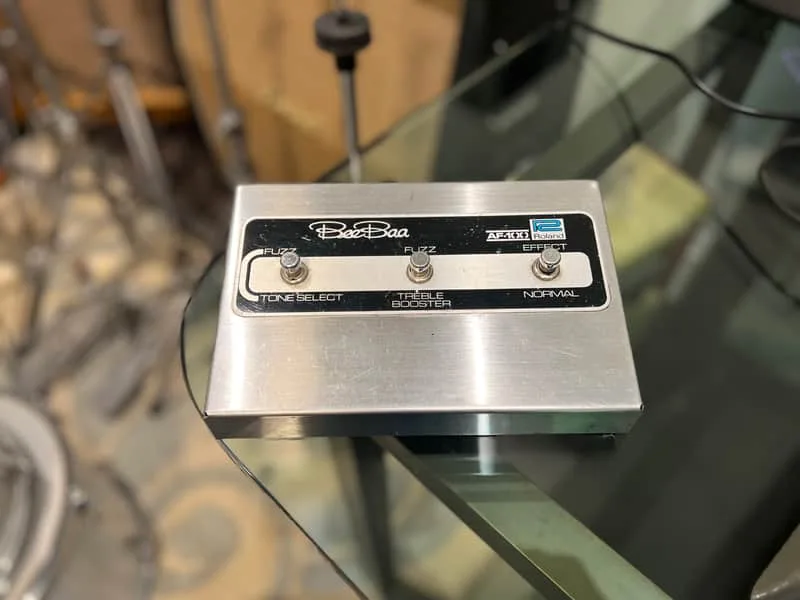
The Roland Bee Baa, formally the AF-100 BeeBaa Fuzz and Treble Booster, is a vintage Japanese effects pedal that puts two effects in one box: a fuzz circuit and a treble booster. Roland built it between 1972 and 1979, and it was the company's first pedal12. Pedal of the Day calls it "a huge silver beast that houses 2 effects and a lot of vintage attitude"1.
What makes the Bee Baa interesting to players today is its layout. Rather than a single fuzz voice, it carries a fuzz section with two selectable tones plus a separate treble-emphasized boost mode with its own volume control, which means it can be run as a two-channel effect2. Original units are long out of production and command high prices on the used market2, but the circuit has lived on through a string of clones and replica kits from makers including Black Cat, Klinger, Zero G, Aion FX, Maxon and General Guitar Gadgets34567.
Where the Bee Baa came from
Roland was established as a company in 1972, the same year the AF-100 Bee Baa appeared as its first fuzz pedal2. In a JHS Pedals interview with Josh Scott and Yoshi Ikegami, the AF-100 BeeBa is identified as the first Roland pedal8. Godlyke describes it as "Roland's answer to the gnarly, nasty guitar boxes coming out of the USA & the UK in the late 60's"6.
The Bee Baa did not stand alone. A BOSS history article by Michael Molenda notes that "Roland made some wild pedals during the early to mid-1970s. These included the AF-100 BeeBaa, AF-60 BeeGee, and AG-5 Funny Cat"9. The Bee Baa was built between 1972 and 1979, a run that Pedal of the Day places among "the classic icons of great vintage fuzz pedals"1.
The name, according to the JHS interview, came straight from the sound the pedal makes: "BEE-BA"8. Delicious Audio, writing about the pedal's legacy, called it "a unique, and rather gnarly, combination of Fuzz and Treble Booster, and one of the first pedals with" that kind of dual layout5, and elsewhere described it as "a unique (and uniquely cumbersome) fuzz & treble booster from the '70s"4.
How it works: fuzz and treble booster in one box
General Guitar Gadgets, which sells a replica kit of the circuit, summarizes the design plainly: "The Roland BeeBaa is basically a fuzz tone with a booster section. This gives you a good sounding clean boost and distortion/fuzz"7. In the JHS interview, the pedal is described as "this fuzz with a treble booster/tone selector"8.
The fuzz side carries the familiar control set. Pedal of the Day lists Volume, Tone and Sustain as "typical fuzz control," each with a wide range1. The boost side has its own volume control; in the General Guitar Gadgets replica this is a 100k audio potentiometer7.
Controls
| Control | What it does |
|---|---|
| Volume knob | Fuzz volume, wide range1 |
| Tone knob | Fuzz tone, wide range1 |
| Sustain knob | Fuzz sustain, wide range1 |
| Fuzz/Treble Booster footswitch | Switches back and forth between the two effects1 |
| Fuzz/Tone Select footswitch | Flops between the two fuzz tones while in Fuzz mode1 |
| Boost control | Sets the level of the treble booster section7 |
The enclosure itself is part of the pedal's reputation: a large silver box that Pedal of the Day characterizes as "a huge silver beast"1. Delicious Audio's "uniquely cumbersome" description points at the same thing4.
For a player thinking about where this sits among fuzz circuits, the Bee Baa is its own design rather than a copy of the British or American boxes it answered6. Its treble booster section puts it in the same family of tools as the Rangemaster-style boosters that players used to push amps, while the fuzz side belongs to the broader world of fuzz pedals.
The boost mode and two voices
The Bee Baa's most practical feature for a modern player is its channel-like structure. Aion FX explains that "it also has a treble-emphasized boost mode with its own volume control, so it can be used as a two-channel effect"2. Set up this way, a player can sit on the cleaner boosted treble voice and step on the Fuzz/Treble Booster footswitch to jump to fuzz for a lead, or the reverse, with the boost level set independently12.
The fuzz mode itself holds two distinct voices, selected by the Fuzz/Tone Select footswitch. Pedal of the Day describes the difference: "One is a mean, 70s fuzz, while the other adds in elements of upper-octave bliss, wildly altering the sounds coming out of" the pedal1.
Aion FX characterizes the two voices in sound terms: "a mid-scooped buzz that sounds like a swarm of bees, and a softer-edged tone that might evoke sheep"2. That pairing is the source of the pedal's name, the bee and the baa8.
"One is a mean, 70s fuzz, while the other adds in elements of upper-octave bliss, wildly altering the sounds coming out of your amp."
What it sounds like and what reviewers said
Because original units are scarce and expensive, most of what is published about the Bee Baa's sound comes from reviewers who have spent time with vintage units or with clones. Pedal of the Day's verdict on the original is positive: "if you come across one, and can afford it, you're not going to be disappointed when you plug it in and crank it up"1. The same review puts the current market value at around $500, as of 20221.
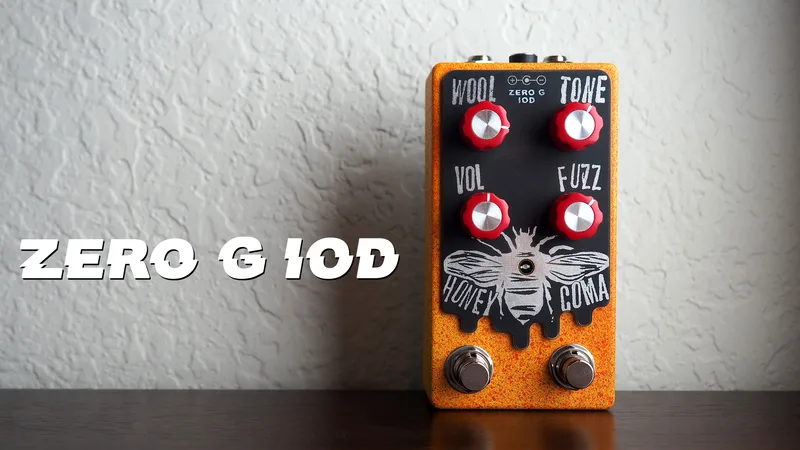
Delicious Audio's Paolo De Gregorio, covering the Zero G IOD Honey Coma Fuzz, framed the original this way: "The Bee Baa was a unique, and rather gnarly, combination of Fuzz and Treble Booster"5. The same writer called the original "uniquely cumbersome" while praising the circuit enough that clone makers keep returning to it4.
Clones and modern versions
The Bee Baa's circuit has been reproduced many times, which is how most players encounter it today.
| Maker | Product | Relationship to the Bee Baa |
|---|---|---|
| Black Cat | Wee Buzz / Bee Buzz | Based on the original Roland Bee Baa design3 |
| Klinger | Fuzz Bee | A clone of the AF-100 BeeBaa Fuzz4 |
| Zero G | IOD Honey Coma Fuzz | A variant of the Bee Baa fuzz5 |
| Aion FX | Ibex Silicon Fuzz | A direct clone of the AF-100 Bee Baa2 |
| Maxon | FIRE (FF10) | Fuzz engine based on the vintage Roland AF100 Bee Baa6 |
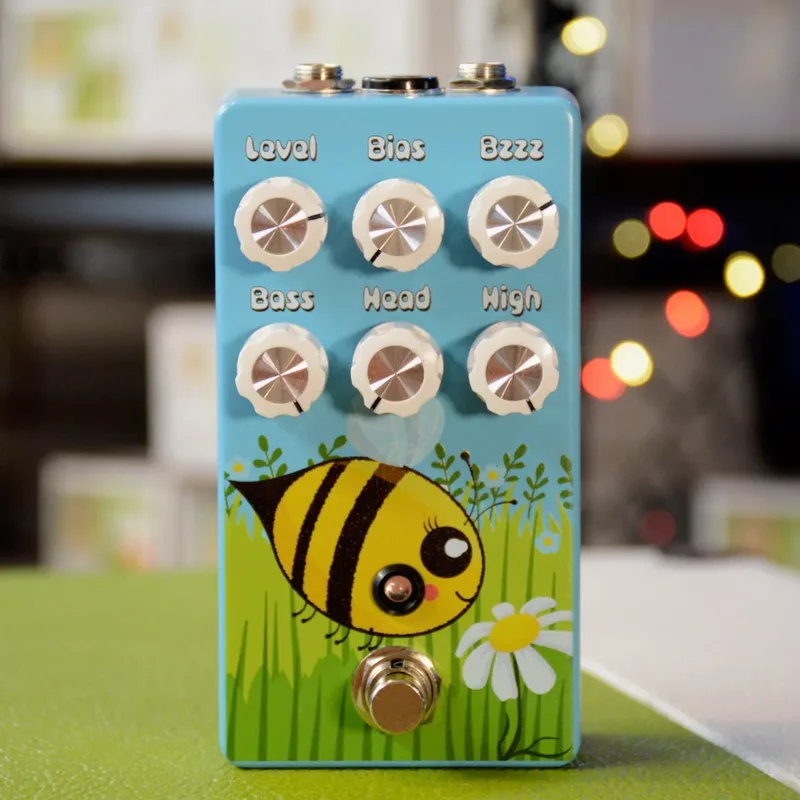
| General Guitar Gadgets | Bee Baa Replica | DIY replica kit with PCB and schematic, from the GEO Site project called the Baa Baa7 |
Premier Guitar's 2012 press release for the Black Cat Wee Buzz states plainly that "Both pedals are, of course, based on the original Roland Bee Baa"3. Delicious Audio reported that "Shaun Klinger made a convincing clone of it" in the Fuzz Bee4. Aion FX's Ibex Silicon Fuzz is described as "a direct clone of the Bee Baa"2, and Godlyke lists the Maxon FIRE's fuzz engine as "based on Vintage Roland AF100 Bee Baa"6.
For a builder rather than a buyer, General Guitar Gadgets offers the circuit as a DIY project: "This is a Roland Bee Baa replica project," with a PCB, schematic and full parts list, developed from the GEO Site's Baa Baa project7. The kit's parts list includes the 100k audio potentiometer for the boost control and an SPDT toggle switch7.
Pedals on this page
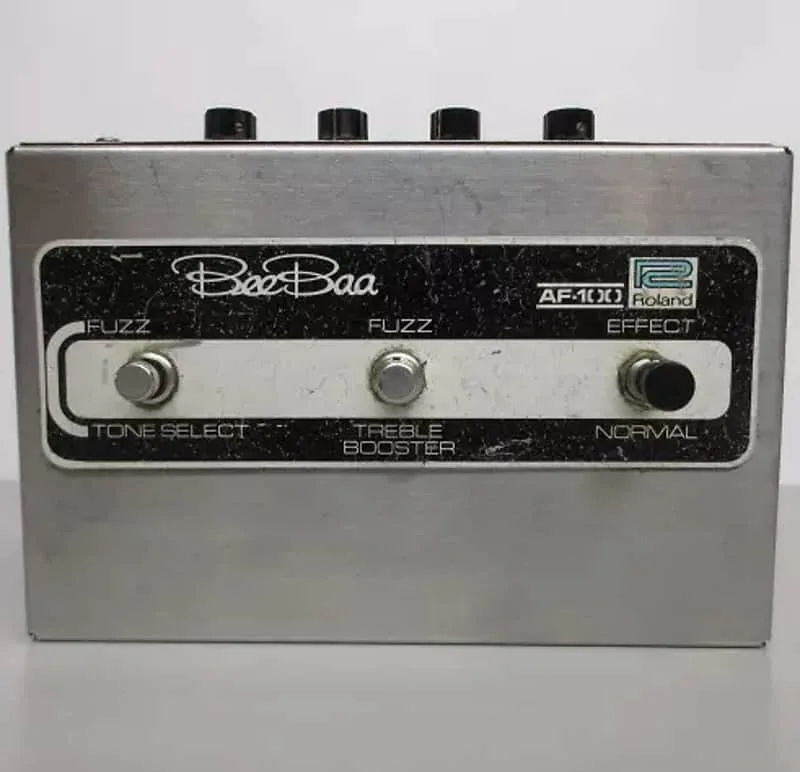
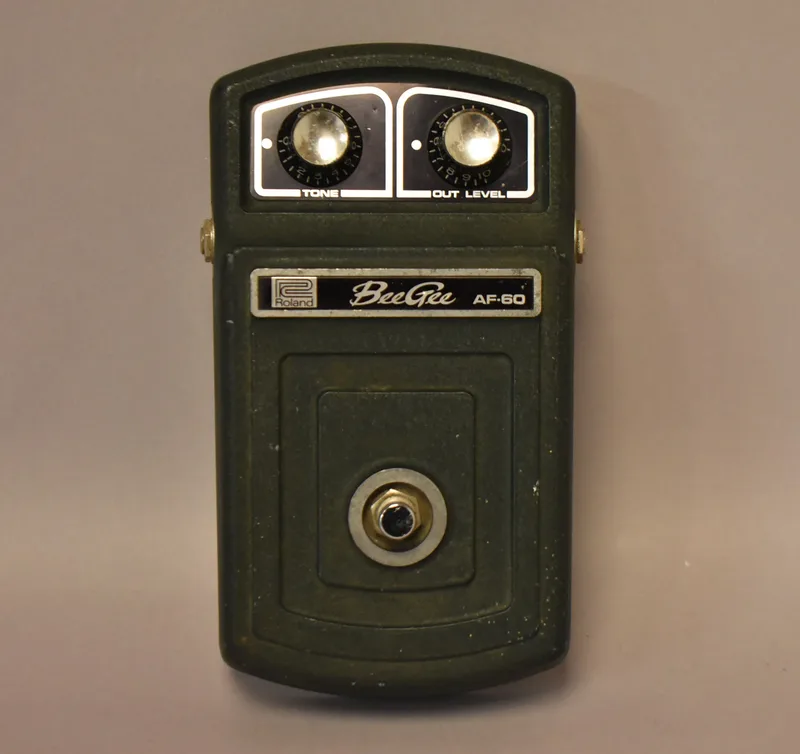
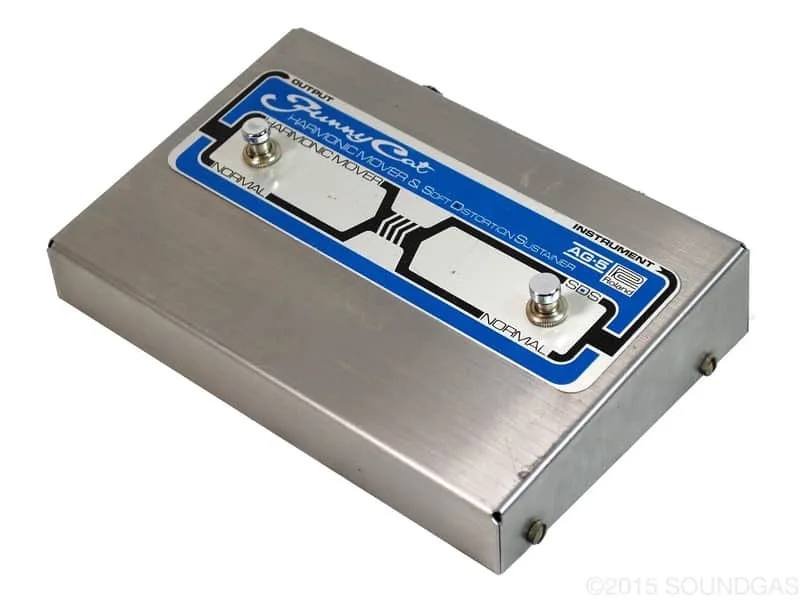
Sources (9)
- Roland AF-100 BeeBaa Fuzz and Treble Booster, Pedal of the Day, 2022-06-25
- Ibex Silicon Fuzz / Roland AF-100 Bee Baa, Aion FX, 2021-10-22
- Black Cat Introduces the New Wee Buzz, Premier Guitar, 2012-01-21
- Klinger Fuzz Bee (Roland Bee Baa Clone), Delicious Audio, 2021-01-11
- Zero G IOD Honey Coma Fuzz, Delicious Audio, 2022-08-09
- FIRE (FF10), Godlyke Distributing, Inc.
- Roland™ Bee Baa™ Clone: Fuzz/Booster Kit, PCB & Schematic, General Guitar Gadgets, 2014-05-12
- BEFORE BOSS WAS BOSS, JHS Pedals
- 40 Years of the BOSS SD-1 Super Overdrive, BOSS (articles.boss.info), 2021-03-17