News
11 Signature Cry Baby Wahs by Dunlop
Think all Cry Baby Wahs are built the same? Think again. The year 2017 marked the 50th anniversary of the Cry Baby Wah, introduced in 1967 by the Thomas Organ Company. For 35 of those years, the Cry Baby Wah has been included in Dunlop’s line of products. In 1982, the company acquired all the original machinery and tooling that the Thomas Organ Company and Jen Elettronica utilized when they produced the first Cry Baby units. Dunlop has since been creating wahs, and its flurry of wah pedals proves that fact. No matter the playing style, anyone can find a Cry Baby Wah to help them express their musical vision. The Clyde McCoy Wah is the very first wah stompbox available to the guitar playing public. Those models are notorious for their uniquely throaty sound and expressive sweep, credits to the Halo Inductor. After five wondrous decades, the Cry Baby family now provides players with more ways to express themselves than ever. Here’s a cheat sheet of legendary musicians who loved the original Cry Baby and teamed up with Dunlop to build their signature version.
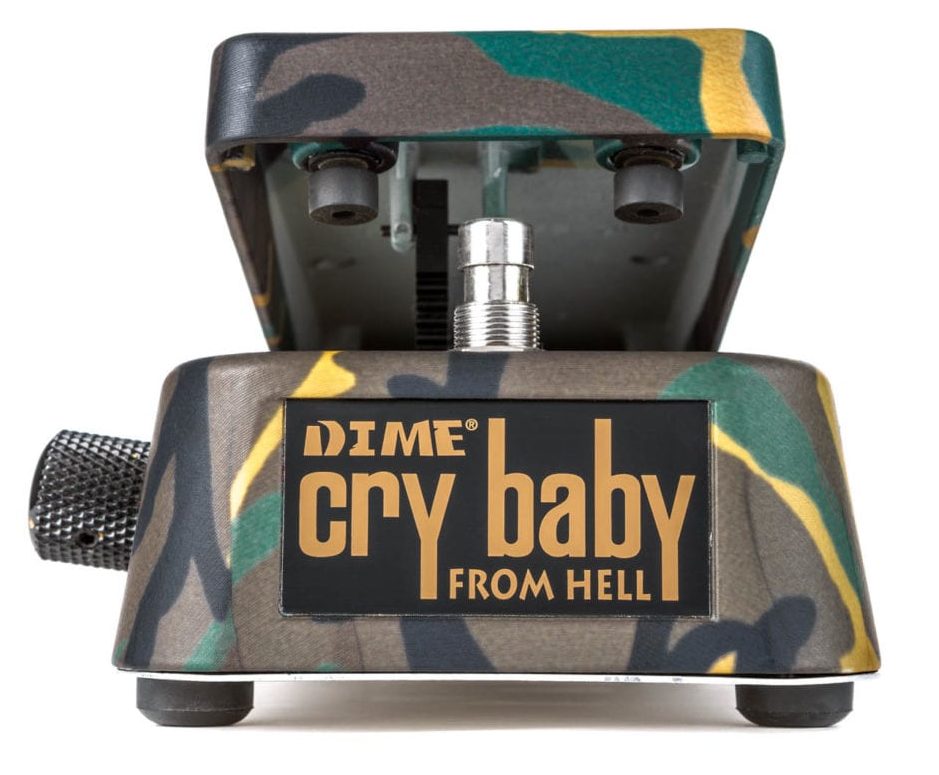
**Dime Cry Baby From Hell Wah **
The Dime Cry Baby From Hell might well be the most versatile and powerful wah pedal ever. A brainchild of iconic guitarist Dimebag Darrell, this camouflage-covered pedal features a switchable boost with LED indicators (Boost on/off and Wah on/off) at the back and a skateboard skid-tape on the top. Darrell genuinely loved the original Cry Baby and collaborated with Dunlop to build such an incredible, hot-rodded stompbox. Besides its camouflaged look, the Dime Cry Baby From Hell serves up an abundance of exceptional features (both for playability and sound) to level up a classic pedal. To add more sonic diversity, Dunlop has extended the Dime Cry Baby From Hell’s frequency sweep range—it is capable of sweeping even deeper and even higher than before. Also, the pedal carries a side-mounted six-position sweep selector, so users can select what frequency range they want to center their sweep on. The Dime Cry Baby From Hell also incorporates a convenient extra output jack on the left-hand side, so users can comfortably go in and out of one end.
Geezer Butler Cry Baby Bass Wah
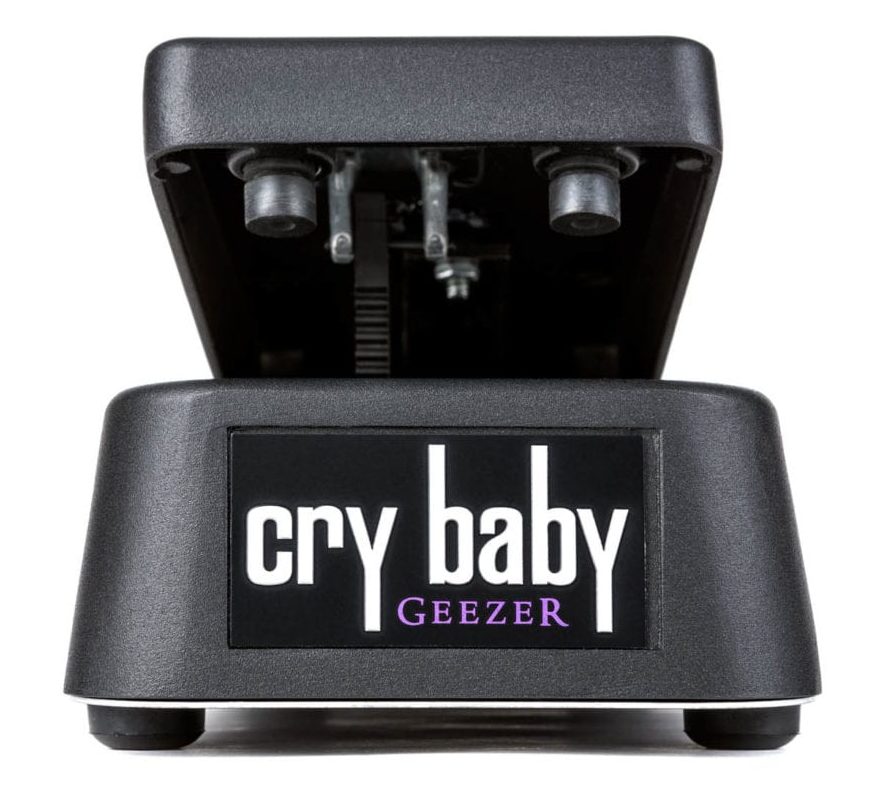
Geezer Butler is among the pioneers of rock and roll—his heavy, swinging bass lines and growling bass tones have helped define whole genres of heavy metal and hard rock. As the first bassist to ever record with a wah pedal, Geezer was the perfect choice to design Dunlop’s very first signature Cry Baby bass wah. Specially designed to complement Geezer’s signature sound, the Geezer Butler Cry Baby Bass Wah preserves low-end frequencies while enabling an aggressive midrange to slice through the mix. Dunlop configured the Cry Baby 95Q Wah’s sweep so that, from the heel-down position, custom circuitry blends in the perfect amount of dry signal. Pressing toward the toe-down position eradicates the dry signal to let the aggressive part of the wah range shine. To modify the shape of the frequency’s bandpass, simply remove the bottom plate and utilize the internal Q control, which comes factory-set to Geezer’s liking. The Geezer Butler Cry Baby Bass Wah is identical to the one Geezer takes out on the road. It is voiced precisely to his specifications, featuring seamless auto-return switching to let him step in and out of the effect effortlessly.
Billy Duffy Cry Baby Wah
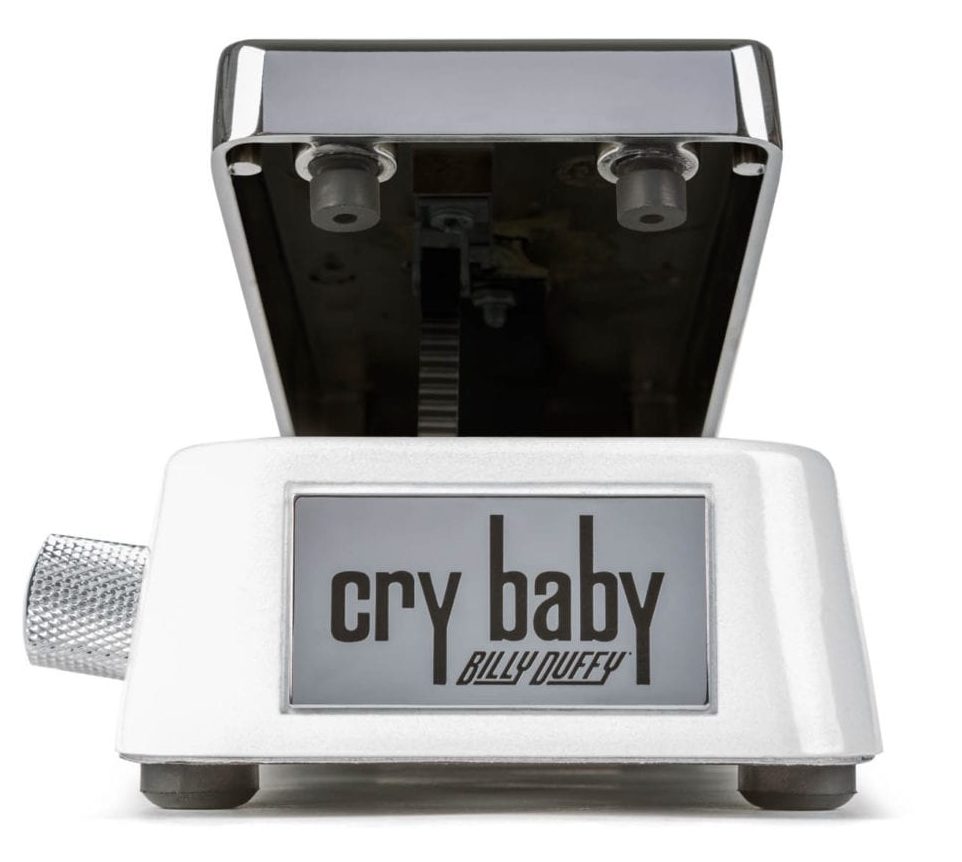
Designed in conjunction with British rock musician Billy Duffy, the Billy Duffy Cry Baby Wah for electric guitar lets users hit the stage with two different Cry Baby voices in a single pedal, giving them the freedom to switch between classic and modern sounds on the fly. Each wah mode uses a separate inductor circuit, selectable through a kick switch on the side of the stompbox with LED indicators to display which mode is active. The 95Q mode serves up “the same aggressive, high Q inductor as the 95Q Cry Baby Wah,” together with its Q and Volume knobs. Kicking the switch chooses the Vintage mode, which leverages a warmer-sounding, low Q inductor designed for Billy and spec’d from one of his prized classic Cry Baby pedals. The Billy Duffy Cry Baby Wah boasts simple auto-return switching, so users can step on and off the effect freely during solos and riffs. Equipped with internal frequency controls and adjustable bypass delay, the Billy Duffy Cry Baby is a flexible, gig-ready wah indeed.
Kirk Hammett Cry Baby Wah
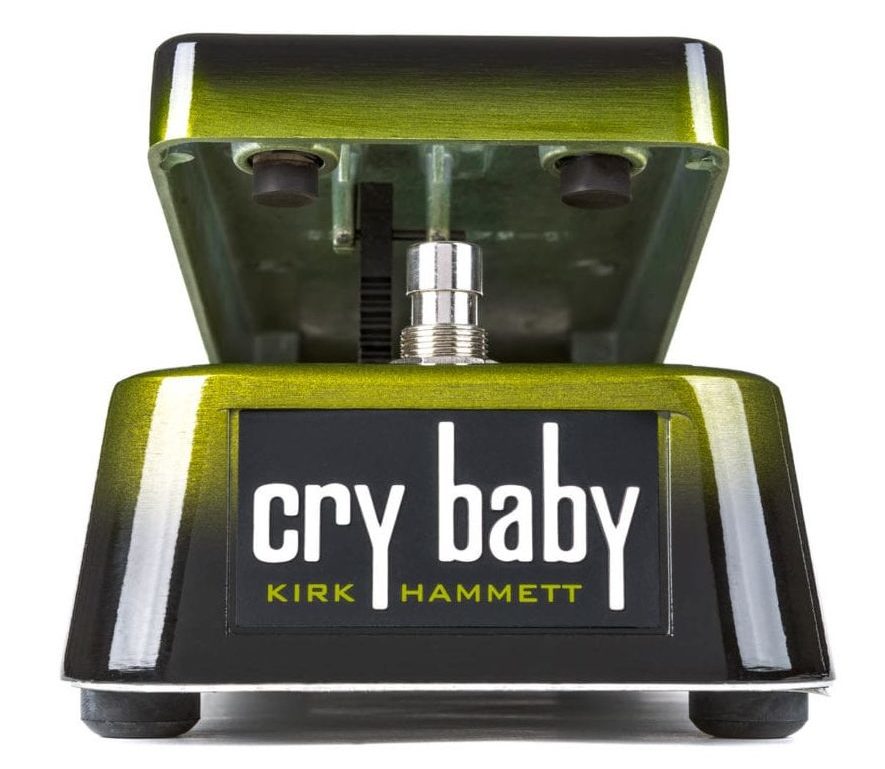
Kirk Hammett is best known for his wah-happy electric guitar solos in American heavy metal band Metallica. Now, the Kirk Hammett Cry Baby Wah allows users to command the same killer wah tone as Kirk. With a single stomp on this signature Cry Baby, users will have Kirk’s legendary wah tone injected into their rig. Built alongside the wicked metal guitarist himself, the Kirk Hammett Cry Baby Wah has been painstakingly tweaked and tuned to dish out that wah sound, which revolutionized metal solos. That is the iconic wah tone that Kirk creates on tour with his beloved Cry Baby Rack Wah. The engineers at Dunlop took Kirk’s tone, EQ, and volume settings—signifying several years of blazing Cry Baby riffology—and recreated them with startling accuracy. The Kirk Hammett Cry Baby Wah is surprisingly even in response as users move from heel to toe, with a full dynamic range and beefy top end.
John Petrucci Cry Baby Wah
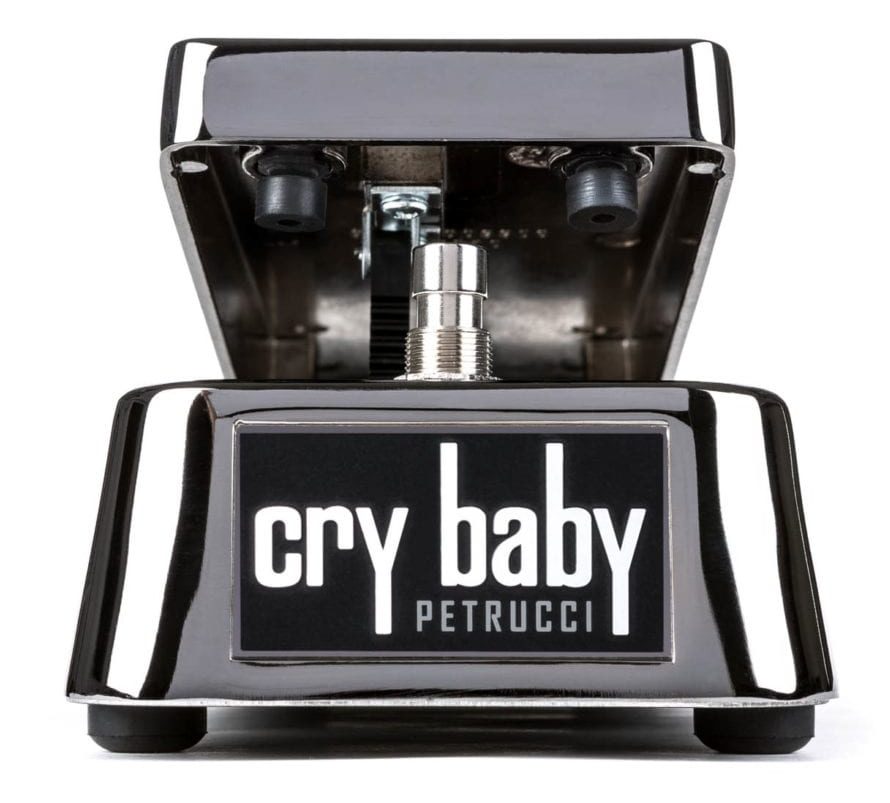
Dream Theater engineer Richard Chycki and guitar virtuoso John Petrucci collaborated with the Cry Baby design team for the development of the John Petrucci Signature Cry Baby Wah. According to Jim Dunlop, this signature Cry Baby is “the result of the legendary prog metal shredder’s years-long quest to hone his perfect wah tone.” For years, John employed the Cry Baby Rack Wah system to customize and fine-tune its several parameters until he achieved the sound that best represents all the intensity and expression he wants. The Cry Baby design team, alongside John and Richard, copied and further fine-tuned that sound with one stompbox. That is a wah that, according to John, “sounds huge and badass like an angry, screaming monster with the ultimate expressive range-it’s perfect for shaping single notes or manipulating growling, heavy chords.” Factory set to John’s preference, the John Petrucci Cry Baby Wah is equipped with all the controls he utilized to capture his Cry Baby voice: Q for sculpting the width of the effect, Volume for adding gain, as well as a six-band EQ for shaping the wah sound’s tone, from 100Hz to 3.2KHz. Users may also fine-tune the sound to their liking by removing the bottom plate and tweaking away.
Joe Bonamassa Cry Baby Wah
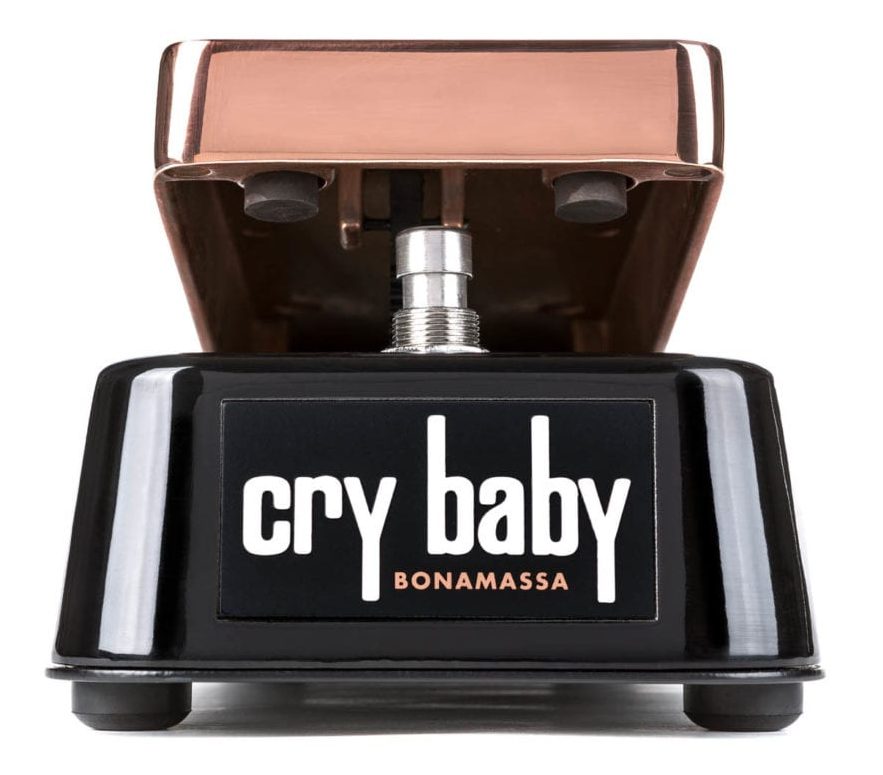
Whether he is rocking with Black Country Communion or blazing through the blues by himself, Joe Bonamassa’s playing is deep, powerful, and fiery. Joe steps on a Cry Baby wah whenever he desires to express himself in a solo. That explains why Dunlop collaborated with him to build the Joe Bonamassa Signature Cry Baby. Joe’s signature Cry Baby is specially engineered to fit in perfectly with his system, from the way it sounds right down to the way it looks. Sporting a sleek copper top with a smooth-finish black body, the custom-modified Joe Bonamassa Cry Baby stompbox boasts some cool circuitry tweaks uncommon in standard wah pedals. It incorporates an output buffer to avoid impedance imbalance with vintage fuzz pedals, a Halo inductor for added harmonic content, huge vintage-esque thru-hole components, as well as a switch for non-true-bypass or true-bypass operation. Thanks to its huge vocal sweep range, the Joe Bonamassa Cry Baby is among the most expressive Cry Babys ever. It is Joe’s tool of choice to highlight every bluesy wail and soulful bend. “The first pedal I ever purchased was a Cry Baby, 25 years ago,” he recalled. “I am so honored to have my name on this pedal and hope it brings you as much fun as it brings me every night on stage.”
Eddie Van Halen Cry Baby Wah
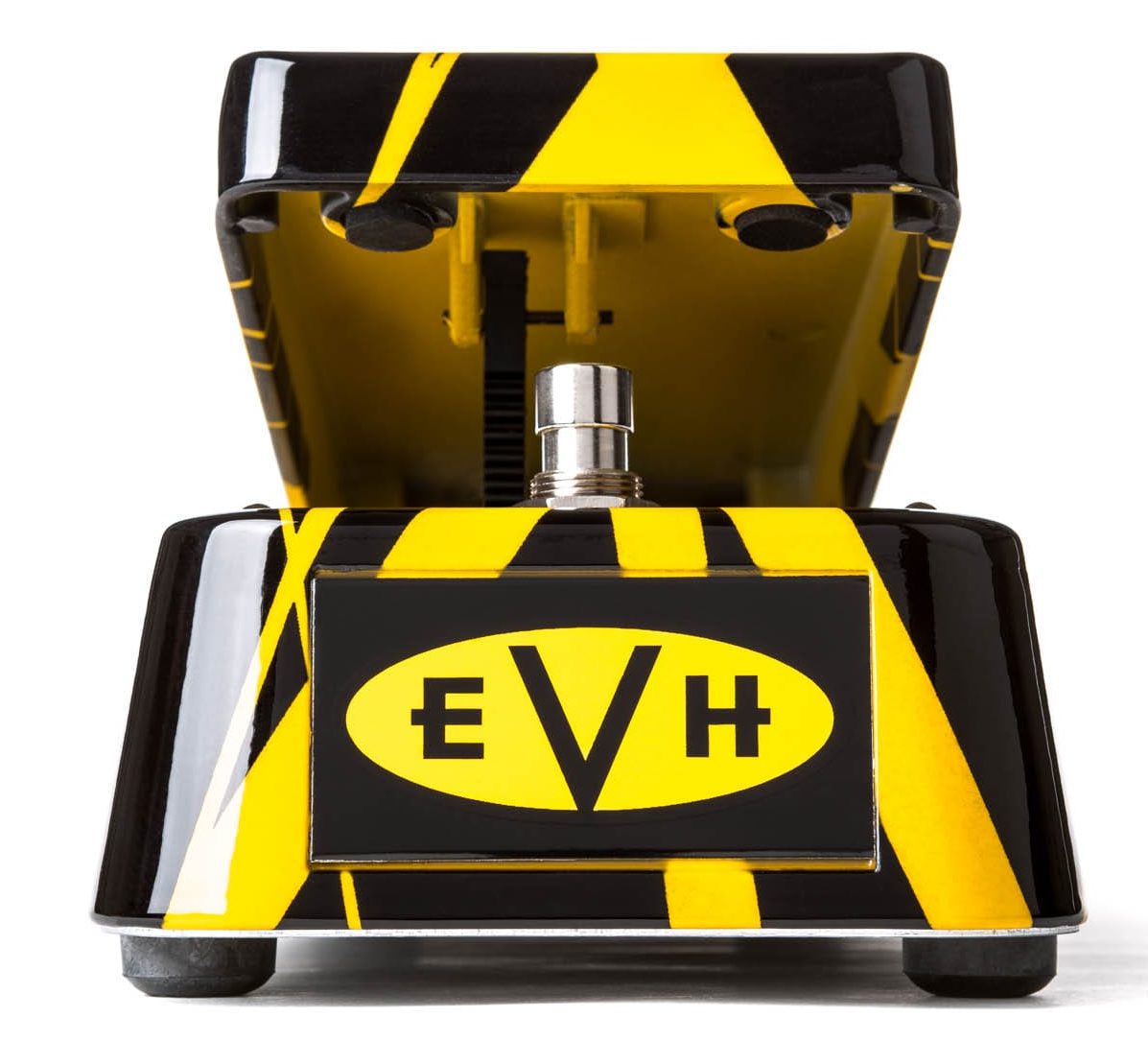
Spec’d from Eddie Van Halen’s “Holy Grail” Cry Baby pedal, the EVH Wah was built after meticulous design collaboration with the iconic guitarist himself. Eddie handed over his beloved Cry Baby Wah—a standard Cry Baby modified in the early 90s with a broader frequency sweep and more vocal-like, High Q inductor. Interestingly, Dunlop discovered that throughout the years Eddie’s distinctive wah style, which leverages mainly the mid range of the stompbox’s action, had sculpted his curve into the pot’s resistive element. Dunlop has gone as far as reproducing the worn-in pot feel and sweep, so the EVH Cry Baby feels exactly the same beneath the user’s foot as Eddie’s does beneath his. The graphics inspired by the black and yellow-striped guitar featured on Van Halen II, dual bright blue bypass LEDs, and true hardwire bypass round out this Eddie Van Halen-approved Cry Baby with a look and voice all its own.
Jerry Cantrell Cry Baby Wah
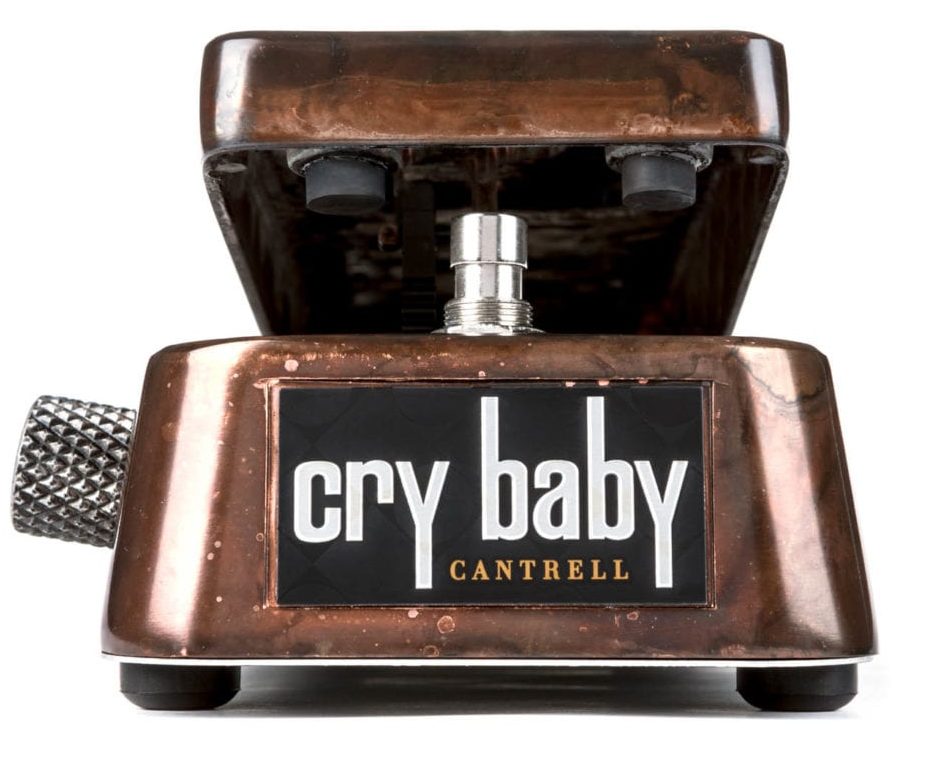
Regarded as one of the most prominent guitarists to emerge from the Seattle rock scene, Jerry Cantrell’s searing tone and legendary riffs have served as the driving force behind Alice in Chains since the late 1980s. Jerry’s melancholy wah-drenched melodies in contemporary classics such as The Rooster and Man in the Box left a permanent mark on a generation of guitarists. He is big on wah-wahs with a darker and broader response. Dunlop has faithfully cloned that moody sound to build the Jerry Cantrell Signature Cry Baby Wah, tweaked to Jerry’s specs. The Jerry Cantrell Cry Baby Wah is designed to take the grunge guitar god’s dark sound to any rig. It has been custom-voiced to achieve a “tight, punchy heel-down tone.” It carries a sturdy side-control knob for fine-tuning the toe-down frequency. Sporting a custom Alice in Chains tread and an oxidized road worn brass casting, the Jerry Cantrell Cry Baby Wah is a stompbox that looks as beautiful as it sounds.
Slash Cry Baby Classic Wah
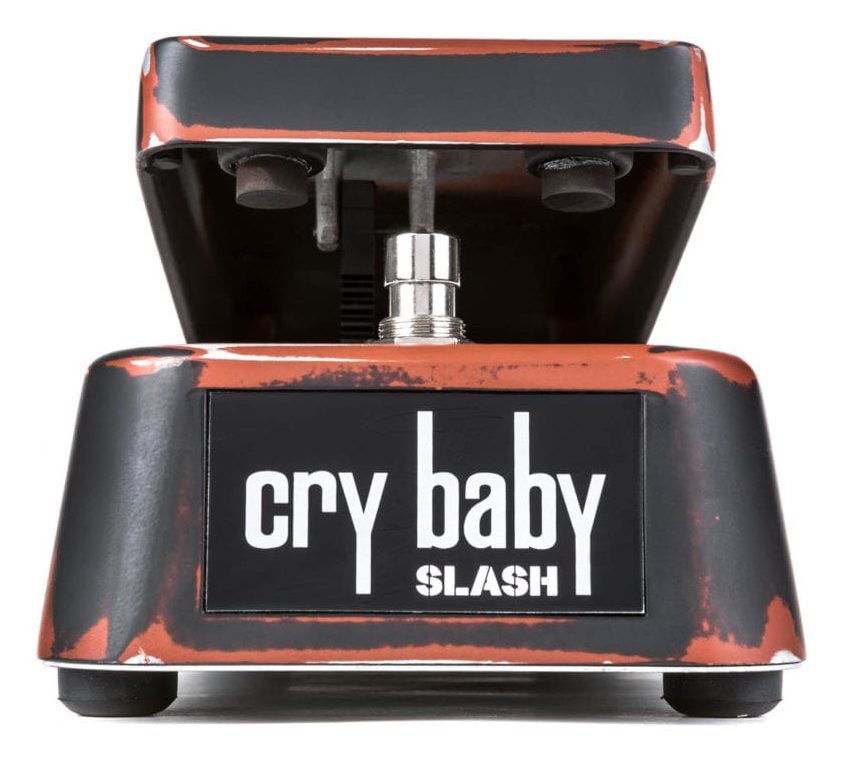
The Cry Baby has been a significant part of Slash’s career. He utilized it to craft his signature epic solos, which he weaves into his revolutionary gritty, blues-inspired rock. Dunlop collaborated with Slash for the creation of the Slash Cry Baby Classic, which has been tweaked for “the raw, expressive sound that influenced a generation of guitar players.” Boasting a custom-wound resonance inductor and tuned to a lower frequency, the Slash Cry Baby Classic features an extensive sweep and tremendous dynamic range. It carries two side-mounted blue LED indicators to show the effect status, visible from all angles onstage, so the user always knows when the effect is active. The Slash Cry Baby Classic also consists of top-grade components, including a durable pot and true hardwire bypass switch. The Slash Cry Baby Classic Wah is packaged within a sturdy die-cast chassis wearing a distressed hot-rod paint job plus special Slash artwork.
Buddy Guy Cry Baby Wah
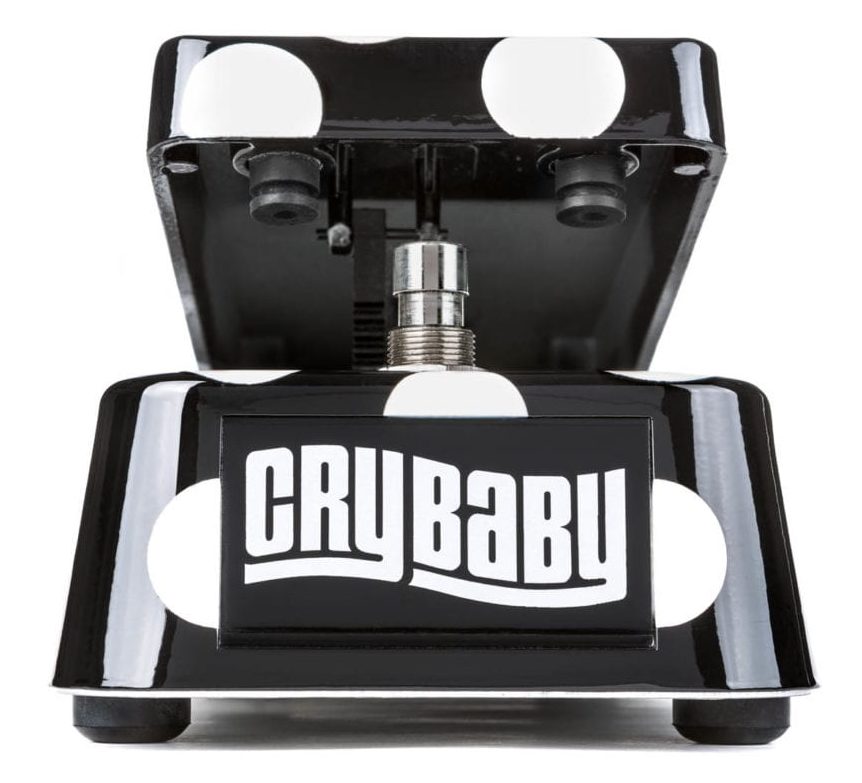
Dunlop built the Buddy Guy Cry Baby Wah to pay homage to Buddy Guy’s contributions. Cited as a significant influence by wah legends Stevie Ray Vaughan, Jimi Hendrix, and Eric Clapton, Buddy has been instrumental in establishing the effect as part of the blues language. The Buddy Guy Cry Baby Wah incorporates the iconic Fasel Inductor to capture a “sweet and singing top end.” The Buddy Guy Cry Baby Wah also features two different user selectable wah voices: BG and Deep. BG dishes out Buddy’s warm, bell-esque wah tone while Deep produces a huge, throaty growl. The Buddy Guy Cry Baby Wah carries convenient side-mounted LEDs to show which mode the user is in plus another LED to indicate the effect on/off. It comes in an enclosure featuring a custom signature tread and Buddy-approved polka dot graphics.
Jimi Hendrix Cry Baby Wah
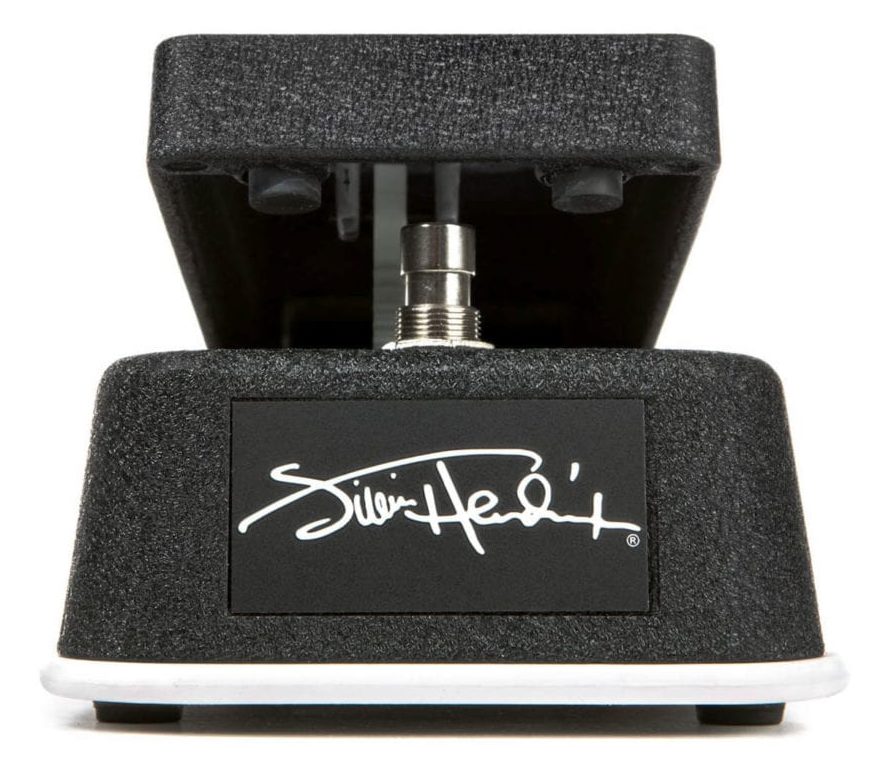
The wah-wah pedal was just born when Jimi Hendrix burst on the scene during the late 60s. Up to now, only a few players’ names are more synonymous with wicked wah-powered syncopated rhythms and killer wah leads. The wah stompbox employed by Hendrix was a design of the Thomas Organ Company and manufactured by JEN in Italy. That is the distinctive wah tone heard on Hendrix classics such as Little Miss Lover, Voodoo Child (Slight Return), Up From the Sky, and Still Raining, Still Dreaming. The Jimi Hendrix Cry Baby emulates these timbres and more with exacting precision. Expressive and throaty, the Jimi Hendrix Cry Baby ignites the imagination. Its vintage classic look sports a beautiful black Italian crinkle finish aluminum enclosure. From its mind-bending sound right down to its eye-catching appearance, everything about the Jimi Hendrix Cry Baby is screaming Hendrix.