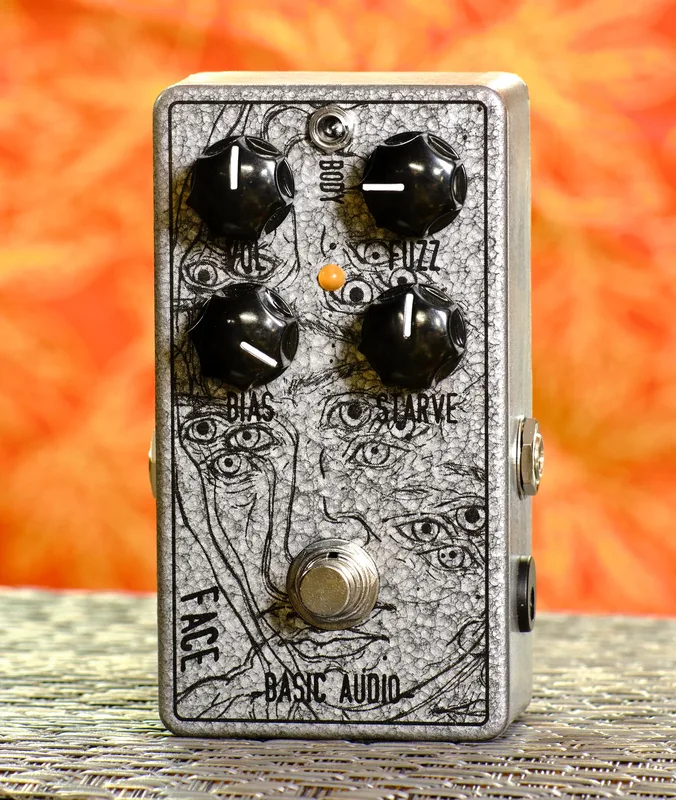

The Basic Audio Face is a germanium Fuzz Face built by Basic Audio. It takes the classic two-transistor germanium fuzz circuit and adds three controls the original never had: a Bias control, a Starve control, and a bass cut at the output. Basic Audio describes it as a germanium Fuzz Face "with control over Bias ans Starve as well as bass cut at the output"1.
Where the original Fuzz Face gave you two knobs and left the transistors' operating point to chance, the Face puts that in the player's hands. Basic Audio says it "cleans up well with the guitar" and is "a bit rougher and more cuting that typical vintage fuzz face circuits"1.
A germanium Fuzz Face from Basic Audio
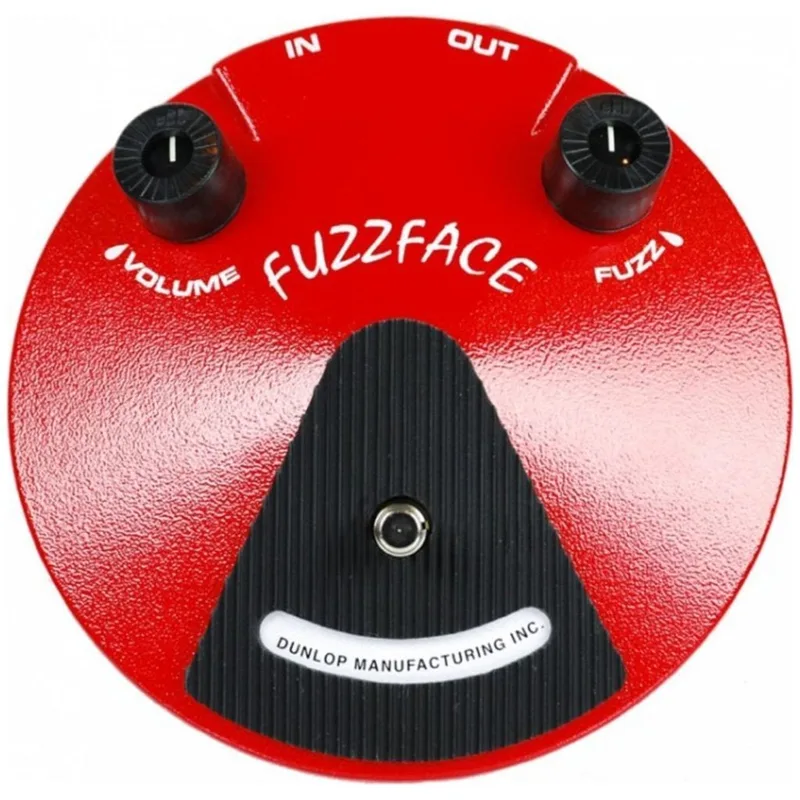
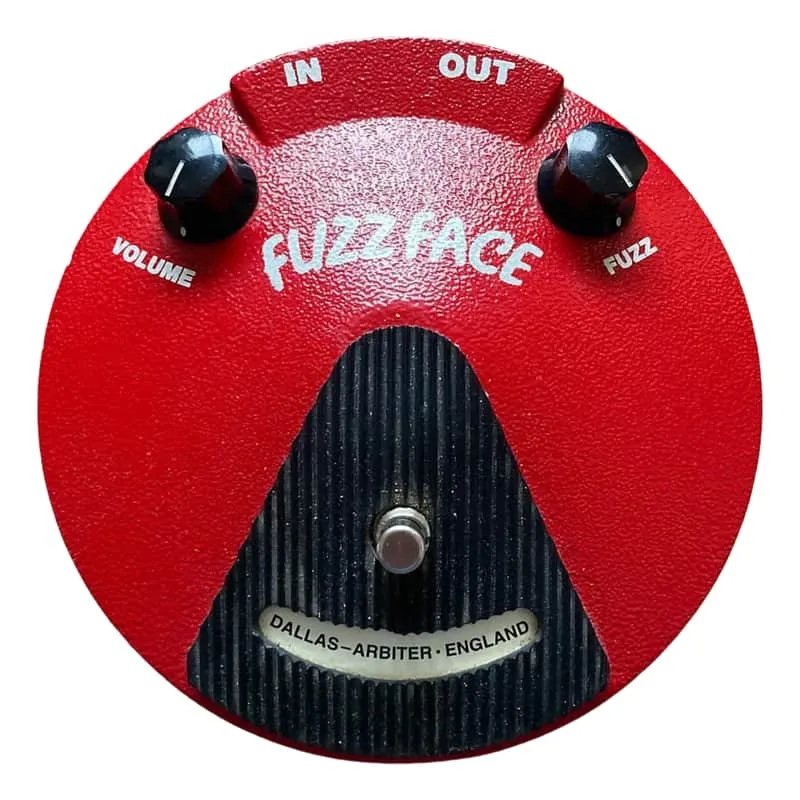
The Fuzz Face circuit Basic Audio builds on goes back to the original Dallas Arbiter pedal. The first Arbiter Fuzz Face model used PNP germanium transistors, the AC128, and the original circuit's germanium transistors are what gave it its warm and smooth fuzz sound23. Early germanium Fuzz Faces tend to use NKT275 transistors and are biased cold, with the voltage between three and four volts4.
Germanium is the side of the Fuzz Face family players choose for its responsiveness. Premier Guitar's reviewer noted that "compared to the dynamic germanium Fuzz Face, silicon versions sometimes come off as brutish," and that germanium is the pick if a dirty-to-clean range and sensitivity to guitar volume attenuation are the priorities5. That cleanup with the guitar's volume knob is the behavior Basic Audio points to on the Face as well1.
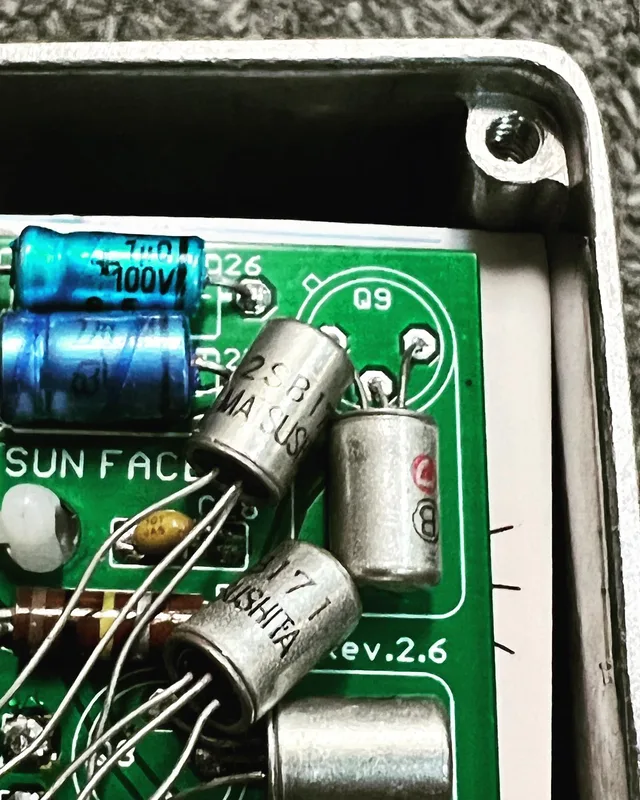
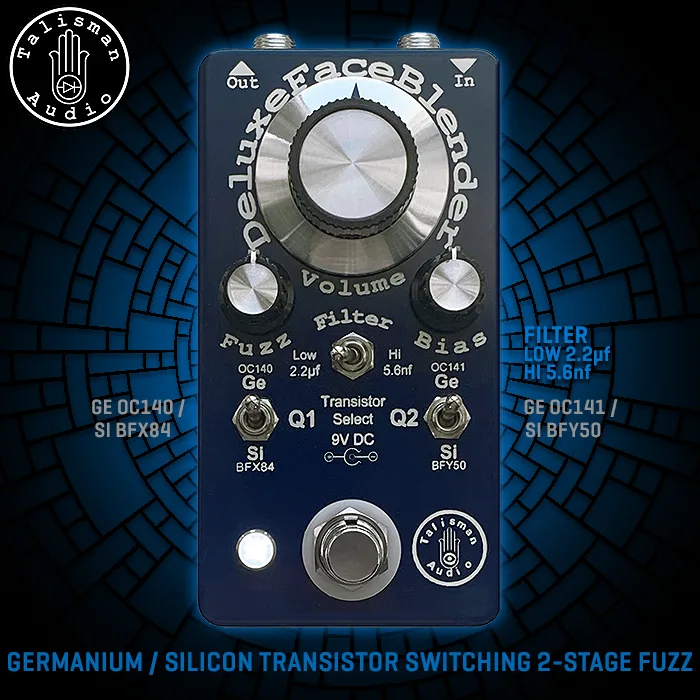
The Face sits in a crowded field of modern Fuzz Face interpretations. The Analog Man Sun Face keeps "the standard 1960's germanium circuit with a few tweaks to make it easier to use and sound better"6. The Talisman Audio Deluxe Face Blender packs germanium, silicon and hybrid Fuzz Face variants into one box7. The Face's own angle is the Bias, Starve and bass cut controls on a straight germanium circuit1.
The controls
Basic Audio lists three controls beyond the basic Fuzz Face format1:
| Control | What it does |
|---|---|
| Bias | Sets the transistors' operating point, which on a germanium Fuzz Face governs how the fuzz behaves |
| Starve | Adjusts the circuit's operating condition, per the maker's control listing |
| Bass cut | Trims bass at the output |
On a germanium fuzz, bias is the control that matters most. The original Fuzz Face "is already somewhat self-biasing, but not nearly enough to make a difference and avoid trimming," as one circuit analysis puts it, which is why vintage units vary so much from pedal to pedal8. A Bias knob externalizes that trimming. The bass cut addresses a known trait of the circuit: letting lower bass through makes the fuzz more woolly, while reducing bass makes it more focused and sharp, to the point that low input capacitor values can make a Fuzz Face sound almost like an overdrive pedal9.
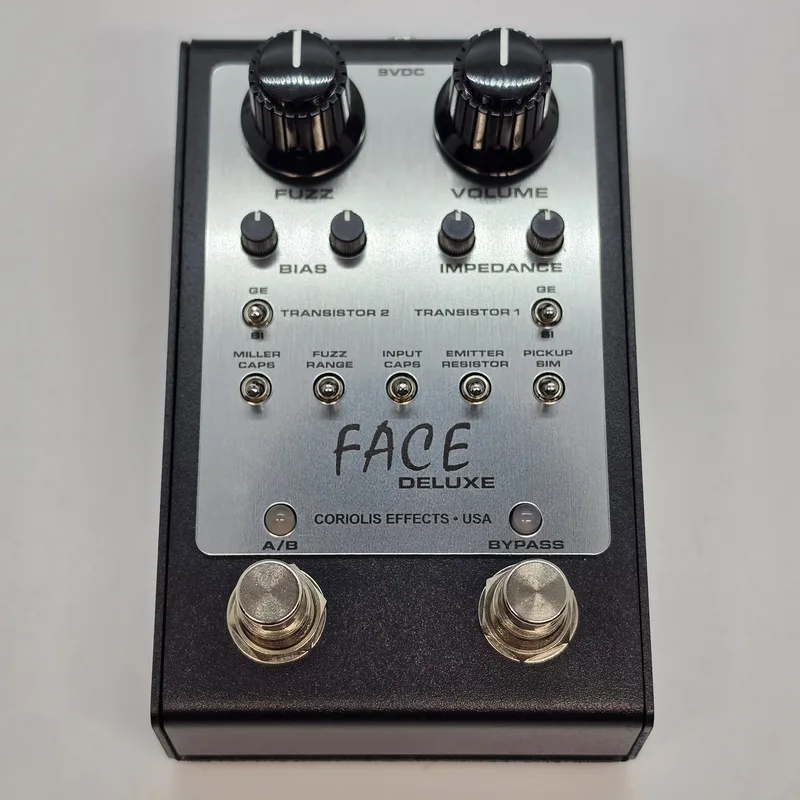
The original Fuzz Face's two knobs, volume and fuzz, sat as the eyeballs of its grinning face enclosure. Modern takes have carried the circuit forward with different control sets: the Coriolis Effects Face Deluxe adds input capacitor switching, and the Acorn Amplifiers F#%k Face keeps Fuzz and Level controls with an added gain stage1011.
Power and battery
The Face runs on a 9V DC center negative jack and also has a battery snap, which Basic Audio fits to all its pedals1. Center negative is the standard modern pedal polarity, so it works with ordinary pedalboard supplies. The battery option is worth having on a fuzz: among Fuzz Face players, "many fanatics apparently prefer the sound of a battery-fed fuzz anyway," as MusicRadar noted of the Dunlop reissue12.
Basic Audio notes that pedal colors are subject to change1.
How it differs from a vintage Fuzz Face
Three things separate the Face from a 1960s Arbiter unit. First, the sound: Basic Audio calls it rougher and more cutting than typical vintage Fuzz Face circuits, while still cleaning up well with the guitar1. Second, the controls: Bias, Starve and the output bass cut replace the original's fixed internal bias and full-range output1. Third, the parts: the original models use 1/2W carbon film resistors, considered noisy compared to modern metal-film resistors13, so a modern build with contemporary parts is quieter at the same circuit.
For players comparing germanium Fuzz Face options, the ThorpyFX Tacit Blue Germanium Fuzz Face and the Dunlop Fuzz Face Mini Germanium, based on '66-'68 era pre-silicon Fuzz Faces, take the same circuit in compact directions1415, while the Hudson Electronics Soul Face is a silicon take on the Arbiter design141516.
Videos
Jim Marciano
Questions
Does the Basic Audio Face use a battery?
Yes. Basic Audio fits every pedal with a battery snap alongside a center negative 9V DC jack, so the Face runs on a standard 9V battery or a power supply.
What polarity does the Basic Audio Face use?
It uses a 9V DC center negative jack, the same convention as most modern pedals, so it works with a standard pedalboard power supply.
What does the Starve control do?
Starve is one of the three extra controls Basic Audio adds to the germanium Fuzz Face circuit, alongside Bias and a bass cut at the output. The maker lists it as a control over the circuit's operating condition rather than a tone stack control.
Is the Basic Audio Face a germanium fuzz?
Yes. Basic Audio describes the Face as a germanium Fuzz Face, built on the two-transistor circuit that the original Dallas Arbiter pedals used with germanium transistors.
How does it differ from a vintage Fuzz Face?
Basic Audio says it is a bit rougher and more cutting than typical vintage Fuzz Face circuits, and that it cleans up well with the guitar. It also adds Bias, Starve and output bass cut controls that the original two-knob pedal never had.
Sources (16)
- Face - Basic Audio, Basic Audio
- The guitar pedal that changed the world the Fuzz Face, Tru-Fi (tru-fi.com)
- Fuzz Face Analysis, GuitarPCB
- The history of the Sola Sound Tone Bender, Guitar World, 2021-03-26
- McGregor Classic Fuzz Pedal Explored, Premier Guitar, 2024-12-10
- SFManual-Germ, Analog Man, 2021-07
- Guitar Pedal X, Guitar Pedal X, 2026-08-04
- Guitar FX Layouts: Dylan159's Fuzz Facelift, Guitar FX Layouts (tagboardeffects.blogspot.com), 2024-09-28
- Effects > Fuzz Face Revisited : DIY Fever, DIY Fever (diy-fever.com), 2012-09
- Guitar Pedal X, Guitar Pedal X, 2026-08-26
- Acorn Amplifiers Unveils New F#%k Face Fuzz Pedal, GuitarPlayer (www.guitarplayer.com), 2021-04-01
- Dunlop JDF2 Fuzz Face review, MusicRadar, 2011-11-30
- You Can Build the Perfect Germanium Fuzz, GuitarPCB
- Guitar Pedal X, Guitar Pedal X, 2023-11-09
- Dunlop Unveils Talk Box and Fuzz Face Mini Models, Premier Guitar, 2013-01-24
- NAMM 2013: Dunlop launches Fuzz Face Mini and MXR Talk Box, MusicRadar, 2013-01-25