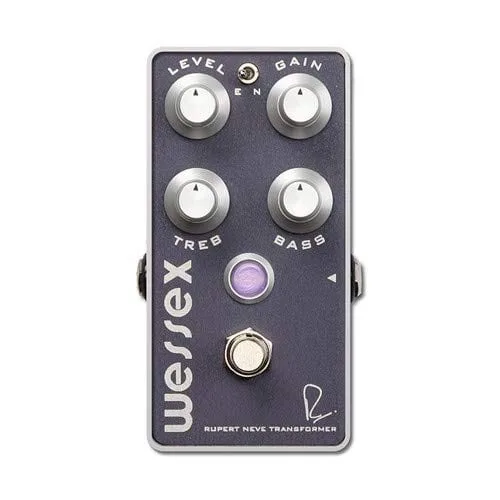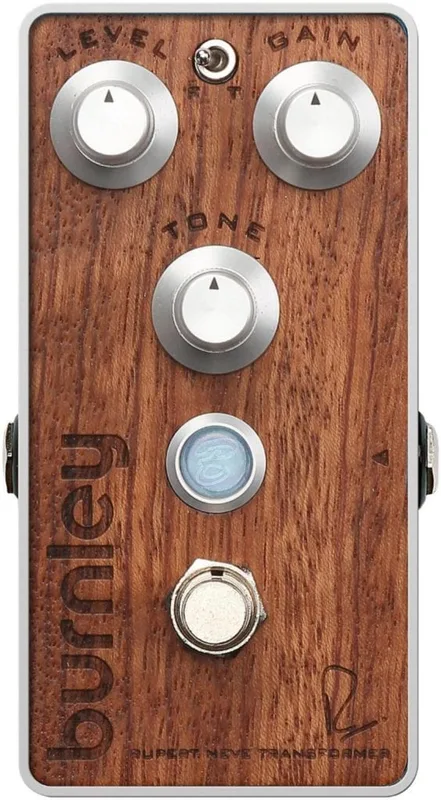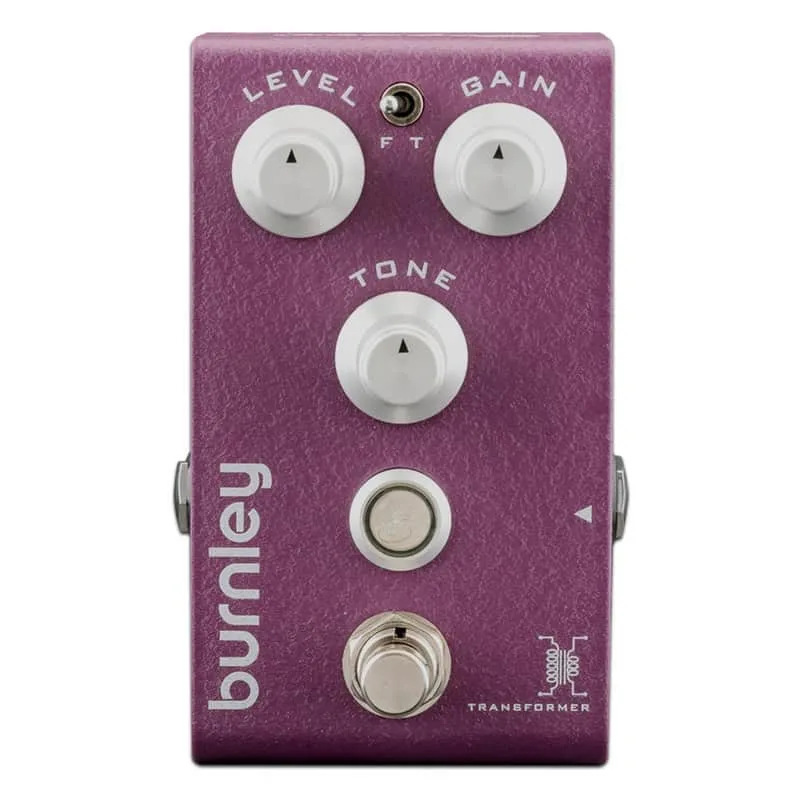


The Bogner Burnley is a three-knob, high-gain distortion pedal from Bogner Amplification, built around a 100% analog circuit and a custom audio transformer designed by Rupert Neve, the famous British audio engineer12. Bogner describes its range as running from hot crunch to high-gain annihilation, and it is the highest-gain pedal of the company's three-pedal transformer line, alongside the Wessex overdrive and the Harlow boost13.
What sets the Burnley apart from most distortion pedals is that transformer. Each of the three Bogner drive pedals uses its own unique custom transformer designed by Rupert Neve, intended to provide a dynamic, detailed response inspired by classic Neve mixing consoles2. A two-way F/T toggle switch then selects between a tight and aggressive or a fat and mellow distortion voicing45.
Controls and the Fat/Tight switch
The control set is simple: Level, Gain and Tone knobs, plus the F/T toggle13.
| Control | What it does |
|---|---|
| Level | Sets the output volume |
| Gain | Sets the amount of distortion, with what reviewers found to be a wide range on tap |
| Tone | Shapes the overall brightness |
| F/T switch | Selects between tight and aggressive or fat and mellow tones4 |
The two switch positions are more than a subtle tilt. Guitar World's reviewer found the Fat setting produces fat, rich, slightly compressed lead tones, making the Burnley a good choice as a solo boost, while the Tight setting is better for rhythm playing and single-note lines, with more dynamic edge and responsiveness2. On the V2, Guitar.com describes the same switch as a choice between an unrestrained bottom end and a more biting one3.
The jewel light
The Burnley's most distinctive visual feature is its jewel light indicator. It illuminates red when the pedal is engaged and turns progressively bluer depending on playing dynamics and the guitar's output level2. In practice it works as a live readout of how hard you are pushing the pedal. The V2 versions still feature the jewel LED lighting up in response to your playing3.
A transformer designed by Rupert Neve
The circuit's centerpiece is a custom transformer designed by Rupert Neve, the British engineer behind the Neve mixing consoles that define many classic studio recordings12. Guitar World's 2015 review of the pedal line explained the intent:
"Each model features its own unique custom transformer designed by Rupert Neve to provide incredibly dynamic and detailed"
The V2 versions released in 2020 use Rupert Neve Designs audio transformers inspired by the Neve mixing consoles of the 1960s, which MusicRadar described as giving the pedals an ultra-dynamic, studio-quality response8. One visible change on the V2: the Rupert Neve branding no longer appears on the pedal's visible surfaces5.
History and versions: the Burnley V1 and V2
The original Burnley launched as part of Bogner's first wave of effects pedals, alongside the Wessex and Harlow, in compact housings that Guitar World described as built like tanks, with an optional bubinga wood front panel at a higher list price2. Pedal of the Day reviewed it in January 2018 as a purple, high-gain dirt pedal with a simple control setup1.
In April 2020, Bogner reissued all three pedals as V2 versions6. The changes:
- A smaller, more pedalboard-friendly enclosure, roughly 15% smaller than the V1, with rounded housing536
- A significantly re-voiced tone, described by Bogner as having more dynamics and gain on tap, and a more modern, more punchy and aggressive signature5
- A list price of $179 each, down from the V1's $269.9923
- No bubinga faceplate option, as the new enclosure cannot accommodate one5
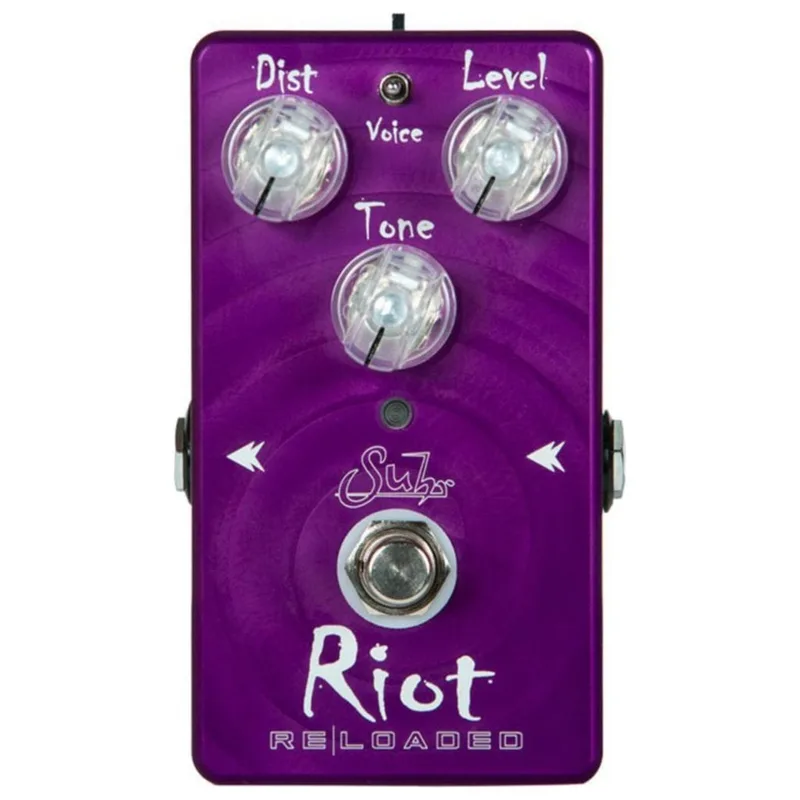
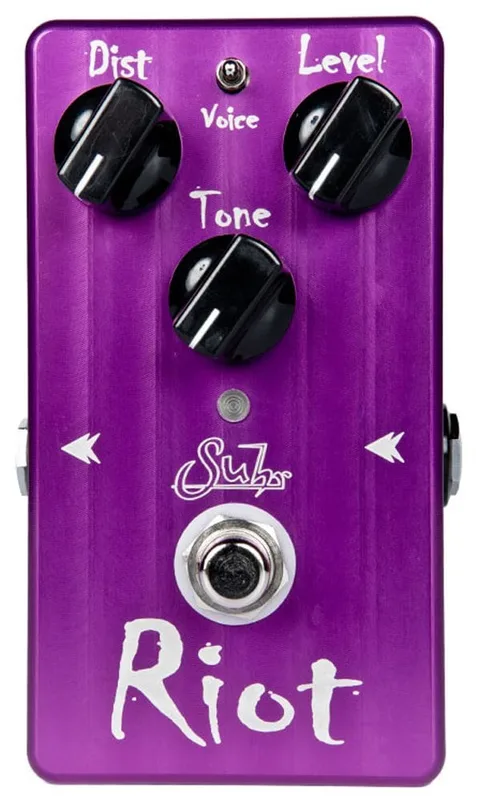
Guitar Pedal X noted that the V2's tone is described as more modern, open and aggressive than the V1, and that the writer personally prefers the original version in the parallel case of the Suhr Riot and its Reloaded reissue5.
What amp sound is it based on?
Guitar Pedal X characterizes the Burnley as essentially a Marshall JCM800 style distortion with an EVH Brown Sound character, along similar lines to the Suhr Riot5. Bogner's own positioning is broader: the Burnley V2 is the highest-gain pedal of the trio, offering tones between a cranked crunch and high-gain distortion3.
What reviewers said
Guitar World reviewed the original Burnley alongside the Harlow and Wessex in 2015 and was positive about the drive character62:
"The Burnley is a very aggressively voiced distortion pedal that can boost both gain and output level quite significantly"
The same reviewer found the tone never gets over the top and remains musically useful throughout its entire range, and that the pedals kept the noise from a particularly troublesome single-coil guitar at bay while increasing the level of notes played2. Pedal of the Day called it a good first foray into Bogner effects pedals, with studio-quality sound not typically found in stompbox form1. Of the V2 range, Guitar World reported that the sound quality and performance of all three pedals is on another level compared to the average overdrive and distortion pedal6.
Videos
Pete Thorn
bogneramplification
Brett Kingman
Questions
What does the Fat/Tight switch do on the Burnley?
The F/T toggle selects between two voicings. Tight gives a tighter, more aggressive tone with more dynamic edge, which suits rhythm playing and single-note lines. Fat gives a fatter, mellower, slightly compressed character that works well for lead playing and solo boosts. On the V2, Bogner describes it as a choice between an unrestrained bottom end and a more biting one.
Can the Bogner Burnley run on a battery?
Yes. The original Burnley runs on a battery or 9V DC power, with Guitar World specifying a supply of 50mA or more. It uses true bypass switching and mono input and output jacks, so it fits a standard pedalboard power setup as well.
What amp sound is the Bogner Burnley based on?
Guitar Pedal X describes the Burnley as essentially a Marshall JCM800 style distortion with an EVH Brown Sound character, along similar lines to the Suhr Riot. Bogner's own description ranges it from hot crunch to high-gain distortion, making it the highest-gain pedal of the company's transformer trio.
Why does the Burnley LED change color?
The Burnley has a jewel light indicator that illuminates red when the pedal is engaged and turns progressively bluer depending on your playing dynamics and the guitar's output level. It is a visual readout of how hard you are driving the pedal, and it carried over to the V2 versions.
Sources (8)
- Bogner Amplification Burnley Distortion, Pedal of the Day, 2018-01-15
- Review: Bogner Burnley, Harlow and Wessex Effect Pedals, Guitar World, 2015-06-25
- Bogner releases updated versions of its Burnley, Harlow and Wessex pedals, Guitar.com, 2020-04-21
- Bogner Burnley High Gain Overdrive, Delicious Audio, 2020-08-03
- Guitar Pedal X, Guitar Pedal X, 2020-04-12
- Bogner updates its Burnley, Wessex and Harlow custom audio transformer drive pedals, Guitar World, 2020-04-20
- Bogner reissues V2 drive pedals with Rupert Neve audio transformers, gearnews.com, 2020-04-20
- Bogner is reissuing its acclaimed overdrive, distortion and boost effects pedals, MusicRadar, 2020-04-17