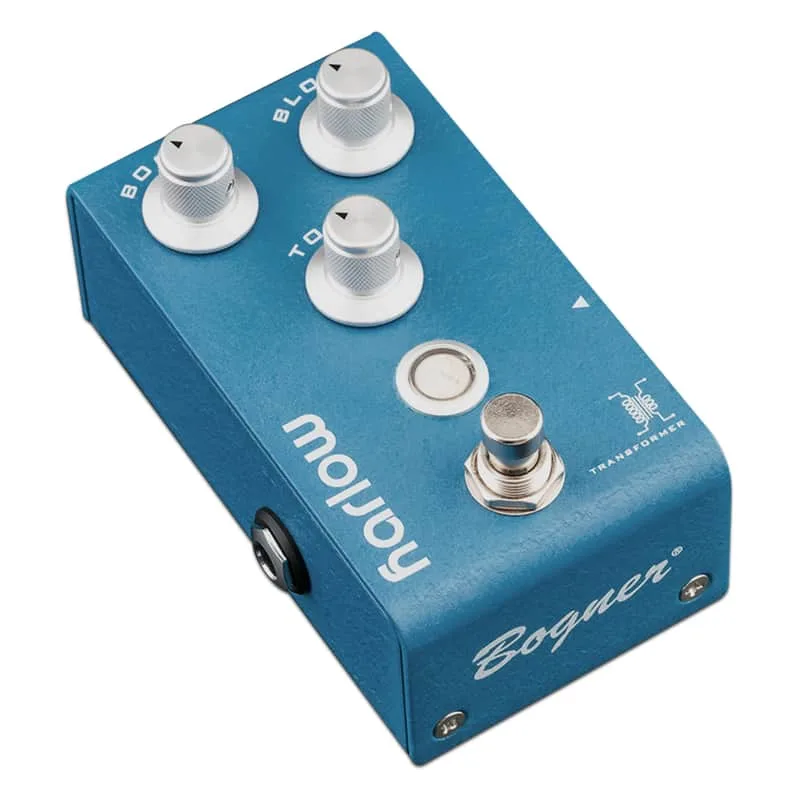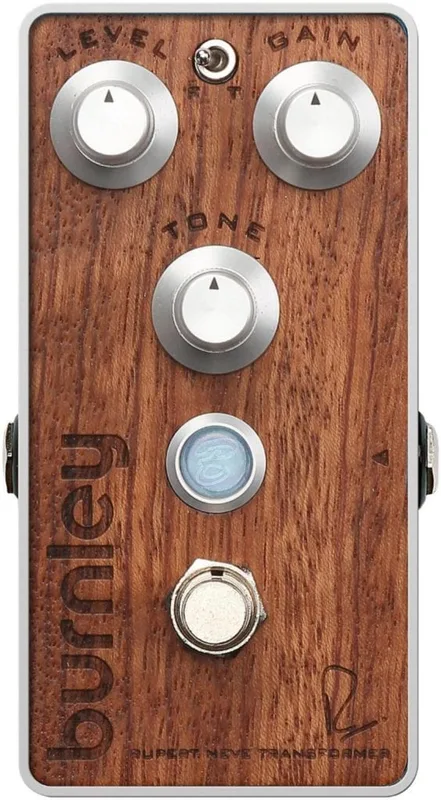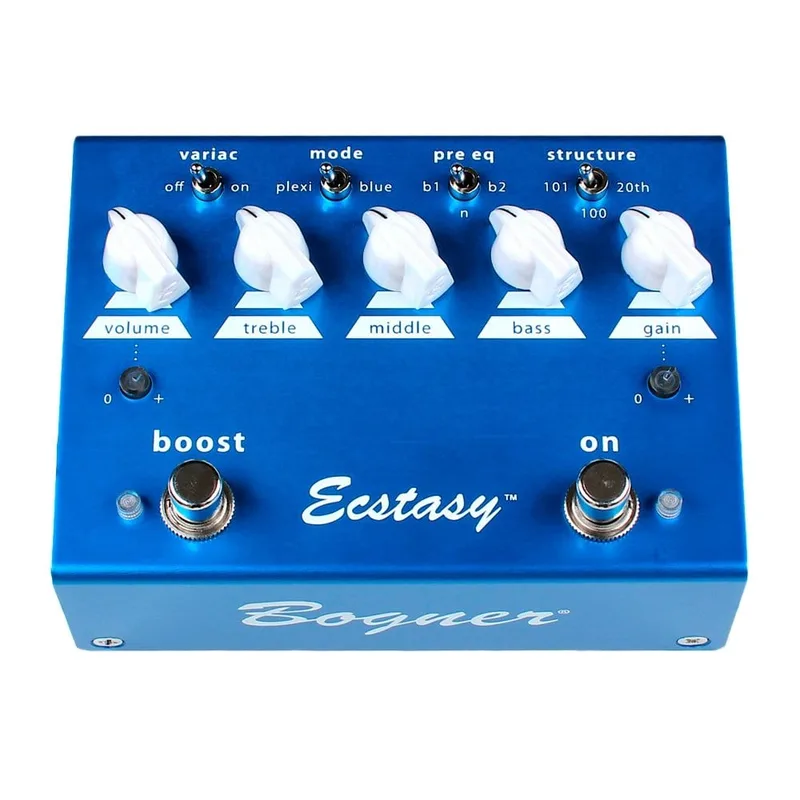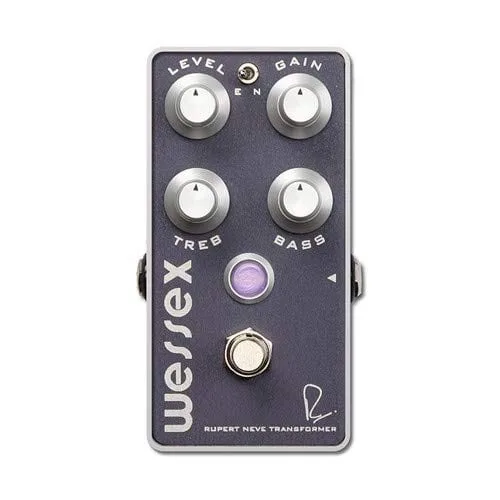


The Bogner Wessex is an overdrive pedal from Bogner, the amplifier builder whose pedal line-up also includes pedals based on the Uberschall, Shiva and Ecstasy amps1. It is the third pedal in a series of three Bogner drives that all feature transformers designed by Rupert Neve, alongside the Harlow boost and the Burnley distortion2. Its 100% analog circuit is built around that Rupert Neve-designed transformer, and it covers ground from a low-gain, very subtle overdrive through to a mid-gain, modern, tough overdrive32.
Bogner describes the Wessex as bringing a classic low gain growl to lush contemporary scorch, and the V2 reissue was described as going from "low gain growl to rich modern scorch", making it a multi-role overdrive pedal that should cover most bases34. A version with a Bubinga exotic wood faceplate is sold as the Bogner Wessex Bubinga35.
The controls
The Wessex has four rotary controls and a toggle switch7. In the original Bogner demo video, Reinhold Bogner and Greg V. walked through them: the gain control sets the amount of overdrive, the level control is the volume, the bass control shapes the low end and also somewhat the feel (less bass for a tighter feel), and the treble control sets the high end or how smooth the sound is7.
| Control | What it does |
|---|---|
| Gain | Sets the amount of overdrive7 |
| Level | Volume control7 |
| Bass | Low end, and somewhat the feel: less bass gives a tighter feel7 |
| Treble | High end, or how smooth the sound is7 |
| Toggle (N/E) | Switches between non-enhanced and enhanced modes7 |
Pete Thorn, demoing the pedal on his channel in September 2015, noted that the bass and treble controls are voiced really nicely, so you can fine-tune the tone of the pedal2. He demoed it mostly into a clean Suhr Hedgehog amp, with a final run into a Suhr SL68 (an old plexi) set crunchy2.
Enhance and Normal modes
The toggle switch in the middle of the control cluster chooses between Enhance and Neutral modes: Enhance brings a bit more character to the drive sound, while Neutral leaves the EQ profile alone8. In the original demo, Reinhold Bogner described the difference in his own words: the N position is the non-enhanced mode, and as soon as you switch to the enhanced mode you get a richer, fuller, juicier, 3D sound7.
Pete Thorn found the enhanced mode seems to give you a bit more bass and maybe bumps the gain up a little2. Guitar World's review was more specific about what Enhance does to the EQ: the Enhance setting boosts both bass and treble without scooping out mids, to maintain a full-bodied tone and expressive midrange6. On the V2, Guitar Pedal X described the Enhanced mode as adding Resonance and Presence to the circuit for accentuated high and low frequencies, sort of like a full-range boost being applied9.
History and versions: the Neve transformer and the V2
The Wessex launched as part of the original 2014 trio of Bogner transformer pedals, each with its own unique custom transformer designed by Rupert Neve to provide incredibly dynamic and detailed boost, overdrive and distortion effects, inspired by the dynamic and detailed sounds of classic Neve mixing consoles10. MusicRadar described the Rupert Neve Designs audio transformers as setting the pedals apart with an ultra-dynamic studio-quality response, inspired by the revered Neve mixing consoles of the 1960s11.
In April 2020, Bogner reissued all three pedals as V2 iterations, re-voiced and in smaller, more pedalboard-friendly sizes with rounded housings12. Guitar Pedal X reported the new V2 enclosure as approximately 15% smaller than the V19. The V2 Wessex is a gray box in a small, pedalboard-friendly format, and each pedal in the V2 series contains an audio transformer designed by Neve4. The V2 pedals listed at USD 179 each, or £199 in the UK49.
The V2 reissue is a different physical pedal from the original: smaller, rounded, and re-voiced. If you are buying used, check which version you are looking at, since the original Bubinga-faceplate version and the gray V2 differ in size and voicing1294.
How the Wessex compares to the Burnley and Harlow
The three pedals form a set by role: the Harlow is the boost, the Wessex the overdrive and the Burnley the distortion49. All three share the same transformer concept, true bypass switching, mono inputs and outputs, and battery or 9V DC power at 50mA or more6. The Burnley's controls differ from the Wessex's: Level, Gain and Tone, alongside a Fat/Tight switch for a choice between an unrestrained bottom end or a more biting one8.
The Wessex's separate bass and treble controls are what distinguish it inside the lineup. Guitar World's reviewer found the Wessex offers the widest variety of tones and textures thanks to its individual treble and bass EQ controls, called it the most versatile pedal of the bunch, and recommended it as the first purchase for guitarists who can only afford one6.
What reviewers said
Guitar World's 2015 review of the trio concluded that the sound quality and performance of all three pedals is on another level compared to the average overdrive and distortion pedal12. Pete Thorn's verdict on the Wessex was blunt:
"Just a terrific sounding overdrive pedal. All three pedals in this series that feature Transformers from Rupert Ne sound just great to me."
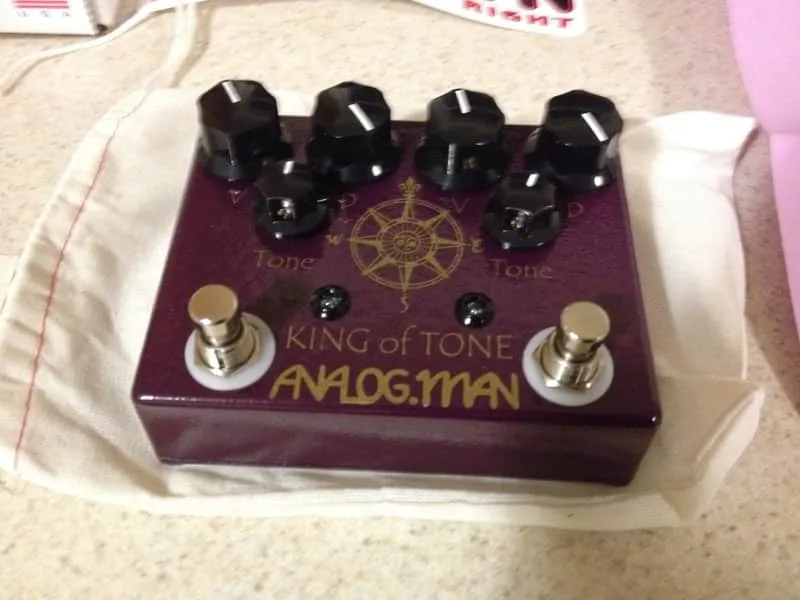
In that demo, Thorn ran the Wessex from low-gain subtle overdrive through mid-gain modern tough overdrive2. On the player side, Linda Taylor, in a Strymon pedalboard feature, said the Wessex gets changed out and switched frequently on her board, sometimes replaced by an Analog Man King Of Tone depending on the gig13.
Thorn's video demo covers the controls, the Enhance mode, and the pedal's range into both a clean Suhr Hedgehog amp and a crunchy Suhr SL68 plexi-style amp2.
Videos
Premier Guitar
bogneramplification
News
Questions
Is the Bogner Wessex true bypass?
Yes. Guitar World's review of the original series lists true bypass switching as a common feature of all three pedals, and gearnews reported the same of the V2 reissue: each pedal is completely analogue and true bypass. Mono inputs and outputs are standard, and the pedals run on battery or 9V DC power drawing 50mA or more.
Is the Bogner Wessex analog?
Yes. The Wessex is described as a 100% analog circuit, and the V2 reissue was reported as one of three 100% analogue drive pedals. The character of the pedal comes from an audio transformer designed by Rupert Neve, the console designer, rather than from digital processing.
How does the Wessex compare to the Burnley and Harlow?
The three form a set: the Harlow is the boost, the Wessex the overdrive and the Burnley the distortion. Guitar World's reviewer found the Wessex the most versatile of the three thanks to its separate treble and bass EQ controls, and recommended it as the first purchase for a guitarist who can only afford one.
Who designed the transformer in the Bogner Wessex?
Rupert Neve, the legendary console designer. Each pedal in the series carries its own unique custom transformer designed by Rupert Neve, inspired by the dynamic and detailed sounds of the classic Neve mixing consoles of the 1960s, which is what sets the series apart from ordinary drive pedals.
Sources (13)
- Bogner launches La Grange overdrive/boost effects pedal, MusicRadar, 2016-06-13
- Bogner Wessex Overdrive, demo by Pete Thorn, YouTube (Pete Thorn channel), 2015-09-25
- Wessex Bubinga Exotic Wood by Bogner, RockBoard PedalPedia, 2026
- Bogner reissues V2 drive pedals with Rupert Neve audio transformers, gearnews.com, 2020-04-20
- Bogner Wessex Overdrive Pedal, Bubinga Faceplate, hollywooddj.com
- Review: Bogner Burnley, Harlow and Wessex Effect Pedals, Guitar World, 2015-06-25
- Bogner Wessex, Burnley and Harlow Pedals Overview, bogneramplification (YouTube), 2014-08-12
- Bogner releases updated versions of its Burnley, Harlow and Wessex pedals, Guitar.com, 2020-04-21
- Guitar Pedal X, Guitar Pedal X, 2020-04-12
- Harlow, Wessex, Burnley, gearnews.de, 2020-04-20
- Bogner is reissuing its acclaimed overdrive, distortion and boost effects pedals, MusicRadar, 2020-04-17
- Bogner updates its Burnley, Wessex and Harlow custom audio transformer drive pedals, Guitar World, 2020-04-20
- Pedalboard Feature: Linda Taylor, Strymon (www.strymon.net), 2016-09-15