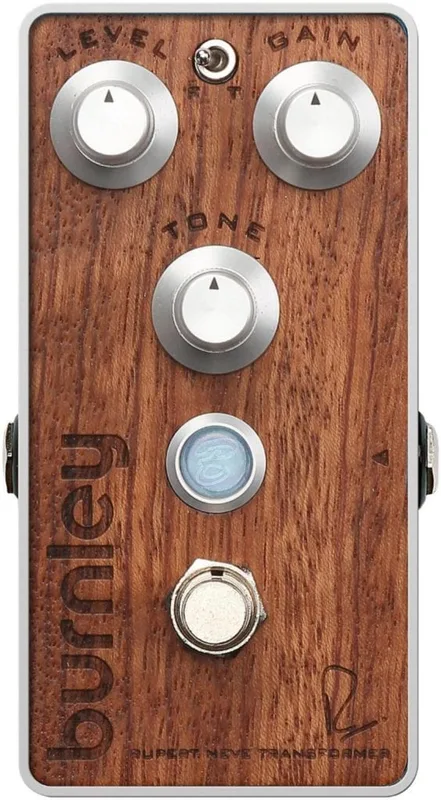


The Bogner Burnley Bubinga is a limited wood-topped edition of the Bogner Burnley distortion pedal, part of Bogner's Studio Series12. It is the same circuit as the standard Burnley, a 100% analog distortion pedal whose sound, in Bogner's description, runs from hot crunch to high-gain annihilation, with the added tonal weight the company attributes to a custom audio transformer designed by legendary audio engineer Rupert Neve3. What sets the Bubinga apart is its exotic hardwood top panel, hand formed, sanded, layered and finished, meant to recall the vintage mixing consoles of the 1960s2.
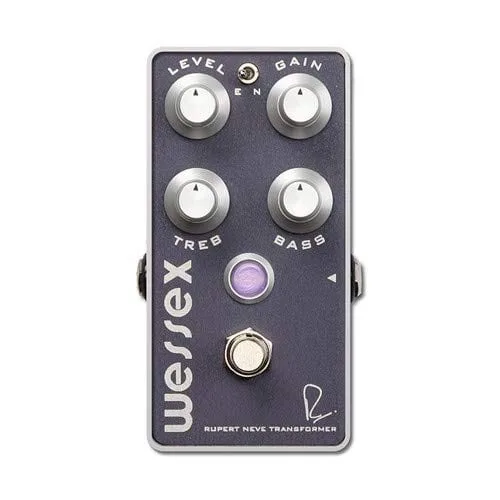
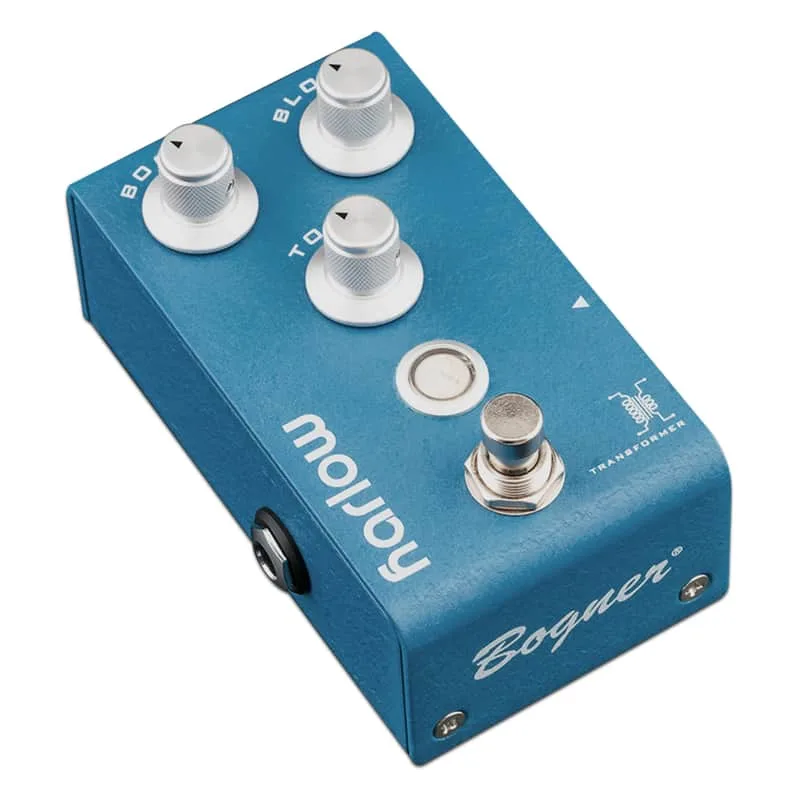
The Burnley sits in Bogner's trio of transformer pedals alongside the Wessex overdrive and the Harlow boost, each with its own transformer voiced for that model4. Guitar World's reviewer called the Burnley "a very aggressively voiced distortion pedal that can boost both gain and output level quite significantly, but the tone never gets over the top and remains musically useful throughout its entire range"4.
A transformer designed by Rupert Neve
The Burnley's distinguishing feature is the audio transformer at the heart of its circuit, designed by Rupert Neve, the famous British electronics engineer36. RockBoard describes Reinhold Bogner's design as placing the transformer at the center of the circuit5, and the MrJack Guitars listing names Reinhold Bogner and Rupert Neve as the pair behind the pedals2. Each transformer is unique and specifically designed to pair with the analog circuit of its model2.
The transformers draw on Neve's mixing console heritage. MusicRadar reports that the Rupert Neve Designs audio transformers give the pedals an ultra-dynamic, studio-quality response inspired by the revered Neve consoles of the 1960s7, and gearnews describes the V2 series as using '60s-style mixing console transformers to attain its dynamic tones8. Guitar World's 2015 review of the original pedals found that "each model features its own unique custom transformer designed by Rupert Neve to provide incredibly dynamic and detailed boost, overdrive and distortion effects"4.
"Masterminds Reinhold Bogner and Mr. Rupert Neve have teamed up to produce superb audio-effects pedals that serve up rich, buttery tones, ultra-dynamic response and a stunning three-dimensional sound quality inspired by the classic mixing consoles of the 1960's."
Controls and the Fat/Tight switch
The control layout is simple: Level, Gain and Tone knobs plus a two-way F/T toggle3. The toggle is where the pedal's two personalities live:
| Setting | Character | Suits |
|---|---|---|
| Fat (F) | Fat, rich, slightly compressed, mellow and warm | Lead playing, solo boost, smooth singing sustain46 |
| Tight (T) | Tight, punchy, aggressive, more dynamic edge | Rhythm playing and single-note lines46 |
Guitar World's reviewer found the Fat setting made the Burnley a strong choice as a solo boost pedal, particularly for players who love smooth, singing sustain4. Guitar.com describes the switch on the V2 as a choice between an unrestrained bottom end and a more biting one9.
The pedal also carries a "jewel light" indicator that illuminates red when engaged and turns progressively bluer depending on playing dynamics and the guitar's output level4. Pedal of the Day highlighted it as an LED that reacts to your playing6, and the feature carried over to the V2 reissue9.
What amp sound is it based on?
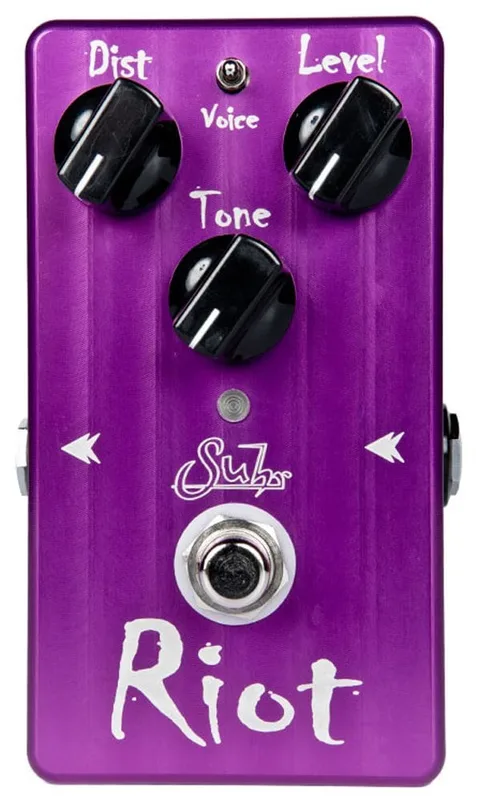
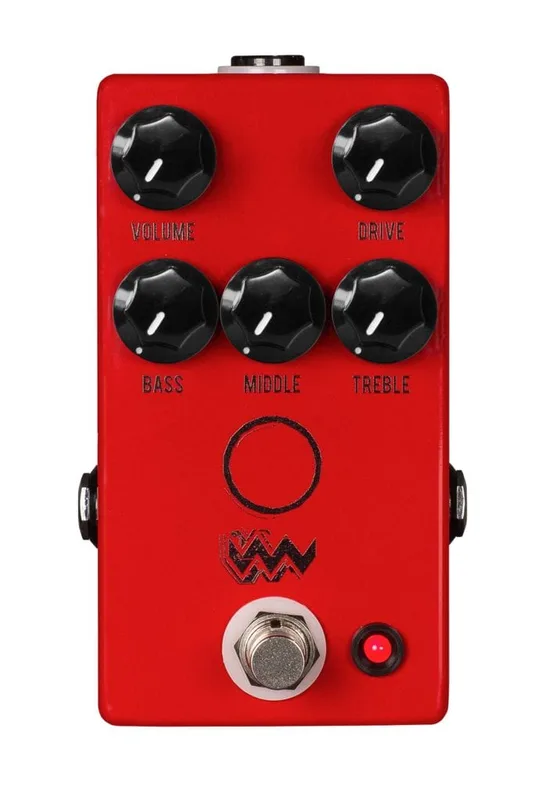
Guitar Pedal X characterizes the Burnley as "essentially a Marshall JCM800 style Distortion sort of EVH Brown Sound pedal," placing it alongside the Suhr Riot, JHS Angry Charlie and MI Effects Super Crunch Box10. Bogner's own description covers a wide range, from warm, overdriven crunch to full-blown high-gain annihilation68. Among the three transformer pedals, the Burnley is the highest-gain of the trio9, and gearnews calls it "the extra-tasty one, with buckets of gain on tap for those that need it"8.
History and versions: the Burnley V1 and V2
The original Burnley launched as part of Bogner's first pedal line, reviewed by Guitar World in 2015 in compact housings the reviewer described as built like tanks, with the Bubinga hardwood top available as an option for an additional $604. Pedal of the Day reviewed it in January 2018, noting its simple control setup, the Neve transformer and the reactive jewel light6.
In April 2020 Bogner reissued all three transformer pedals as V2 versions in smaller, more pedalboard-friendly enclosures with rounded housings1112. Guitar Pedal X measured the new enclosure at approximately 15% smaller than the V110, but noted the new design cannot accommodate a Bubinga faceplate the way the previous model did10. The V2 pedals list at $179 each98.
The V2 was also re-voiced. Bogner describes the V2 range as significantly re-voiced, with more dynamics and gain on tap and a more modern, punchy, aggressive tonal profile10; Guitar Pedal X calls the V2 Burnley's tone more modern, open and aggressive than the V110. The same writer noted that the Rupert Neve branding no longer appears on the visible surfaces of the V2 pedals10, though gearnews reports each V2 still contains an audio transformer designed by Neve8. Guitar World added that the sound quality and performance of the original trio was, in its earlier review, on another level compared to the average overdrive and distortion pedal11.
Burnley versus Burnley Bubinga
The difference is cosmetic, not sonic. The Bubinga is the Studio Series version of the same distortion pedal, with the same analog Rupert Neve transformer design, the same Level, Gain and Tone controls, and the same rich, organic overdrive tone12. What you add is the Bubinga exotic hardwood top panel, hand formed, sanded, layered and finished, giving the look and feel of vintage 1960s mixing consoles2. On the original run that panel cost $60 over the standard $269.99 price4. MrJack Guitars sells the Bubinga version with a 3 year warranty2.
For players weighing it against other high-gain options, the standard Bogner Burnley page covers the same circuit in its plain enclosure, and the distortion pedals type page places it among the alternatives.
Videos
GuitarrasCustom
session
MarshallGTV
News
Questions
What does the Fat/Tight switch do on the Burnley?
The F/T toggle selects between two voicings. Fat gives fatter, mellower, slightly compressed tones that suit lead playing and singing sustain, while Tight produces tighter, punchier, more aggressive tones that suit rhythm playing and single-note lines with more dynamic edge and responsiveness.
Can the Bogner Burnley run on a battery?
Yes. The original Burnley runs on a battery or 9V DC power, drawing 50mA or more. A standard 9V supply meets that requirement, so the pedal works on most pedalboard power supplies as well as on an internal battery.
What amp sound is the Bogner Burnley based on?
Guitar Pedal X describes the Burnley as essentially a Marshall JCM800 style distortion with an EVH Brown Sound character, in the same territory as the Suhr Riot and JHS Angry Charlie. Bogner's own description ranges from hot crunch to high-gain distortion.
Why does the Burnley LED change color?
The jewel light illuminates red when the pedal is engaged and turns progressively bluer depending on your playing dynamics and the guitar's output level. It is a visual indicator of how hard the circuit is being driven, and it carried over to the V2 reissue.
What is the difference between the Bogner Burnley and the Burnley Bubinga?
The circuit is the same. The Bubinga version is the Studio Series option, adding a Bubinga exotic hardwood top panel that is hand formed, sanded, layered and finished, giving the look and feel of vintage 1960s mixing consoles. On the original run it cost $60 more than the standard pedal.
What does the Rupert Neve transformer do in the Burnley?
Each pedal in Bogner's transformer series uses a unique custom audio transformer designed by Rupert Neve, paired with the 100% analog circuit. Bogner says it provides dynamic, detailed, studio-quality response inspired by the classic Neve mixing consoles of the 1960s.
Sources (12)
- Bogner Burnley Bubinga Wood Dimensions, Specs & Details, Stompbox Garden
- Bogner Burnley Bubinga, mrjackguitars.com
- Bogner Burnley High Gain Overdrive, Delicious Audio, 2020-08-03
- Review: Bogner Burnley, Harlow and Wessex Effect Pedals, Guitar World, 2015-06-25
- Burnley Bubinga Wood by Bogner, RockBoard (www.rockboard.de), 2026
- Bogner Amplification Burnley Distortion, Pedal of the Day, 2018-01-15
- Bogner is reissuing its acclaimed overdrive, distortion and boost effects pedals, MusicRadar, 2020-04-17
- Bogner reissues V2 drive pedals with Rupert Neve audio transformers, gearnews.com, 2020-04-20
- Bogner releases updated versions of its Burnley, Harlow and Wessex pedals, Guitar.com, 2020-04-21
- Guitar Pedal X, Guitar Pedal X, 2020-04-12
- Bogner updates its Burnley, Wessex and Harlow custom audio transformer drive pedals, Guitar World, 2020-04-20
- The Sheriff V2 Midnight by Preston Pedals, RockBoard PedalPedia, 2026