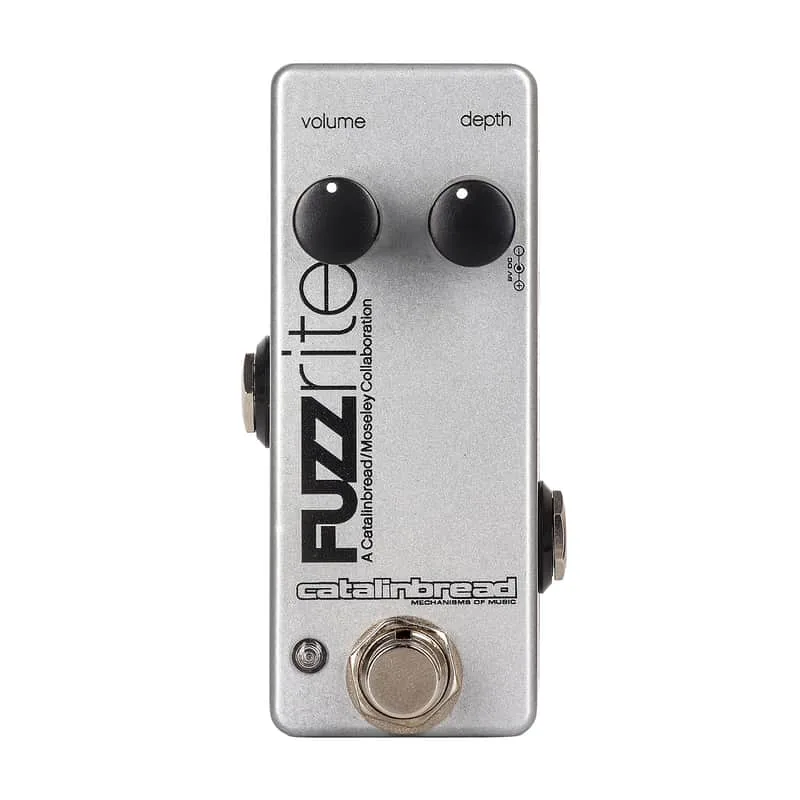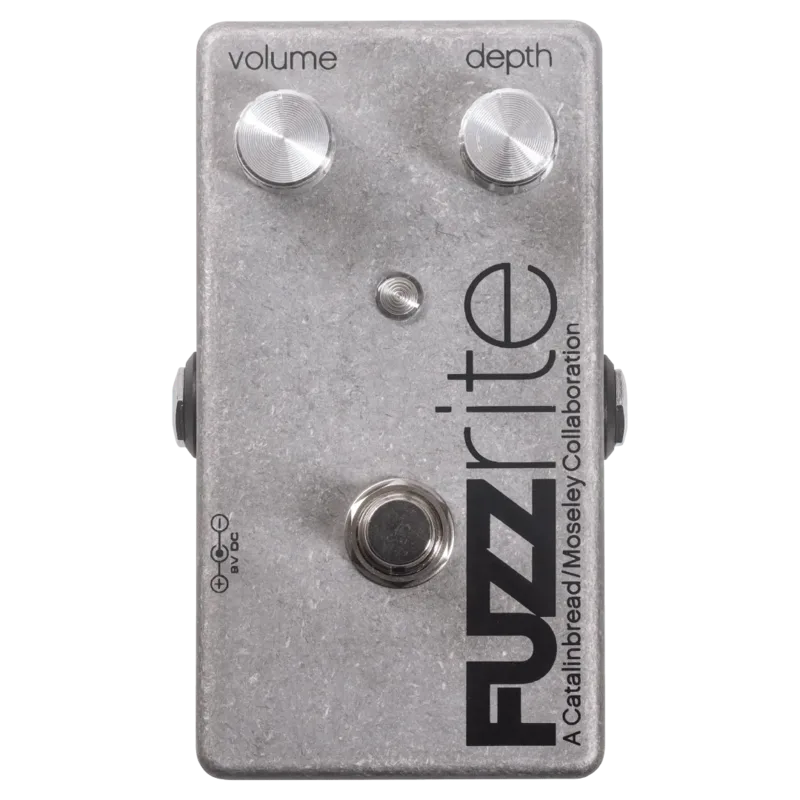


The Catalinbread Fuzzrite Mini is a compact fuzz pedal from Catalinbread, the Portland, Oregon builder, built on the exact same circuit as the company's full-size Fuzzrite1. Announced in October 2025 alongside a mini edition of the Epoch Boost, it packs the Fuzzrite circuit, a 1960s design, into a rugged, pedalboard-friendly enclosure12. Catalinbread describes the Fuzzrite sound as "buzzy, spitty, and abrasive texture" with a "mid-heavy snarl that cuts through a mix with an aggressive, vintage character"1.
Delicious Audio described the result in plain terms:
"The Fuzzrite is all about buzzy, spitty, and abrasive texture."
The controls: Volume and Depth
The Mini keeps the Fuzzrite's two-knob layout. Catalinbread's product page describes each control13:
| Control | What it does |
|---|---|
| Volume | Sets the output volume of the circuit. Higher settings begin to overdrive your amplifier, which can add body and smoothness to the fuzzed-out sounds.4 |
| Depth | The heart of the pedal. A blend control that mixes in a second transistor gain stage with the first.4 |
Depth is where the Fuzzrite's character lives. At the minimum setting you hear the first transistor on its own, which Catalinbread describes as "cleanish and fat"4. As you increase Depth, the maker says you will notice:
- more voltage-starved, gated sounds
- pseudo ring mod-style upper octave harmonics
- at max settings, a thinner, more aggressive saturated sound with a ripping top-end attack and huge bloom to the notes4
One thing to know about the circuit's behavior: no matter where the Depth control is set, the signal travels directly through a small capacitor that cuts the low end5. The Fuzzrite is not a thick, low-end-heavy fuzz by design; it is a mid-focused one, and Delicious Audio characterized the Mini's voice as a "mid-heavy snarl that cuts through a mix with an aggressive, vintage character"1.
Note that Delicious Audio's launch coverage described the two knobs as Volume and Fuzz, while Catalinbread's own product page names them Volume and Depth41. The maker's page is the reference for what is printed on the enclosure.
The Fuzzrite circuit and where it came from
The Fuzzrite dates to the late 1960s. The original Mosrite Fuzzrite used germanium transistors in its earliest units, while later versions moved to silicon transistors, across a variety of construction methods; one surviving eyelet-board example carries the date "12/67" engraved on its battery cover62. The silicon version appears to have been much more widespread than the germanium one7.
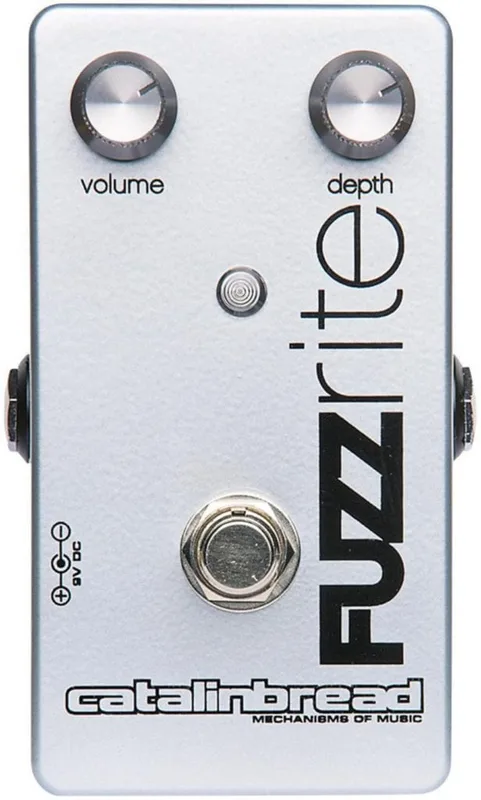
Catalinbread's Fuzzrite is a faithful recreation of the original classic circuit, based on the silicon version of the circuit that first appeared in the late '60s89. According to Aion FX, the company teamed up with the Moseley estate and Ed Sanner to release an official reissue of the Fuzzrite, with a germanium version following in 20237. Premier Guitar's review of the standard Fuzzrite noted its build quality, describing a robust box with the circuit board secured by small steel braces affixed directly to the enclosure8.
The circuit itself is simple: two separate gain stages, with the Depth knob acting as a mix control between them. You never hear the second stage by itself, only the first stage alone or the two blended5. That blend design is what lets the Fuzzrite range from trashy distortion to full-on fuzz with hints of upper octaves, as Delicious Audio's buying guide puts it10.
The Mini and Jr editions
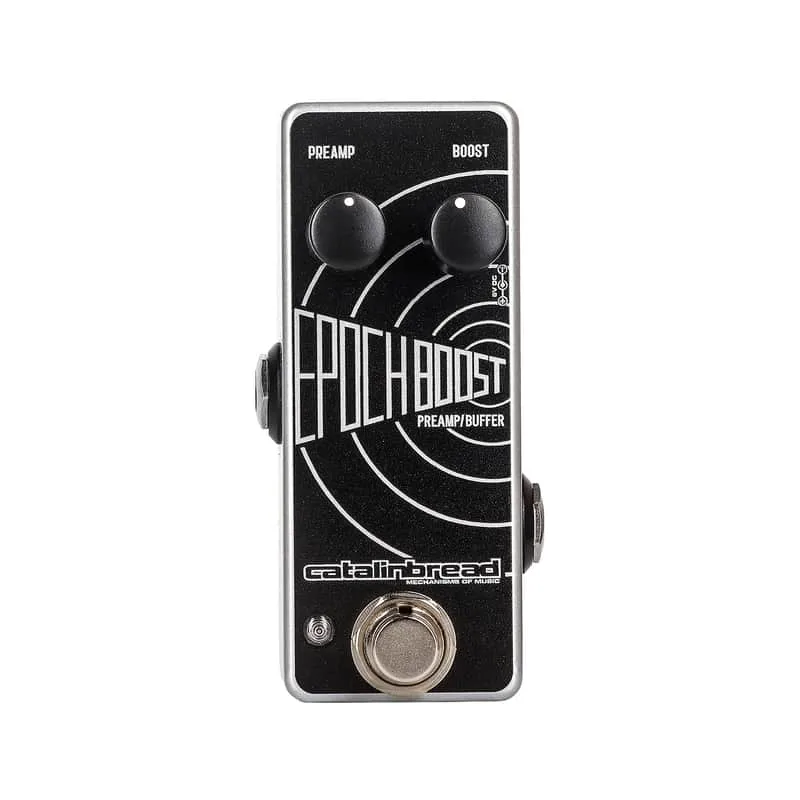
In October 2025 Catalinbread brought two of its pedals into mini format as two-knob Jr editions: the Epoch Boost and the Fuzzrite11. Guitar Pedal X reported the Mini editions at $1293. For players, the appeal is straightforward: the Fuzzrite's buzzy, spitty, abrasive texture and mid-heavy snarl in an enclosure that saves pedalboard space1.
How the Mini relates to the Silicon Fuzzrite Mini
The Silicon Fuzzrite Mini is the mini edition of Catalinbread's silicon-transistor Fuzzrite, and it carries the same Volume and Depth controls as its compact sibling3. The Fuzzrite Mini line and the Silicon Fuzzrite Mini sit alongside each other in the catalog, both descended from the same late-1960s silicon circuit18.
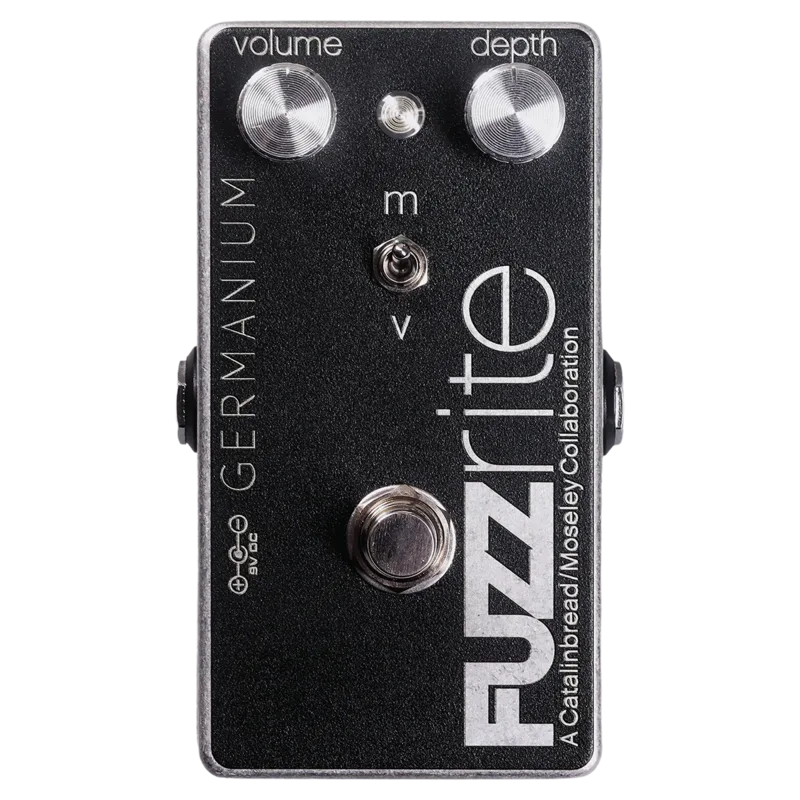
Catalinbread also makes a Germanium Fuzzrite, a take on the early germanium version of the Mosrite Fuzzrite, voiced after an original unit, with two NOS PNP germanium semiconductors and a polarity inverter IC so it plays nice with all forms of power129. Reviewers have compared the two flavors: Guitar Pedal X's Stefan Karlsson wrote of the silicon and germanium versions,
"I really like the Silicon version, but I absolutely love the Germanium one!"
Power
The Fuzzrite Mini runs on a 9V DC adapter only in its mini enclosure. It needs a good-quality adapter for audio circuits that is filtered and regulated, with a center-negative tipped plug4. The full-size Catalinbread Fuzzrite also accepts a 9V battery, with its 9V DC power supply sold separately14.
Catalinbread's guidance is to avoid cheap, unregulated supplies, since the Mini's page specifies filtering and regulation for clean operation4.
Videos
Brett Kingman
JayLeonardJ
Antonio Lambert
News
Questions
What does the Depth knob do on the Catalinbread Fuzzrite Mini?
Depth is a blend control that mixes in a second transistor gain stage with the first. At the minimum setting you hear only the first stage, which is cleanish and fat. As you turn it up you get more voltage-starved, gated sounds and pseudo ring mod-style upper octave harmonics, until at max it is a thinner, more aggressive saturated fuzz.
What power does the Fuzzrite Mini need?
Catalinbread specifies any good-quality 9V DC adapter intended for audio circuits, one that is filtered and regulated. Cheap unregulated adapters can add noise, so a quality supply is the safe choice for this pedal.
Is the Fuzzrite Mini center-negative?
Yes. Catalinbread's product page for the Fuzzrite Mini specifies a 9V DC adapter with a center-negative tipped plug, the same convention as most modern pedals.
What is the difference between the Fuzzrite Mini and the Silicon Fuzzrite Mini?
The Silicon Fuzzrite Mini is the mini edition of Catalinbread's silicon-transistor Fuzzrite, with the same Volume and Depth controls as its compact sibling. The Fuzzrite Mini line brings that circuit to a smaller, pedalboard-friendly enclosure at a lower price than the compact editions.
Can the Fuzzrite Mini run on a battery?
Catalinbread's page for the Mini specifies a 9V DC adapter. The full-size Catalinbread Fuzzrite also accepts a 9V battery, so players who want battery power have that option in the standard enclosure.
Sources (14)
- New Pedal: Catalinbread Fuzzrite Mini, Delicious Audio, 2025-10-17
- The 5 Most Pupular Fuzz Pedals Of All Time: Compare Five Classic Circuits, Delicious Audio, 2020-08-06
- Guitar Pedal X, Guitar Pedal X, 2025-10-17
- Fuzzrite Mini, Catalinbread Effects
- Fuzzrite Germanium (White), Catalinbread Effects
- Mosrite Fuzzrite: A detailed history • Fuzzboxes, Fuzzboxes (fuzzboxes.org), 2023-07-20
- Orpheus Silicon Fuzz / Mosrite Fuzzrite, Aion FX, 2024-07-04
- Catalinbread Fuzzrite Review, Premier Guitar, 2015-10-08
- Catalinbread Releases the Fuzzrite Germanium, Premier Guitar, 2022-08-11
- The 3 Best Fuzz Pedals Per Type, In 2023, Delicious Audio, 2022-09-15
- Guitar Pedal X, Guitar Pedal X, 2025-10-17
- Catalinbread Germanium Fuzzrite, Delicious Audio, 2022-09-13
- Guitar Pedal X, Guitar Pedal X, 2024-06-24
- Fuzzrite, Catalinbread Effects