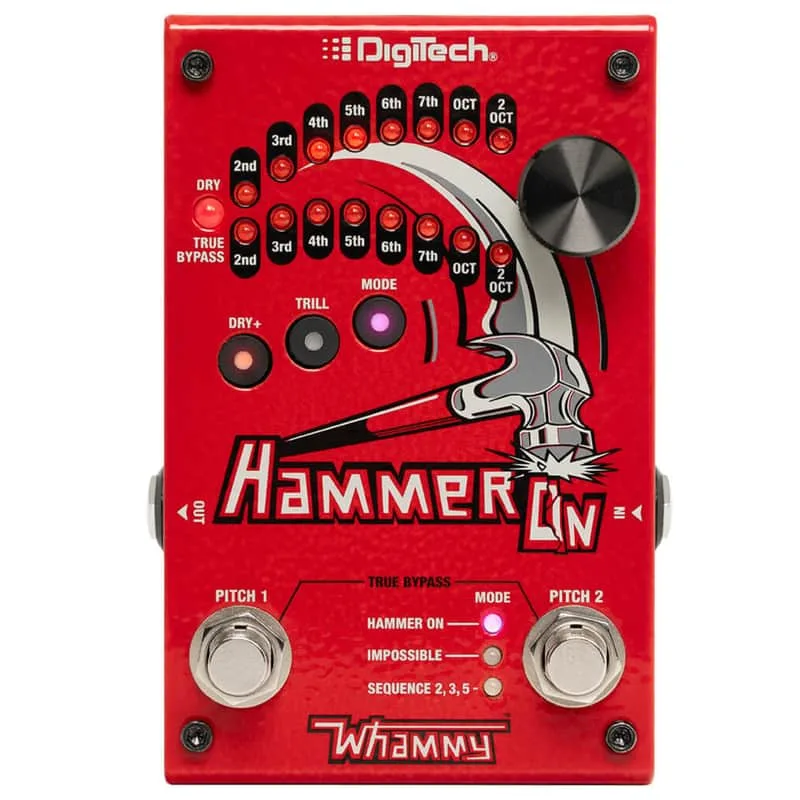


The name is the point. A hammer-on is a left-hand technique where you fret a higher note without picking it; the HammerOn does the same job with pitch shifting, so a single picked note can leap to another interval under your foot. In DigiTech's demo with MonoNeon, the company describes the pedal as one that "melts into your technique just like a traditional guitar or bass hammer on/pull-off"1.
The controls and modes
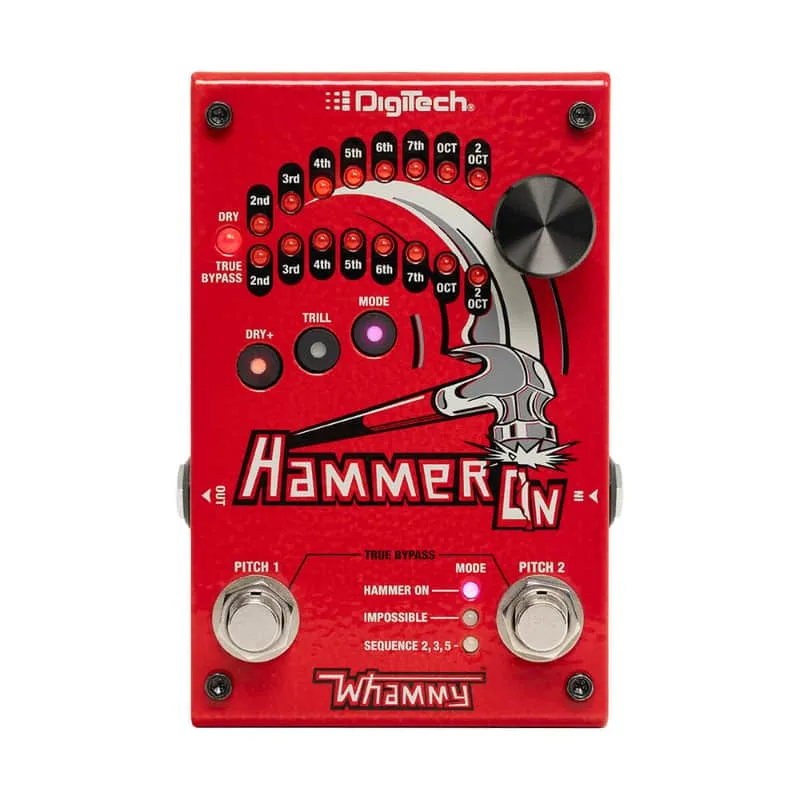
The HammerOn gives you seven modes, selected with a Mode button2. Three of them are named in the reviews: Hammer On, Impossible and Sequence2.
| Control | What it does |
|---|---|
| Multi-purpose knob | Selects a variety of functions depending on what the pedal is doing5 |
| Mode button | Cycles the modes, including Hammer On, Impossible and Sequence2 |
| Dry+ button | Blends your dry signal with the shifted note5 |
| Trill button | Engages the Trill Auto-Repeater function5 |
| Trill knob | Sets the tempo of Trill sequences7 |
| Pitch 1 footswitch | Momentary; controls one octave up5 |
| Pitch 2 footswitch | Momentary; controls two octaves up5 |
Hammer On mode is the default. You select a note for the pedal to shift to, and each press of a footswitch pitches your note up or down to whichever octave or interval you set5. The two momentary footswitches are the heart of it: one jumps an octave up, the second jumps two octaves up, and because they are momentary the shift lasts only as long as you hold them, like a hammer-on followed by a pull-off5.
The Pitch 2 footswitch also works in conjunction with the Mode button across the Hammer On, Impossible and Sequence options2.
Impossible Mode
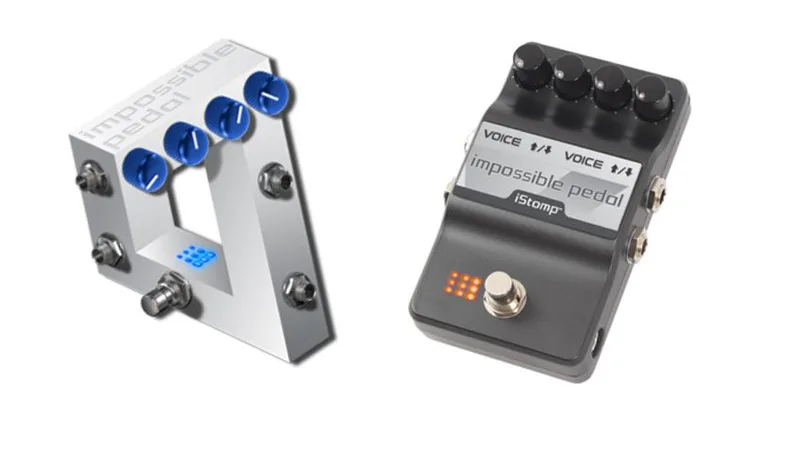
Impossible Mode is not new to DigiTech. It was carried over from the iStomp-era Impossible Pedal, and DigiTech's artist page on Adrian Belew notes that "The Impossible Mode has now made its way into the new DigiTech HammerOn pedal"8. Belew, a longtime Whammy player, did not yet have the HammerOn on his pedalboard when that page was written, though DigiTech expected it would not be long8.
Sequence mode and note runs
Sequence mode is where the HammerOn stops behaving like a technique substitute and starts behaving like a player. You can program sequences of two, three or five notes, fully programmable with no presets, so whatever notes you want7. Hit a single note and the pedal shifts to a different note each time, which DigiTech's demonstrator at NAMM described as "like a delay modulation and a hammer on" combined7.
Guitar World's reviewer found this opens up lines you would otherwise have to practice for years:
"You can get it do a scale run for you, make it sound like you're sweep-picking, do EVH-style tapping licks, and make it sound like a synthesizer by just playing a single note."5
One thing to keep straight: the speed control does not set how fast the pitch shifts. Guitar Pedal X notes that the speed function applies to Trill Auto-Repeater sequences, with universal tempo, not to the pitch-shift interval itself9. The shift is instant either way.
Power and connections
The back panel is simple: a single 1/4-inch input, a single 1/4-inch output, and a 9V DC jack52. It draws 300mA52, which is well beyond what a typical analog pedal pulls, so give it its own outlet on a power supply rather than sharing a daisy chain with low-current pedals. There is no battery compartment5. Guitar Player notes the adapter is included2.
At 300mA the HammerOn needs a power supply outlet rated for that draw. A typical 100mA daisy-chain tap will not run it.
How it differs from the Whammy Ricochet
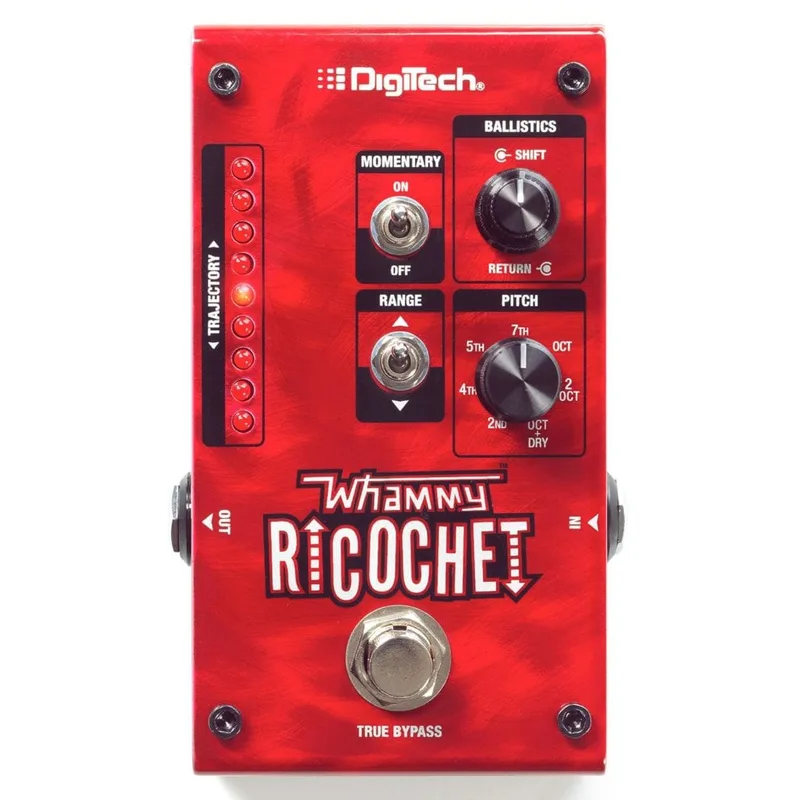
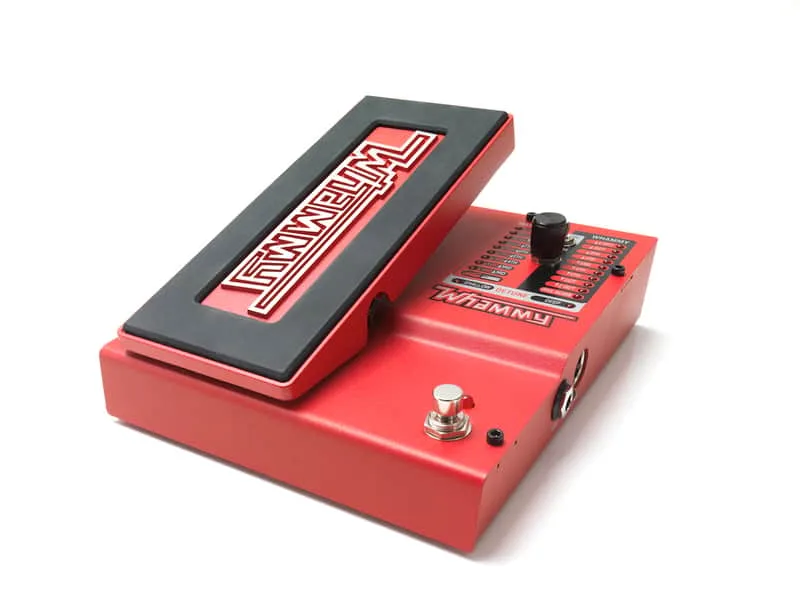
The HammerOn's closest relative in the DigiTech line is the Whammy Ricochet, a compact pitch-shifter introduced in 2016 that put the Whammy pitch-shifting effect into a small pedal10. Guitar World's reviewer notes the HammerOn "bears a striking resemblance" to the Ricochet, though slightly taller and distinctly wider5.
The functional difference is the shift response. The Ricochet ramps to its target pitch over a timed interval, mimicking the motion of a whammy bar being pushed down; the HammerOn shifts instantly, the moment you tap9. Guitar Pedal X frames the HammerOn as an evolution of the Ricochet format that brings it closer to the original Whammy's fuller feature set4, with its sequence mode, Trill Auto-Repeater and Impossible Mode adding up to the "seven pedals in one" claim3.
| Whammy Ricochet | HammerOn | |
|---|---|---|
| Shift response | Timed, ramped interval9 | Instant9 |
| Modes | Pitch shifting2 | Seven modes2 |
| Footswitches | Momentary shift5 | Two momentary, one and two octaves up5 |
What reviewers said
Reviews have been positive and consistent about one thing: the HammerOn does something other pedals do not. Guitar World's verdict lists "does something totally unique" among its strengths5. Guitar Player's Jimmy Leslie went further:
"I'd enthusiastically recommend the DigiTech HammerOn to absolutely anyone out for sonic adventure."2
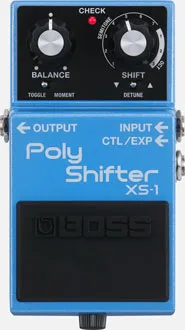
He described the pedal's creativity factor as absolutely off the charts2. Guitar.com's Richard Purvis reviewed it in August 2025 at £219/$2996, and a later Guitar.com piece on the Boss XS-1 Poly Shifter used the HammerOn as the comparison point for the new Boss pedal11.
On price, Guitar World lists a launch price of $279.995, while Guitar.com's reviews give $299611. Both are listed above with their dates.
A demo worth watching
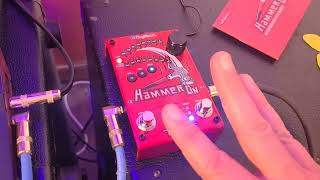
Premier Guitar's NAMM 2025 video with DigiTech's demonstrator walks through the pedal's functions, including the sequence mode's two-, three- and five-note programmable progressions and the Trill Auto-Repeater with its tempo knob7.
Videos
Cameron Cooper
Gear4music Guitars
Gary Schutt
Questions
Is the DigiTech HammerOn true bypass?
Yes. Both Guitar World and Guitar Player list the HammerOn as true bypass, so with the pedal disengaged your dry signal passes without the pitch-shifting circuit in the path.
Does the HammerOn take a battery?
No. The pedal has no battery compartment and runs from a 9V DC power supply. Guitar Player notes that an adapter is included in the box, and it draws 300mA, so plan on a dedicated outlet on your power supply rather than a shared daisy chain.
What is Impossible Mode on the HammerOn?
Impossible Mode is a setting carried over from DigiTech's earlier iStomp-based Impossible Pedal. DigiTech's own artist page on Adrian Belew, a longtime Whammy user, notes that Impossible Mode has made its way into the HammerOn, giving players the same interval-jumping behavior that pedal was known for.
How is the HammerOn different from the Whammy Ricochet?
The Ricochet ramps to its target pitch over a timed interval, like a whammy bar being pushed down. The HammerOn shifts instantly, the moment you tap a footswitch. Guitar Pedal X describes the HammerOn as an evolution of the Ricochet format that brings it closer to the original Whammy's feature set.
Can the HammerOn play note sequences?
Yes. In Sequence mode you can program two-, three- or five-note progressions, with no fixed presets, so any notes you want. Hit a single note and the pedal steps through the sequence, which reviewers have used for scale runs, sweep-picking effects and synthesizer-like lines.
Sources (11)
- DigiTech Whammy 5: MonoNeon & HammerOn, Premier Guitar, 2025-01-26
- DigiTech HammerOn Pitch Shifter reviewed, GuitarPlayer, 2025-06-03
- HammerOn is HERE!, DigiTech, 2025-03-24
- Guitar Pedal X, Guitar Pedal X, 2025-01-24
- DigiTech HammerOn review, Guitar World, 2025-03-27
- DigiTech HammerOn review, Guitar.com, 2025-08-01
- DigiTech Whammy 5 MonoNeon Signature & HammerOn Demos, Premier Guitar, 2025-01-25
- Artist Spotlight: Adrian Belew, DigiTech, 2025-03-24
- Guitar Pedal X, Guitar Pedal X, 2025-01-29
- DigiTech Unveils the Whammy Ricochet, Premier Guitar, 2016-04-05
- Boss XS-1 Poly Shifter review, guitar.com, 2025-12-31