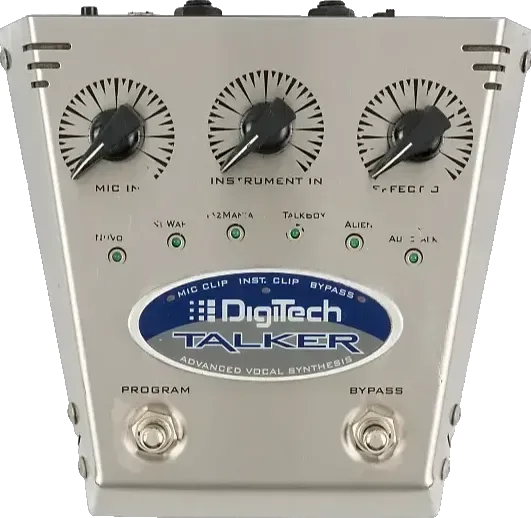


The DigiTech Talker is a vocoder stompbox from the 1990s that lets your voice shape your guitar sound. You plug a guitar and a microphone into it, and the pedal blends the two, producing everything from a talk box vibe on riffs to otherworldly vocals. DigiTech, a division of Harman Music Corp., built it around six presets: NuVo, NuWah, TazMania, TalkBox, Alien, and AutoTalk123.
It is a rare pedal today. Josh Scott of JHS Pedals said in a 2024 video that he has "never seen anyone use it except the Daft Punk stuff," and that used examples now sell for around $11,0004. Guitarist Stu G, on the same video, named it as a pedal he has used, on the songs "Bliss" (the Bliss setting) and "Simple Things" (the NuVo setting)4.
What it does to your sound
The Talker is a vocoder: it uses the signal from a microphone, your voice, to control the character of your guitar signal, so the guitar appears to speak or sing. General Guitar Gadgets' JD Sleep wrote that he believes DigiTech's Guitar Talker uses vocoder-type technology5. RockBoard's PedalPedia calls it "a gem from the '90s that stands as a testament to vocal and instrumental innovation," blending vocals and instruments into a fusion of sounds1.
Each of the six presets takes a different approach2:
| Preset | What it does |
|---|---|
| NuVo | Delivers the most intelligible, robotic "talking guitar" sound2 |
| NuWah | Acts like an envelope-controlled auto-wah for guitar2 |
| TalkBox | Faithfully simulates classic talk-box tones without the need for mouth tubes2 |
| AutoTalk | Smartly switches between clean guitar and vocoded speech depending on mic input2 |
| TazMania | One of the six factory presets1 |
| Alien | One of the six factory presets1 |
How it works: mic in, no tube
A regular talk box works by sending your amplified guitar through a plastic tube into your mouth, so your mouth shapes the sound acoustically. The Talker replaces all of that with a microphone. As Josh Scott put it on the JHS video, "this comes along in the '90s and they're using this DSP technology and the tech to plug in a microphone instead of" a tube4. DigiTech's own vintage spotlight says the Talker used a built-in XLR mic input and processed vocals and instruments together digitally2.
"The TalkBox preset faithfully simulates classic talk-box tones without the need for mouth tubes."
Controls and connections
DigiTech describes the front panel as simple, with no menu navigation: it lets you select programs, adjust instrument and mic inputs, and route outputs either to amp, PA, or both2. Barry Rudolph's review for Music Connection's "New Toys" column notes the back panel has both XLR balanced and 1/4 inch unbalanced inputs and output, plus a switchable -10/+4dBu pad to accommodate different impedances and levels3.
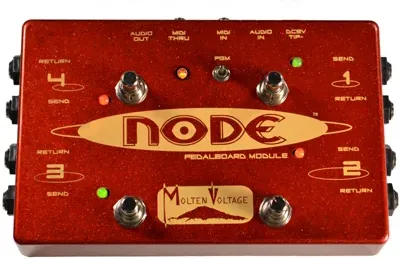
On a MIDI-controlled board, Molten Voltage documents using the Talker with its NODE MIDI Switcher: "Run your guitar in one channel, and a mic (not shown) in the other, then modulate your guitar with your voice," switching the pedal in and out via MIDI6.
Power requirements
The Talker runs on 9.75V DC, center negative, and draws 820mA1. That is a heavy draw for a single pedal, well beyond what a standard daisy-chain supply or a battery can provide, so it needs its own high-current output on a pedalboard power supply.
At 820mA, the Talker cannot share a daisy-chain output with other pedals. Plan a dedicated high-current supply output for it1.
Analog or digital?
The published accounts disagree. DigiTech's own vintage spotlight says it "processed vocals and instruments together digitally"2, and Josh Scott describes it as 1990s DSP technology4. Both descriptions are given here as stated; no single account settles the question.
True bypass
DigiTech's vintage spotlight describes the Talker as having "no-menu navigation and easy true-bypass functionality," so the guitar signal passes through untouched when the effect is off2.
Who uses it
The Talker's most famous documented association is Daft Punk: Josh Scott said he has never seen anyone use it except the Daft Punk material4. Stu G described using it on "Bliss" and "Simple Things," the latter with the NuVo setting and the microphone4. Scott also owns one, but "for the like posterity of collecting DigiTech," and has never used it4. He added a practical warning for anyone considering one for a live rig: "it's a huge pedal to carry around for one song it's like a giant pedal"4.
Related pedals
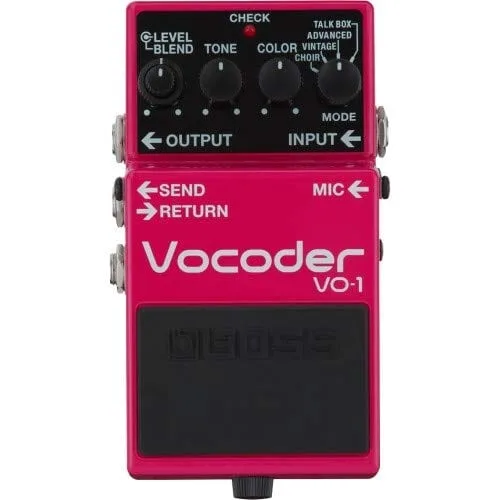
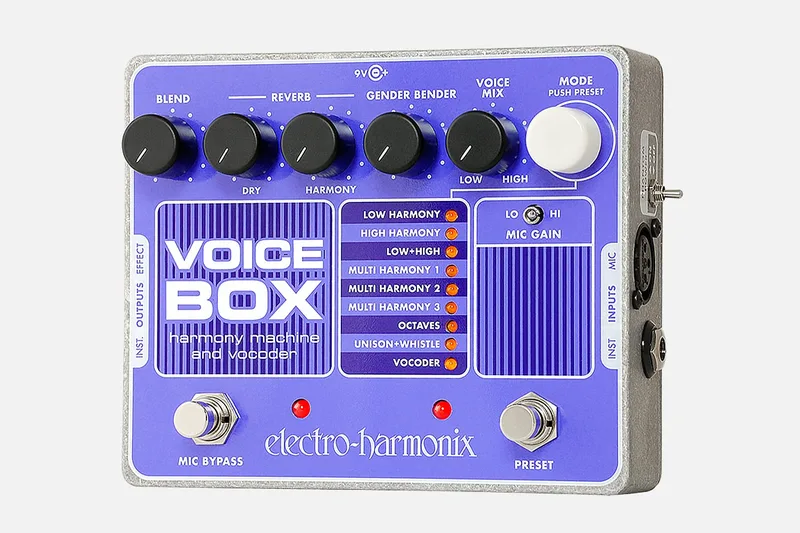
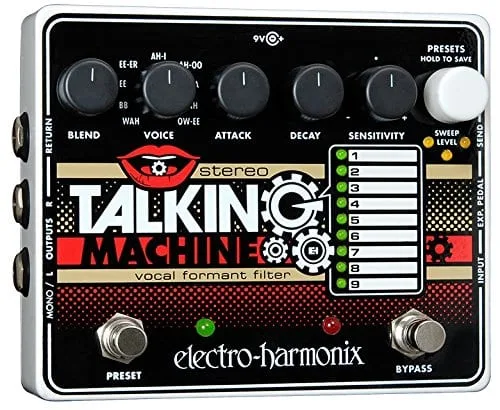
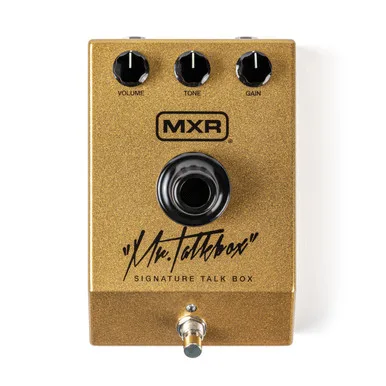
Players looking at vocoder and talk box sounds today have current alternatives, including the BOSS VO-1 Vocoder, the Electro-Harmonix Voice Box, the Electro-Harmonix Stereo Talking Machine, and the MXR Mr. Talkbox Signature Talk Box. See the full Vocal Pedals page for more.
Videos
shnobel
Stu Garrard
Alchemy Audio
Questions
Is the DigiTech Talker analog or digital?
RockBoard's PedalPedia lists the circuit type as analog. DigiTech's own vintage product spotlight says the Talker processed vocals and instruments together digitally, and Josh Scott of JHS Pedals describes it as 1990s DSP technology with a microphone input instead of a tube. Both descriptions appear in print, and no single published account settles the question.
Is the DigiTech Talker true bypass?
Yes. DigiTech's vintage product spotlight describes the Talker as having no menu navigation and easy true-bypass functionality, so your guitar signal passes through untouched when the effect is off.
Does the Talker need a tube like a regular talk box?
No. A conventional talk box sends your guitar through a plastic tube to your mouth, but the Talker uses a built-in XLR microphone input instead. DigiTech says its TalkBox preset faithfully simulates classic talk-box tones without the need for mouth tubes, using 1990s DSP technology.
What power supply does the Talker use?
The Talker runs on 9.75V DC, center negative, and draws 820mA according to RockBoard's PedalPedia. That current draw is far beyond what a standard daisy-chain supply or battery can deliver, so it needs a dedicated high-current power supply.
Can I plug a microphone straight into the Talker?
Yes. The Talker has a built-in XLR mic input, and DigiTech says it processed vocals and instruments together digitally. You run your guitar in one channel and a mic in the other, then modulate your guitar with your voice. The front panel lets you adjust instrument and mic inputs and route outputs to amp, PA, or both.
Why is the DigiTech Talker so expensive used?
It is a rare 1990s pedal that was never widely used, and demand from collectors has pushed prices up. On the JHS Pedals video from 2024, Josh Scott said the Talker now sells for around $11,000 on the used market, and he owns one for posterity as a collector rather than for regular use.
Sources (6)
- Talker by DigiTech, RockBoard PedalPedia, 2026
- Vintage Product Spotlight: DigiTech Talker, DigiTech, 2025-07-09
- DigiTech Talker, Barry Rudolph / Music Connection "New Toys", 2024
- StuG's Experimental Tones Explained (Zvex FuzzProbe, Digitech Whammy, Talker, Expandora, Line6 DL4), JHS Pedals (YouTube), 2024-05-07
- Talkbox Fundamentals: How a Talk Box Works, General Guitar Gadgets, 2014-06-29
- Molten Voltage™ presents Starship Kaom .:. the Modern MIDI PedalBoard, Molten Voltage