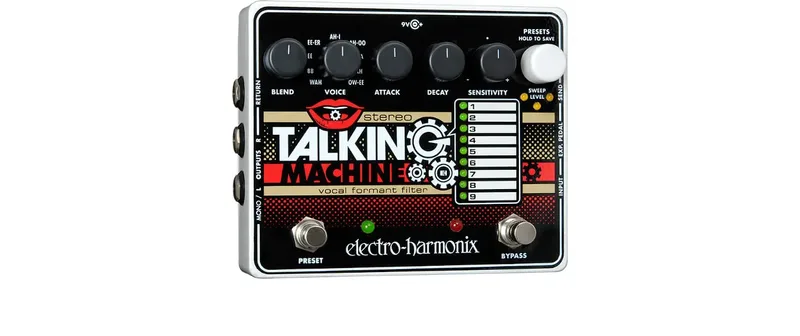


The Electro-Harmonix Stereo Talking Machine is a vocal formant filter pedal: a digital effect that uses multiple moving filters to make a guitar or bass imitate the vowel sounds of human speech. Electro-Harmonix describes it as a "highly customizable envelope-controlled digital vowel filter," meaning the filters respond to how hard you play, sweeping open and shut like a mouth forming words.1
The pedal was unveiled at NAMM in January 2011 and released that year, and Electro-Harmonix discontinued it in 2022.21 It came in a solid die-cast package measuring 5.75 x 4.75 x 2.5 inches, with a U.S. list price of $290 at launch; Premier Guitar later gave its street price as $215.2134
An envelope-controlled vowel filter
A formant filter works differently from a wah-wah pedal or a talk box. Instead of one sweeping band, the Stereo Talking Machine runs several moving filters shaped around the resonances a human vocal tract makes when pronouncing vowels. Play harder and the filters move more; the sensitivity control sets the input volume at which they start responding.1
Vintage Guitar described the result at launch: its nine selectable voices "deliver vowel sounds such as AH-OO and OW-EE, as well as Bassballs and wah-type dynamic filters."5 The voices are not limited to speech-like tones, then: two of them turn the pedal into a dynamic envelope filter in the vein of Electro-Harmonix's own filter designs. MusicRadar's launch coverage said the effects "imitate characteristics of human speech and create sounds that are both organic and harmonically rich."2
The "Stereo" part of the name comes from its true stereo outputs, which let you run two amps with independent effect signals.1 It also carries an effects loop of its own: the SEND/RETURN jacks sit between the preamp and filter sections, so you can insert other pedals into the signal path, in Electro-Harmonix's words, "without any alteration to the instrument's original dynamics."1
The controls
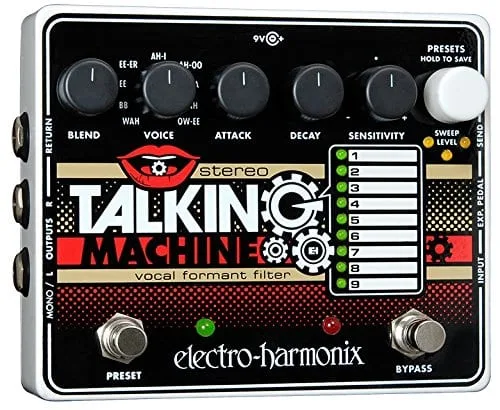
The front panel keeps the sound shaping to a handful of knobs, with preset storage handled by an encoder and two footswitches13.
| Control | What it does |
|---|---|
| SENSITIVITY (with voice polarity) | Sets the input volume at which the filters start moving |
| VOICE TYPE | Selects one of the nine voice options |
| BLEND | Controls the wet/dry balance of the effect outputs |
| ATTACK | Varies the rise time of the filter sweep |
| DECAY | Varies the fall time of the filter sweep |
| PRESETS encoder | Scrolls through presets; press and hold 3 seconds to save; press and release to toggle auxiliary functions |
The two footswitches divide the work: the BYPASS switch toggles between effect and bypass mode, with a red LED indicating effect mode, while the PRESET switch loads a selected preset on a press and release, or enters auxiliary knob edit mode when held.13 Nine preset locations store and instantly recall favorite programs, a count MusicRadar's reviewer singled out as one of the pedal's strengths.14
An expression pedal jack adds real time control over the filter sweeps. Electro-Harmonix describes the interaction as similar to a wah-wah pedal, so you can sweep the vowels manually rather than leaving them to your picking dynamics.1
Power and connections
The Stereo Talking Machine runs on a 9.6VDC 200mA power adapter, which is included, and draws 185mA.1 There is no battery option: Premier Guitar's review notes it runs on a 9-volt DC adapter only.3
No battery compartment, and a 185mA current draw. That demand is well above what a battery-powered pedal typically needs, so plan on a dedicated power supply or a pedalboard output that can deliver it.13
Connections on the back cover mono and stereo rigs. The input jack takes your instrument or another effects pedal. The MONO/L output goes to your primary amp, and for stereo the R output goes to a second amp. The effects loop send and return sit between the preamp and filter sections, and the expression pedal input handles manual filter control.1
What reviewers said
MusicRadar's review summed up the pedal's strengths in three lines:
"Great filter sounds close to the classic 'talk box' sound. Plenty of sound shaping options. Nine internal memory slots."
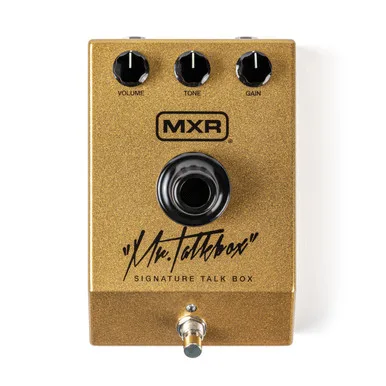
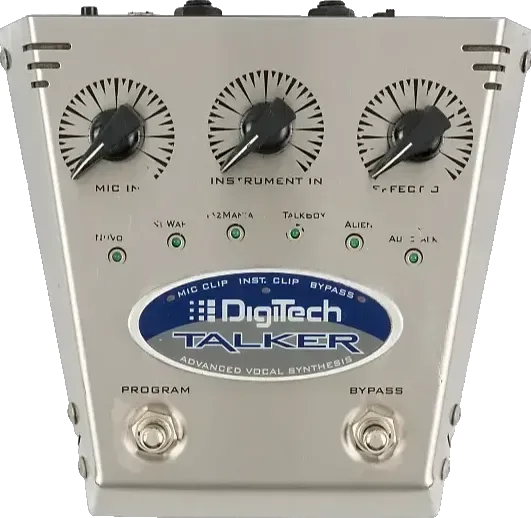
That talk box comparison is the reference most players bring to a pedal with this name. The difference is mechanical: a talk box like the MXR Mr. Talkbox drives your amp's signal into a tube in your mouth and shapes it with your lips, while the Stereo Talking Machine does its vowel shaping electronically, with nothing to hold in your mouth and no microphone needed to re-amplify your mouth movements. The DigiTech Talker took a similar electronic approach to speech-like effects.
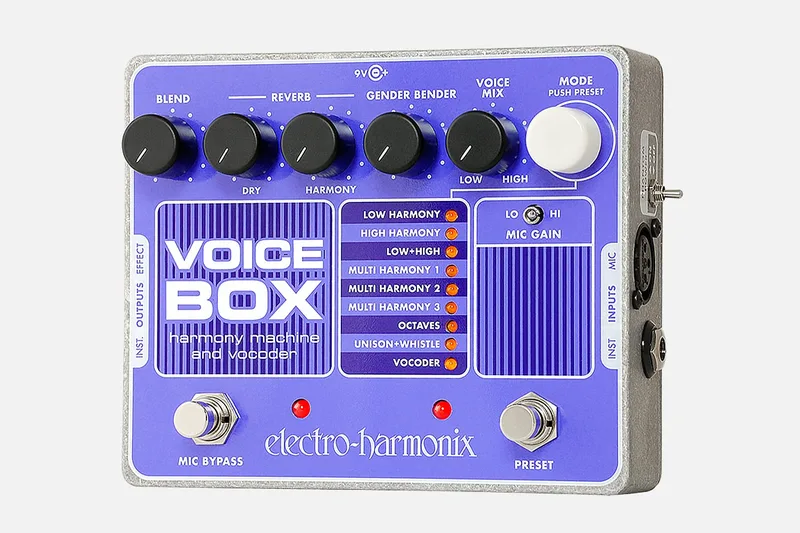
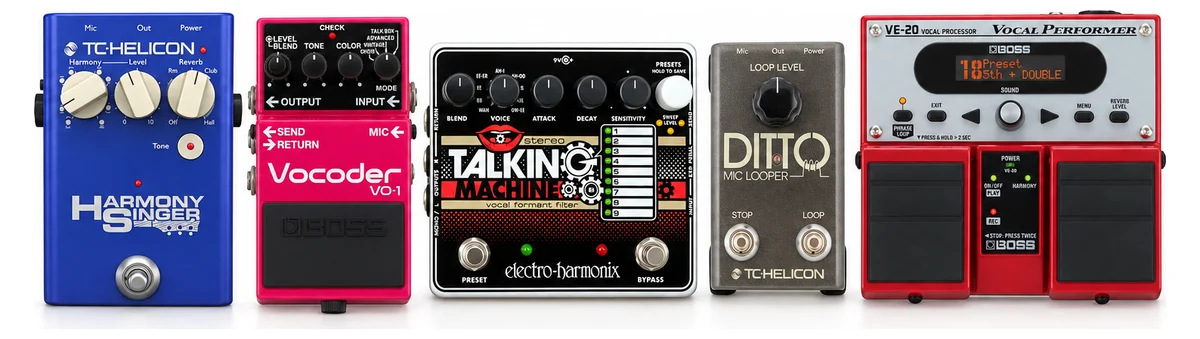
The pedal also sits in a family of Electro-Harmonix voice-oriented boxes. The company had already released the Voice Box vocoder and harmony pedal in 2009, and the Stereo Talking Machine extended that vocal expertise to a formant filter for guitar. For players shopping the vocal lane today, the Stereo Talking Machine is a guitar effect rather than a microphone processor, closer in spirit to a filter pedal than to a vocal pedal like the Boss VE-20.
Videos
EHX
Gelb Music
Questions
Does the Stereo Talking Machine sound like a talk box?
It gets close without the plastic tube. MusicRadar's reviewer called its filter sounds close to the classic talk box sound, and the pedal works by moving filters that imitate the vowel characteristics of human speech. Unlike a talk box, nothing goes in your mouth, and your amp does the talking rather than your mouth shaping the sound.
Is the Electro-Harmonix Stereo Talking Machine discontinued?
Yes. Electro-Harmonix lists the Stereo Talking Machine as discontinued in 2022. It was released in 2011 and unveiled at NAMM that January, so it had an eleven year run. Discontinued pedals are often found secondhand, but it is no longer made.
Can the Stereo Talking Machine run on a battery?
No. Premier Guitar's review notes that it runs on a 9-volt DC adapter only, and Electro-Harmonix ships it with a 9.6VDC 200mA adapter. There is no battery compartment, so it needs a power supply or an isolated pedalboard output on the board.
Is the Stereo Talking Machine true bypass or buffered?
It uses buffered bypass, not true bypass. One of its two footswitches toggles between effect mode and bypass mode, with a red LED showing when the effect is on. The other footswitch loads and edits presets.
Can you use an expression pedal with the Stereo Talking Machine?
Yes. It has a dedicated expression pedal jack that gives real time control over the filter sweeps, and Electro-Harmonix describes the interaction as similar to a wah-wah pedal. That lets you sweep the vowel filters by hand instead of relying only on your picking dynamics.
What is Bassballs mode on the Stereo Talking Machine?
Bassballs is one of the nine selectable voices. Alongside vowel sounds like AH-OO and OW-EE, the pedal offers Bassballs and wah-type dynamic filters, so it can act like those classic envelope filters rather than only producing speech-like vowel tones.
Sources (5)
- Stereo Talking Machine, Electro-Harmonix, 2022
- NAMM 2011: Electro-Harmonix Stereo Talking Machine unveiled, MusicRadar, 2011-01-20
- Electro-Harmonix Stereo Talking Machine Pedal Review, Premier Guitar, 2011-08-16
- Electro-Harmonix Stereo Talking Machine review, MusicRadar, 2011-07-19
- Electro-Harmonix Intros Stereo Talking Machine, Vintage Guitar magazine, 2011-06-08