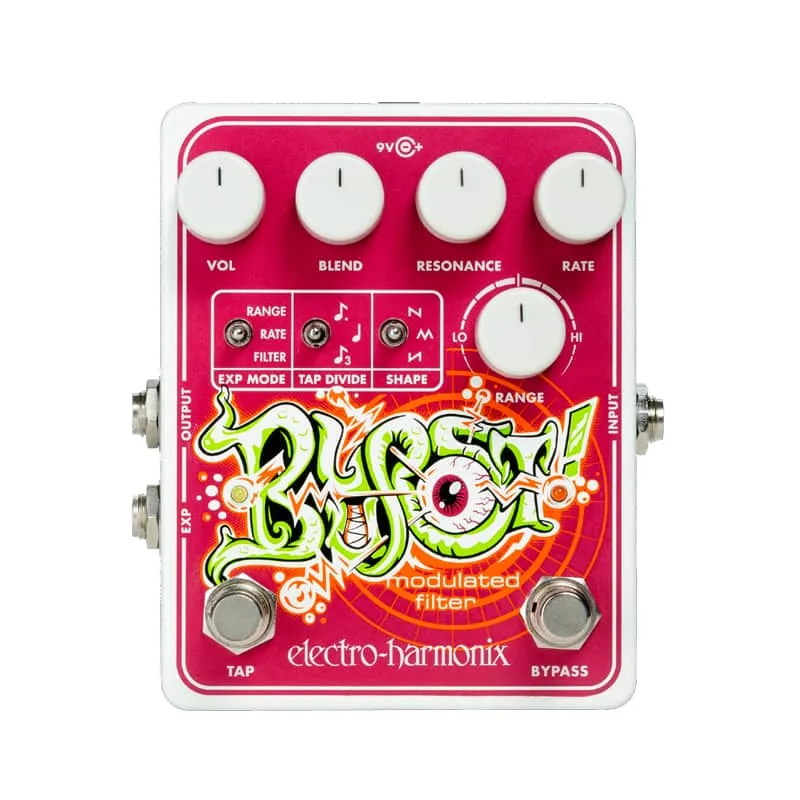


The Electro-Harmonix Blurst Modulated Filter is a pedal that sweeps an analog low pass filter with an internal oscillator. Electro-Harmonix describes it as working like an envelope filter, but with the filter's response driven by the oscillator instead of by how hard you play, so the sweeps keep moving whether you are picking or letting notes ring. The company positions it as covering a wide array of effects, including phase shifter-like swirls, tremolo-style volume shifts and rhythmic filter sweeps1.
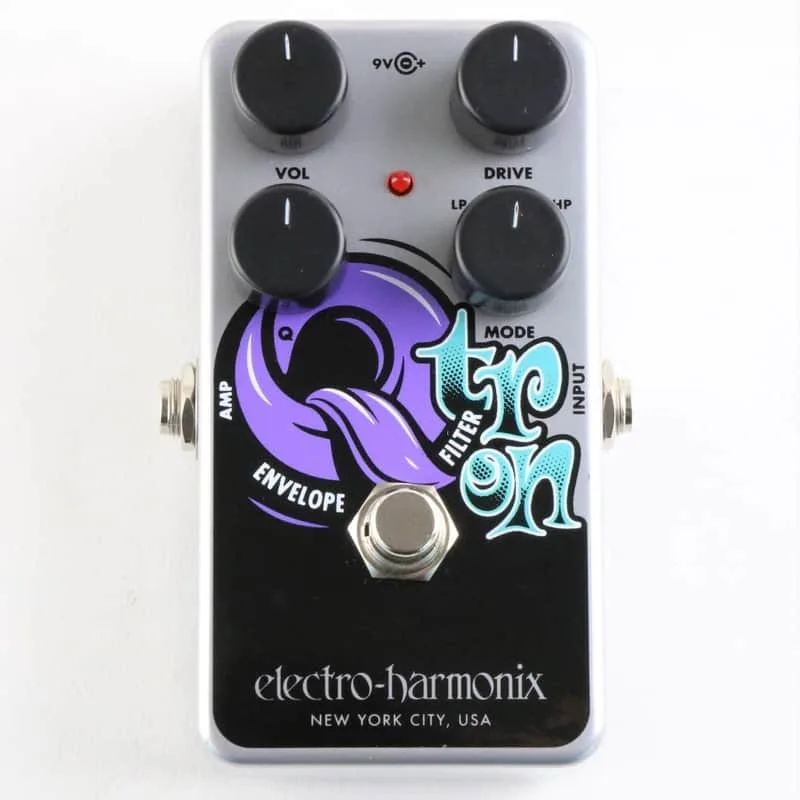
It was announced as available in February 2017 with a U.S. list price of $183.201. For players more familiar with envelope-driven filters like the Q-Tron XO or Nano Q-Tron, the Blurst sits in the same filter family but trades playing-dynamics control for oscillator-driven, tempo-locked movement.
How the filter works
The Blurst modulates an instrument's sound like an envelope filter, but instead of the filter's response being controlled by picking dynamics, an internal oscillator drives it. The filter itself is analog, a low pass design with adjustable resonance, so you can shape how pronounced the sweep peak is1.
Three modulation waveform shapes set the character of the sweep:
- Triangle: smooth, symmetrical back-and-forth movement
- Rising saw-tooth: a sweep in one direction, then a reset
- Falling saw-tooth: the reverse sweep shape1
Because the filter is being swept rather than opened by your attack, the effect keeps a steady motion under sustained notes and chords, which is where the phaser-like and tremolo-like sounds come from: a resonant low pass filter moving at speed can produce swirls, while deeper, faster movement reads as volume shifts1.
Controls and tempo sync
The tap footswitch sets the modulation rate. Together with the tap divide toggle switch, it offers quarter, dotted eighth and triplet rhythms, so the filter movement can sit in time with a song rather than free-running1.
Expression and voltage control are a core part of the design. Three EXP modes, covering range, rate and filter, can be controlled by an expression pedal or a control voltage source1. That means a player can sweep the filter by foot mid-phrase, or patch a control voltage from a synth or modular setup into the same parameters. For expression pedal options, see Expression Pedals.
Power
The Blurst comes equipped with a standard EHX 9.6DC200mA power supply in the box1.
The Blurst ships with Electro-Harmonix's own 9.6DC200mA supply. Players powering boards from a shared supply should match that rating when allocating current on a daisy chain or isolated power unit.
Where it sits in the EHX filter range
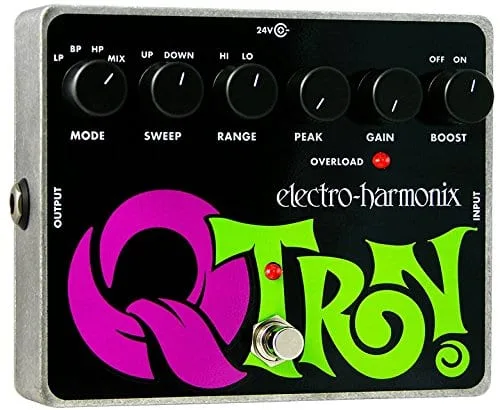
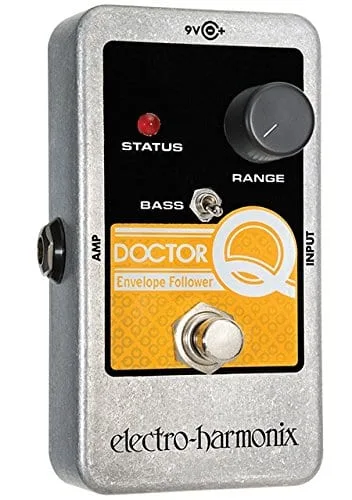
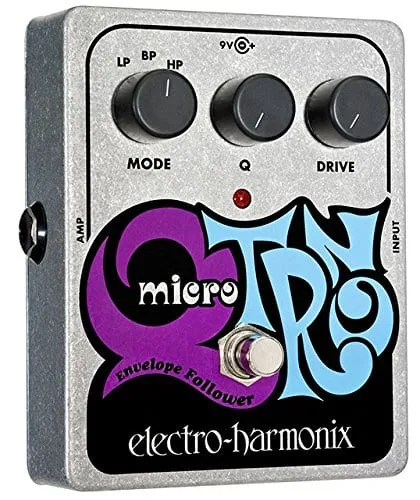
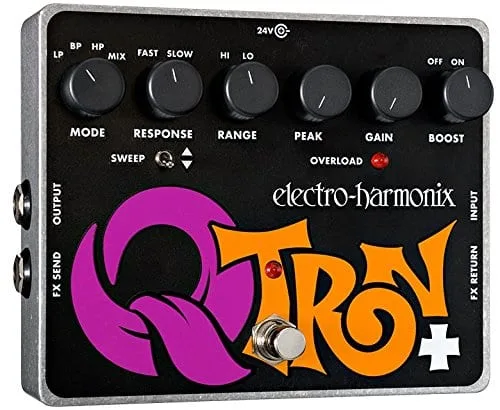
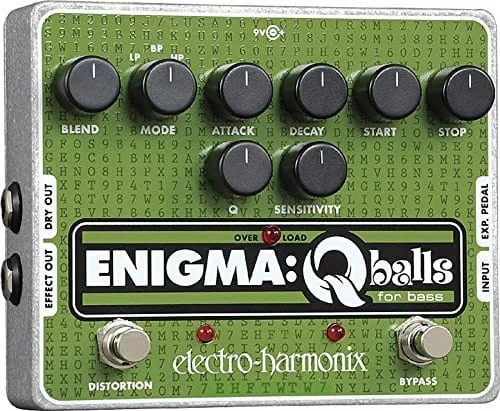
Electro-Harmonix's filter line is mostly envelope-driven: pedals like the Doctor Q, Micro Q-Tron, Q-Tron Plus, Enigma: Q-Balls and Riddle: Q Balls respond to playing dynamics. The Blurst is the oscillator-driven alternative in that family, and the company has since extended the line with other filter-adjacent designs such as the Talking Machine and the Andy Summers Walking On The Moon Flanger/Filter Matrix1.
Videos
Premier Guitar
Andertons Music Co
EHX
Questions
Is the Electro-Harmonix Blurst analog?
Yes. According to Electro-Harmonix's announcement, the Blurst features an analog low pass filter with adjustable resonance. The modulation driving that filter comes from an internal oscillator rather than from an envelope follower, which is what separates it from the company's envelope filter pedals like the Q-Tron range.
Does the Blurst come with a power supply?
Yes. Electro-Harmonix equipped the Blurst Modulated Filter with a standard EHX 9.6DC200mA power supply, so it ships ready to run off wall power rather than relying on a battery.
What waveforms does the Blurst offer?
The Blurst offers three modulation waveform shapes: triangle, rising saw-tooth and falling saw-tooth. Each shape sweeps the filter differently, from smooth back-and-forth movement to the sharper, one-directional sweeps of the two sawtooth shapes.
Can I use an expression pedal with the Blurst?
Yes. Three EXP modes, covering range, rate and filter, can be controlled by an expression pedal or a control voltage source. That means you can sweep the filter by foot in real time or patch in external control voltage from other gear.
Can the Blurst sound like a phaser or tremolo?
Electro-Harmonix describes the Blurst as capable of emulating a wide array of effects, including phase shifter-like swirls, tremolo-style volume shifts and rhythmic filter sweeps. Because it is a filter being modulated rather than a dedicated phaser or tremolo, the character comes from how the filter and its resonance are set.
Does the Blurst have tap tempo?
Yes. The tap footswitch sets the modulation rate, and combined with the tap divide toggle switch it offers quarter, dotted eighth and triplet rhythms, so the filter sweeps can lock to note subdivisions.
Sources (1)
- Electro-Harmonix Launches Blurst & Operation Overload, Premier Guitar, 2017-02-09