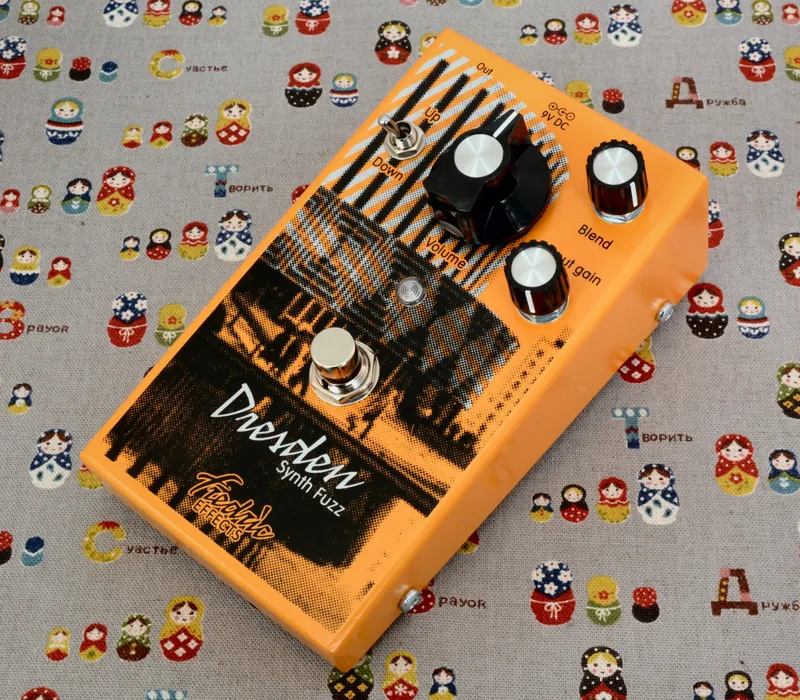


The Fredric Effects Dresden Synth Fuzz is an octave fuzz pedal built around two synthy-sounding octave fuzzes run in parallel, an upper and a lower octave fuzz, which the maker says lets it cover the whole frequency range1. Rather than tracking your note an octave up or down the way a dedicated octave pedal does, it stacks two fuzz voices on top of each other, and the result is a thick, glitchy, keyboard-adjacent fuzz. Fredric Effects describes the sound as "dirty and snarly on the low notes, almost like a malfunctioning analogue synth, and relentlessly precise on the higher notes. It is always rewardingly noisy!"1
What it does to your sound
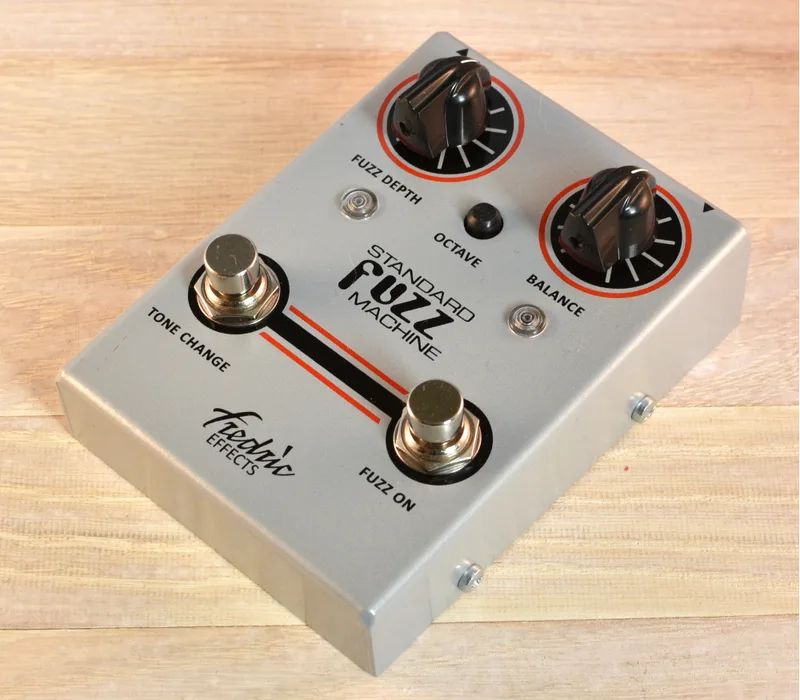
Because the two octave fuzzes run in parallel rather than in series, the sound gets pretty thick, as gearnews put it when the MkII was announced3. The pedal sits in the same family as the maker's other fuzz designs, and players looking for context can compare it with the Standard Fuzz Machine, another Fredric Effects octave fuzz, or with the wider field of octave and pitch pedals. It is a fuzz first and a synth impression second: gearnews' Jef wrote that "it will do fuzzed out synth-like tones and it is certainly not for the faint-hearted"3.
Controls
| Control | What it does |
|---|---|
| Big synth knob | Simply the volume control1 |
| Small switch (left) | Selects either the upper or lower octave fuzzes, or both of them combined1 |
| Blend (Version II) | Sets the blend with your input signal1 |
| Input gain (Version II) | Increases the gain of your input signal to increase the sustain and lessen the "glitch" factor of the octave circuit, particularly the lower octave1 |
The input gain control is worth dwelling on, because tracking glitches are the usual complaint about octave fuzzes. Raising the gain of the signal feeding the octave circuit gives it more to work with, which the maker says increases sustain and reduces the glitch factor, particularly on the lower octave1. gearnews framed the same control as a way "to reduce or perhaps, if you are so inclined, increase the glitchiness"3, so it works in both directions depending on how ragged you want the tracking to sound.
MkI and MkII
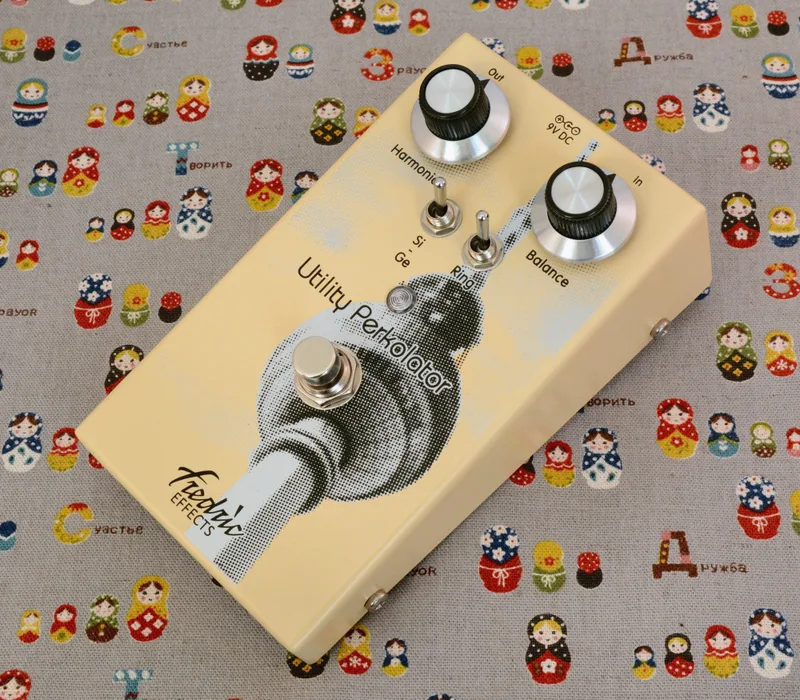
The pedal exists in two versions, MkI and MkII, and the MkII was announced in 2019 as part of a trio alongside the Verzerrer and the Utility Perkolator MKII1. At the 2019 launch, MusicRadar reported a price of £140 for each pedal in the trio2, as did Guitar.com4. The maker's current product page lists the pedal at £1751.
The Blend and Input gain controls are Version II features. A MkI on the used market will not have them1.
The maker's product page carries two demo videos: a MkII intro demo, and a full MkI demo by Christian of Magnetic Effects1.
Where it came from
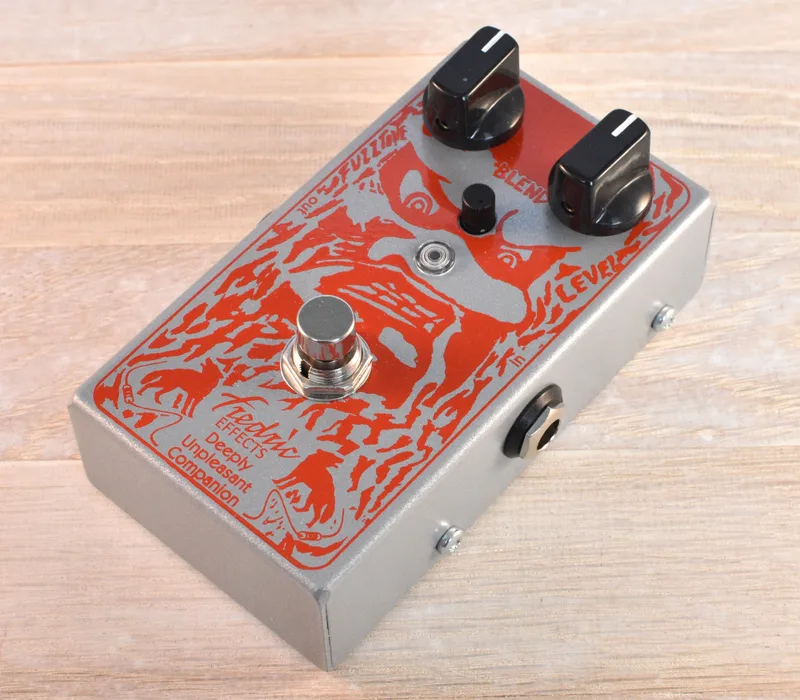
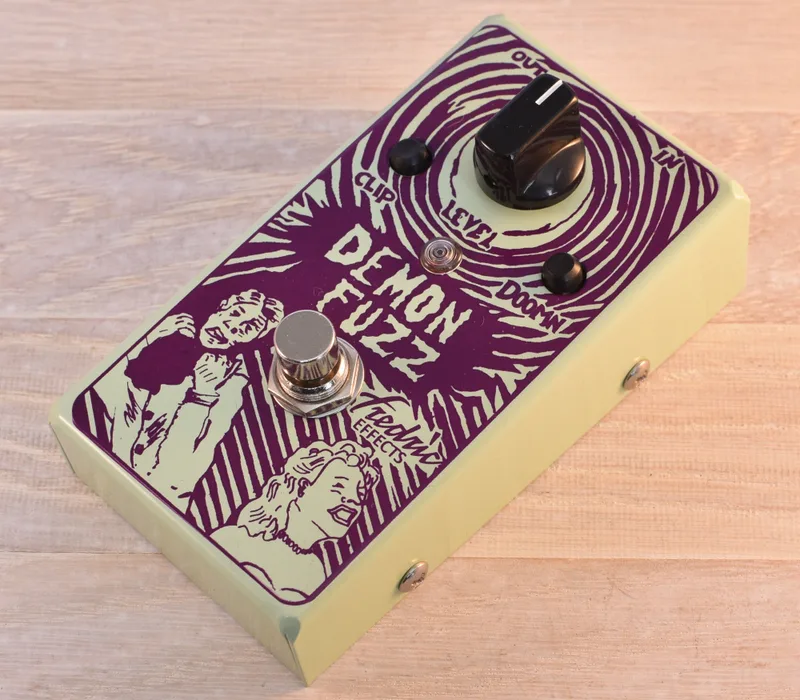
The Dresden Synth Fuzz is a variant of the Dresden Rundkino, the name Fredric Effects gives as the pedal it grew out of1. The Rundkino is a well-known cinema in Dresden, Germany, which fits the maker's habit of naming pedals after places and circuits with a story behind them. Fredric Effects has built its fuzz range this way for years: the Deeply Unpleasant Companion line draws on the Shin-Ei Companion fuzzes, the DuoFace pairs silicon and germanium Fuzz Face-style circuits, and the Demon Fuzz takes on the Electro-Harmonix Muff-style fuzz. The Dresden Synth Fuzz is the odd one of the family in that its character comes from the parallel octave pairing rather than from a single vintage circuit.
Videos
timhulio
Tim Webster
Chugs74
Questions
What is the difference between the Dresden Synth Fuzz MkI and MkII?
Version II added two controls the original did not have: a clean blend, a dry/wet mix that lets you fold your clean input signal back in under the fuzz, and an input gain control that raises or lowers the gain of your input signal. The MkII was announced in March 2019 alongside the Verzerrer and the Utility Perkolator MkII, in newly designed wedge enclosures with top-mounted jacks.
Does the Dresden Synth Fuzz have a blend control?
Yes, on Version II. The Blend knob sets the blend with your input signal, so you can mix clean guitar in with the octave fuzzes. The MkI did not have this control; it was one of the additions when the MkII was introduced.
What does the input gain knob do on the Dresden Synth Fuzz?
Input gain, a Version II control, increases the gain of your input signal to increase the sustain and lessen the glitch factor of the octave circuit, particularly the lower octave. Press coverage put it the other way round too: it can reduce, or if you are so inclined, increase the glitchiness.
Can you use only the upper or only the lower octave fuzz?
Yes. A small switch on the left of the pedal selects either the upper or the lower octave fuzz, or both of them combined, so you are not locked into the full parallel sound.
How is the Dresden Synth Fuzz related to the Dresden Rundkino?
The maker's product page names the Dresden Rundkino as the pedal the Dresden Synth Fuzz is a variant of. The Rundkino is a Dresden cinema, which fits the pedal's synth-flavoured, East German-adjacent naming.
Sources (4)
- Dresden Synth Fuzz, fredric.co.uk
- Fredric Effects unveils “unusual” trio of new guitar effects pedals, MusicRadar, 2019-03-07
- Fredric Effects Verzerrer, Utility Perkolator MkII & Dresden Synth Fuzz MkII, gearnews.com, 2019-03-10
- Fredric Effects unveils three new stompboxes, Guitar.com, 2019-03-07