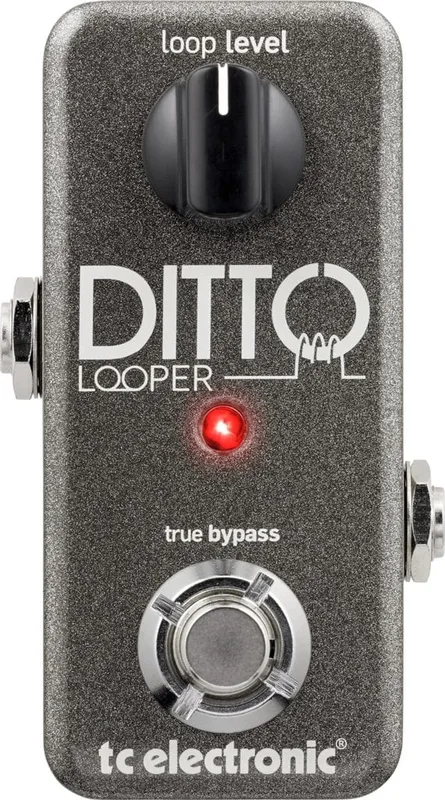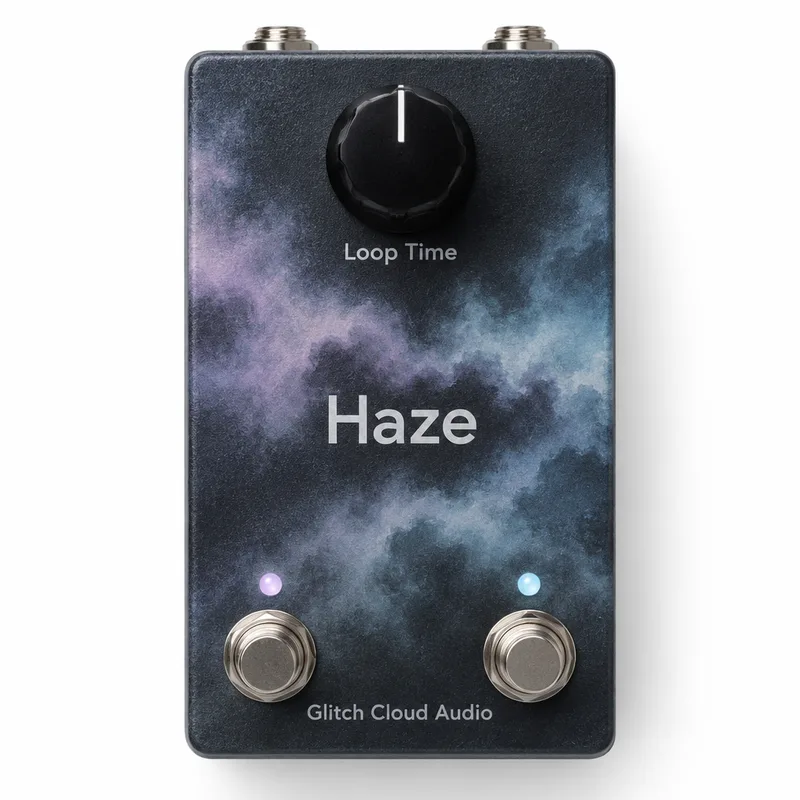


The Haze from Glitch Cloud Audio is a stereo lo-fi looping tape machine, a glitched digital buffer, and a sample juggler in one pedal1. Where a conventional looper like the TC Electronic Ditto Looper records a phrase and plays it back faithfully, the Haze is built to degrade, rearrange, and mutate what you feed it. Its maker describes the idea plainly:
"Haze is a generative composer that transforms sound into texture. Skips, stutters, and fluid time become rhythm and motion. Feed it a loop. Plug in an instrument. Let it mutate for hours1."
Glitch Cloud Audio, quoted by Guitar Pedal X1
The pedal is made in small batches, and as of March 2026 the next restock was being awaited, so availability comes and goes rather than sitting on shelves1. It carries a MAP/RRP of $349 in the US, €311 in the EU, and £268 in the UK1.
What the Haze does with a sound
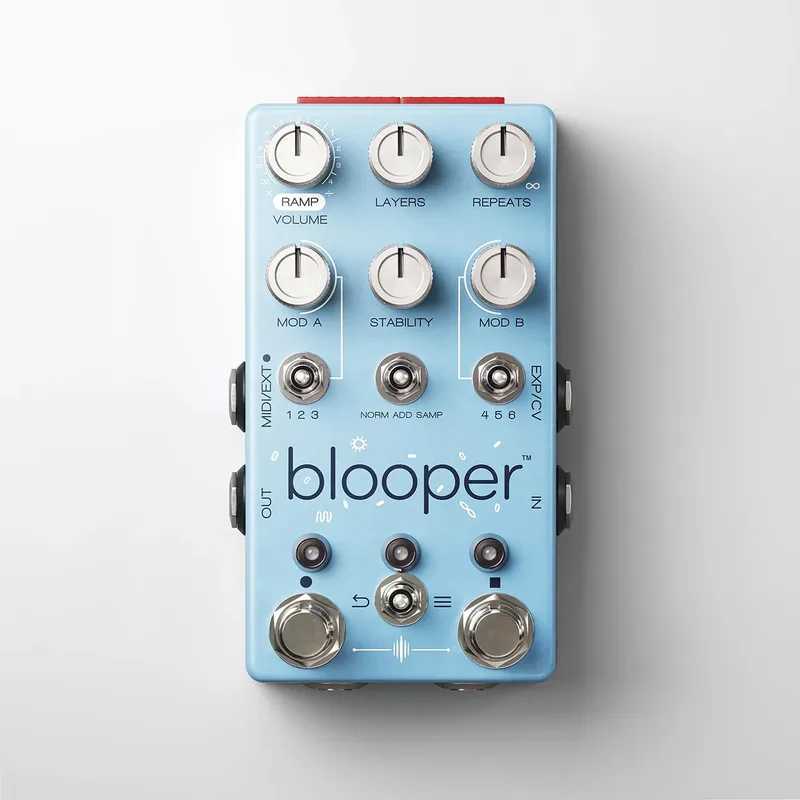
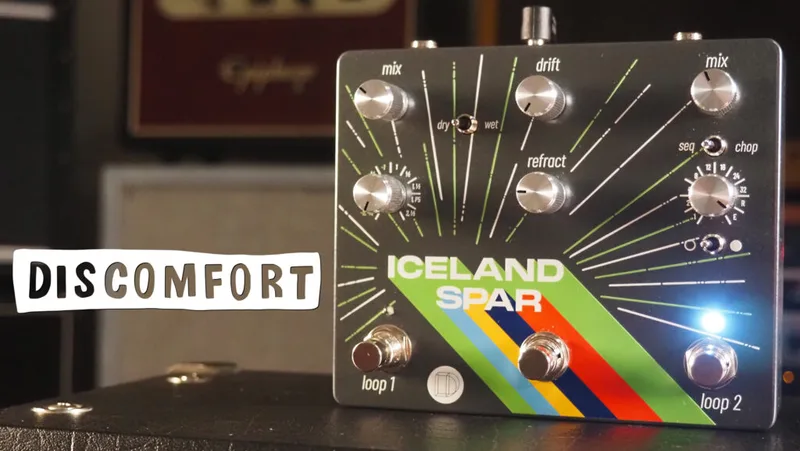
The pedal works from two sample loops, and everything else on the panel acts on what those loops hold1. Guitar Pedal X's Stefan Karlsson, who profiled the pedal in March 2026, places it in the same corner of the market as pedals from Chase Bliss, Discomfort Designs, and Kinotone, and notes it is similar to the Puremagnetik JOTS in using two sample loops1. Players who know the Chase Bliss blooper or the Discomfort Designs Iceland Spar Loop Refractor will recognize the territory: a looper that treats the recording as material to be reshaped rather than a backing track to be repeated.
The lo-fi character is deliberate. Loop time is short, a maximum of 10 seconds, and the controls push the audio toward skips, stutters, and time-warping rather than clean repetition1. Latency through the pedal is listed at 1 msec, so what you play into it arrives essentially in time; the fluid, unstable feel comes from the sample manipulation, not from lag1.
The controls
The Haze carries a set of knobs plus two options on the top edge of the enclosure, and two footswitches1.
| Control | What it does |
|---|---|
| Dry/Wet Mix | Balances the untreated signal against the looped, processed signal |
| Loop Time | Sets loop length, 5s at noon up to 10s max |
| Haze | The pedal's namesake lo-fi texture control |
| Resonant Filter | A filter that can be pushed into resonance |
| Repeat / Sample Shrink | Controls repetition and shrinking of the sample |
| Smooth Random Modulation | Random modulation with a smooth character |
| Pitch/Speed | Shifts pitch and playback speed of the loops |
| Loops | Selects 1 / 2 / 2 + Double Rate loop configuration |
| Warble | Instability and wobble in the playback |
| Gain (top edge) | Lo/Hi gain selection |
| Echo (top edge) | Off/On echo option |
The two footswitches each have a hold function layered on top of their main job1:
- Left footswitch: x0.75 Speed Transpose; hold for Manual Shuffle
- Right footswitch: Bypass; hold to Clear Buffer
That right switch is worth noting for anyone used to simple loopers: clearing the buffer is a hold gesture, not a separate switch, so a quick tap engages and disengages the effect while a longer press wipes what is stored1.
Connections, power, and internals
The Haze is stereo capable, with selectable TS mono or TRS stereo jacks on both input and output and a Path setting that chooses mono or stereo operation1. That means one TRS cable can carry both channels on each side when the pedal is set up for stereo, or standard mono cables work in mono mode.
Power is a +9VDC supply with a 2.1 mm barrel and negative tip, the common pedal standard1. The current draw is 300 mA1.
At 300 mA the Haze draws far more current than most analog pedals. It needs a power outlet rated for that draw; sharing a low-current daisy chain with a handful of analog pedals is a likely path to trouble.
Under the hood the pedal is built on an Electro-Smith Daisy Seed board with a 480 MHz ARM processor, processing audio in 32-bit floating point and converting through 24-bit ADCs and DACs1. Input impedance is 1 MΩ and output impedance is 100 Ω, values that sit comfortably with guitar-level gear1. Maximum input level is +4dBu, with optimal saturation around 0 dBu, so the pedal is happy taking hotter signals than a passive guitar pickup delivers and can be driven into its own saturation character1.
Where it sits among lo-fi loopers
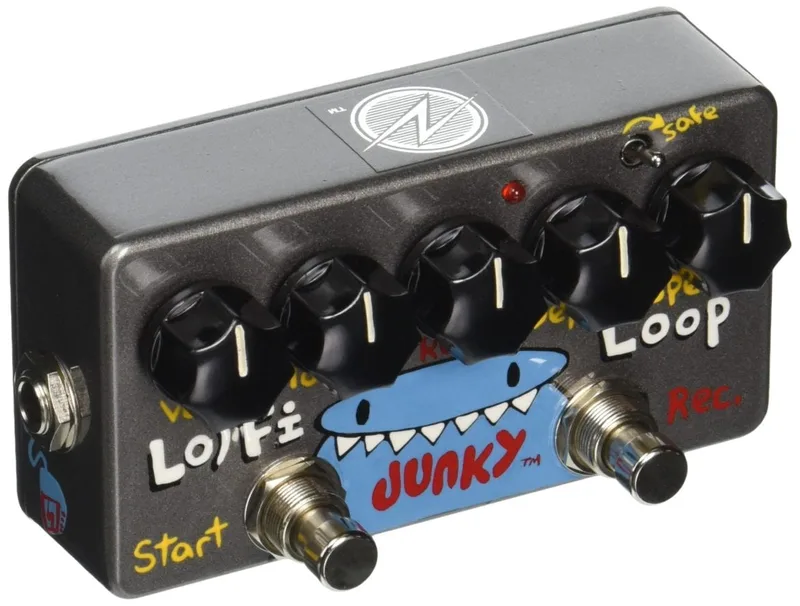
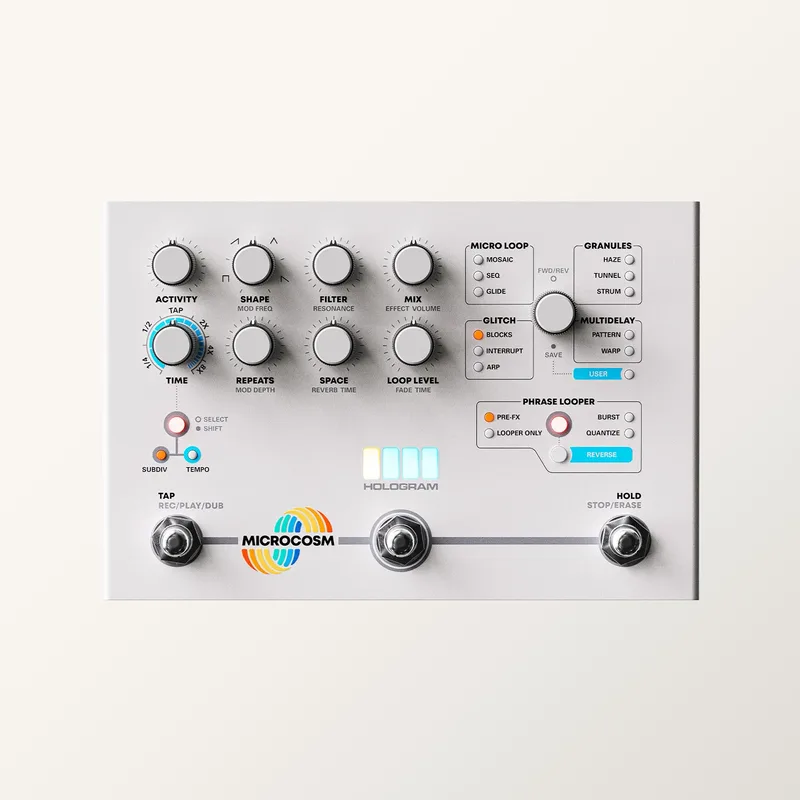
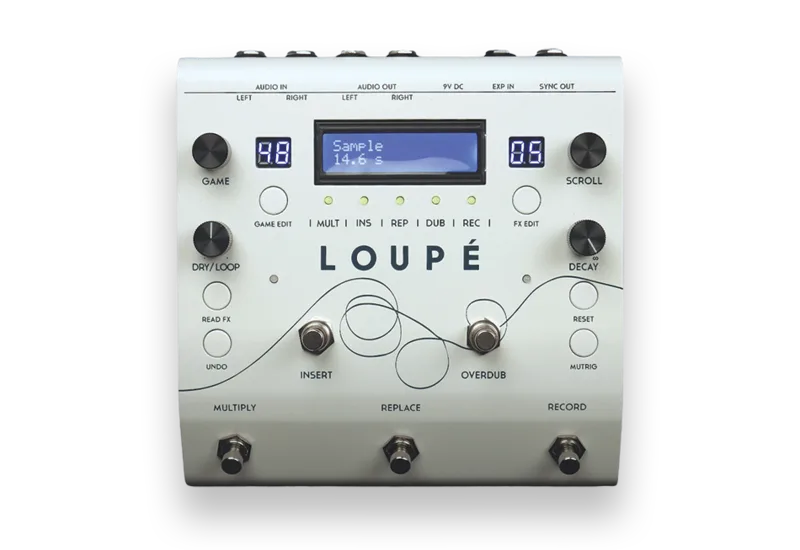
The Haze belongs to a small family of pedals that treat looping as an instrument rather than a recorder. Guitar Pedal X likens it to work from Chase Bliss, Discomfort Designs, and Kinotone, and compares its two-sample-loop architecture to the Puremagnetik JOTS1. On this site, the closest neighbors in spirit are the Chase Bliss blooper, which layers degradation onto looping, the Discomfort Designs Iceland Spar Loop Refractor, the ZVex LO-FI Loop Junky with its analog lo-fi loop, and texture machines like the Hologram Electronics Microcosm and Glou-Glou Loupé. For a broader look at the category, see looping pedals.
The difference from a straightforward phrase looper is the point. The Haze is built around two sample loops, an approach it shares with the Puremagnetik JOTS, and its maker's coverage places it alongside pedals from Chase Bliss, Discomfort Designs and Kinotone rather than conventional loopers1.
What reviewers said
Published coverage so far centers on Guitar Pedal X's profile of the pedal, which laid out the full control list, specifications, and pricing1. The piece also noted that the Haze is currently made in small batches, with the next restock awaited1.
"while I really like the sound and look of this one from Glitch Cloud Audio"1
Stefan Karlsson, Guitar Pedal X1
He named it his most likely next acquisition from this genre of pedal, which gives a sense of where it stands for a writer who follows this corner of the market closely1.
Videos
Glitch Cloud Audio
Neuro No Neuro
E M P T Y R O O M S
Questions
Is the Glitch Cloud Audio Haze stereo?
Yes. The Haze is stereo capable, with selectable TS mono or TRS stereo input and output jacks and a Path setting that switches between mono and stereo operation. A single TRS cable can carry both channels when the pedal is set to stereo.
What power supply does the Haze need?
It runs on a +9VDC supply with a 2.1 mm barrel and negative tip, the standard pedalboard connector. The current draw is 300 mA, which is high for a compact pedal, so it needs a power outlet that can deliver that much rather than a shared low-current supply.
How long can the Haze loop?
Loop time runs from about 5 seconds with the Loop Time knob at noon up to a maximum of 10 seconds. The pedal works with two sample loops, selectable as 1, 2, or 2 plus Double Rate, so the effective recording time depends on how the loops are set up.
Is the Haze true bypass?
Yes, the Haze uses a true output bypass, so the dry signal passes around the effect when the pedal is disengaged. Holding the right footswitch clears the buffer rather than changing the bypass behavior.
What processor does the Haze use?
It uses an Electro-Smith Daisy Seed board with a 480 MHz ARM processor, processing audio in 32-bit floating point through 24-bit converters. The lo-fi character comes from how the pedal manipulates the samples, not from low-resolution conversion.
Sources (1)
- Guitar Pedal X, Guitar Pedal X, 2026-03-16