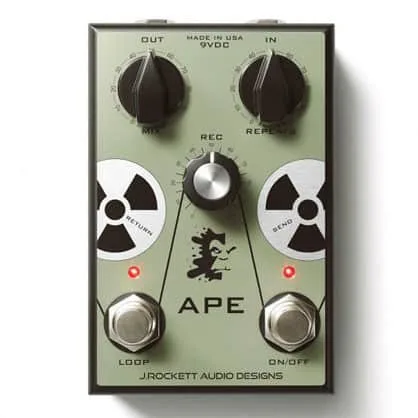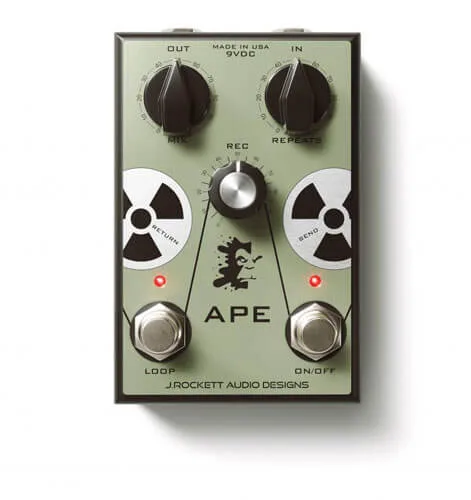


What makes the APE unusual for a preamp is that it also hosts a delay loop. A pair of send and return jacks lets you plug in a digital delay pedal, so the APE's vintage analog circuit wraps around your modern delay and colors it, much like an amplifier's effects loop12. On That Pedal Show, the presenters described what that arrangement does when the delay in the loop is set to 100% wet with a single repeat:
"what the ape is essentially doing is giving you an analogue dry through mixer and kind of tone ya stamp for your boring one sound digital delay if you use it that way I love it isn't it brilliant"3
Dan and Mick, That Pedal Show1
A preamp that hosts a digital delay loop
The APE is not a delay pedal. It generates no repeats of its own. Its job is to sit in your signal chain and impose the character of the EP-3's analog section, and optionally to host a delay inside that circuit. Premier Guitar's product page describes it as "a unique design and an accurate re-creation of famous vintage tape delay's analogue section," and stresses that "this is not just a preamp but rather the entire analogue circuit from input to output including the sonic influence of the tape heads"12.
There are two ways to use it. Guitar World reported at launch that the APE can be placed in front of your delay pedal, coloring the signal before it reaches the delay, or in a loop setup where the delay pedal is connected to the APE's external delay loop, like an amplifier's effects loop2. In loop mode, a second footswitch engages the loop and brings the connected delay pedal into the signal path; the main footswitch turns the pedal on or off2.
On That Pedal Show's demo, the presenters framed the loop mode as a way to get more out of a delay you already own6:
"that to me adds functionality to your fairly boring single sound digital delay"6
Dan and Mick, That Pedal Show1
The Mix control and the Send and Return jacks
The loop itself is simple to wire up. Two jacks and one knob handle it21:
| Jack or control | What it does |
|---|---|
| SEND | Connect your digital delay's input here to start creating your looped delay1 |
| RETURN | Connect your digital delay's output here to complete the looped delay1 |
| MIX | With a delay inserted into the loop, controls the wet/dry mix level1 |
| REPEATS | Controls the repeats4 |
The MIX knob only comes into play in loop mode; it sets how much of the connected delay's wet signal is blended with the APE's analog dry path12. Because the dry signal stays in the analog domain, the APE effectively becomes an analog dry-through mixer for whatever digital delay you plug in, which is the arrangement That Pedal Show demonstrated with a 100% wet, one-repeat delay in the loop6.
Power: 22.5V from a 9V supply
The original Echoplex EP-3 preamp ran at 22.5 volts, and the APE matches that internally. Guitar.com quoted the maker on the point: "We even have the correct 22.5v, just like the original"52. Gearnews likewise noted the pedal "uses a 22.5 volt circuit to recreate the old Echoplex EP3 preamp design"4.
You do not need a special power supply. A DC to DC converter inside the APE steps a standard 9V supply up to 22.5V, and the pedal takes a common 2.1/5.5mm plug, "just like most of the pedals on the market"1. It draws 39mA1.
The vintage tape delay circuit behind it
The circuit the APE recreates is the Echoplex EP-3, a tape delay whose preamp section became a prized tone tool in its own right, used on countless records by players chasing its thickening effect. Guitar.com reported that J. Rockett aimed to recreate "an exact copy of the Echoplex preamp in order to hone your EP3 delay sound"52, and Guitar World described the pedal as "replicating the entire analog circuit of the EP-3, from input to output"2.
On That Pedal Show, the presenters described the effect the preamp has on tone in the way players usually talk about the original6:
"the Echoplex preamp is well known for fattening what I like about that as it fatten so it doesn't kill those a top-end"6
Dan and Mick, That Pedal Show1
In other words, the preamp fattens the sound without dulling the top end, which is the quality the EP-3's preamp is known for6. The pedal is fully analog2, and its compact 4.25" x 3" enclosure keeps it pedalboard-friendly1.
Where it sits in the J. Rockett range
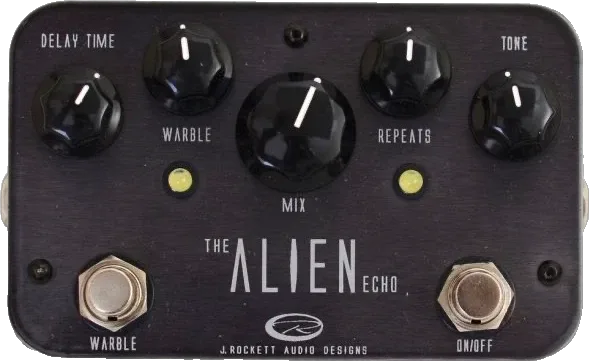
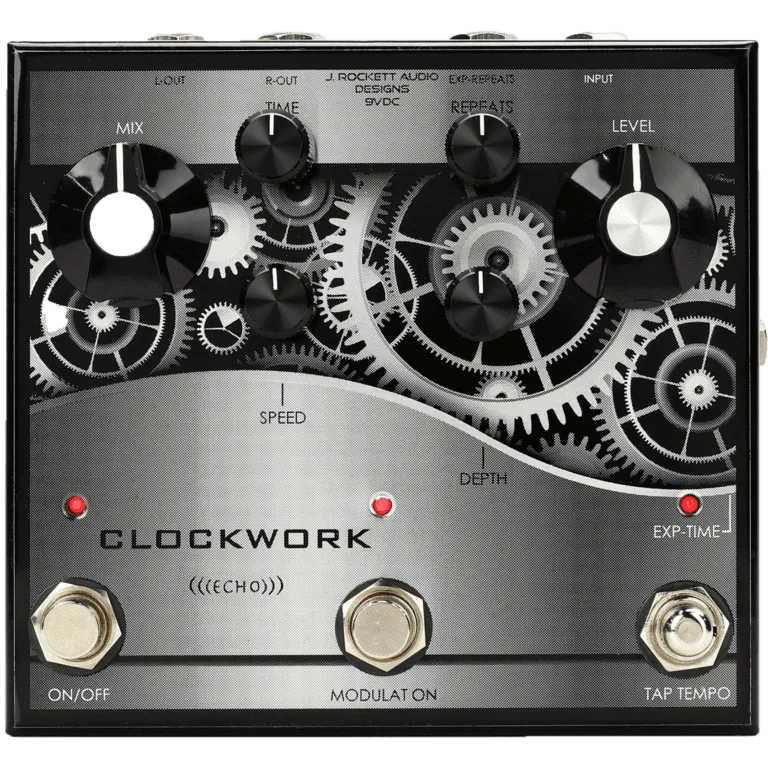
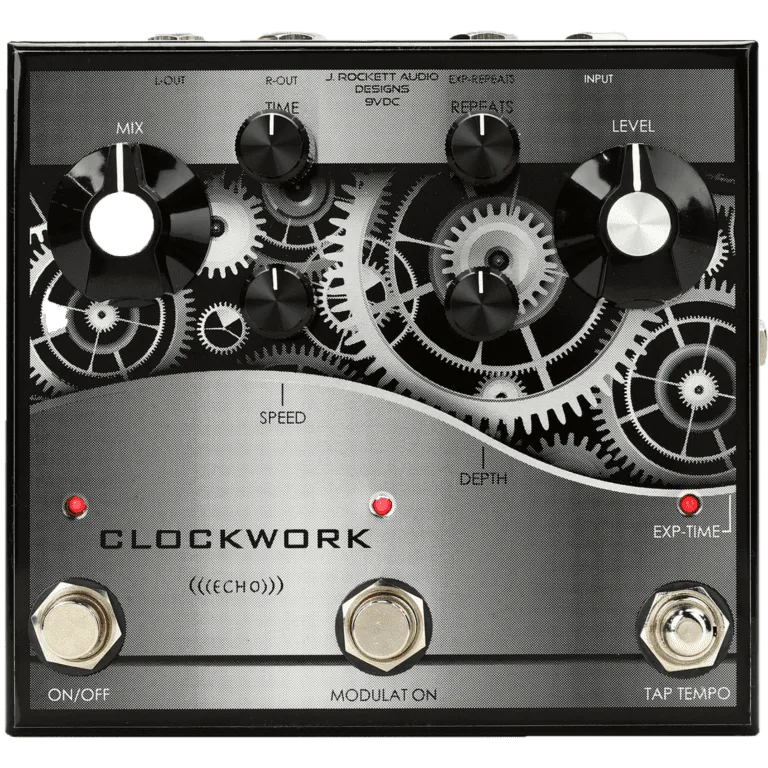
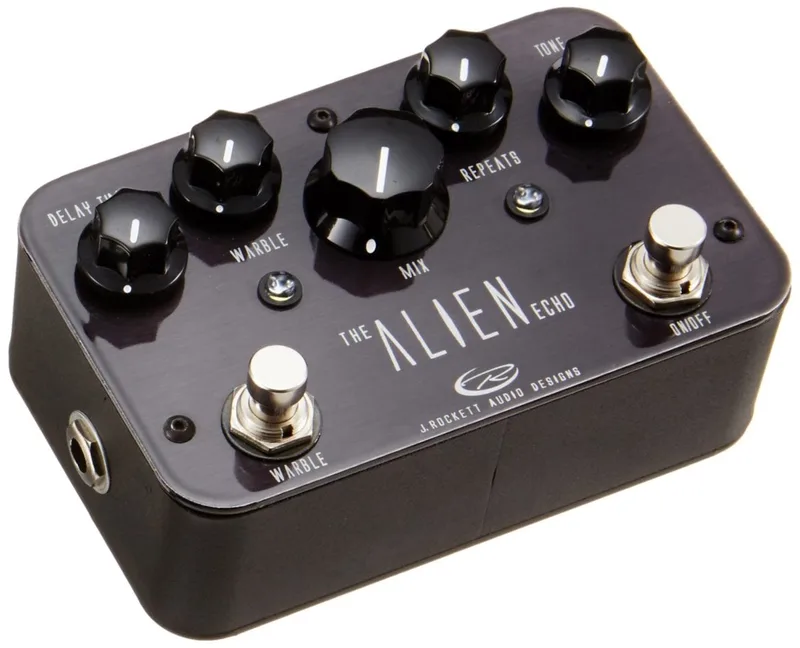
J. Rockett Audio has a history with delay and echo pedals, including the Alien Echo delay and, later, the Clockwork Echo, a Memory Man-inspired analog delay designed with Howard Davis. The APE is a different animal from all of them: it is the company's preamp pedal that treats your existing digital delay as the echo source and supplies the vintage analog character around it12.
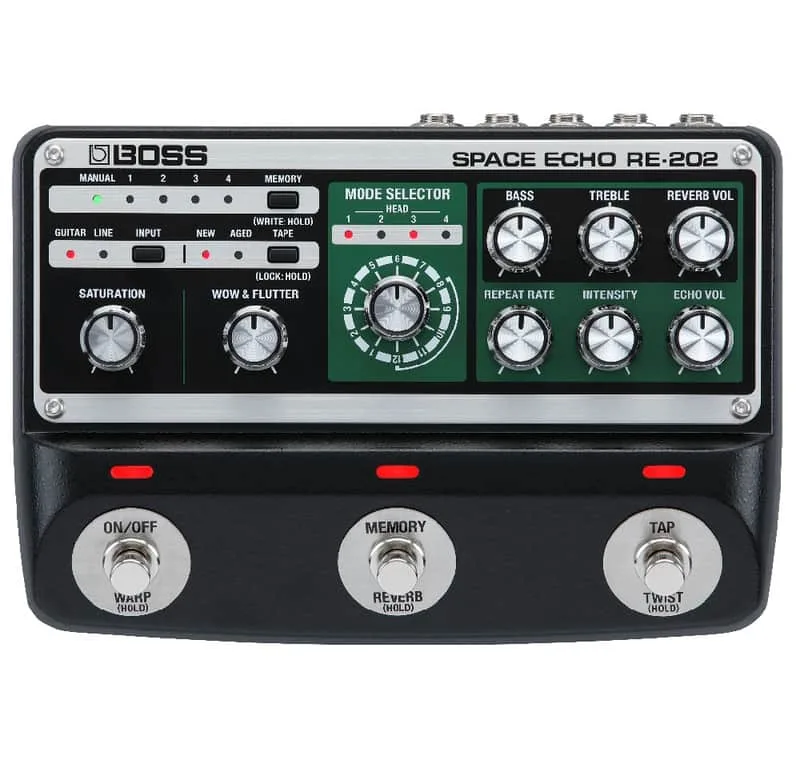
That Pedal Show returned to the APE in 2022 when discussing the Boss RE-202, mentioning it as an interesting comparison point: a pedal that simulates the actual Echoplex preamp, set against the RE-202's digital take on the same circuit3.
Videos
Sweetwater
Premier Guitar
Guitar Bonedo
News
Questions
What is the J. Rockett APE?
The APE, short for Analog Preamp Experiment, is a preamp pedal from J. Rockett Audio Designs that recreates the entire analog circuit of the Echoplex EP-3 tape delay, from input to output, including the sonic influence of the tape heads. It runs at 22.5 volts like the original and can be used on its own as a preamp or with a delay pedal connected to its loop.
Is the J. Rockett APE a delay pedal?
No. The APE is a preamp pedal, not a delay. It recreates the analog section of the Echoplex EP-3, but it produces no echoes of its own. Its purpose is to feed and color a delay, either placed in front of your delay pedal or with a digital delay connected to its send and return loop.
How much current does the J. Rockett APE draw?
The APE draws 39mA. It runs internally at 22.5 volts, like the original Echoplex EP-3 circuit, but a DC to DC converter lets you power it from a standard 9V supply with a common 2.1/5.5mm plug, so no special power supply is needed.
Which Echoplex preamp is the APE based on?
The APE is based on the preamp of the Echoplex EP-3. J. Rockett aimed to recreate an exact copy of the Echoplex preamp, replicating the entire analog circuit from input to output, including the sonic influence of the tape heads, and running it at the original's 22.5 volts.
Do I need a separate delay pedal to use the APE's loop?
Yes. The APE has no delay circuit of its own, so to use its loop mode you connect a digital delay's input to the APE's send jack and its output to the return jack. On That Pedal Show, the presenters noted it adds functionality to a single-sound digital delay you may already own.
Sources (6)
- J. Rockett Audio Designs APE, Premier Guitar, 2020-07-13
- J. Rockett Audio wants to give your delay a vintage makeover with the APE delay preamp, Guitar World, 2019-11-26
- Boss RE-202, Strymon Volante, Line 6 DL4 MkII Likes, Dislikes & Which Should You Buy?, That Pedal Show (YouTube), 2022-05-06
- J Rocket Audio APE pedal adds vintage echo tone to your digital delays, gearnews.com, 2019-11-26
- J. Rockett Audio reveals the APE preamp, Guitar.com, 2019-11-27
- J Rockett APE, Earthquaker Afterneath V3, N-Audio Firesound, That Pedal Show (YouTube), 2020-04-07