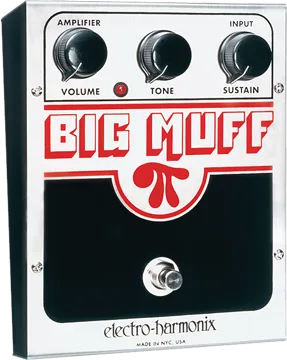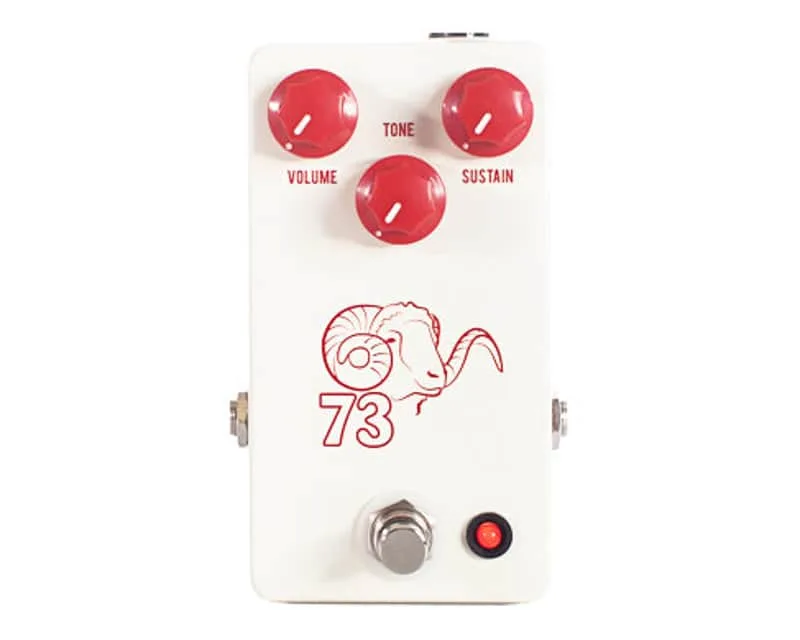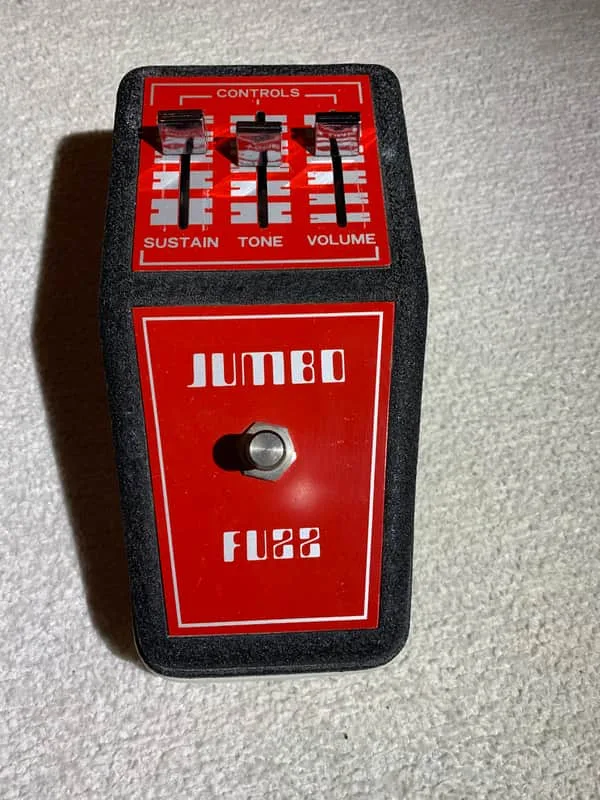


The JEN Jumbo Fuzz is a rare Italian fuzz pedal from the 1970s, built by JEN Elettronica as its take on the Electro-Harmonix Big Muff Pi. It swapped the Big Muff's knobs for sliders and added a germanium noise gate, and it has since become one of the more sought-after Muff-style pedals of its era. Delicious Audio's buying guide calls it "a rare Muff clone from the 70s, the JEN Jumbo Fuzz"1.
A Big Muff circuit with sliders and a germanium noise gate
The Jumbo Fuzz is, at its core, a Big Muff. Premier Guitar's reviewer put it plainly: "The original JEN Jumbo Fuzz was essentially a Big Muff circuit with a few modifications, most notably a germanium noise gate"3. Kit Rae's history of Big Muff clones records that by the early 1970s "the Big Muff was being cloned by both minor and major manufacturers, including Jen, Sola Sound/Colorsound, and Ibanez"4.
What sets the Jumbo Fuzz apart from the pedal it copies is the gate. Kit Rae notes that some versions carry a germanium gate section: "The gate includes two Germanium transistors and two Germanium diodes"4. A noise gate silences the signal when you stop playing, which tames the hiss and hum a high-gain fuzz generates; the Sovtek Deluxe Big Muff Pi later offered a similar GATE control knob, described as a "Noise gate to eliminate high gain hiss noise or hum"5. For a player, the Jumbo Fuzz's gate means the fuzz stops dead between phrases instead of washing on underneath everything.
The voicing is not a straight Big Muff copy either. SolidGoldFX, which studied the original closely when designing a modern tribute, describes it this way6:
"the tuning of the Jumbo Fuzz lies somewhere in the Ram's Head camp - not overly scooped or woofy, with a nice gain range"6
In other words, compared with the scooped, bass-heavy character some Big Muff versions have, the Jumbo Fuzz keeps more midrange, closer to the Ram's Head era of the Big Muff6.
Where it came from
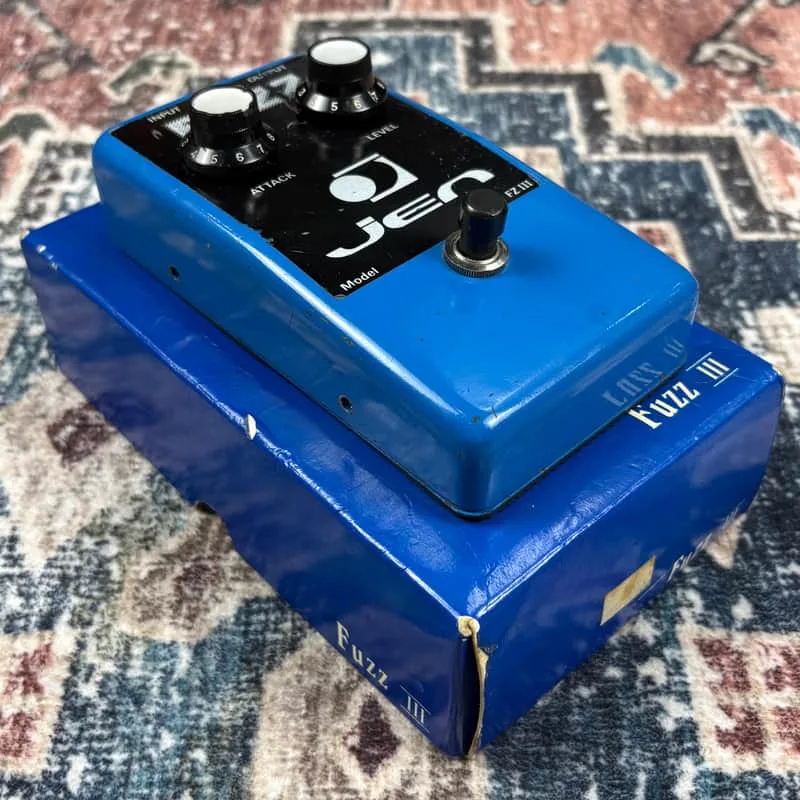
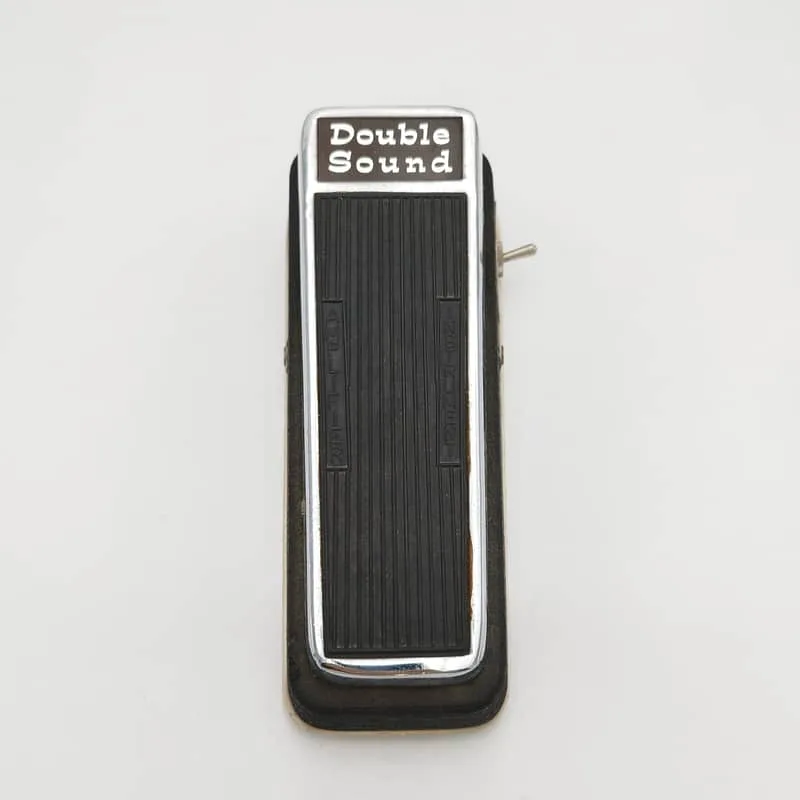
Kit Rae dates the pedal to the mid-1970s: "I estimate this pedal was made circa 1973-75", with the place of manufacture listed as Pescara, Italy4. The maker, JEN Elettronica, was a substantial Italian manufacturer in its own right. As Delicious Audio's Paolo De Gregorio notes, "JEN Elettronica was an Italian manufacturer who made pedals for Vox, Dallas Arbiter and Sound City (among others)"2. Other JEN-built fuzzes of the period include the Jen Fuzz FZ III and the JEN Double Sound.
The Jumbo Fuzz design also traveled under other names. Kit Rae's history records that Jen introduced the Jumbo Fuzz in 1973, "also rebranded as the Dallas Arbiter Jumbo Fuzz and Sam Ash Jumbo Fuzz/Fuzzola II"4. A related Italian branch of the family is the Colorsound Tone Bender Jumbo, about which TONEHOME observes: "The sound - as well as the circuit - reveals: this is more a Big Muff than a Tone Bender"7.
Knobs or sliders?
Sliders. Guitar.com's Cillian Breathnach describes the original as a pedal "which used sliders and voiced for a little more midrange a la the Ram's Head Muff"8. The slider format carried over to the modern tribute as well: Premier Guitar's announcement of the SolidGoldFX Imperial MkII notes that the Jumbo Fuzz "swapped the knobs out for sliders"6.
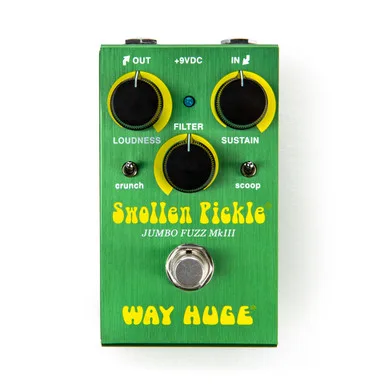
For comparison, other pedals in the extended Jumbo family went back to knobs. The Way Huge Smalls Swollen Pickle Jumbo Fuzz, whose name borrows the "Jumbo Fuzz" label, uses three knobs: a LOUDNESS knob that "sets output level", a SUSTAIN knob that "sets fuzz intensity", and a FILTER knob that "adjusts tone from mellow to bright", per Jim Dunlop's manual9. Pedal of the Day's guest review of the Swollen Pickle confirms "it features three knobs for loudness, filter and sustain"10.
Why vintage units differ
If you play or shop for an original Jumbo Fuzz, expect variation between units. The germanium gate is the reason. SolidGoldFX states that "vintage units vary greatly from one unit to another, with some gating too much and others not at all"6. Guitar.com adds that "time and component drift have rendered them slightly unstable"8. Germanium components drift with age, so two Jumbo Fuzzes bought on the same day can gate and respond differently decades later.
The Jumbo Fuzz today
The original is long out of production, and originals are scarce. Its design resurfaced in 2021 when SolidGoldFX released the Imperial MkII Fuzz, a pedal inspired by the JEN Jumbo Fuzz, with sliders, a redesigned silicon noise gate and a new Contour slider2. Pedal of the Day's review of that pedal covers its JEN Jumbo Fuzz-inspired design, JFET preamp, silicon noise gate and Contour slider, and refers to "the Jumbo Fuzz's germanium transistor design"11. For players drawn to the gated, mid-forward Muff sound of the original, the Imperial MkII is the modern route to it; for more on the effect type itself, see Fuzz Pedals.
Videos
Vintage Stompboxes
Psych Up Melodies
Star Clash
Questions
Is the JEN Jumbo Fuzz a Big Muff clone?
Yes. Kit Rae's Big Muff history notes that by the 1970s the Big Muff was being cloned by minor and major manufacturers including Jen, Sola Sound/Colorsound and Ibanez. Premier Guitar's reviewer described the Jumbo Fuzz as essentially a Big Muff circuit with a few modifications, most notably a germanium noise gate, and Delicious Audio calls it a rare Muff clone from the 70s.
Where was the JEN Jumbo Fuzz made?
Kit Rae lists the place of manufacture as Pescara, Italy. The pedal was made by JEN Elettronica, an Italian manufacturer who, according to Delicious Audio, also built pedals for Vox, Dallas Arbiter and Sound City, among others.
Does the JEN Jumbo Fuzz use germanium transistors?
The pedal's noise gate section is germanium. Kit Rae notes that some versions carry a germanium gate with two germanium transistors and two germanium diodes, and Pedal of the Day's review of the SolidGoldFX Imperial MkII refers to the Jumbo Fuzz's germanium transistor design.
Why do vintage JEN Jumbo Fuzz units sound different from one another?
The germanium gate is the main reason. SolidGoldFX notes that vintage units vary greatly from one unit to another, with some gating too much and others not at all, and Guitar.com reports that time and component drift have rendered the gates slightly unstable.
Does the JEN Jumbo Fuzz have knobs or sliders?
Sliders. Guitar.com describes the original as a pedal which used sliders, voiced for a little more midrange a la the Ram's Head Muff, and SolidGoldFX says the Jumbo Fuzz swapped the Big Muff's knobs out for sliders.
Sources (11)
- Best Big Muff Pedals In 2025: Reissues, Clones & Evolutions, Delicious Audio, 2025-04-07
- SolidGoldFX Imperial MkII Fuzz, Delicious Audio, 2021-04-22
- SolidGoldFX Imperial MKII Review, Premier Guitar, 2021-09-20
- The Big Muff History, www.kitrae.net, 2017-01
- The Big Muff History of All Versions 2, Kit Rae (kitrae.net), 2018-12
- IMPERIAL MKII, SolidGoldFX
- TONEHOME, TONEHOME - the World of Vintage Guitar Effects Pedals
- SolidGoldFX releases the Imperial MkII, a gated muff-style fuzz, Guitar.com, 2021-03-05
- WM41.pdf, Jim Dunlop (jimdunlop.com), 2020
- Guest Reviewer Fridays: Way Huge Electronics Swollen Pickle Jumbo Fuzz, Pedal of the Day, 2016-10-07
- SolidGoldFX Imperial MkII Fuzz, Pedal of the Day (www.pedal-of-the-day.com), 2021-04-14