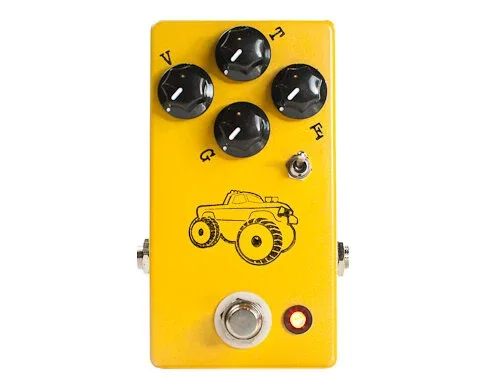


The JHS Pedals Pollinator V2 is a germanium fuzz pedal built by JHS Pedals as its take on the classic Fuzz Face circuit. JHS describes it as "Germanium fuzz with more mojo than a velvet painting of Hendrix," and the company frames the design plainly: "no other pedal has made its way on more recordings, stages, and rigs than the classic Fuzz Face. The Pollinator is our t[ake on a classic design but with some huge improvements]"1.
The biggest of those improvements is headroom. The original Fuzz Face pedals have very low output volume, so JHS tripled the available headroom in the Pollinator1. That matters for players who found vintage-style fuzz units too quiet after the rest of their rig, or who wanted cleaner signal into the pedal before it breaks up.
What it does: a germanium Fuzz Face with more headroom
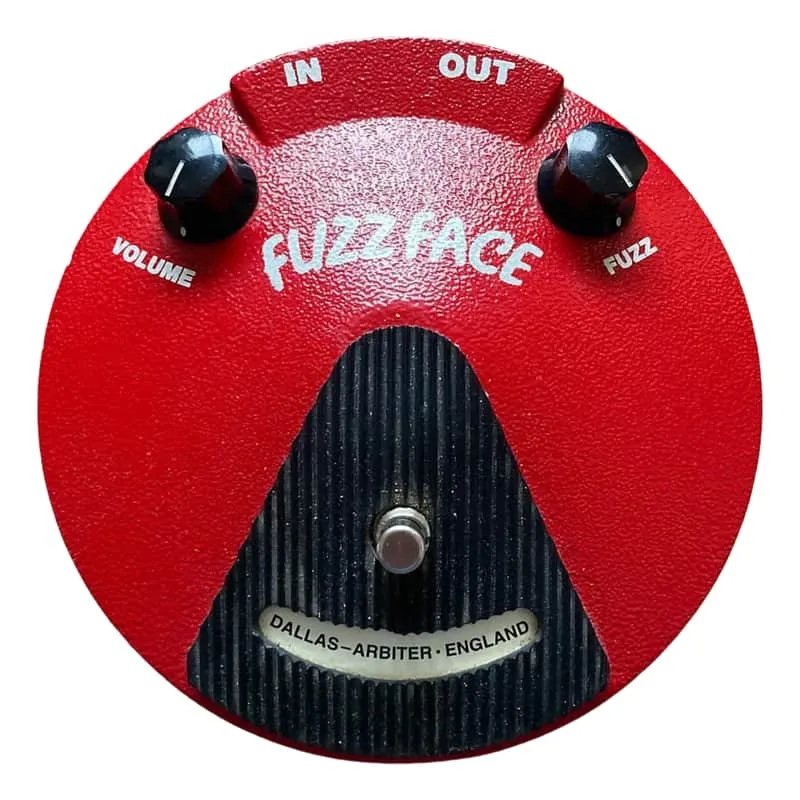
The Pollinator is a Fuzz Face derivative, which places it in the same family as the fuzzes Hendrix and Clapton played in the late 1960s. Pedal of the Day's 2014 review of the original Pollinator put it the same way: the pedal "aims to capture that same sound, but modernize it just a lit[tle]" compared with the Arbiter Fuzz Face4.
JHS describes the result in its own words:
"The bass is tight and focused but still classic. The highs are as crisp as anything we've ever heard in a vintage design."
The germanium AC128 transistors are the heart of the sound. Germanium parts clip differently from the silicon transistors used in later Fuzz Face versions, generally softer and more temperature-sensitive, which is part of why the bias control exists. JHS matches the AC128s by hand for each pedal3.
The controls
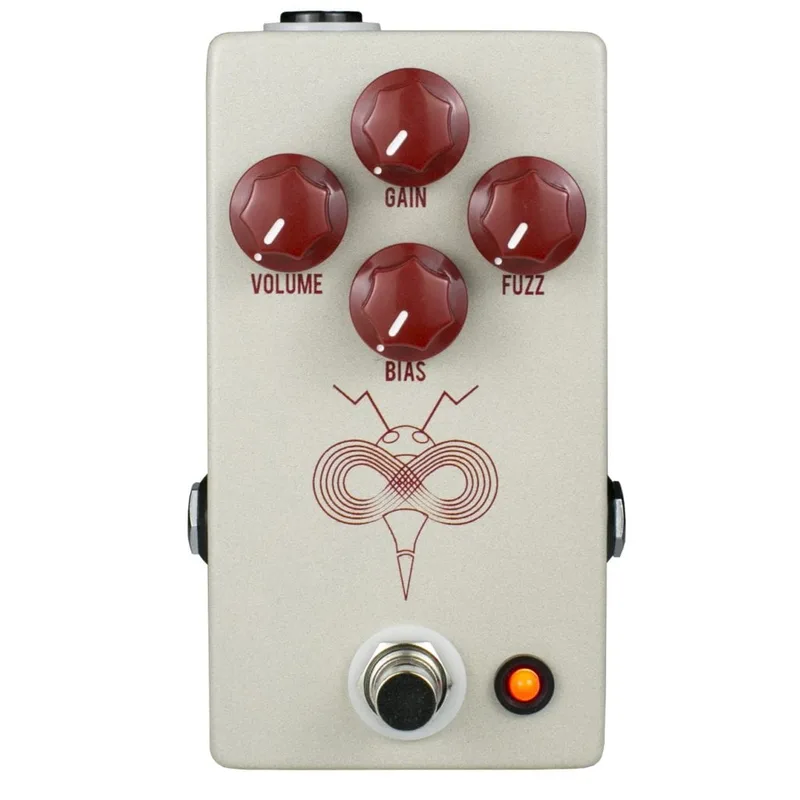
The control set is small and standard for the circuit, with one addition that is unusual for a Fuzz Face derivative41.
| Control | What it does |
|---|---|
| Volume | Sets the output level4 |
| Fuzz | The standard fuzz control, which Pedal of the Day found produces "an amazing amount of depth and range"4 |
| Bias | Dials in the specific amount of power going to the germanium AC128 transistors4 |
| Gain (V2) | Dials in the pre-gain, interacting with the fuzz for numerous dirt settings4 |
The bias knob is the feature JHS highlights most. As the maker explains: "Another addition is our external bias knob. This allows you to fine-tune just the right amount of power to the perfectly [hand-matched germanium AC128 transistors inside]"1. On vintage Fuzz Face units, bias was fixed inside the pedal and drifted with temperature and component age; putting it on the outside means a player can re-tune the fuzz character, from smooth and saturated to gated and sputtery, without touching a screwdriver.
The V2's Gain control, added in the second version, shapes the signal before the fuzz stage. Pedal of the Day noted that "The addition of a Gain control allows you to dial in the pre-gain, interacting with the fuzz for numerous dirt settings"4, which effectively widens the pedal beyond a single vintage fuzz voice.
History and versions: from the bee-icon originals to the V2
The Pollinator line goes back to at least 2014, when Pedal of the Day featured the JHS Pedals Pollinator Fuzz on August 31, 201442. That early review already covered the Volume, Fuzz and Bias arrangement and the AC128 transistors, so the core design has stayed consistent across the line's life.
Early versions of the Pollinator have a bee icon and are different colors from later units, a detail JHS notes on its product pages for the Pollinator, the Pollinator V2 and the hand-paint version315. The V2 brought the added Gain control for pre-gain4.
JHS has also sold a Pollinator Hand Paint version, a hand-painted finish on the same circuit6. The hand-paint option was rare enough that Pedal of the Day's 2014 reviewer called it out: "I was lucky enough to get one of the rare hand-painted versions of this pedal"4.
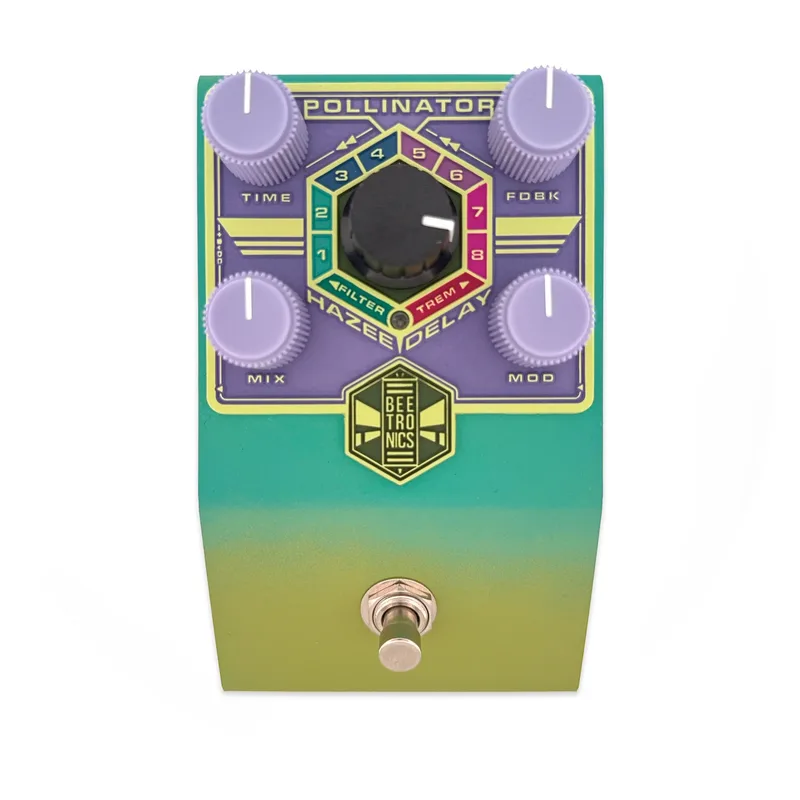
The Pollinator shares its name with the Beetronics Pollinator Hazee Delay, a fully digital delay pedal from Beetronics FX reviewed by Delicious Audio in 2026. Despite the shared bee-themed name, it is a different product from a different maker with no connection to the JHS fuzz.
What reviewers said
Pedal of the Day's 2014 review of the original Pollinator found the fuzz warm rather than aggressive. In the reviewer's words24:
"There's nothing too harsh or gritty about this fuzz, even when cranked (though it will get awesome buzzsaw tones and driving fuzz for days if you let it loose, trust me)"
The same review described "an instant warmth and coziness about the Pollinator," with buzzsaw tones and driving fuzz available when the controls are pushed4. That balance, vintage warmth at moderate settings with harder-edged tones on tap, lines up with what JHS itself claims for the pedal's tight bass and crisp highs3.
Videos
JayLeonardJ
R.J. Ronquillo
shnobel
Questions
What does the bias knob do on the JHS Pollinator?
The bias knob lets you fine-tune the amount of power going to the germanium AC128 transistors inside the pedal. On a germanium fuzz, transistor bias changes the character of the fuzz, from gated and sputtery to smooth and saturated, and because germanium parts vary with temperature, having the control on the outside lets you dial it back in without opening the pedal.
What transistors does the JHS Pollinator use?
It uses hand-matched germanium AC128 transistors. JHS Pedals describes them as perfectly hand-matched, and the external bias knob adjusts the power supplied to them. Germanium transistors are the same type used in the original Fuzz Face pedals the circuit is based on.
Is there a hand-painted JHS Pollinator?
Yes. JHS Pedals has offered a Pollinator Hand Paint version, and a 2014 Pedal of the Day reviewer noted receiving one of the rare hand-painted units. Early versions of the Pollinator also carried a bee icon and came in different colors.
Is the JHS Pollinator based on the Fuzz Face?
Yes. JHS Pedals describes the Pollinator as its take on the classic Fuzz Face design, with improvements including tripled headroom over the original pedals' very low output volume and an external bias knob for the germanium transistors.
Sources (6)
- POLLINATOR, JHS Pedals
- JHS Pedals Pollinator Fuzz, Pedal of the Day, 2014-08-31
- POLLINATOR V2, JHS Pedals
- JHS Pedals Pollinator Fuzz Pedal, Pedal of the Day, 2014-09-16
- POLLINATOR HAND PAINT, JHS Pedals
- POLLINATOR HAND PAINT, JHS Pedals