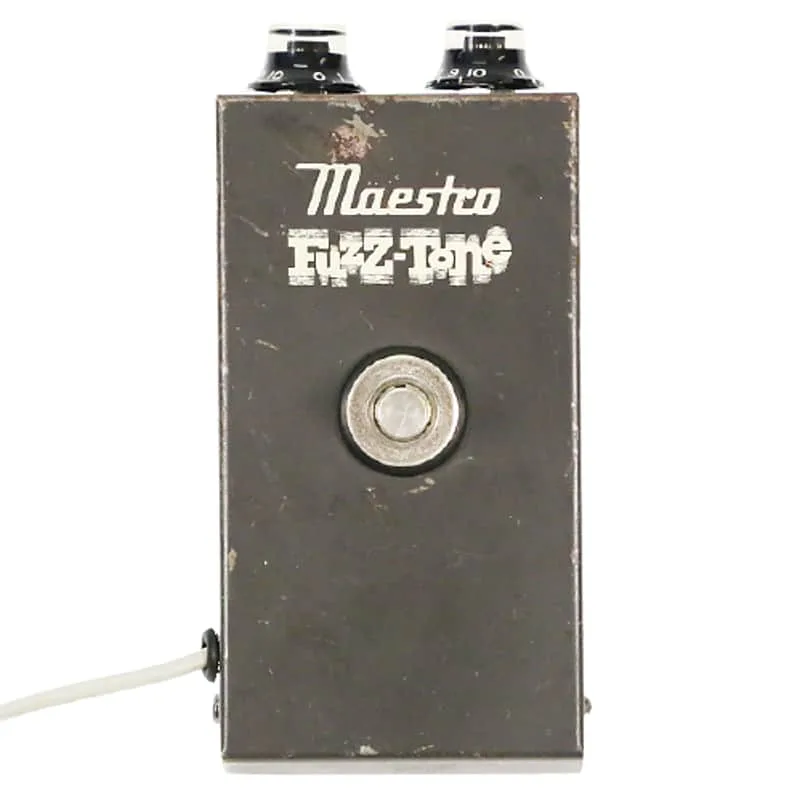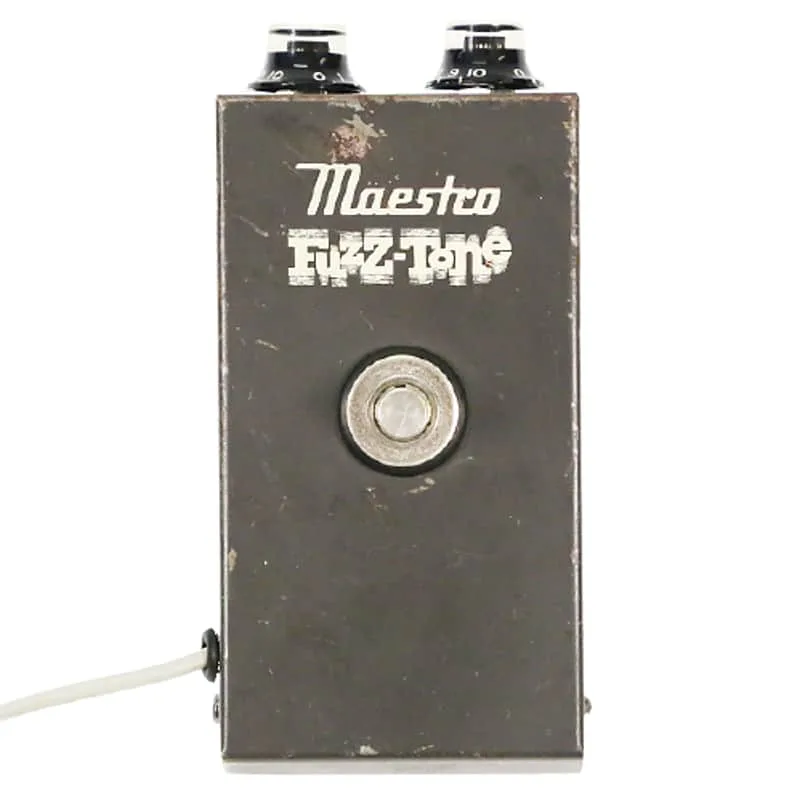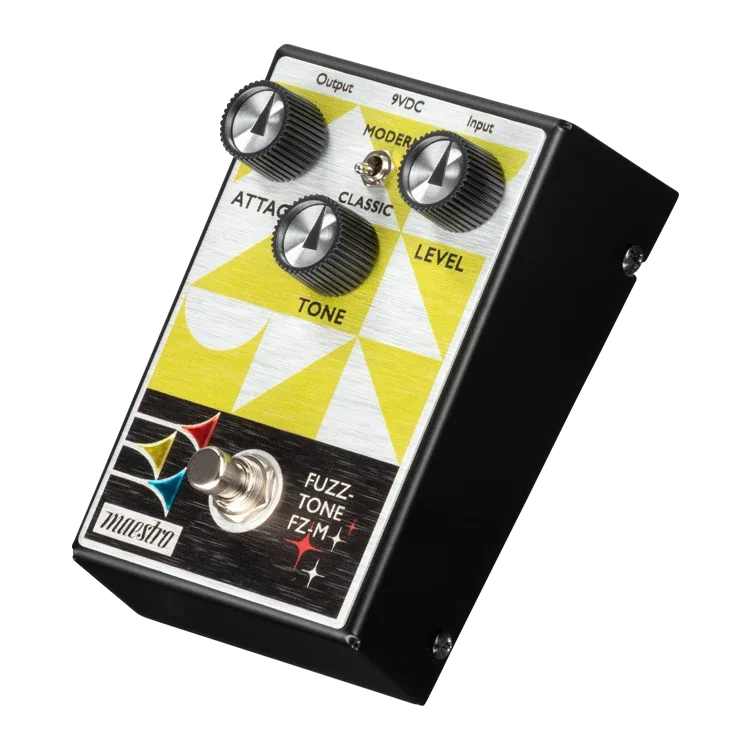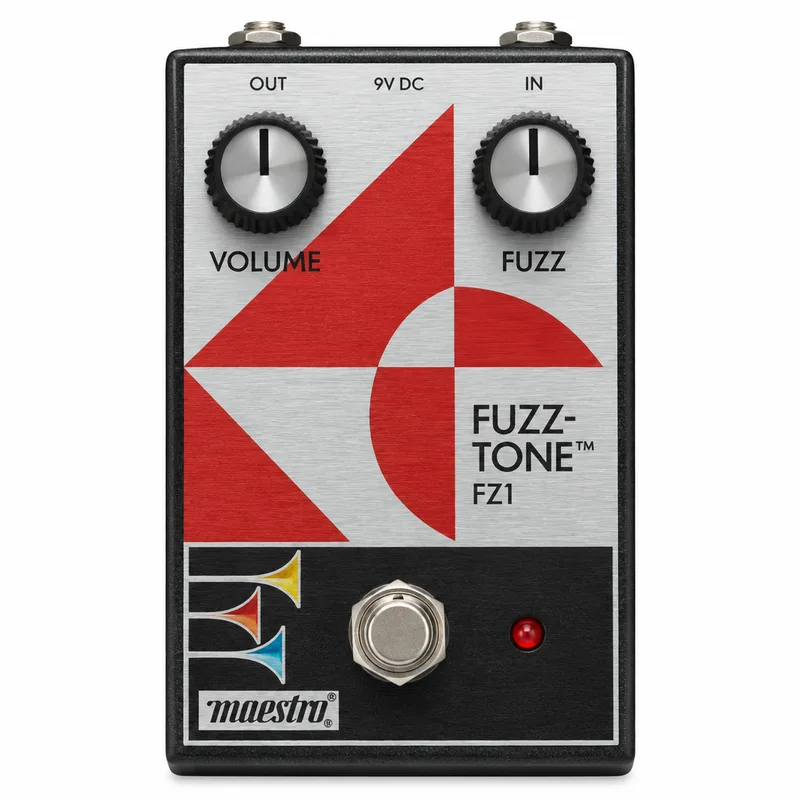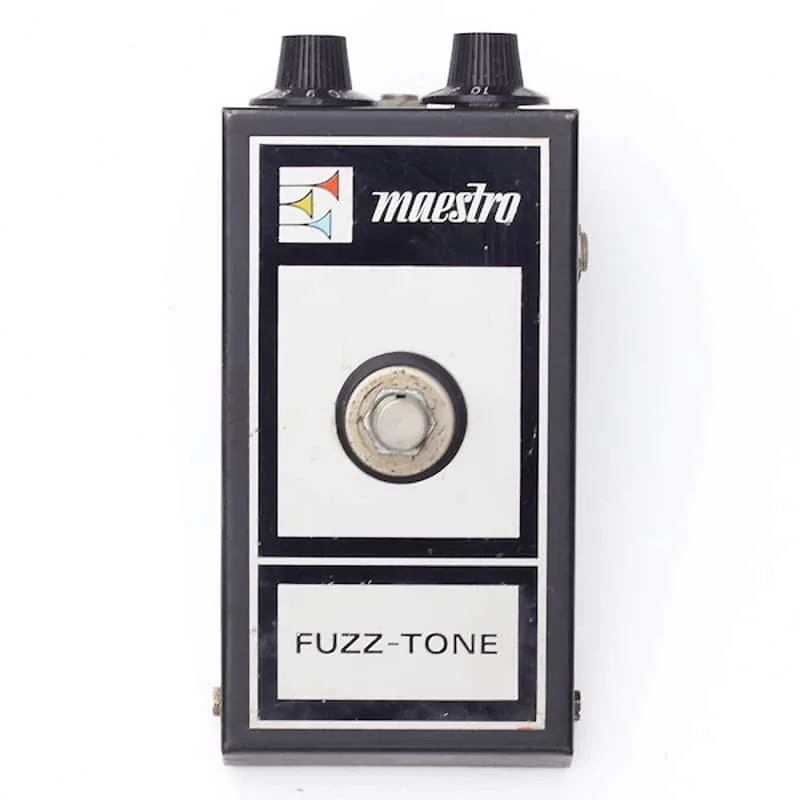


The Maestro Fuzz-Tone FZ-1B was a fuzz pedal built in Lincolnwood, Illinois. Vintage Guitar magazine's history of the pedal describes it as a two-transistor design that ran on a 9-volt battery, and notes that it arrived with revised graphics and a different voice from what came before: "It's sound was more trebly, but with less gain"1.
What it does
Like the FZ-1 Fuzz-Tone before it, the FZ-1B turns a guitar's clean signal into a buzzy, sustaining fuzz, the effect that defined the fuzz pedal category. Where the FZ-1B differs is in its voicing. Vintage Guitar's account puts it as "more trebly, but with less gain," so a player picking between the two original Maestro units was choosing between a darker, heavier fuzz and a brighter, less saturated one1.
Background
The FZ-1B was built in Lincolnwood, Illinois, and ran on a 9-volt battery, an upgrade from the earlier FZ-1's power arrangement. Vintage Guitar notes it "followed with revised graphics," marking it out visually as well as sonically from the first version1.
"The Lincolnwood-built/9-volt/two-transistor FZ-1B followed with revised graphics. It's sound was more trebly, but with less gain."
The FZ-1B sat within Maestro's fuzz line as a Lincolnwood-built, two-transistor design running on a 9-volt battery, with revised graphics distinguishing it from the units before it1.
Videos
Reverb
fuzzyeah
DiPinto Rockshop
Sources (1)
- Maestro Fuzz-Tone, Vintage Guitar magazine, 2015-12-08