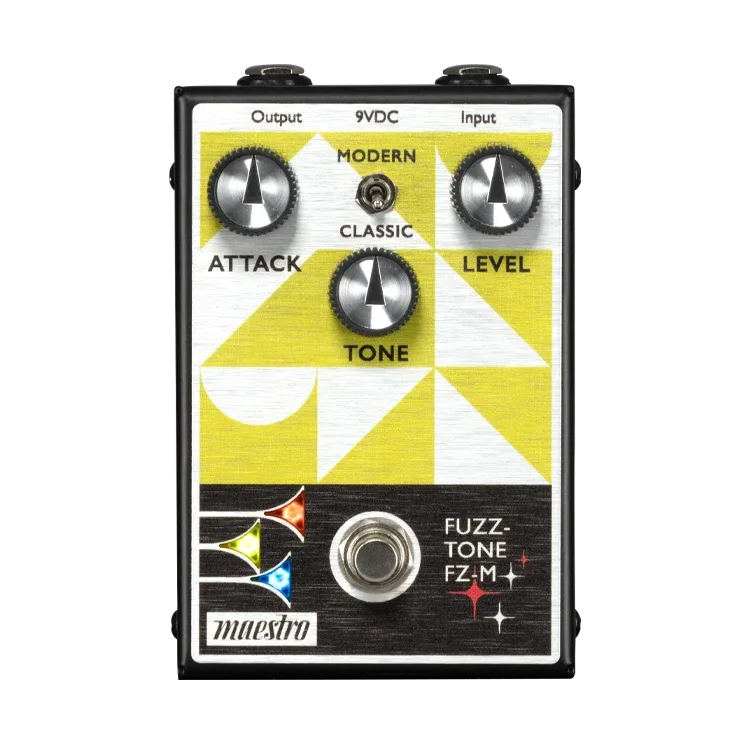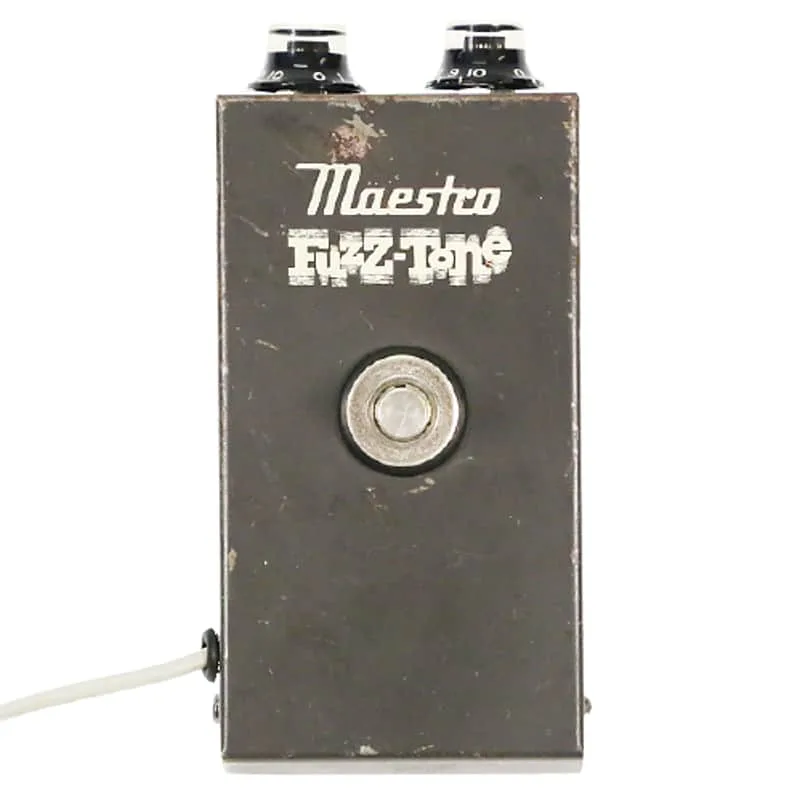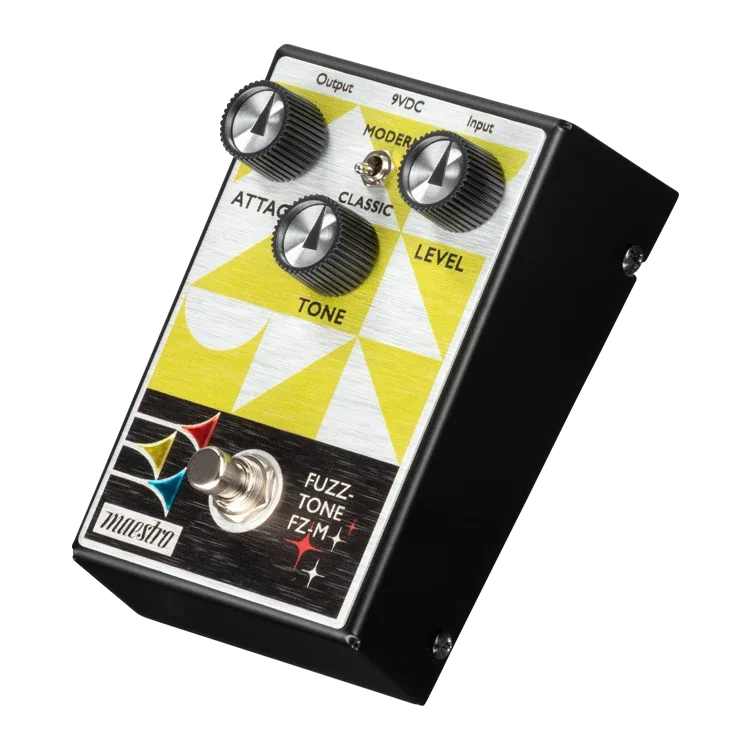


The Maestro Fuzz-Tone FZ-M is an all-analog fuzz pedal from Maestro, the brand Gibson revived in 2022. It is a remake of the Maestro FZ-1 Fuzz-Tone, the pedal widely described as the world's first fuzz, released in 196212. Where the original gave you one sound, the FZ-M puts two in one box: a Classic mode inspired by the FZ-1's fuzz and a thicker, more modern fuzz tone, selected by a toggle switch3.
Gibson positions it as "two pedals in one functionality for increased sonic versatility"3. It launched in 2022 as part of the five-pedal Maestro Original Collection, at $1494, and Guitar Player noted it is the only pedal in that series based on anything Maestro had previously done5.
Two fuzz voices in one pedal
The FZ-M's central feature is its mode switch. A two-position mini-toggle selects between Classic and Modern sounds5.
- Classic mode is based on the exact FZ-1 raucous fuzz tone6. Guitar Player's reviewer found it "sounds like an early Fuzz-Tone, with its slightly scooped response and frazzy fuzz sound"5, and Guitar World describes it as a nod to the past, said to be based on the FZ-1A sound7.
- Modern mode is a lot thicker, with a slightly different voicing6. Performer Mag's reviewer found it "cleans things up a bit with more punch and presence"8.
Premier Guitar summed up the split in practical terms: in Classic mode "it cuts through the mix like a hot knife through butter," while the thicker, contemporary Modern mode also suits electric bass9.
The controls
The FZ-M keeps the three-knob layout of the revived Maestro line5. Gibson describes what each control does3:
| Control | What it does |
|---|---|
| Attack | Controls the amount of fuzz |
| Tone | Adjustes the timbre from bright and raspy to warm and wooly and anywhere in between |
| Level | Sets the output volume; it can go way beyond unity gain when desired |
Guitar Player's reviewer found the Attack knob "unleashes a goodly amount of sustain as it's turned up to where the playing feel is starting to get a little" compressed at high settings5. The original FZ-1 and FZ-1A had only Volume and Attack controls10, so the FZ-M adds a Tone control the originals never had.
The true bypass footswitch triggers LED lights in the bugles of the Maestro logo, which glow red, yellow and blue when the pedal is on3. Guitar Player called this "three bugles" bypass LED one of the pedal's distinctive extras5.
Power and connections
The FZ-M runs on a 9V battery or a regulated 9V DC power supply with a 5.5 x 2.1 mm plug wired center-negative3. Power switches on through the input jack, so Gibson advises unplugging the input when the pedal is not in use to prevent battery drain3. Current draw is 21 mA3.
Input and output jacks are front-mounted, along with the power supply jack5. Input impedance is 32 kOhms and output impedance is 5 kOhms3.
Because power-on is built into the input jack, a battery installed in a stored or idle FZ-M will drain unless the input cable is unplugged3.
The enclosure is steel, with the familiar wedge shape of the original, a little larger, and lime green triangles-and-half-moon graphics on a brushed-aluminum top5. Guitar World noted the slightly sloping top panel makes footswitching easier7. It is made in China2.
History: from the 1960s FZ-1 to the Gibson revival
The FZ-M traces back to the Maestro Fuzz-Tone FZ-1, introduced in 19621 and designed by recording engineer Glenn Snoddy and WSM-TV engineer Revis V, manufactured by Gibson11. The FZ-1 and the later FZ-1A, released in late 1965, used largely the same circuitry with three germanium transistors10. The original ran on three volts12.
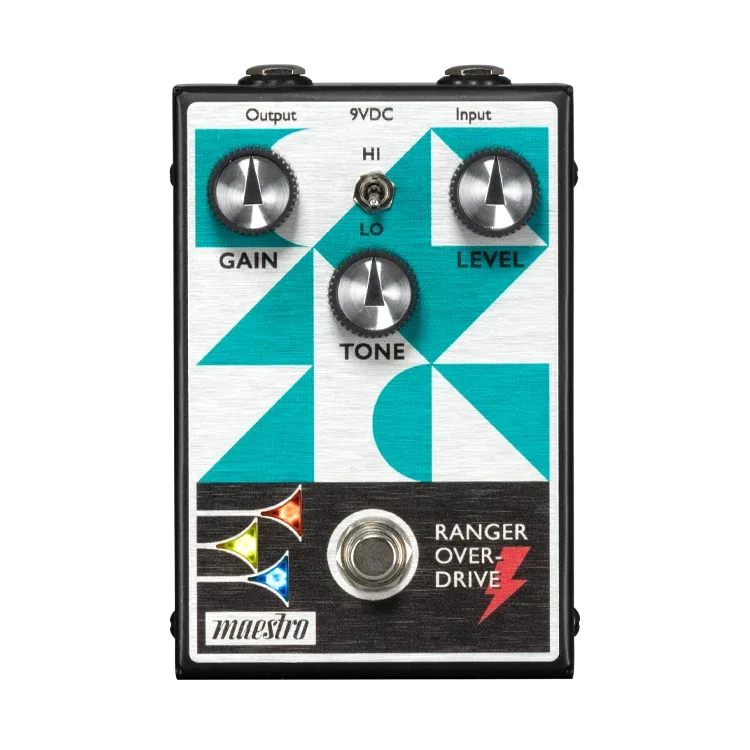
Gibson revived the Maestro name in 2022 with a five-pedal Original Collection: the Fuzz-Tone FZ-M, Invader Distortion, Ranger Overdrive, Comet Chorus and Discoverer Delay, launching at $149, with the Discoverer Delay at $1594. The FZ-M arrived in the FZ-1's 60th anniversary year, bridging those vintage sounds and contemporary tones13.
The FZ-M departs from the originals in one key way: where the FZ-1 and FZ-1A used germanium transistors, the FZ-M uses silicon. Craig Hockenberry, Gibson's director of engineering and lead designer of the revamped Maestro line, explained the choice in a MusicRadar interview: "But instead of using germanium transistors we're using silicon transistors," for reliability and availability145. He told Guitar Player the sound is based on the FZ-1A in Classic mode, using discrete transistors5.
What reviewers said
Reviews of the FZ-M were broadly positive:
| Reviewer | Verdict |
|---|---|
| Guitar.com (Richard Purvis) | 9/10; "Gutsy and distinctive, this multi-voiced fuzz is much more than just a straight retro reboot"2 |
| Guitar Player (Art Thompson) | "A good all-around fuzz that can deliver circa-'60s tones as well as heavy rock grind"5 |
| Guitar World (Trevor Curwen) | "A versatile fuzz that's built like a tank and nails the classic sounds, and a lot more besides," though a little bulky overall7 |
| Performer Mag (Chris Devine) | Classic mode is rich and can get plenty hairy, works well with single coil and humbucking pickups, with plenty of cut and edge without getting unusably sizzly8 |
Guitar.com's reviewer found in Classic mode "there's a tightness to the bottom end that balances the raspy aggression of the treble," making it a joy for spirited chord work2. Guitar World also credited the pedal's solid build and design, and called it sensibly priced7.
Videos
Sweetwater
Gibson TV
guitarguitar
News
Questions
Is the FZ-M germanium or silicon?
Silicon. The original FZ-1 and FZ-1A used three germanium transistors, but Gibson's lead designer Craig Hockenberry said the FZ-M uses silicon transistors instead, chosen for reliability and availability. Classic mode is voiced to sound like the early Fuzz-Tone anyway.
What is the difference between Classic and Modern mode on the FZ-M?
Classic mode is based on the FZ-1A's raucous, slightly scooped fuzz tone. Modern mode is thicker, with a slightly different voicing, more punch and presence. Reviewers found Classic cuts through a mix while Modern blends in better and suits heavier, contemporary parts.
Does the Maestro FZ-M work on bass?
Premier Guitar noted that Modern mode, being thicker and more contemporary, is also suited to electric bass. Classic mode's tighter low end balances its raspy treble, but the pedal was designed and reviewed primarily as a guitar fuzz.
Is the Maestro Fuzz-Tone FZ-M true bypass?
Yes. Gibson lists true bypass switching on the product page, and Guitar.com and Guitar Player both confirm it. The footswitch also lights up the red, yellow and blue bugles in the Maestro logo when the pedal is on.
Does the Maestro FZ-M take a 9V battery?
Yes. It runs on a 9V battery or a regulated 9V DC power supply with a 5.5 x 2.1 mm center-negative plug. Power switches on through the input jack, so unplug the input when not in use to prevent battery drain.
Sources (14)
- Fuzz-Tone FZ-M by Maestro, RockBoard PedalPedia, 2026
- The Big Review: Maestro Original Collection pedals, Guitar.com, 2022-02-10
- Maestro Fuzz-Tone FZ-M, Gibson (www.gibson.com)
- Gibson revives Maestro as a fully-fledged pedal brand with five new stompboxes, Guitar.com, 2022-01-18
- Maestro FZ-M Fuzz-Tone Review, GuitarPlayer, 2022-04-06
- Gibson re-launches Maestro Electronics with Original Collection pedal range, gearnews.com, 2022-01-18
- Maestro Fuzz-Tone FZ-M review, Guitar World, 2022-05-09
- REVIEW: Maestro Original Collection Guitar Effect Pedals, Performer Mag, 2022-07-07
- Gibson Launches Maestro Original Collection 2023, Premier Guitar, 2022-01-18
- Maestro Fuzz-Tone, Vintage Guitar magazine, 2015-12-08
- The legendary Maestro Fuzz-Tone appears poised to make a comeback in 2022, Guitar.com, 2022-01-06
- The history of the Sola Sound Tone Bender, Guitar World, 2021-03-26
- Maestro Knocks Out Another Batch of Classic Analog Stompboxes, GuitarPlayer, 2022-11-09
- Interview: "It's arguably the first guitar effects pedal ever", MusicRadar, 2022-02-21