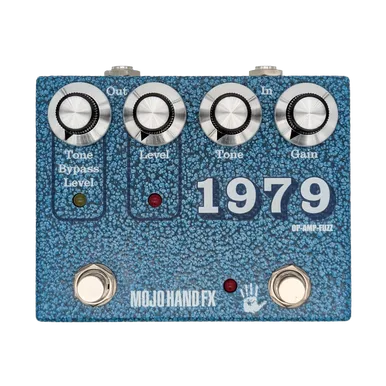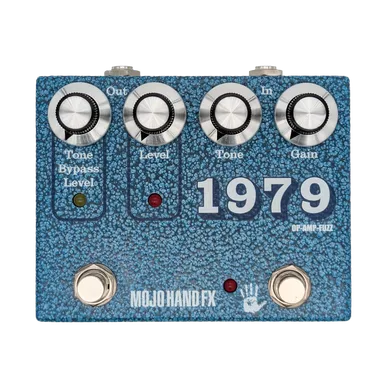


The Mojo Hand FX 1979 is an op-amp fuzz pedal from Mojo Hand FX, built as an evolution of the company's discontinued 1978. It is based on the notoriously high gain Big Muffs manufactured in the late 1970s, the versions that used op-amp integrated circuits instead of the transistors found in every other Big Muff variant1. Mojo Hand FX describes it as a fuzz with outrageous grungy distortion, a sound the maker says many players have favored, most notably Billy Corgan1.
What sets the 1979 apart from a typical Big Muff clone is its second footswitch. The left stomp switch bypasses or engages the tone circuit, so with the tone knob out of the signal path you get, in the maker's words, all the bass, all the treble, and a huge helping of extra mids and volume1.
An op-amp Big Muff with a raw, aggressive voice
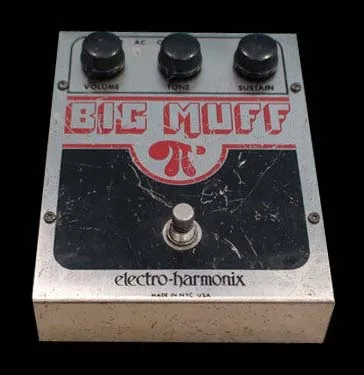
Most Big Muff variants use transistors for their gain stages. The late-70s Big Muffs that the 1979 is modeled on instead used op-amps, the integrated circuit version of the circuit that Gearnews' reviewer called "the classic Integrated Circuit or IC Big Muff circuit, which I love"23. Kit Rae's Big Muff timeline dates the Electro-Harmonix op-amp version to circa 1979, which is where the pedal takes its name4.
The maker is direct about what to expect from the sound:
"The sound is more raw and aggressive than a typical BMP. Please do not expect subtlety. This pedal does not 'clean up well' with your volume knob."
Gearnews' 2017 review put the voice in context, writing that "a good late '70s Big Muff has a certain quality to its tone that could be described as almost buzzsaw-like, smashing through even the heaviest hard hitting drummer"2. That is the character the 1979 aims for: a cutting, high gain fuzz rather than a smooth, forgiving one. Players who like to roll back their guitar's volume knob for cleaner tones should look elsewhere, since the maker says the pedal does not clean up well that way3.
One change Mojo Hand FX made to the original circuit: the taper of the gain pot was adjusted for a more usable sweep, so the Gain control responds more evenly across its range than the original late-70s pot did1.
The controls and the tone bypass footswitch
The 1979 has two footswitches and four knobs. The right stomp switch engages or bypasses the fuzz circuit, as on a normal pedal. The left stomp switch bypasses or engages the tone circuit, which is the pedal's distinguishing feature1.
| Control | What it does |
|---|---|
| Gain | Sets fuzz amount, with a taper adjusted from the original for a more usable sweep1 |
| Tone | Tone control for the fuzz circuit1 |
| Level | Volume with the tone circuit engaged1 |
| Tone Bypass Level | Volume with the tone circuit bypassed, settable to unity or a boost1 |
| Right footswitch | Engages or bypasses the fuzz circuit1 |
| Left footswitch | Bypasses or engages the tone circuit1 |
Because the tone bypass has its own volume knob, you can set it to unity gain or use it as a boost, giving you two distinct fuzz voices from one pedal15. With the tone circuit bypassed, the maker says you get all the bass, all the treble, and a huge helping of extra mids and volume1. Guitar Interactive Magazine highlighted this when the pedal was announced, noting the tone bypass volume knob "so you can set it to unity or boost!"5
Power and build
The 1979 runs on a standard 9V DC center negative power supply, which is not included, and draws about 8mA1. When the pedal was announced in 2017, Guitar Interactive Magazine reported it could also run on a 9V battery5, but the maker's current product page makes no mention of one, so treat battery power as uncertain.
The maker's page lists only a 9V DC center negative supply and does not mention a battery. If you run a pedalboard on batteries, plan on a power supply for this one1.
The pedal is housed in a sturdy die-cast aluminum enclosure with professional powder coating and printing, measuring 4.7" L x 3.69" W x 1.37" H1. Gearnews' reviewer liked the solid casing and clear layout, calling it "pretty bomb proof" and noting it takes a regular 9V supply2.
Where it came from
The 1979 was announced in February 2017 as an evolution of the Mojo Hand FX 1978, which was discontinued before the 1979 arrived25. Gearnews reported a release date of February 22, 2017 at an RRP of $179.002; the maker's current list price is $169.001.
The 1978's discontinuation was, in Gearnews' words, "now unfortunately discontinued"2. The 1979 carries the same op-amp fuzz concept forward, and Mojo Hand FX has since released a further variant, the 1979 Baja, described by the maker as "the same great op amp fuzz with a great new finish"3.
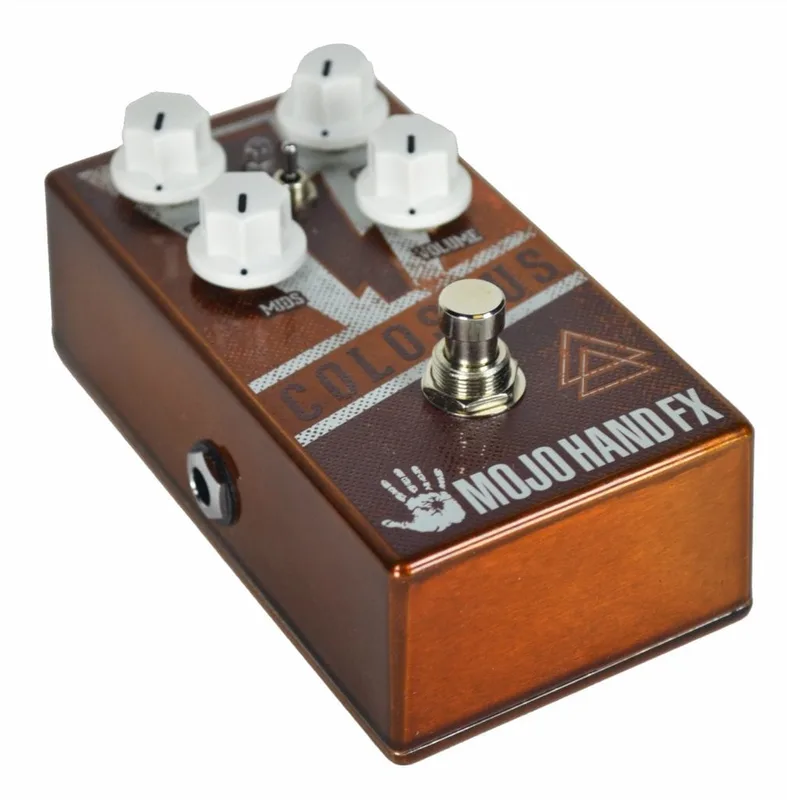
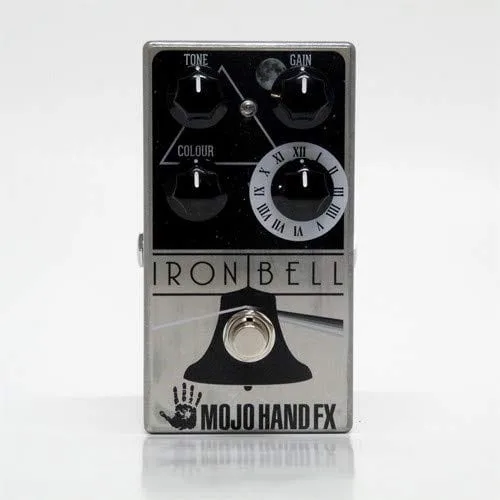
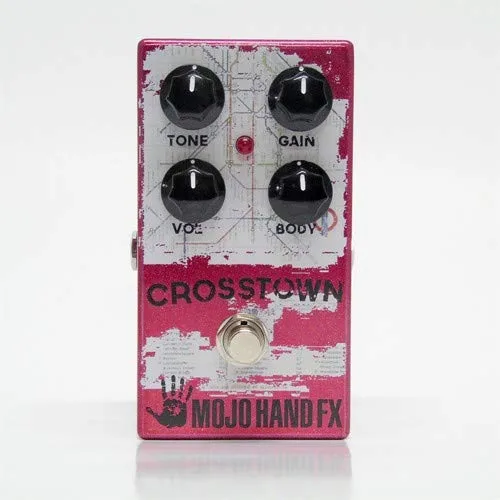
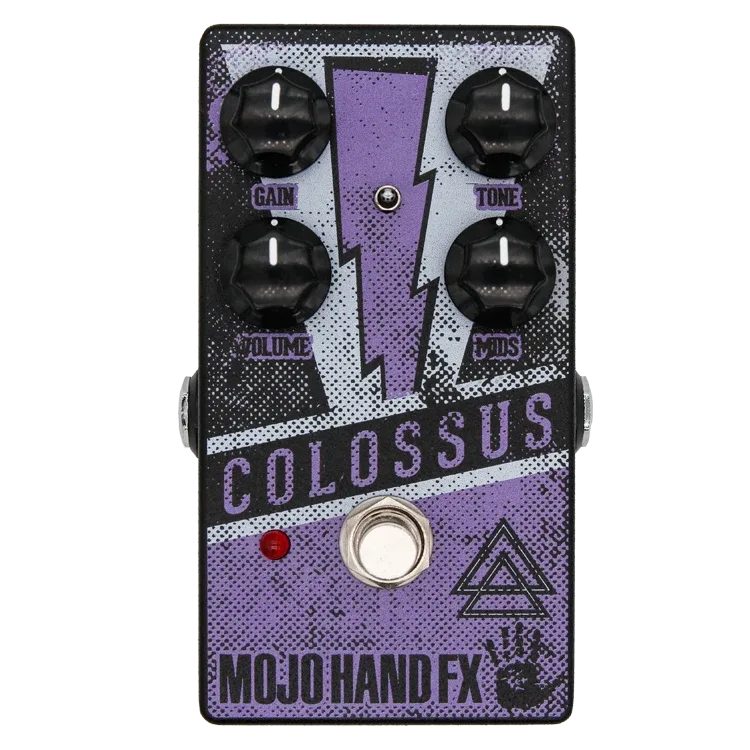
Mojo Hand FX also makes other Big Muff derived fuzzes: the Colossus, which Premier Guitar noted is based on the Sovtek Big Muffs of the early '90s rather than the op-amp era6, plus the Iron Bell and Crosstown lines.
What reviewers said
Gearnews' 2017 review was positive on both sound and build. On the circuit: "The 1979 is based on the classic Integrated Circuit or IC Big Muff circuit, which I love"2. On the pedal itself:
"I like the solid casing and clear layout of the 1979 and am sorely tempted to order one myself."
The reviewer also noted the 1979 improves on the original concept with "true-bypass switching and modern components"2.
Videos
Reverb
60 Cycle Hum
Chicago Music Exchange
Questions
Does the Mojo Hand FX 1979 take a battery?
The maker's current product page lists only a standard 9V DC center negative supply, which is not included, and makes no mention of a battery. When the pedal was announced in 2017, Guitar Interactive Magazine reported it could also run on a 9V battery, so the two sources disagree on battery power.
Is the Mojo Hand 1979 true bypass?
Yes. Mojo Hand FX lists the 1979 as true bypass, and Gearnews' 2017 review noted its true-bypass switching alongside modern components. The right stomp switch engages or bypasses the fuzz circuit, and the left one engages or bypasses the tone circuit.
Does the Mojo Hand 1979 clean up with the guitar volume?
No. Mojo Hand FX says plainly that the 1979 does not clean up well with your volume knob and that you should not expect subtlety. The sound is more raw and aggressive than a typical Big Muff, so players who roll back for cleaner tones will want a different fuzz.
What happened to the Mojo Hand FX 1978?
The 1978 is discontinued. Mojo Hand FX describes the 1979 as an evolution of the now discontinued 1978, keeping the same op-amp fuzz approach. Gearnews called the 1978's discontinuation unfortunate when the 1979 was announced in 2017.
What Big Muff is the Mojo Hand 1979 based on?
It is based on the notoriously high gain Big Muffs manufactured in the late 1970s, the versions that used op-amp integrated circuits instead of the transistors found in every other Big Muff variant. Kit Rae's Big Muff timeline dates the Electro-Harmonix op-amp version to circa 1979.
Sources (6)
- MojoHandFX, MojoHandFX
- 1979 fuzz by Mojo Hand Fx: A late 70s Big Muff you can rely on?, gearnews.com, 2017-01-27
- 1979 Baja, Mojo Hand FX
- A Fuzz and Muff pedal Timeline, Kit Rae (kitrae.net), 2014-07
- Mojo Hand FX Introduces the 1979 Fuzz, Guitar Interactive Magazine, 2017-02-06
- Mojo Hand Colossus Pedal Review, Premier Guitar, 2011-10-18