

The Mojo Hand FX Crosstown is a fuzz pedal built around a germanium and silicon hybrid Fuzz Face circuit. Mojo Hand FX describes it as offering "more control, more flexibility, super low noise operation, and guaranteed stability" compared with a stock Fuzz Face1. It uses one germanium and one silicon transistor, a hand-picked combination the maker says avoids the stability issues, such as overheating, that pure germanium builds can suffer12.
The pedal returned in 2026 after roughly two years out of production. Guitar Pedal X reported that the earlier AC187 germanium transistor became unavailable, since it is long discontinued and in short supply, and that Mojo Hand FX spent two years finding a suitable germanium replacement before reviving the pedal in Classic and Rasta editions2.
A hybrid germanium and silicon Fuzz Face
The Crosstown is an expanded take on the classic two knob Fuzz Face, with four controls in place of the classic two2. Earlier versions paired a germanium AC187 with a silicon BC109; the AC187 ran out, which is what took the pedal off the market until a replacement germanium transistor was found2.
The hybrid pairing is the pedal's core idea. Mojo Hand FX says the hand-picked germanium and silicon transistors, coupled with an internal bias control, let you tailor the gain structure to your taste without worrying about stability issues such as overheating1. Delicious Audio's buying guide called it "highly tweakable to account for any environmental changes that could affect your f"3.
On sound, the maker says the Crosstown gives "astonishing note clarity" even at extreme settings, and that rolling back your guitar's volume control yields "pristine yet fat clean tones at almost every setting"1.
The controls: Volume, Gain, Tone, Body and internal bias
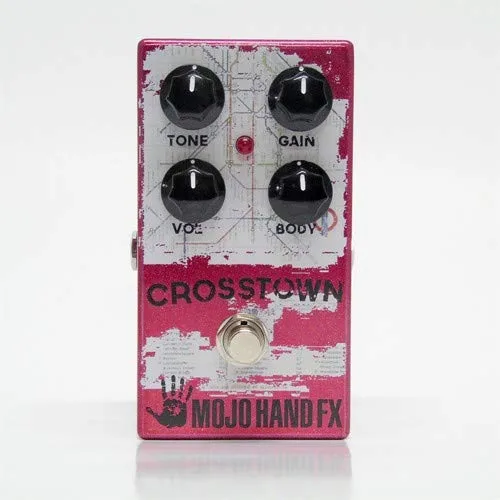
The four external controls are Volume, Gain, Tone and Body2. Inside the pedal, an internal bias trimmer adjusts the gain structure1.
| Control | What it does |
|---|---|
| Volume | Sets the output level2 |
| Gain | Sets the fuzz amount2 |
| Tone | Output treble, from warm and creamy to bright and sizzly14 |
| Body | Increases the bass before the gain stage3 |
| Internal bias | Tails the gain structure to taste, without overheating worries1 |
The Tone control is a full range output treble control that the maker says moves the treble response from warm and creamy to bright and sizzly14. The Body knob is the more unusual addition: it boosts bass ahead of the gain stage, which lets you dial the low end up or down before the fuzz is generated3.
Guitar Pedal X's Stefan Karlsson saw the point of it directly:
"It's cool to have a Body control here - as some don't like the amount of low-end you get with some Fuzz Face circuits - and this helps balance that out."
Classic and Rasta editions
The Crosstown comes in two editions, both currently available on the Mojo Hand FX webstore: the mostly orange Classic Edition and the mostly green Rasta Edition2. The Rasta is a limited first batch marking the pedal's return after two years away4. Both editions share the same circuit, controls, power requirements and $179.00 price4.
The Rasta edition is described by the maker as the first batch after the Crosstown's return, a 4/20 limited edition4. Players wanting one may find it sells through faster than the standard Classic edition.
Guitar Pedal X's verdict on the relaunch was straightforward on value:
"The Crosstown Hybrid Fuzz is very fairly priced at $179 - you just need to decide whether you prefer the mostly Orange Classic Edition, or mostly Green Rasta Edition."
Power, bypass and build
Both editions run on a standard center negative 9V DC supply or a 9V battery, with neither included, and draw about 65mA14. That draw is worth noting if you share a supply across several pedals. Switching is true bypass, and both editions feature extremely low noise operation, a 9V DC jack, a bright LED and a high quality die cast enclosure in the same 4.8" x 2.62" x 1.55" housing14.
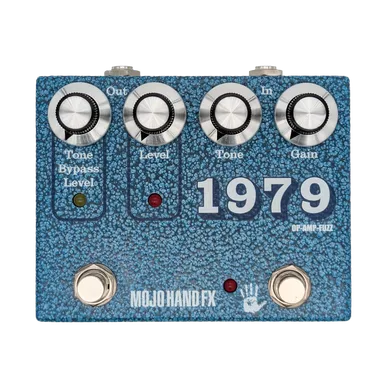
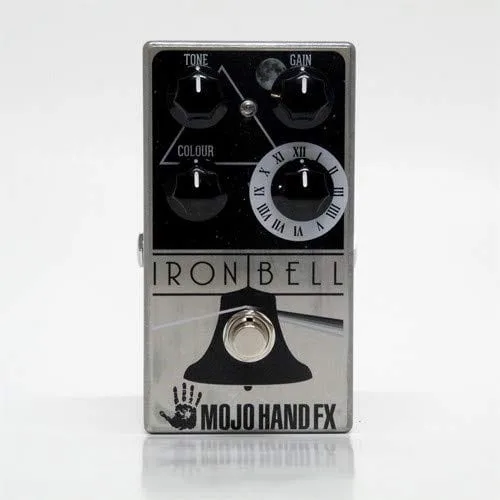
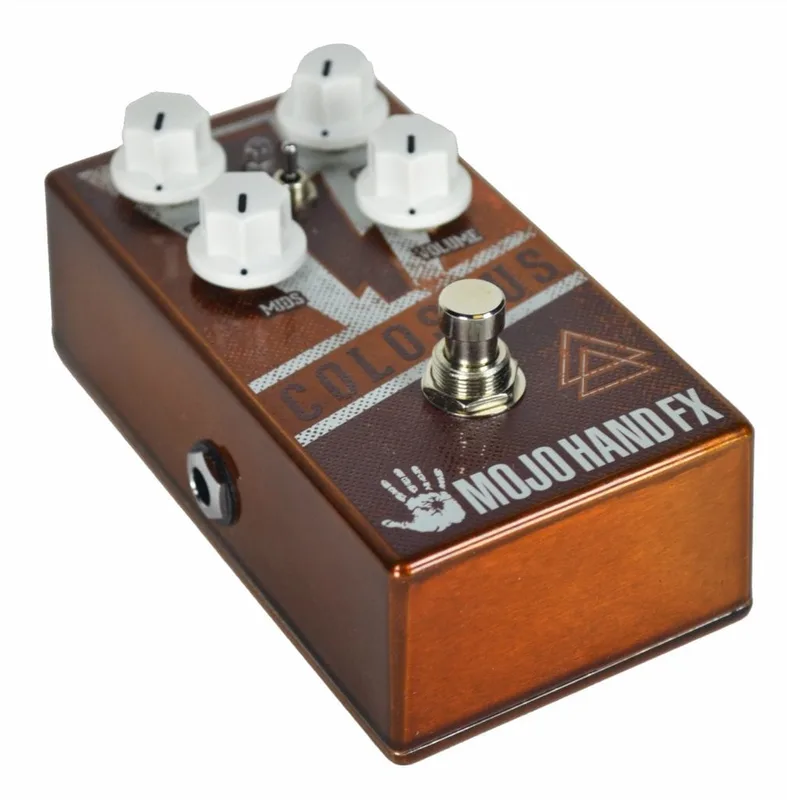
Within the Mojo Hand FX lineup, the Crosstown sits alongside other fuzzes including the 1979 op amp fuzz, the Iron Bell and the Crosstown Hybrid Fuzz pages, and the Rasta edition has its own page.
Videos
Prymaxe
gearmanndude
Brett Kingman
Questions
Is the Mojo Hand Crosstown true bypass?
Yes. Mojo Hand FX lists true bypass switching among the Crosstown's features, along with extremely low noise operation, a 9V DC jack, a bright LED and a high quality die cast enclosure. The Rasta edition carries the same true bypass switching.
Can the Crosstown run on a 9V battery?
Yes. The maker specifies a standard center negative 9V DC supply or a 9V battery, and notes that neither is included with the pedal. The Rasta edition shares the same power options.
How much current does the Crosstown draw?
Mojo Hand FX lists the current draw as approximately 65mA for both the Classic and Rasta editions. That is higher than many two transistor fuzzes, so it is worth accounting for on a shared power supply.
What does the Body knob do on the Crosstown?
The Body knob increases the bass before the gain stage, letting you balance the low end of the Fuzz Face circuit. Guitar Pedal X noted that some players find Fuzz Face circuits have too much low end, and that this control helps balance that out.
Is the Mojo Hand FX Crosstown Rasta true bypass?
Yes. The Rasta edition's feature list includes true bypass switching, along with extremely low noise operation, a 9V DC jack, a bright LED and a high quality die cast enclosure.
What power supply does the Crosstown Rasta need?
A standard center negative 9V DC supply, or a 9V battery, neither of which is included. Current draw is approximately 65mA, so a supply that can deliver at least that much on its output is needed.
Sources (4)
- Crosstown, MojoHandFX
- Guitar Pedal X, Guitar Pedal X, 2026-09-23
- Best Fuzz Face Clones And Evolutions In 2024, Delicious Audio, 2024-04-17
- Crosstown Rasta, Mojo Hand FX