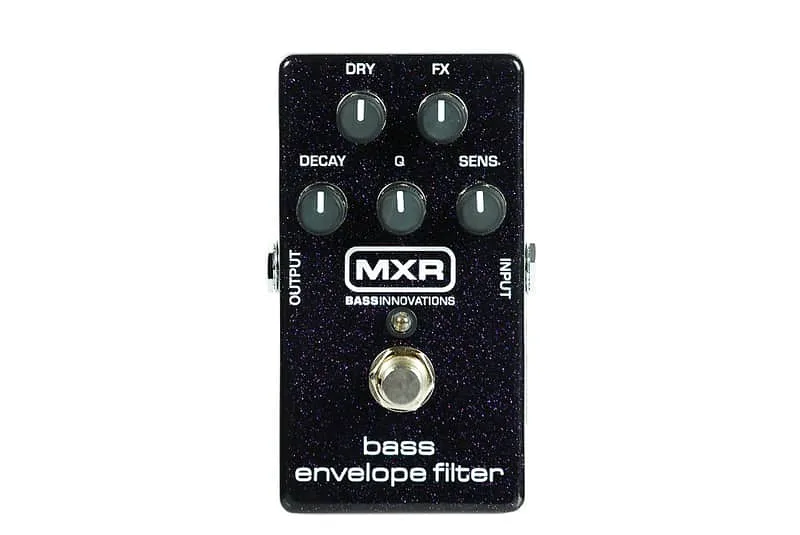


The MXR M82 Bass Envelope Filter is an analog envelope filter pedal for bass, made by MXR (Dunlop Manufacturing). An envelope filter listens to how hard you play and sweeps a resonant filter up or down in response: dig in and the filter opens, play softly and it closes. The result is the quack, squelch and synth-like burp heard all over funk, and the M82 is built to deliver those classic envelope filter sounds while keeping your bass's low end intact1.
What sets it apart from many competitors is its signal handling. Instead of one blended output, the M82 gives you separate DRY and FX level controls, so the volume of your unaffected signal and the volume of the filtered signal are set independently. MXR positions this as a feature for preserving low end, and Premier Guitar's reviewer called it an especially important advantage over the competition12.
Controls and how it works
The pedal carries five knobs and a true-bypass footswitch, with a blue LED that indicates when the effect is on. The two controls the manual describes in detail are the heart of its design12:
| Control | What it does |
|---|---|
| DRY | Sets the volume of your unaffected signal; clockwise to increase, counterclockwise to decrease1 |
| FX | Sets the volume of the envelope filter signal3 |
| Footswitch | Toggles the effect on and bypass; blue LED indicates on1 |
Because the dry and wet paths have their own level knobs, you can keep a solid foundation of clean low end underneath the sweep rather than letting the filter thin out your tone. The DRY control ranges from fully off (-∞) to +6 dB, and the FX control ranges from fully off to 0 dB relative to the filter gain1.
The filter itself sweeps from 76 Hz to 3.2 kHz, which covers the territory a bass player actually uses, from deep sub-ish sweeps up through vocal quack. Sensitivity range is 46 dB, meaning the pedal can be set to trigger across a wide span of playing dynamics1.
Specifications
| Specification | Value |
|---|---|
| Filter sweep (fc) | 76 Hz to 3.2 kHz1 |
| Sensitivity range | 46 dB1 |
| Decay stop frequency | 76 Hz to 1.3 kHz1 |
| Dry range | -∞ to +6 dB1 |
| FX range | -∞ to 0 dB relative to filter gain1 |
| Input impedance | 1 MΩ1 |
| Output impedance | 100 Ω1 |
| Max output level | +8 dBV1 |
| Noise floor | -94 dBV, A-weighted, all controls at mid position1 |
The manual's control descriptions are worth reading closely: the DRY knob sets the volume of the unaffected signal, clockwise to increase and counterclockwise to decrease, and the footswitch toggles the effect on and bypass, with a blue LED indicating when the effect is on1.
Sample settings
The instruction pamphlet ships with three sample settings, which Premier Guitar also noted in its review12:
Premier Guitar describes the Bubble Funk preset as "classic '70s funk"2. These give you starting points rather than fixed recipes: once a setting is dialed in, the sensitivity control determines how the filter responds to your attack, and the DRY and FX knobs set the balance between clean and filtered signal.
Power and connections
Setup is straightforward: run a cable from your bass to the M82's INPUT jack, and another from its OUTPUT jack to your amplifier1. For power you have three options1:
- One 9-volt battery, installed by removing the bottom plate
- A 9-volt AC adapter such as the Dunlop ECB003 or ECB003E
- A DC Brick power supply
At 6 mA of current draw, the pedal is light on a power supply, leaving plenty of headroom on a multi-pedal board1.
The M82 and the M82B
The M82B is the Blackout Series Bass Envelope Filter, a special edition version of the same pedal and one MXR describes as among its most popular3. The core specifications carry over between the two manuals: both list a 46 dB sensitivity range, a 76 Hz to 3.2 kHz filter sweep, and a +8 dBV maximum output level13. The M82B manual lists a maximum input level of +7.4 dBV, where the M82 manual lists -15 dBV13. Functionally, the Blackout Series version is the same filter circuit in a different finish, so a player choosing between them is mostly choosing looks and availability.
What reviewers said
Premier Guitar reviewed the M82 and found it held up well against its rivals, writing that "the M82 proves itself to be a strong contender in the analog filter world. Its separate level controls for dry and wet s"ignal handling stood out as its key edge2. The reviewer also noted the pedal's build: "It boasts a sparkle-purple finish, five knobs, and a true-bypass footswitch. Overall, this pedal feels quite sturdy"2. At $149 street as of that review, it sits in the middle of the analog filter field2.
"the M82 proves itself to be a strong contender in the analog filter world. Its separate level controls for dry and wet"
Where it sits in the MXR bass line
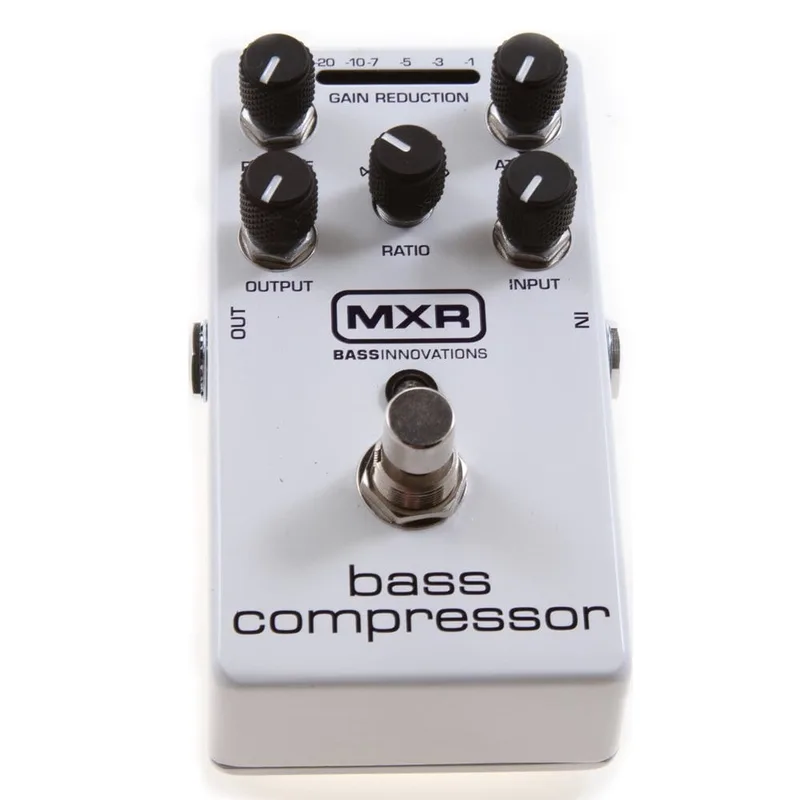
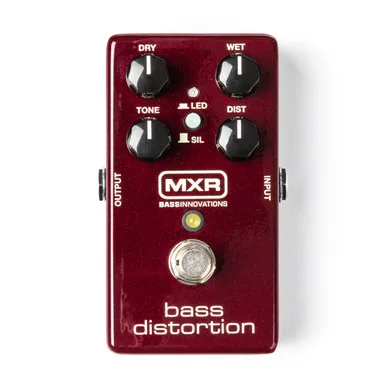
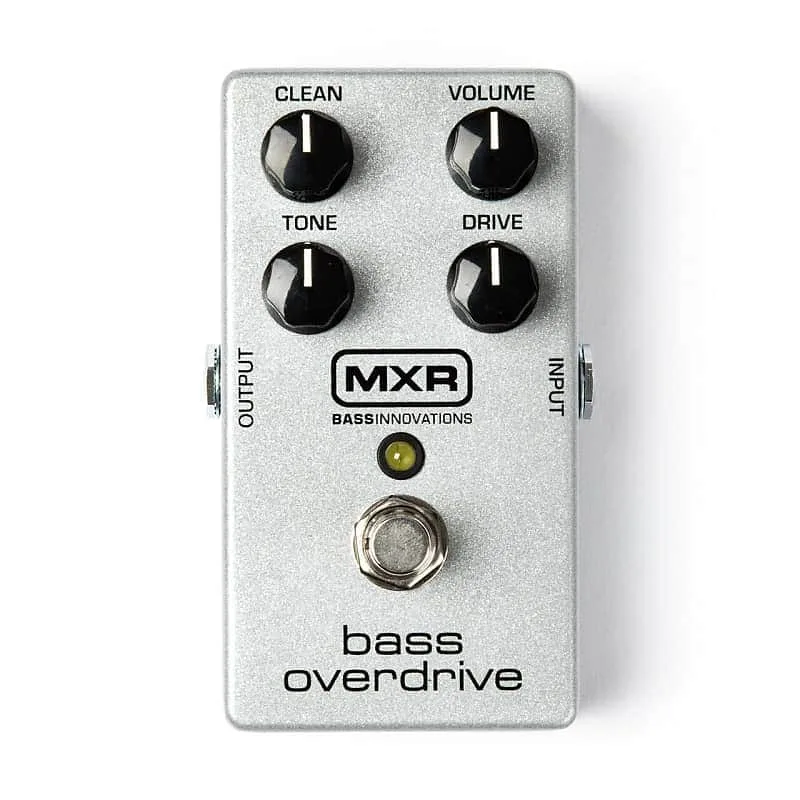
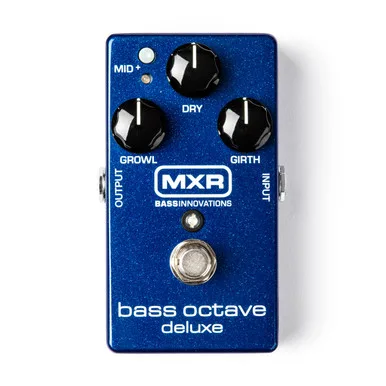
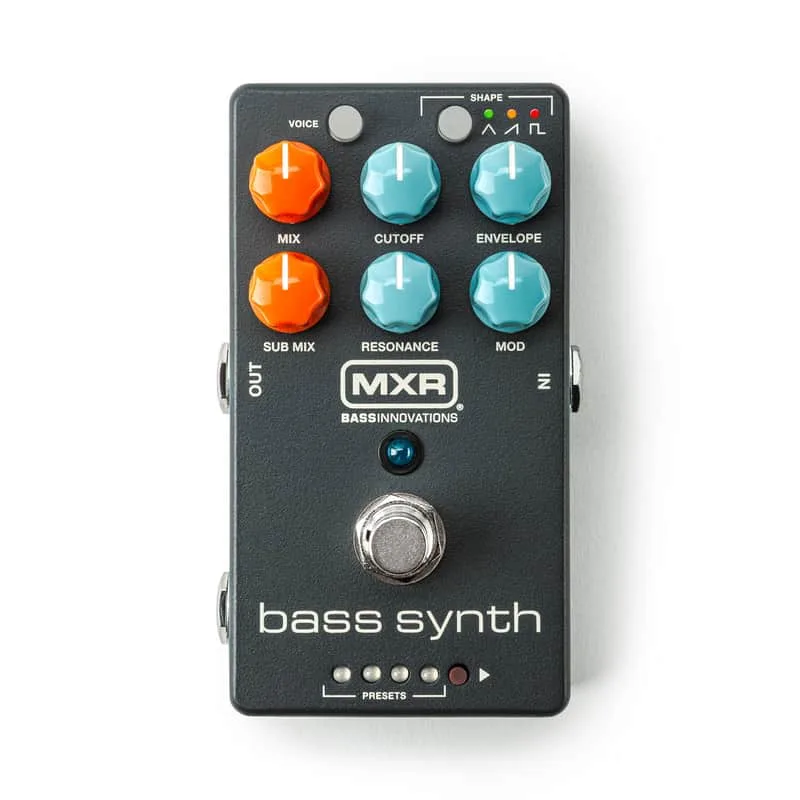
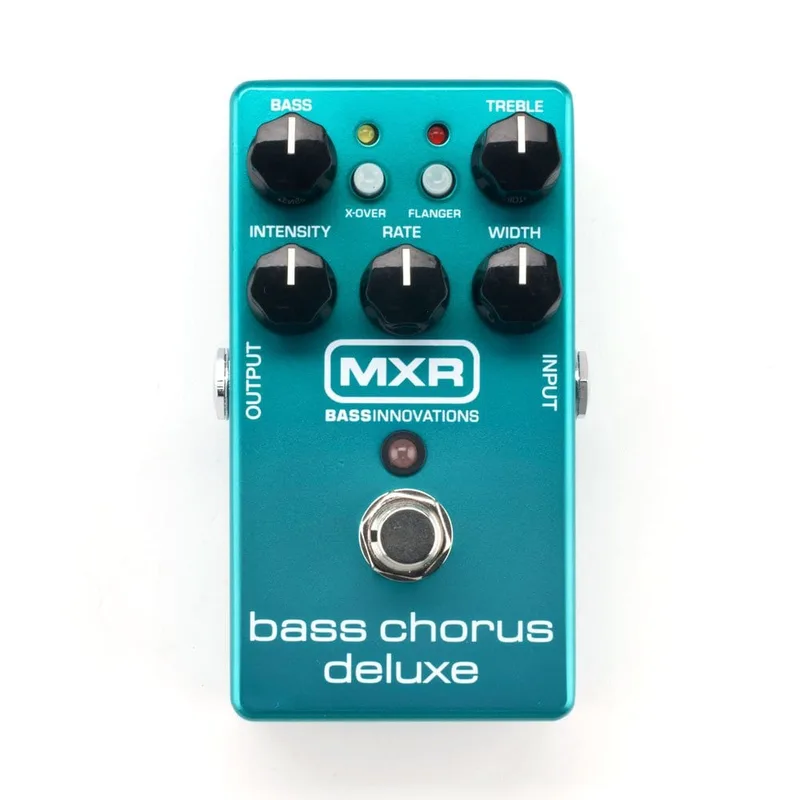
The M82 is one piece of MXR's broader bass pedal range, which spans drive, dynamics and pitch effects including the MXR Bass Compressor, the MXR M85 Bass Distortion, the MXR M89 Bass Overdrive, the MXR Bass Octage Deluxe and the MXR Bass Synth. For players building a funk or synth-flavored bass board, the envelope filter covers a job none of those do: dynamics-driven filter sweeps rather than compression, clipping or pitch shifting.
Videos
Rafael Freitas Music
MusicallinVideo
Chicago Music Exchange
Questions
Does the MXR M82 take a battery?
Yes. The M82 runs on one 9-volt battery, installed by removing the bottom plate. It can also be powered by a 9-volt AC adapter such as the Dunlop ECB003 or ECB003E, or a DC Brick power supply, and draws only 6 mA.
Is the MXR M82 true bypass?
Yes. MXR specifies a True Hardwire bypass, so with the effect switched off your signal passes through without the filter circuit in the path. A blue LED on the footswitch lights when the effect is on.
What is the difference between the M82 and M82B?
The M82B is the Blackout Series version of the same Bass Envelope Filter, a special edition of one of MXR's most popular pedals. The core design carries over, including the 46 dB sensitivity range and +8 dBV maximum output level, though the M82B manual lists a higher maximum input level of +7.4 dBV.
Can you use the MXR Bass Envelope Filter on guitar?
The M82 is built for bass: the manual describes running a cable from your bass to the input jack, and its separate DRY control exists to preserve low end through the filter sweep. Players of other instruments would be working outside what the pedal was designed for.
How do you set the M82 for 70s funk?
Start from the Bubble Funk sample setting in the instruction pamphlet, which MXR labels classic 70's funk. From there, raise the sensitivity until the filter responds to your attack, and balance the DRY and FX knobs so the effect speaks without losing your fundamental.
Sources (3)
- M82.pdf, Dunlop Manufacturing, Inc., 2019
- MXR M82 Bass Envelope Filter Pedal Review, Premier Guitar, 2010-09-21
- M82B.pdf, Jim Dunlop (jimdunlop.com), 2023