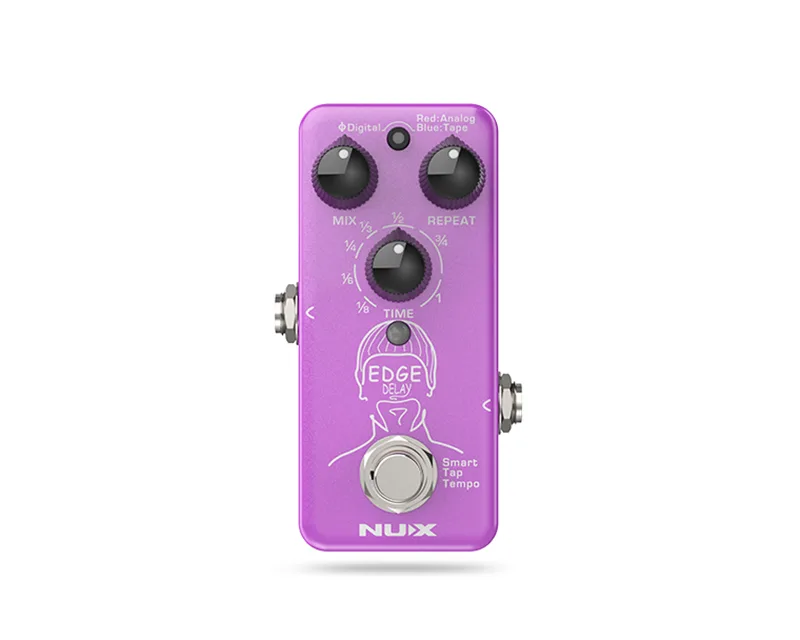


The NUX Edge Delay (NDD-3) is a mini delay pedal from NUX's Mini Core Series, packing three distinct delay types into a compact enclosure: Phi Digital Delay, Analog Delay and Tape Echo12. NUX describes the Phi mode as "a digital delay with a golden ratio 2nd repeat head" that "makes your guitar sounds more musical in nature," while the Tape Echo mode is "based on the legendary Space Echo machine"1. Delicious Audio's buying guide called it "The first stereo mini delay on the market," offering "three modes (Analog, Tape and Phi, which applies delays timed according to the golden rule)"3.
Three delay types in a mini pedal
The Edge Delay's three modes cover a wide range of delay flavors in one small box134:
- Phi Digital Delay: a digital delay with a second repeat head timed to the golden ratio, which NUX says makes the guitar sound more musical1
- Analog Delay: a conventional analog-style delay voice1
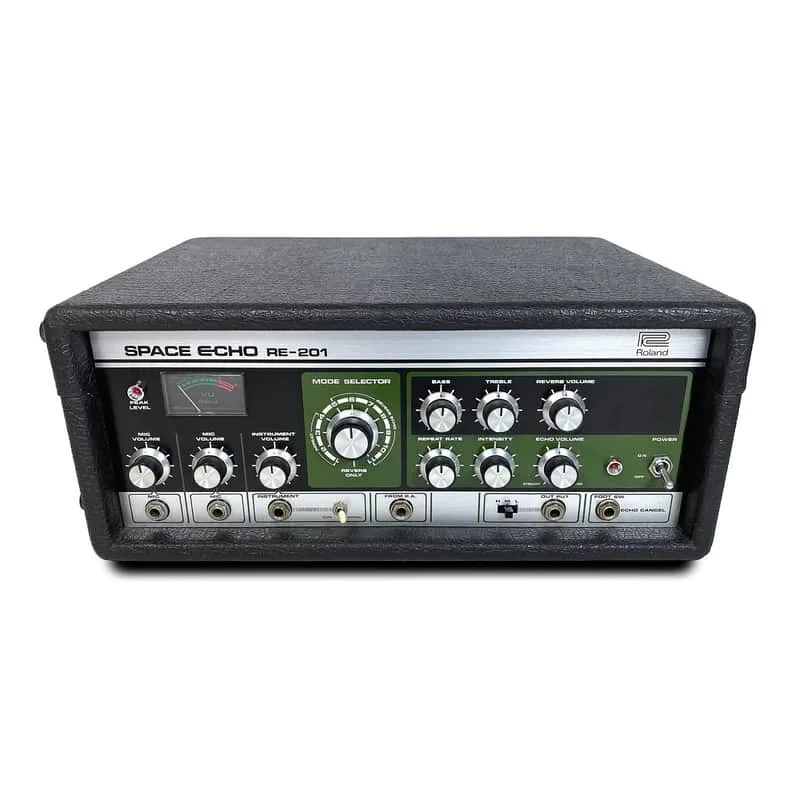
- Tape Echo: modeled on the Roland Space Echo machine1
Switching between them is done by pressing and holding the footswitch1. There is no separate mode knob or toggle, so the single switch handles both effect on/off and mode selection.
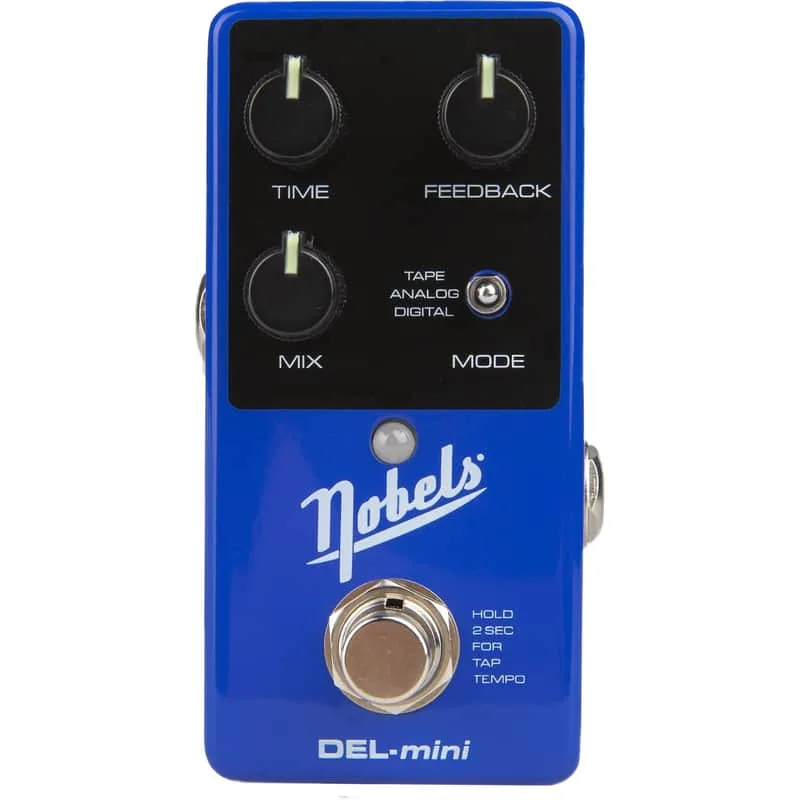
Guitar Pedal X noted in late 2024 that the Edge Delay "looks to have very similar if not an identical feature set to the earlier Nux Mini Edge Delay," comparing it to Nobels' own mini stereo delay, and observed that NUX "were the first to introduce Mini Stereo Pedals"5.
Power, stereo and signal specs
The pedal runs on 9V DC with a negative tip, using an optional ACD-006A adapter, and draws less than 100mA1. There is no battery option listed, so a power supply capable of at least 100mA is needed.
Current draw of up to 100mA means a low-output daisy-chain output may not be sufficient; give the Edge Delay its own supply slot rated for 100mA or more.
Stereo operation requires 1/4 inch TRS cables and selecting Stereo mode1. Delicious Audio confirms: "Stereo In/Out can be activated by using 1/4\" TRS cables"3.
| Specification | Value |
|---|---|
| DSP processing | 48KHz/32-bit1 |
| A/D, D/A sampling rate | 48KHz/24-bit1 |
| Dynamic range | 103dB1 |
| Input impedance | 1MΩ1 |
| Output impedance | 10kΩ1 |
| Dimensions | 194(L) x 51(W) x 53(H) mm1 |
| Weight | 175g1 |
| Firmware | Version 1.0 (macOS and Windows)1 |
The high input impedance of 1MΩ means the pedal sits comfortably after passive pickups without loading them, and the 103dB dynamic range gives it headroom for clean passages and loud playing alike1.
Where it sits in NUX's delay range
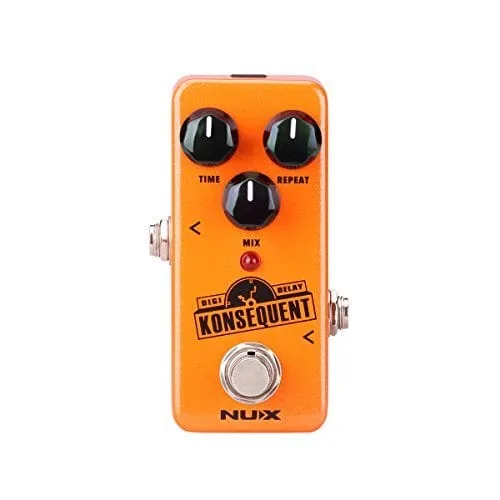
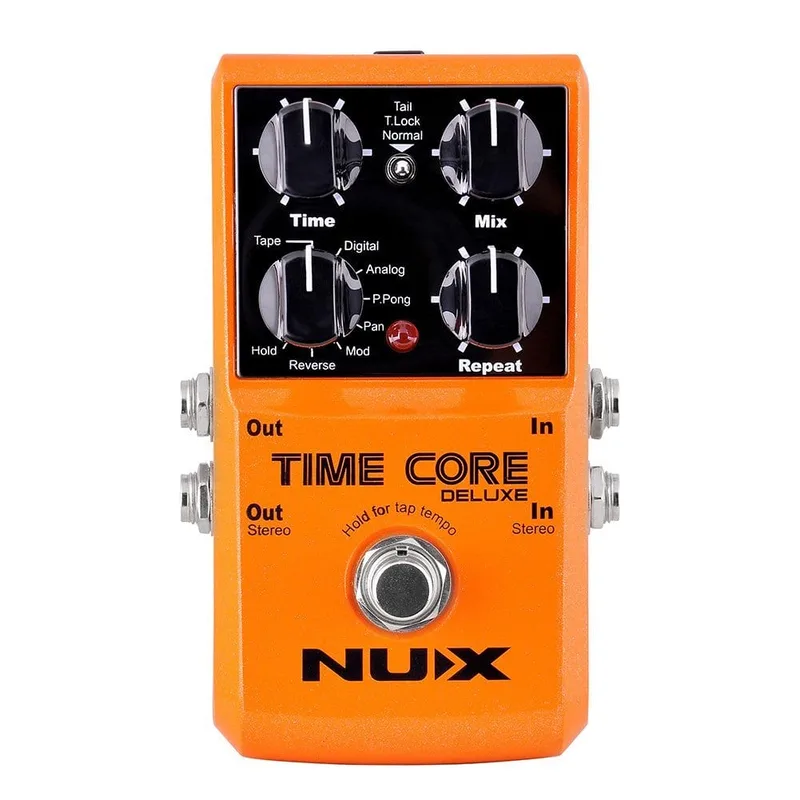
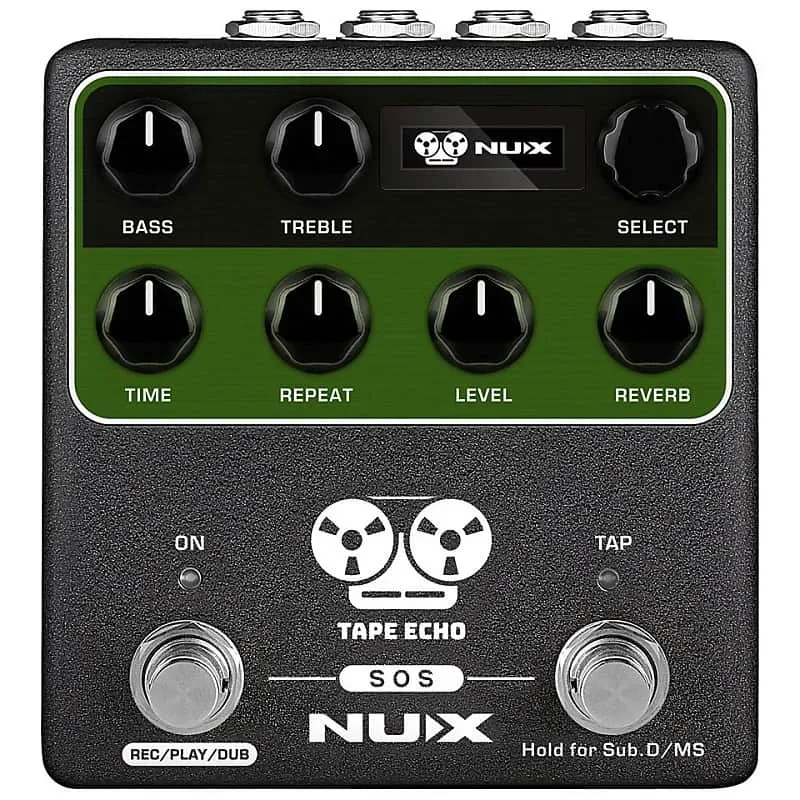
The Edge Delay is one of several delay pedals NUX offers, from the compact NUX Konsequen Mini-Delay to the larger NUX Time Core Deluxe and the NUX NDD-7 Tape Echo, which also draws on the Space Echo heritage12. Players looking for a simple mini stereo delay with three voices will find the Edge Delay covers digital, analog and tape-style echoes in one enclosure, while those wanting more modes or looper functions may look elsewhere in the delay pedal range.
Videos
NUX
Mike Hermans
Sean Pierce Johnson
Questions
How do I switch delay types on the NUX Edge Delay?
Press and hold the footswitch to cycle between the three delay types: Phi Digital Delay, Analog Delay and Tape Echo. There is no separate mode selector, so the footswitch does double duty, turning the effect on and off with a short press and changing the delay type when held. NUX describes this on the product page as the way to switch delay types.
Does the NUX Edge Delay work in stereo?
Yes. The pedal supports stereo input and output, activated by using 1/4 inch TRS cables and choosing Stereo mode. NUX notes this on the product page, and Delicious Audio's buying guide called it the first stereo mini delay on the market when it appeared.
Does the NUX Edge Delay have trails?
It can. The pedal offers a choice between True-bypass and Buffer-bypass (Trails). In buffer mode the repeats continue and fade naturally after you switch the pedal off, while true bypass removes it entirely from the signal path when off.
What power does the NUX Edge Delay use?
It runs on 9V DC with a negative tip, using an optional ACD-006A adapter. Current draw is less than 100mA. There is no battery option mentioned, so plan a power supply slot that can supply at least 100mA.
How do I get infinite feedback on the Edge Delay?
In Tape Echo mode, tweak the time knob quickly from max to min. NUX says this produces infinity feedback, where the repeats build on themselves rather than fading. It is a hands-on trick rather than a switch or a dedicated knob.
Which NUX series is the Edge Delay part of?
The Edge Delay belongs to NUX's Mini Core Series of compact stompboxes, as Delicious Audio noted in its writeup of the pedal.
Sources (5)
- Edge Delay, NUX Audio, 2025-08-05
- Nux Edge Delay (Mini Stereo Echo), Delicious Audio, 2022-12-28
- The 3 Best Delay Pedals Per Type, In 2023, Delicious Audio (delicious-audio.com), 2023-08-25
- Mini Core Series Stompboxes, NUX Audio, 2025-08-18
- Guitar Pedal X, Guitar Pedal X, 2024-11-26