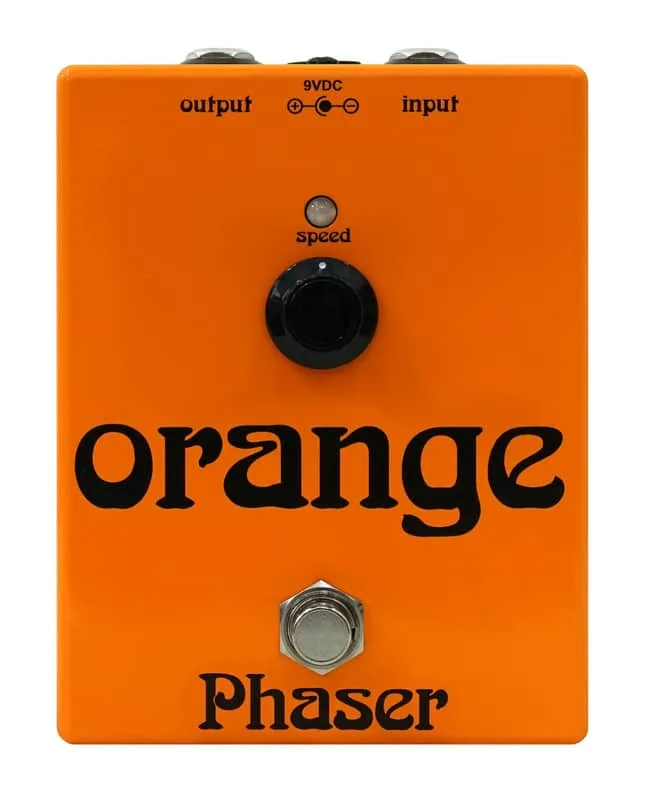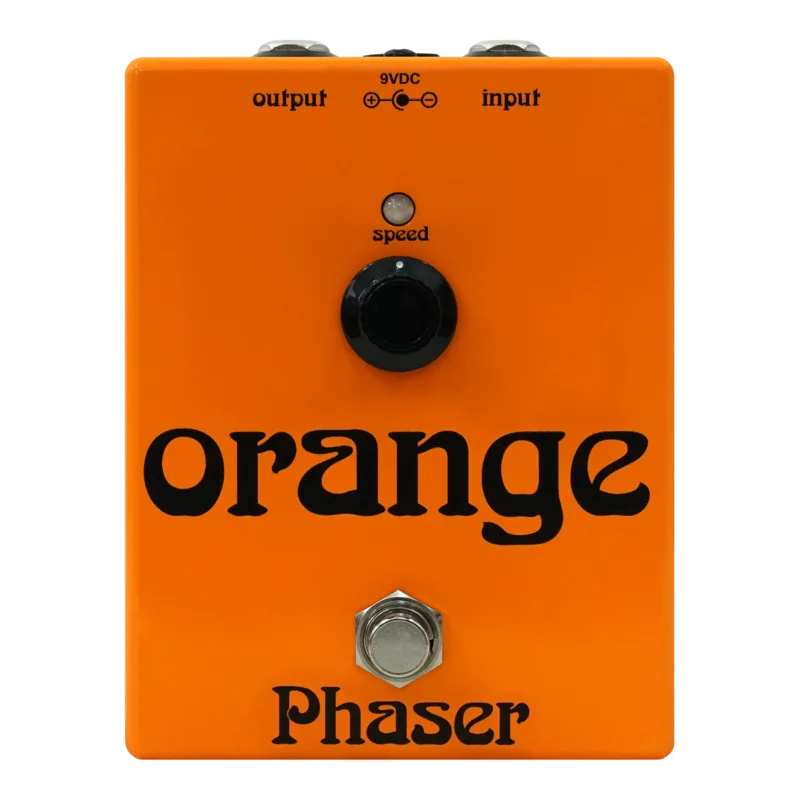
The Orange Phaser is a single-knob, four-stage phaser pedal from Orange, the British amp builder. It is a modern recreation of the company's classic "Phazer" from the early 1970s, built around what Orange calls "precision engineered four-stage circuitry rebirthed from the original hand-drawn schematics"1. Orange positions it as a pedal that does one job and only that job, adding what the maker describes as "a nuanced, warming spin to your sound with the maximum simplicity"1.
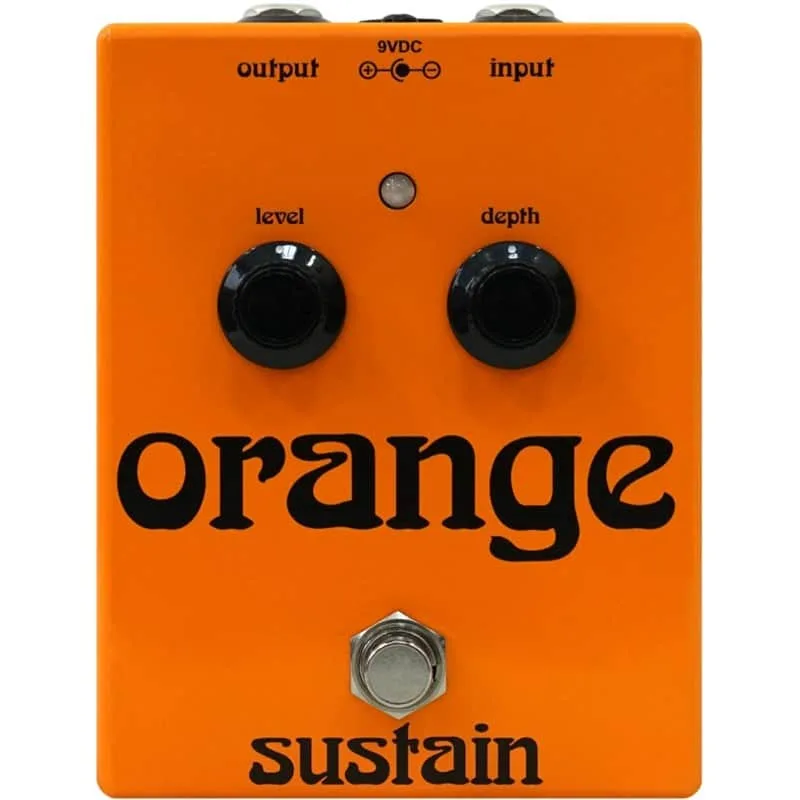
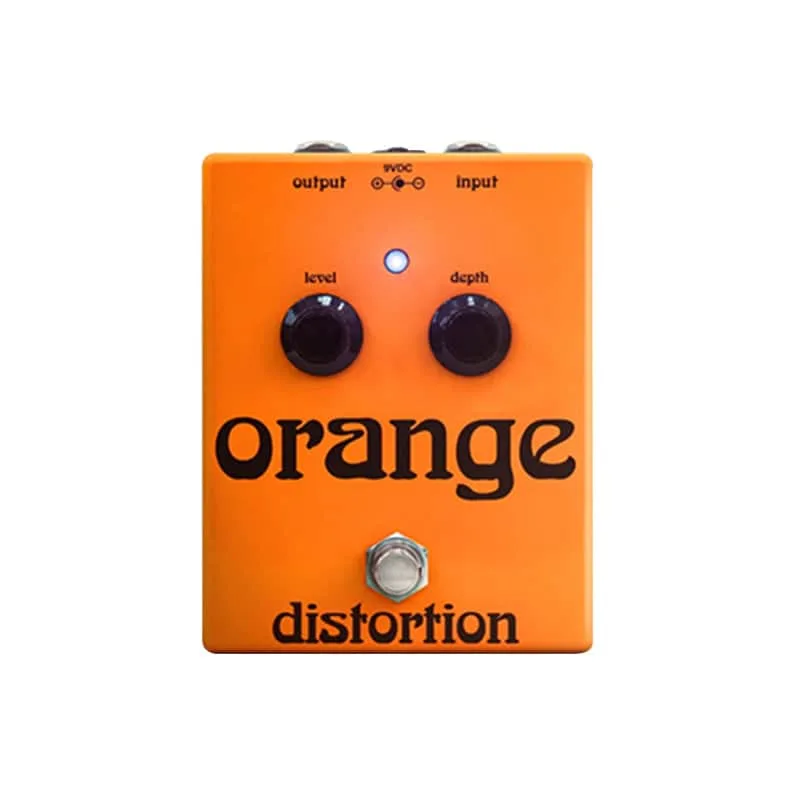
It is one of a set of three same-size recreations of Orange's 1970s pedals, alongside the Phazer, Sustain and Distortion originals, designed by Orange designer Ade Emsley2. Guitar World's reviewer, Trevor Curwen, notes the family resemblance to the most famous pedal of this type: "there are similarities between that unit and this new Orange pedal, which is likewise a four-stage phaser," referring to the MXR Phase 902.
A single-knob four-stage phaser
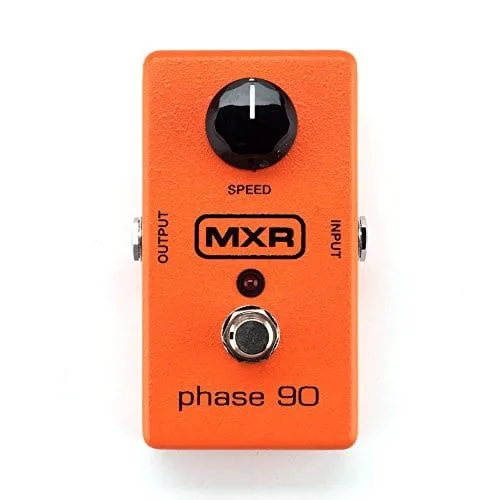
A phaser splits your signal and shifts the phase of one copy through a series of stages, then recombines the two so notches sweep up and down the frequency range. The number of stages shapes how pronounced that sweep is, and as EarthQuaker Devices notes, "the number of stages varies drastically from model to model"3. Four stages is the classic count for a guitarist's phaser: MusicRadar's Trevor Curwen writes that "a single-knob configuration, as on MXR's Phase 90, may well be the classic design for a guitarist's phaser"4, and the Phase 90 itself is described as a four-stage phaser with one knob controlling the rate5.
The Orange Phaser sits squarely in that tradition. Where other pedals complicate things, some offering switchable stage counts, the Orange keeps the stage count fixed at four and the control surface to a single dial. Delicious Audio's Paolo De Gregorio called it "a set-it-and-forget-it design made for ultra simplicity"6.
The control and footswitch
The control layout is about as simple as a pedal gets:
| Control | What it does |
|---|---|
| Speed dial | A single adjustable dial taking the tone from slow, woozy sweeps to fast, choppy stabs1 |
| Footswitch | Engages the effect1 |
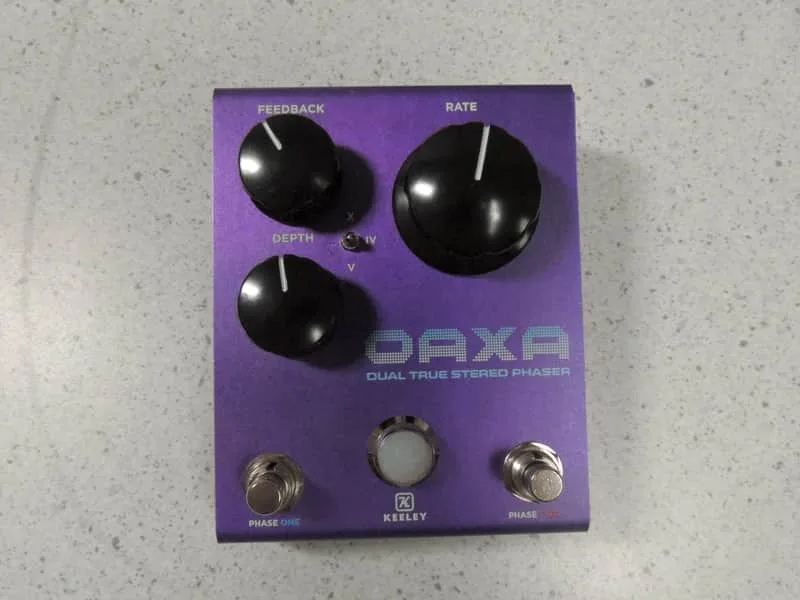
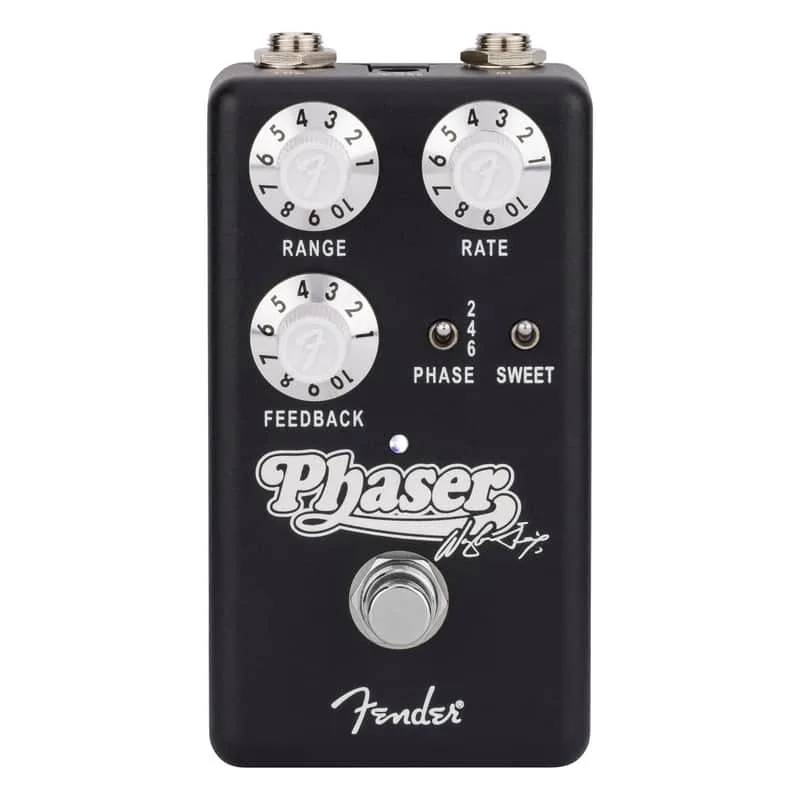
That is the whole interface. There is no depth control, no level control, no mode switch. Delicious Audio described the range of the one dial as taking "your tone from slow, woozy sweeps to fast, choppy stabs, via kaleidoscopic whirling"6. Players who want more shaping options will find them elsewhere: the Keeley Electronics Oaxa Dual True Stereo Phaser offers a Stages knob with 10-stage, 4-stage and Uni-Vibe settings, and the Fender Waylon Jennings Phaser switches between two, four and six stages.
Power
The Orange Phaser runs from a 9 or 12V DC adapter with a center-negative plug, drawing 17 mA at 9V1. That is a light enough draw that it will sit happily on most isolated power supplies alongside other pedals.
The pedal can run from battery power, but Guitar World's reviewer notes that the battery clip is an after-market addition soldered into place, not a factory-fitted compartment2. Plan on powering it from a DC supply.
The 1970s Phazer and the Vintage Series
The Orange Phaser draws on Orange's classic "Phazer" from the early 1970s, a pedal originally spelled with a z1. It is one of a set of three same-size recreations of Orange's 1970s pedals, the Phazer, Sustain and Distortion, designed by Orange's Ade Emsley2.
The new version is not an exact clone. Guitar World's review states plainly that "these UK-made pedals aren't exact clones"2. Instead, the circuit is based on the same 4-stage design but with improvements to bring it to modern standards, including lower noise: Delicious Audio notes that where some phasers can be really hissy, the Orange has reduced noise on the input compared with the classic 1970s counterparts, thanks to a JFET input buffer6.
The look follows the original too. The pedal keeps the same form factor and minimalist artwork as the vintage unit, in what Orange describes as a "tank-strength aluminium chassis, block colour, and art nouveau typography"1.
What reviewers said
Guitar World's Trevor Curwen reviewed the pedal favorably, concluding that "Orange is rewarded for its trip into the archives with a super-simple phaser to rival counterparts from MXR and EHX"2.
"And that's where the Orange Phaser excels, with a single adjustable dial to take your tone from slow, woozy sweeps to fast, choppy stabs, via kaleidoscopic whirling and insistent krautrocking pulses."
De Gregorio's verdict was that the pedal "excels as a specialist pedal that does exactly one job with zero intrusions on the swirl," and Delicious Audio added it to their article about the best phaser pedals6.
How it compares
Against other four-stage, single-knob designs, the Orange Phaser's distinctions are its UK construction, its true bypass switching, and its vintage lineage. The Retro-Sonic 4-Stage Analog Phaser takes a similar four-stage analog approach but adds Speed, Depth and Level controls. The Fender Phaser Reissue is another analog take on a vintage design. For players who want the swirl with more knobs, the Moog MF-103 12-Stage Phaser and the Maxon PH-350 Rotary Phaser offer more elaborate control sets, though the Maxon requires an AC adapter with no battery option216.
News
Questions
Is the Orange Phaser analog?
Yes. Orange describes it as precision engineered four-stage circuitry rebirthed from the original hand-drawn schematics of the early-1970s Phazer, and the Vintage Series version adds a JFET input buffer for lower noise than the 1970s originals. It is a straightforward analog phaser rather than a digital model.
Can the Orange Phaser run on a battery?
Yes. Guitar World's reviewer notes that all three Vintage Series pedals can run from battery power, though the battery clip is an after-market addition soldered into place rather than a factory-fitted compartment. Most players will simply power it from a 9 or 12V DC center-negative supply.
Is the Orange Phaser true bypass?
Yes. Orange lists true bypass among the pedal's features, so with the effect switched off your signal passes through without the circuit coloring it. Delicious Audio's write-up makes the same point about the Vintage Series Phaser's true-bypass design.
How many stages does the Orange Phaser have?
Four. Orange describes precision engineered four-stage circuitry taken from the original hand-drawn schematics, which puts it in the same camp as the MXR Phase 90, the classic single-knob four-stage design. Some other phasers offer switchable stage counts, but the Orange keeps it fixed.
Where is the Orange Phaser made?
In the United Kingdom. Guitar World's review describes the Vintage Series recreations as UK-made pedals, and Delicious Audio notes the pedal's proudly British construction. Orange itself is a British amplifier company.
Sources (6)
- Vintage Pedal, Orange Music Electronic Co Ltd
- Orange Phaser review, Guitar World, 2022-12-01
- 5 Reasons Everyone Needs a Phaser, EarthQuaker Devices, 2023-02-21
- DOD Phasor 201 review, MusicRadar, 2015-02-06
- Meet your maker: MXR at 40, MusicRadar, 2014-12-04
- Orange Vintage Series Phaser, Delicious Audio, 2022-11-07