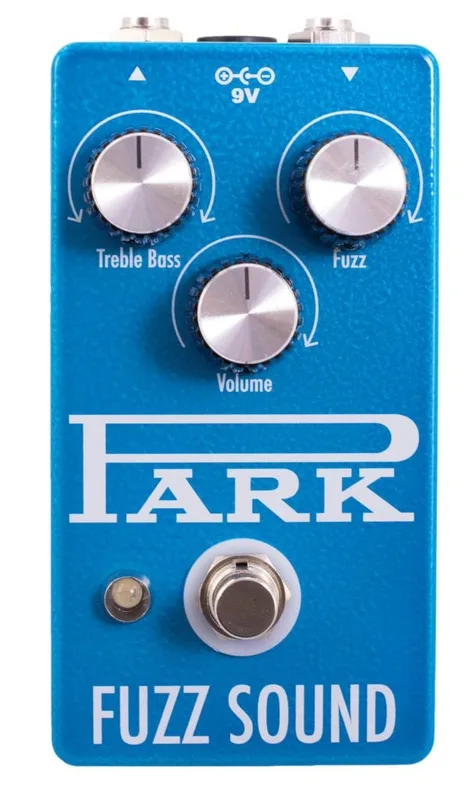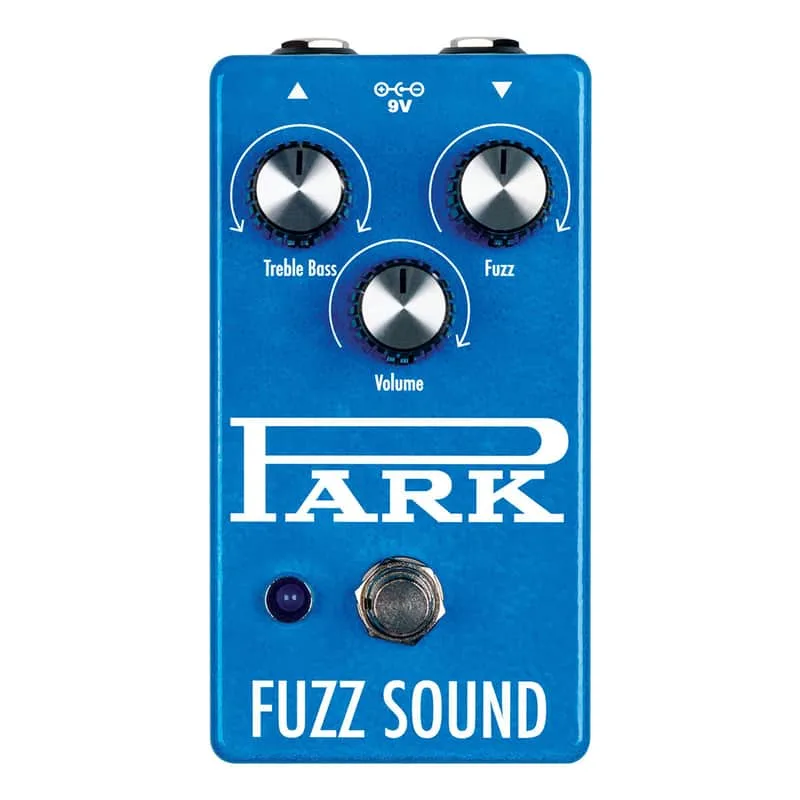


The Park Fuzz Sound is a British fuzz pedal sold under the Park brand from roughly the late 1960s until the mid-1970s. Despite the Park name on the box, it was a rebranded Sola Sound product: the same London builder that made the Tone Bender line supplied the circuit, and during the late 1960s Park Fuzz Sound pedals came with Tone Bender MKIII circuits in MKIII-type enclosures1. Park itself was Jim Marshall's alternative company back in the 1960s, born from Marshall Amplification and originally started by Jim Marshall himself, and it produced only a select few effects pedals alongside its amps, of which the Fuzz Sound stood out above the rest23.
A Tone Bender MKIII in all but name
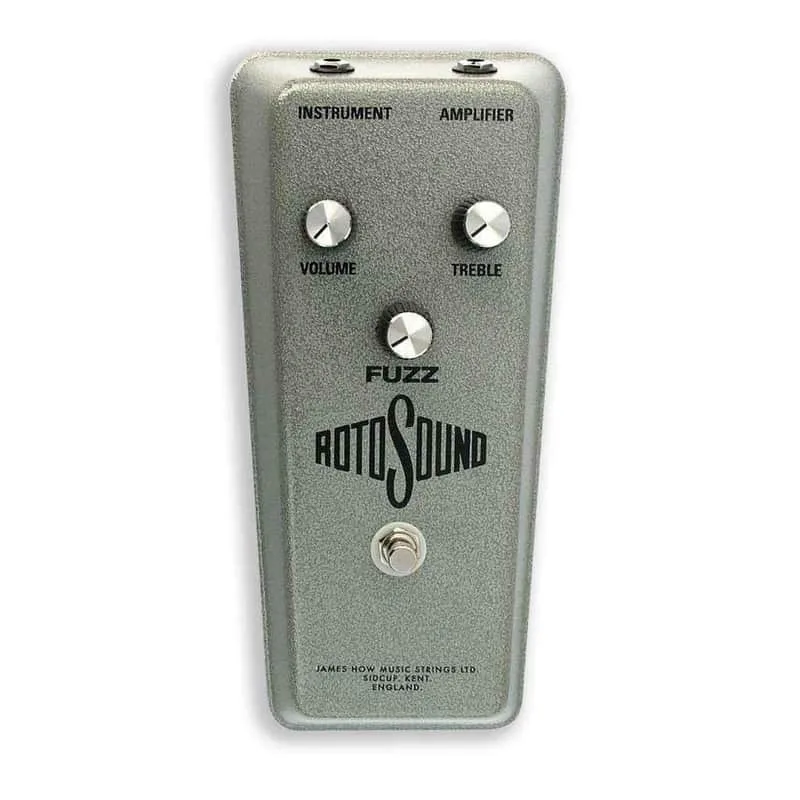
The question of whether the Park Fuzz Sound is a Tone Bender clone has a simple answer: it is the same pedal under a different name. The MKIII Rotosound Fuzz Boxes were built with the same electronic circuits that Sola Sound was also supplying to companies including Park concurrently, and that circuit was ultimately Sola Sound's fuzz circuit that replaced the MKII6. Aion FX lists the Park Fuzz Sound by Park Amplification alongside the Vox Tone Bender as variants of the Tone Bender Mk III family7. Premier Guitar's reviewer put it most directly:
"The original Park Fuzz, a Tone Bender Mk III in all but name, is one of the most versatile Benders models"8
JHS Pedals likewise describes the Park Fuzz Sound as a clone of the Tone Bender MK39. For a player, that means the Park Fuzz Sound belongs to the three-transistor germanium fuzz family of the late 1960s rather than the two-transistor MKII style. On how that circuit behaves, the technical analysis at Guitar FX Layouts notes that the early MKIIIs sound fuzzy and choppy10.
MKIII and MKIV versions
Surviving original Park Fuzz Sounds fall into two broad groups, and the differences are mostly about controls and enclosure rather than circuit family1:
| Version | Approximate period | Controls | Enclosure |
|---|---|---|---|
| Earliest MKIII | Late 1960s | Two knobs: volume and tone, fuzz fixed at maximum | MKIII-type enclosure1 |
| Later MKIII | Late 1960s to early 1970s | Three knobs, identical to the three-knob Tone Benders Sola Sound made for Vox and Rotosound | MKIII-type enclosure1 |
| MKIV-era | Early-to-mid 1970s | Three knobs | Pressed steel enclosure of the type Sola Sound used for the Tone Bender MKIV1 |
Date codes in surviving pedals confirm the pressed steel MKIV-style version was built until the mid-1970s1. The transistors in these MKIII and MKIV Tone Benders were almost always unmarked, probably a British type made by STC, and their exact specifications will likely never be known1.
The controls
The original three-knob Park Fuzz Sound carried the same control set as the three-knob Tone Benders Sola Sound was building for other companies at the same time1. The EarthQuaker Devices reissue keeps the three-knob arrangement, and its manual describes each control plainly11:
| Control | What it does |
|---|---|
| Fuzz | Gain control: more fuzz to the right, less to the left11 |
| Treble/Bass | Tone control: thicker tones to the right, brighter to the left11 |
| Volume | Level control: louder to the right, quieter to the left11 |
On the reissue, the Tone control range was increased so the fuzz goes from warm and mellow to biting, and Delicious Audio's buying guide notes the Fuzz knob has twice the gain range of the original412.
Sola Sound, Gary Hurst and Park
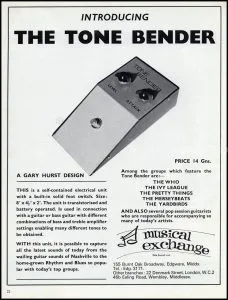
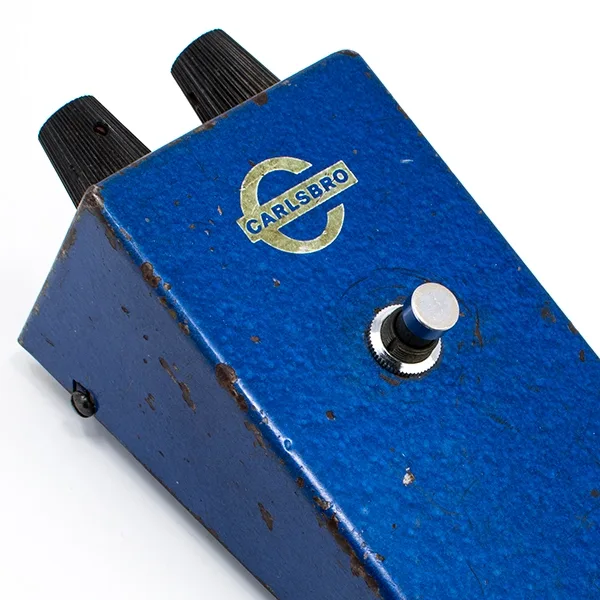
The circuit lineage traces back to Gary Hurst, a former Vox technician who began experimenting with fuzz circuits in 1964 after Tom Jennings of Vox was not interested; Hurst teamed with the Macari brothers, whose Sola Sound went on to build the Tone Bender line13. Hurst later recalled his own designs having been rebranded for a number of companies, which included Park1. Sola Sound supplied the same three-knob fuzz to several brands at once: the Carlsbro Fuzz of the same period was identical to the fuzz boxes Sola Sound was supplying to Park and Vox, and to the Tone Bender MKIV sold under Sola Sound's own name14. Park's own few effects were mostly generic variations of wah pedals, which makes the Fuzz Sound the standout of the brand's pedal output3.
The EarthQuaker Devices version
In 2014, Park Amplifiers and EarthQuaker Devices teamed up to bring a faithful recreation of the original Park Fuzz Sound to market, the first in a collaboration to produce effect pedals consistent with the Park brand4. The reissue, sold as a Vintage Germanium Fuzz Tone, was hand-made one at a time in Akron, Ohio, and sold through EarthQuaker Devices dealers and distributors worldwide4. Its full specifications are on the EarthQuaker Devices Park Fuzz Sound page; the maker's own figures are:
- Circuit: Faithful recreation of the original, with NOS germanium transistors matched for consistency from pedal to pedal411
- Fuzz range: Wider than the original, more than twice the range11
- Bypass: True bypass with electronic relay-based switching; audio will not pass without power11
- Power: Nine volt adapter jack with standard polarity, 3 mA current draw, suited to isolated power supplies411
- Impedance: 100 kΩ input, under 1 kΩ output11
EarthQuaker describes the reissue as retaining the original sounds while adding modern upgrades to improve performance, reduce extraneous background noise and add versatility, in a smaller pedalboard-friendly size411. Premier Guitar's reviewer found it delivers great '60s-style germanium fuzz tones with a little extra gain and range, an effective tone control and colorful overtones, and noted it is less gainy and hectic than the Mk II, though at its highest gain levels the new version has a bit more sizzle than an original8.
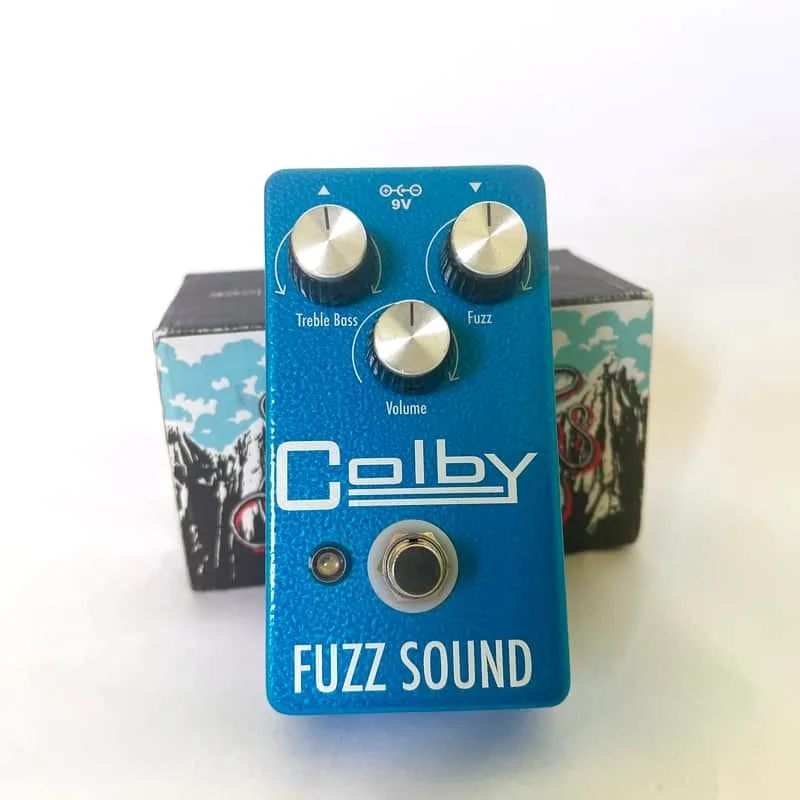
The EarthQuaker Devices Park Fuzz Sound was discontinued as of September 16, 20255, and EarthQuaker lists it among products no longer in production15. EarthQuaker's later Colby Fuzz Sound, also based on the original Park Fuzz Sound, carries the line forward; see the EarthQuaker Devices Colby Fuzz Sound page. MusicRadar's Trevor Curwen notes the original Park Fuzz Sound from the 1960s was itself a branded version of a Tone Bender2.
Videos
ProGuitarShopDemos
ProGuitarShopDemos
ProGuitarShopDemos
News
Questions
Who made the original Park Fuzz Sound?
The original Park Fuzz Sound was a rebranded Sola Sound product, built by the London firm that also made the Tone Bender line. Gary Hurst, the former Vox technician who designed the first Tone Bender, recalled his designs being rebranded for several companies, including Park, Jim Marshall's alternative amplifier brand in the 1960s.
Is the Park Fuzz Sound a Tone Bender clone?
Not a clone so much as the same pedal under another name. From the late 1960s, Park Fuzz Sound pedals were built with Tone Bender MKIII circuits, the same circuit Sola Sound was supplying to Vox and Rotosound at the same time. Premier Guitar's reviewer called the original Park Fuzz a Tone Bender Mk III in all but name.
Is the Park Fuzz Sound still made?
The original Park Fuzz Sound was built from roughly the late 1960s until the mid-1970s, confirmed by date codes in surviving pedals. The EarthQuaker Devices reissue, introduced in 2014, was discontinued as of September 16, 2025, and EarthQuaker lists it among products no longer in production.
Is the EarthQuaker Park Fuzz Sound true bypass?
Yes. EarthQuaker Devices states that the pedal is true bypass and uses electronic relay-based switching. One practical consequence: audio will not pass through the pedal when it is unpowered, unlike a mechanically switched true bypass pedal.
What power does the Park Fuzz Sound use?
The EarthQuaker Devices version runs on a nine volt adapter jack with standard polarity and draws only 3 mA, a low current draw that suits isolated power supplies. The original 1960s and 1970s Park units were battery-powered fuzz boxes of their era.
What is the difference between the MKIII and MKIV Park pedals?
The earliest MKIII-style Park Fuzz Sounds had only two knobs, volume and tone, with the fuzz amount fixed at maximum; later MKIII units gained a third knob. By the early-to-mid 1970s the Park Fuzz Sound moved into the same pressed steel enclosure Sola Sound used for its Tone Bender MKIV, and was built that way until the mid-1970s.
Sources (15)
- Park Fuzz Sound • Fuzzboxes, Fuzzboxes.org, 2021-06-03
- Earthquaker Devices Colby Fuzz Sound review, MusicRadar, 2016-03-15
- Colby Fuzz by EarthQuaker Devices, RockBoard PedalPedia, 2026
- Park and EarthQuaker Launch New Park Fuzz Sound Pedal, Premier Guitar, 2015-01-13
- Guitar Pedal X, Guitar Pedal X, 2025-09-26
- Rotosound Fuzz Box • Fuzzboxes, Fuzzboxes.org, 2021-05-19
- Phobos Germanium Fuzz / Tone Bender Mk. III, Aion FX, 2020-07-03
- Quick Hit: EarthQuaker/Park Fuzz Sound Review, Premier Guitar, 2015-10-27
- MARSHALL'S GREATEST PEDALS, JHS Pedals
- Guitar FX Layouts: DAM Fuzzsound, Guitar FX Layouts (tagboardeffects.blogspot.com), 2017-07-27
- Park Fuzz Sound Vintage Germanium Fuzz Tone, EarthQuaker Devices
- 22 Of The Best Tone Bender Fuzz Pedals In 2024, Delicious Audio, 2024-02-13
- Fuzz pedals: how the wildest drive of all conquered the radio, Guitar World, 2023-06-14
- Carlsbro Fuzz-Tone • Fuzzboxes, Fuzzboxes.org, 2021-05-12
- Legacy Products, EarthQuaker Devices