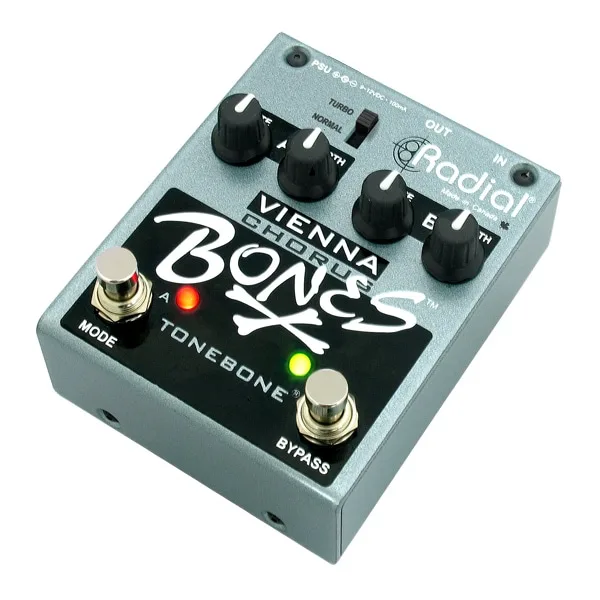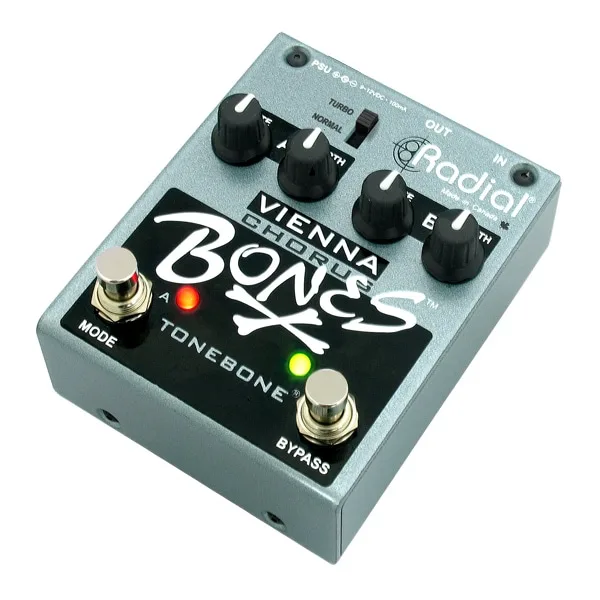


The idea behind the two channels is simple: set one up as a subtle choral effect for rhythm playing and the other as an exaggerated effect for soloing or special effects, then move between them on the fly1.
Two channels, Turbo mode, and the Leslie trick
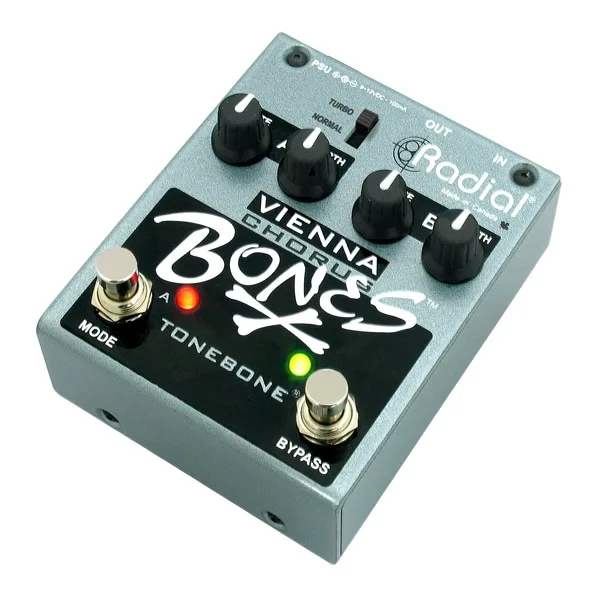
The Vienna gives you two independent chorus channels, each with its own rate and depth controls, so you can dial in two very different sounds and recall either one as a preset21. A footswitch transitions between them, and Radial describes the range as moving from a moderate choral sound to an intense vibrato with one stomp2. That instant chorus-to-vibrato jump is what Radial says mimics the effect of a Leslie rotating speaker2.
A slider switch on the pedal selects between Normal and Turbo settings, which affect the intensity of the modulation3. Turbo mode introduces a proprietary oscillator waveform frequency while increasing the range, which Radial billed as producing extreme chorusing effects21.
| Control or switch | What it does |
|---|---|
| Rate and depth knobs, channel 1 | Set speed and intensity of the first chorus program21 |
| Rate and depth knobs, channel 2 | Set speed and intensity of the second chorus program21 |
| Footswitch | Moves between the two programs, from moderate chorus to intense vibrato2 |
| Slider switch | Selects Normal or Turbo, changing modulation intensity3 |
Premier Guitar's 2026 review found the pedal covers a wide range of modulation territory, from a pleasing, hazy swirl on slow settings to liquid, delightfully queasy, rotary speaker-like sounds that the reviewer said "popped out of the mix in brilliant detail," with slow settings often evocative of tape warble3.
"The dual-mode Vienna Chorus is representative of just how successful that effort has been, and it's an exceptional chorus."
Power, enclosure and setups
The Vienna runs on standard 9-volt power, using a Boss-style adapter and a connector suited to the DC power bricks common on multi-pedal boards23. There is no 9-volt battery option, and the power supply is not included, so you need your own adapter or brick output23. The enclosure is built tough, with 14 gauge steel and a baked enamel finish in a compact footprint21.
No battery operation. The Vienna requires a standard 9V power supply, and none is included in the box23.
Radial suggests a few ways to set it up2:
- Normal pedalboard: guitar into the Vienna, then out to your amplifier, with overdrive or distortion pedals placed before the chorus for greater effect.
- Dual amp stage setup: the signal is split after the Vienna using an ABY switcher such as Radial's Twin City, so the pedal itself works in a mono signal path.
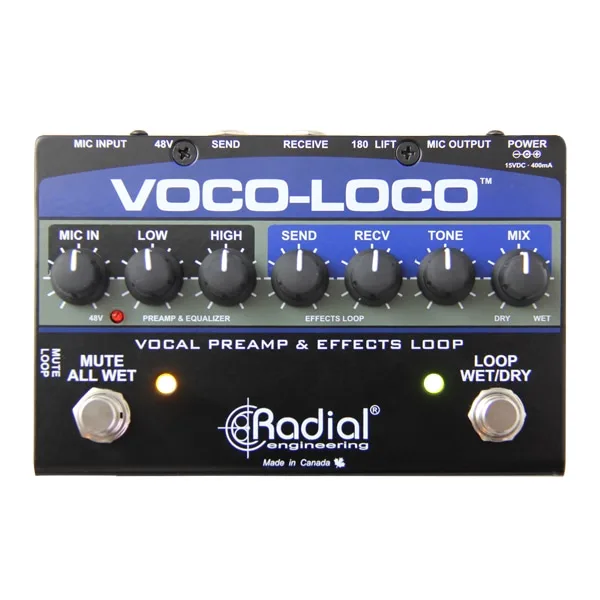
- Mic'd instruments: combining the Vienna with a Radial Voco-Loco makes it possible to add guitar effects to the signal path of mic'd instruments such as sax or trumpet.
Premier Guitar's reviewer tested it through a clean blackface Fender Tremolux with a Danelectro Hodad 12-string and a Rickenbacker 330 run through a JamMan, plus a Gibson Les Paul into a 1966 Fender Bassman on recorded tracks3.
The MN3007 chip behind the circuit
The chip is socket-mounted for easy replacement1, a practical touch given the age of the parts. GuitarPCB's technical analysis describes the MN3007 core as a Bucket Brigade Delay circuit with an isolated triode and a differential output4.
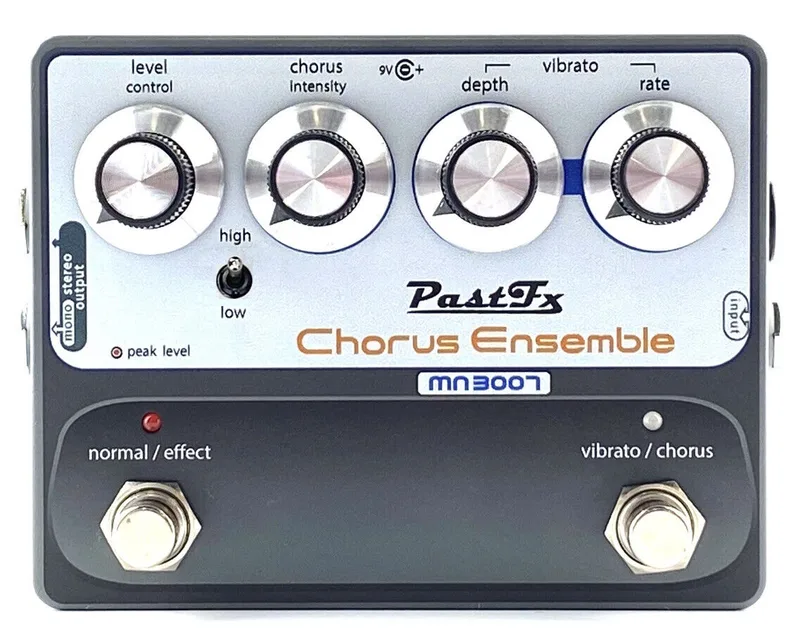
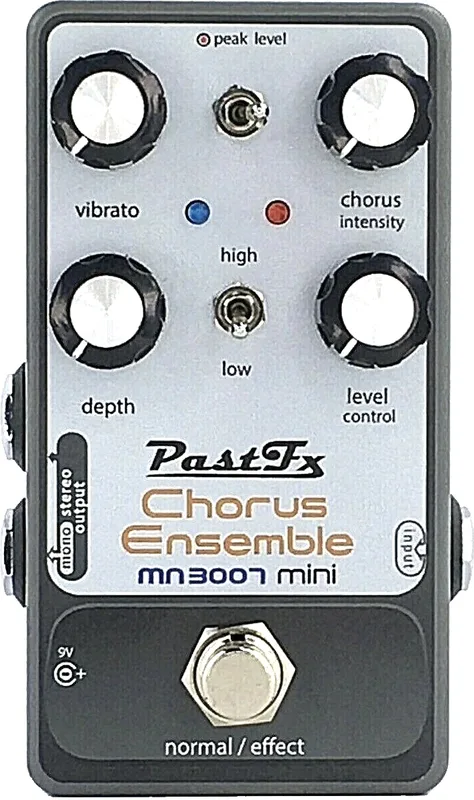
The MN3007 also appears in other chorus circuits, including the PastFx Chorus Ensemble MN3007 and its Mini version, both of which incorporate "Noise Killer" circuitry. One caution for anyone building or repairing around this chip: builders on the Guitar FX Layouts blog traced pedals with no effect and overheating to fake or faulty MN3007 chips bought on eBay, with measurements matching the MN3207 instead5.
Videos
samashop
docSanchezFX
gearwire
Questions
Is the Radial Bones Vienna analog or digital?
It is fully analog. The circuit is built around a new-old-stock Panasonic MN3007 bucket brigade chip, the same type of delay chip used in vintage analog chorus pedals. Radial described it as a warm, old-school analog chorus, and Premier Guitar noted that the chip gives the pedal a genuine analog chorus pedigree.
Is the Radial Bones Vienna still in production?
No. Radial Engineering's product page states the pedal has been discontinued and is no longer shipping. It was announced in January 2010 and sold at a $159.99 street price at launch, so finding one today means looking at the used market.
Does the Radial Bones Vienna come with a power supply?
No, the power supply is not included. The pedal runs on a standard 9-volt supply, the Boss-style adapter type, and uses 9V DC powering to suit common pedalboard power bricks. There is no 9-volt battery option, so you need an adapter or an isolated brick output to run it.
What does turbo mode do on the Vienna?
Turbo mode introduces a proprietary oscillator waveform frequency while increasing the range of the modulation, which Radial described as producing extreme chorusing effects. A slider switch on the pedal moves between Normal and Turbo settings, and Premier Guitar found the switch affects the intensity of the modulation.
Can the Vienna sound like a Leslie rotating speaker?
Radial says the pedal mimics a Leslie rotating speaker by letting you instantly transition between a moderate chorus and an intense vibrato with the stomp of a footswitch. Premier Guitar's reviewer found the liquid, delightfully queasy, rotary speaker-like sounds popped out of the mix in brilliant detail.
Can you run the Vienna on a stereo or dual amp rig?
The Vienna itself uses a mono signal path. For a dual amp stage setup, Radial recommends splitting the signal after the pedal with an ABY switcher such as its Twin City, so each amp gets its own feed from the chorus output.
Sources (5)
- Radial Releases Bones Vienna Dual-Mode Analog Chorus, Premier Guitar, 2010-01-12
- Bones Vienna, Radial Engineering, 2021-03-17
- Radial Engineering Bones Vienna Chorus Pedal Review, Premier Guitar, 2010-10-20
- Bucket Brigade Devices: MN3007, GuitarPCB
- Guitar FX Layouts: Boss CE-2, Guitar FX Layouts (tagboardeffects.blogspot.com), 2017-05-21