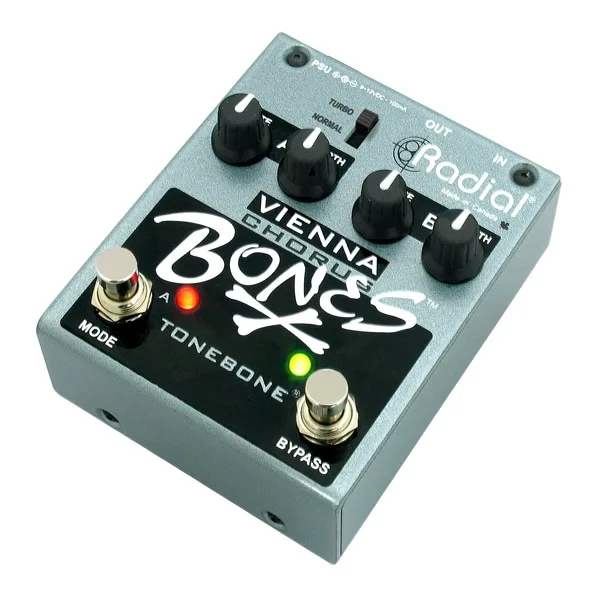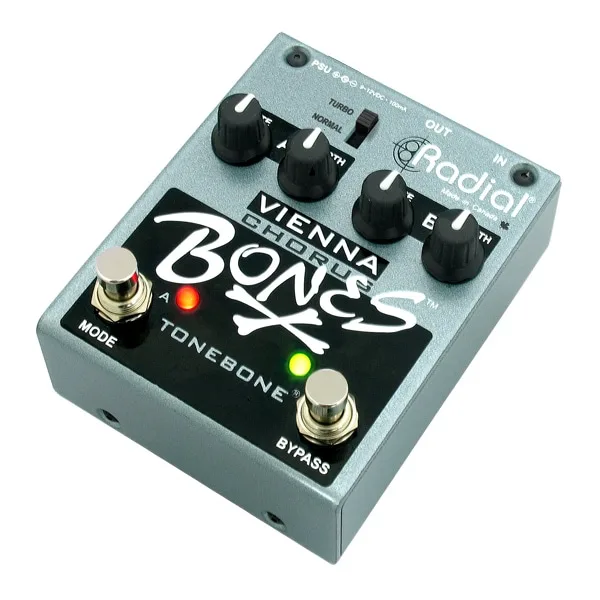


The Radial Bones Vienna Chorus is a dual-mode analog chorus pedal from Radial Engineering, announced in January 2010 and shipped that month at a $159.99 street price1. Radial describes it as a "warm sounding old-school analog chorus in a compact, two channel pedal," built around a new-old-stock Panasonic MN3007 bucket brigade chip2. The pedal is now discontinued and no longer shipping2.
The idea behind the two channels is simple: instead of one chorus setting, you get two, each with its own controls, so you can keep a subtle chorus for rhythm playing and switch to a more exaggerated effect for solos or special effects with a single stomp1. Premier Guitar's reviewer called it "an exceptional choru[s]" and found the dual-mode design flexible enough to move from subtle to psychedelic3.
The Bones Vienna has been discontinued and is no longer shipping2. It also cannot run on a 9-volt battery: it requires a standard Boss-style 9-volt adapter3.
A dual-mode analog chorus
Radial announced the Vienna Chorus as an analog chorus pedal with dual mode functionality, letting a guitarist "transition between a subtle choral effect for rhythm" and an exaggerated tone for soloing1. The company's president, Peter Janis, said at launch that "top end players prefer the 'tone and feel' of vintage analog chorus pedals," which is why Radial built the Vienna around genuine analog parts rather than digital processing1.
The pedal's warm character comes from its bucket brigade chip, the component at the heart of any analog chorus. Bucket brigade chips pass your signal along a chain of tiny capacitors, step by step, and modulating that delay rate is what creates the chorus effect. Radial says the Vienna's "distinctive warm tone is captured by way of a new-old-stock (NOS) Panasonic MN3007, circa 1976 bucket brigade chip"2.
Two channels and two footswitches
The Vienna carries two footswitches. One engages the effect, while the other switches between the pedal's two modes3. Radial describes the result as letting you "instantly transition between a moderate choral to an intense vibrato with the stomp of a footswitch"2, and the launch announcement noted the pedal can be bypassed, activated and toggled between channels quickly for on-the-fly effects1.
Each channel has its own controls:
| Control | What it does |
|---|---|
| Rate (per channel) | Sets the speed of the modulation on that channel2 |
| Depth (per channel) | Sets the intensity of the modulation on that channel2 |
| Slider switch | Moves between Normal and Turbo settings, affecting modulation intensity3 |
| Footswitch 1 | Engages or bypasses the effect3 |
| Footswitch 2 | Switches between the two channels/modes3 |
Because both channels have individual rate and depth controls, you can set up two genuinely different sounds, for example a slight chorus for rhythm parts and a deeper, slower setting for leads21.
What Turbo Mode does
Turbo Mode is the Vienna's second personality. Radial says turbo mode "introduces a proprietary oscillator waveform frequency while increasing the range," which lets you transition from a slight choral effect to "extreme warble, tremolo or vibrato"2. At launch the company described it as producing extreme chorusing effects1. Premier Guitar's reviewer found the Normal and Turbo settings affect the intensity of the modulation, with two knobs dedicated to each mode controlling modulation depth and speed3.
The MN3007 chip and the pedal's history
The Panasonic MN3007 is the same bucket brigade chip family used in classic chorus pedals of the late 1970s and early 1980s. Analog Mike of aNaLoG.MaN notes that "the 3007 chip was used in the original pedals in the late 1970s and very early 1980s and allows higher levels and less noise without clipping your signal"4. That low-noise reputation is why the chip was sought after: Radial's launch announcement explained that low-noise versions such as the MN3007 "ha[ve] not been made for years" and had to be scrounged from the market for production, with the company reporting "thousands in stock" at the time1. The chip in the Vienna is socket-mounted for easy replacement1.
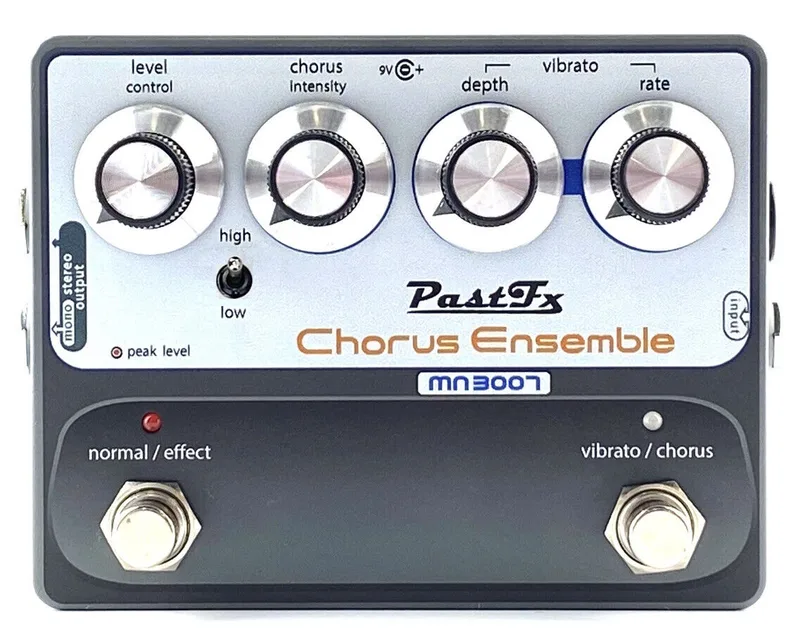
Other builders have gone after the same chip. The PastFx Chorus Ensemble MN3007 is a recreation of the classic Boss CE-1 chorus/vibrato built around the MN30075, which gives a sense of the pedigree Radial was drawing on.
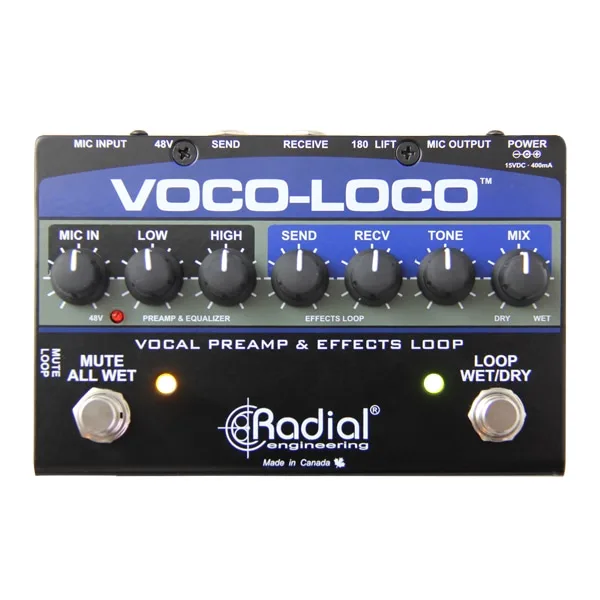
Radial also suggested setups beyond the standard pedalboard. In a normal setup, guitar feeds the Vienna and then an amplifier, with overdrive or distortion pedals placed before the chorus for greater effect2. For a dual amp stage setup, the signal stays mono through the Vienna and is split afterward with an ABY switcher such as Radial's Twin City2. Radial also noted that combining the Vienna with a Radial Voco-Loco makes it possible to add guitar effects to mic'd instruments such as sax or trumpet2.
What reviewers said
Premier Guitar reviewed the pedal and tested it with a blackface Fender Tremolux and a Danelectro Hodad 12-string, a Rickenbacker 330 run through a JamMan, and a Gibson Les Paul with a 1966 Fender Bassman on recorded tracks3. The reviewer's verdict:
"Like any Radial box, the Vienna is a top-quality piece of gear that’s built to handle the road, the stage, and the studio."
The review found the dual-mode design flexible, moving from subtle to psychedelic with a single stomp, and rated the pedal as roadworthy3. The one practical limitation it flagged was power: no 9-volt battery operation, so you need a standard Boss-style 9-volt adapter3.
Videos
Premier Guitar
samashop
docSanchezFX
Questions
Is the Radial Bones Vienna Chorus still made?
No. Radial Engineering lists the Bones Vienna as discontinued and no longer shipping. It was announced in January 2010 with a $159.99 street price and shipped that month, but the maker has since retired it from the lineup.
What does Turbo Mode do on the Bones Vienna?
Turbo Mode increases the intensity of the modulation. Radial says it introduces a proprietary oscillator waveform frequency while increasing the range, letting you move from a slight choral effect to extreme warble, tremolo or vibrato. Premier Guitar described it as producing extreme chorusing effects.
Which bucket brigade chip does the Bones Vienna use?
It uses a new-old-stock Panasonic MN3007 bucket brigade chip, which Radial dates to circa 1976. The chip was socket-mounted for easy replacement, and Radial said it had thousands in stock at launch. The MN3007 was used in original chorus pedals of the late 1970s and early 1980s.
Does the Bones Vienna run on a battery or a power supply?
It runs on a power supply only. There is no 9-volt battery option, and the pedal takes a standard Boss-style 9-volt adapter suited to common DC power bricks. Radial notes the power supply is not included.
Can the two channels be set differently?
Yes. Both chorus channels have their own rate and depth controls, so you can dial in two very different sounds, for example a subtle chorus for rhythm and a more exaggerated setting for solos, and toggle between them with a footswitch.
Sources (5)
- Radial Releases Bones Vienna Dual-Mode Analog Chorus, Premier Guitar, 2010-01-12
- Bones Vienna, Radial Engineering, 2021-03-17
- Radial Engineering Bones Vienna Chorus Pedal Review, Premier Guitar, 2010-10-20
- Analog Man Chorus Pedals, aNaLoG.MaN (analogman.com), 2026
- Chorus Ensemble MN3007, pastfx.com, 2026