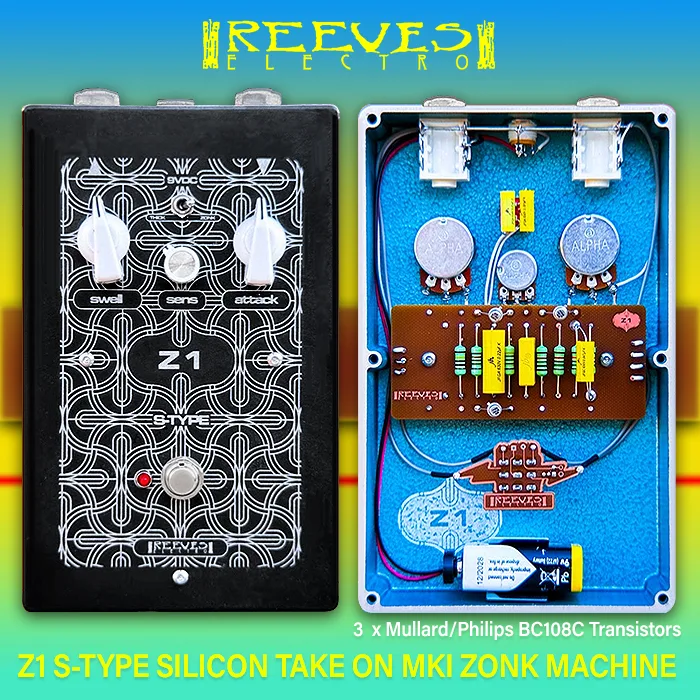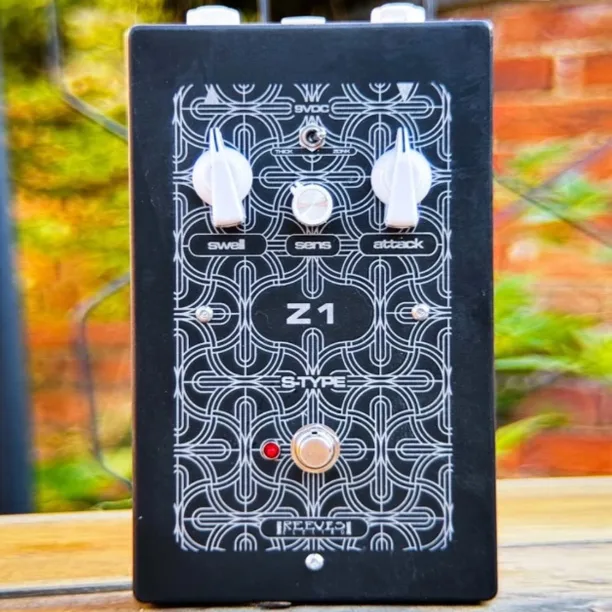


The Reeves Electro Z1 is a small-batch fuzz pedal from UK builder Reeves Electro. Each enclosure carries a unique, hand-etched gunmetal patina created through an acid-etching process and verified individually, and a Zonk/Thick switch toggles instantly between a tight bass-cut profile and a fatter MK1 response1. The internal layout is intentionally spacious, which the maker says prevents component crosstalk and ear-bleeding high-frequency sizzle1.
A three-transistor silicon fuzz
The heart of the Z1 is a matched set of vintage New Old Stock Mullard/Philips BC108C silicon transistors, paired with carefully measured components on a vintage-spec phenolic resin PCB12. The original Zonk Machine used germanium transistors in its circuit3, and the silicon approach is the Z1's main practical difference: Delicious Audio says the design captures the aggressive MK1 bite entirely free from the temperature-dependent fuzz-out that plagues germanium units1. Guitar Pedal X likewise notes that Markus Reeves generates the same vibrant textures with rare silicon where rivals are germanium-based2.
The build is described as tour-grade, with an intentionally spacious layout to prevent component crosstalk and ear-bleeding high-frequency sizzle12. Each enclosure carries a unique, hand-etched gunmetal patina created via an acid-etching process and verified individually1.
"this small-batch creation delivers uncompromising vintage mojo with modern operational stability"
The controls
The Z1 keeps the MK1-style three-knob layout and adds a voicing switch12:
| Control | Function |
|---|---|
| Swell | High-output volume knob12 |
| Sensitivity | Fuzz drive or intensity2 |
| Attack | Fuzz amount2 |
| Zonk/Thick switch | Instantly toggles between a tight bass-cut profile and a fatter MK1 response1 |
The Zonk/Thick switch is the addition players will notice first: one position leans toward a tighter, bass-cut voicing, the other toward the fatter response of the original MK1 design1.
Availability
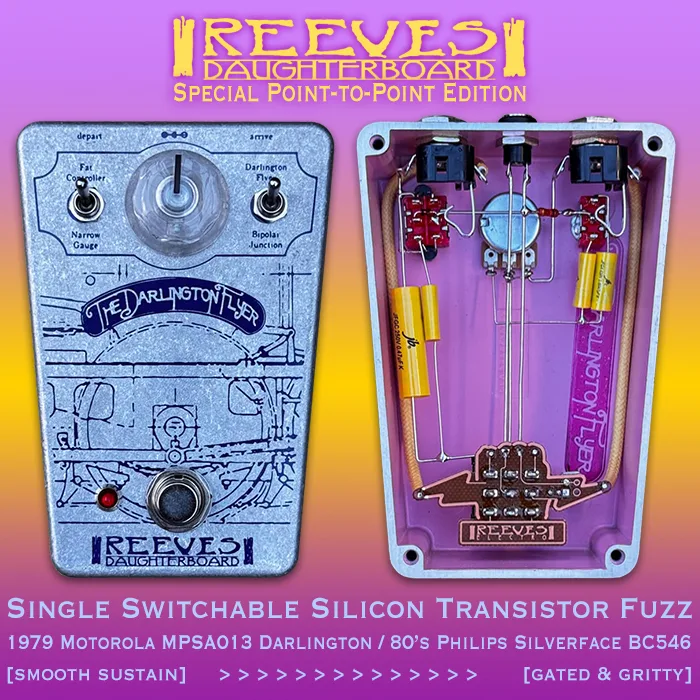
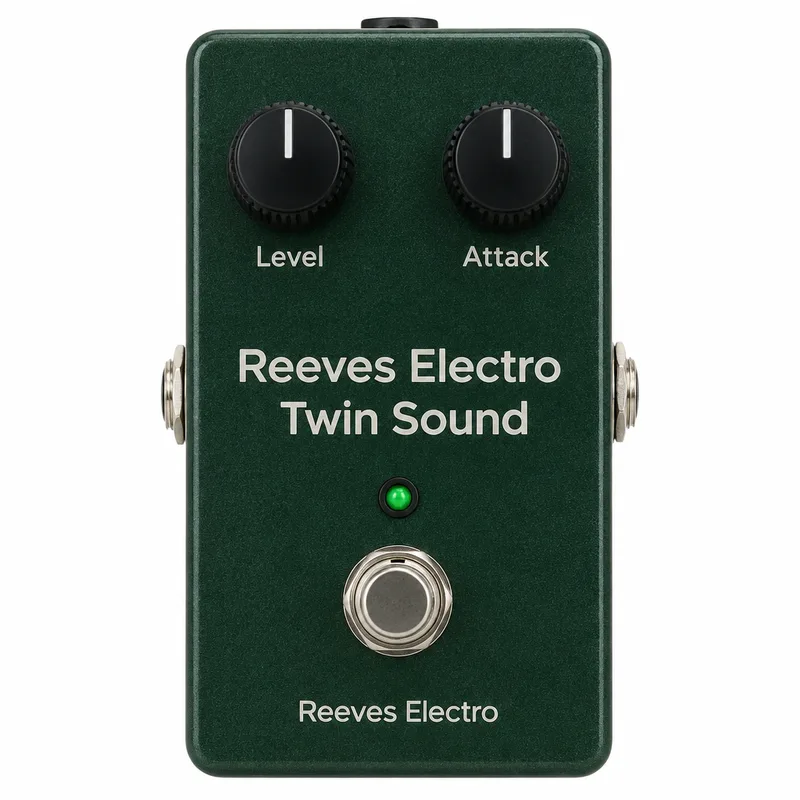
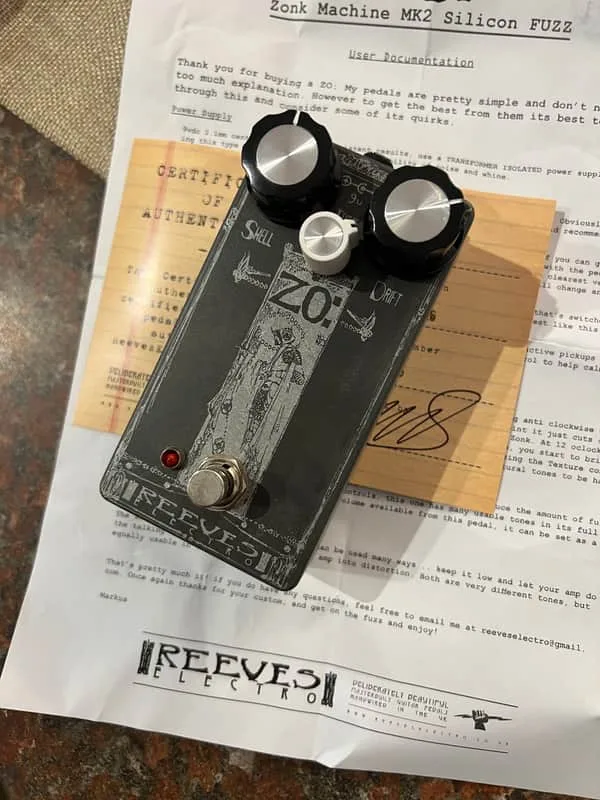
The Z1 S-Type Silicon-style MKI Zonk Machine is a small-batch creation rather than a continuously produced pedal1. Each unit is finished individually, with a hand-etched gunmetal patina produced by an acid-etching process and verified one enclosure at a time1. Reeves Electro's recent releases, such as the Darlington Flyer, the Twin Sound and the ZO Fuzz, have all appeared in limited drops.
The Z1 is a limited small-batch release1, with each enclosure etched and verified individually1, so availability depends on whether further batches are announced.
Videos
Mike Hermans
Sasha Ivantic
Questions
What is the Zonk/Thick switch on the Reeves Electro Z1?
It is a two-position switch that instantly toggles between two voicings: a tight bass-cut profile and a fatter MK1 response. In practice it lets one pedal cover both a leaner, more focused fuzz and the fuller low-end character associated with the original MK1 Zonk Machine design, without touching the knobs.
Which circuit is the Reeves Electro Z1 based on?
The Z1 is a deliberate homage to the rare John Hornby Skewes MK1 Zonk Machine and its MK1 Tonebender cousin. Guitar Pedal X describes it as the Z1 S-Type Silicon style MKI Zonk Machine, and the build is framed around the Doyle Bramhall II sound that circuit is associated with.
Does the Reeves Electro Z1 use silicon or germanium transistors?
Silicon. The Z1 carries a matched set of vintage New Old Stock Mullard/Philips BC108C silicon transistors. The original Zonk Machine used germanium transistors, and the silicon approach is presented as avoiding the temperature-dependent fuzz-out that plagues germanium units.
What power supply does the Reeves Electro Z1 use?
A standard 2.1mm center-negative DC power supply. No battery option or current draw figure is given in the published coverage, so plan your pedalboard power accordingly.
How many Reeves Electro Z1 pedals were made?
The Z1 is a small-batch creation. The initial run of the Z1 S-Type Silicon-style MKI Zonk Machine was limited to 25 units, which went on sale through the Reeves Electro Webstore at 20:00 BST on 10 October 2026.
Sources (3)
- New Pedal: Reeves Electro Z1 Fuzz, Delicious Audio, 2026-10-09
- Guitar Pedal X, Guitar Pedal X, 2026-10-09
- Creation of Zonk Machine Fuzz, tru-fi.com