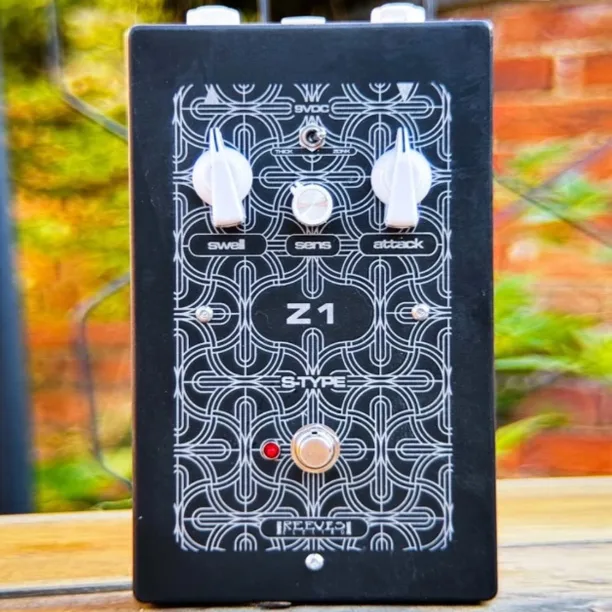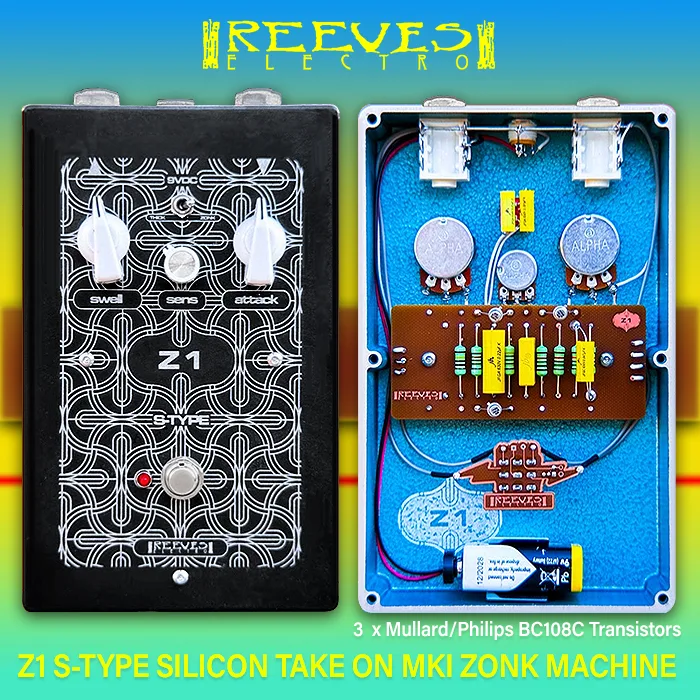


The Reeves Electro Z1 S-Type Silicon-style MKI Zonk Machine is a limited-run fuzz pedal from UK builder Markus Reeves that rebuilds the rare John Hornby Skewes MK1 Zonk Machine, and its MK1 Tonebender cousin, using silicon transistors rather than the germanium parts of the originals. Delicious Audio describes it as a deliberate homage that "meticulously reconstructs the original three-transistor architecture"1.
What it does to your sound
The Zonk Machine is a classic fuzz pedal known for its unique sound and vintage appeal, created in the late 1960s by the Italian company Jen Elettronica3. The original used germanium transistors in its circuit3, and that is the one thing Reeves has deliberately changed. Guitar Pedal X reports that while rival Zonk-style pedals are germanium-based, Reeves prides himself on generating the same vibrant textures with rare silicon parts2.
Delicious Audio says the design captures "that elusive, aggressive MK1 bite entirely free from the temperature-dependent fuzz-out that plagues" germanium units1. In practical terms, a germanium fuzz can lose its character as the temperature on a stage or in a room shifts; the silicon version is built to stay consistent.
Guitar Pedal X describes the Z1 as "more upfront and urgent, more vibrant, and cleans up nicely to that Doyle Bramhall II tone perfectly"2. The Doyle Bramhall II sound is the target the pedal was designed around, according to the same report2.
Controls
The three-knob layout follows the original circuit's approach, with the Attack control acting as the fuzz amount and the Swell knob setting overall level2.
Silicon versus germanium
The choice of transistor type is the headline of this pedal. The Z1 is populated with "3 killer Mullard/Philips BC108C Silicon Transistors"2, and Delicious Audio specifies a matched set of vintage New Old Stock Mullard/Philips BC108C silicon transistors alongside carefully measured components1. Guitar Pedal X notes this is the circuit Markus is proudest of to date2.
"This Z1 is more of a tour-grade build using a vintage spec Phenolic resin PCB"
The build is described as tour-grade, using a vintage-spec Phenolic resin PCB, the kind of board construction associated with older pedal designs2.
Where it sits among Zonk-style pedals
Guitar Pedal X positions the Z1 S-Type against other silicon takes on the Zonk Machine, saying it "targets the DanDrive Secret Engine/Machine/Weapon, Bonk Machine, and Dominion Knoz textures"2. Those are the pedals a player comparing silicon Zonk variants would most likely weigh it against.
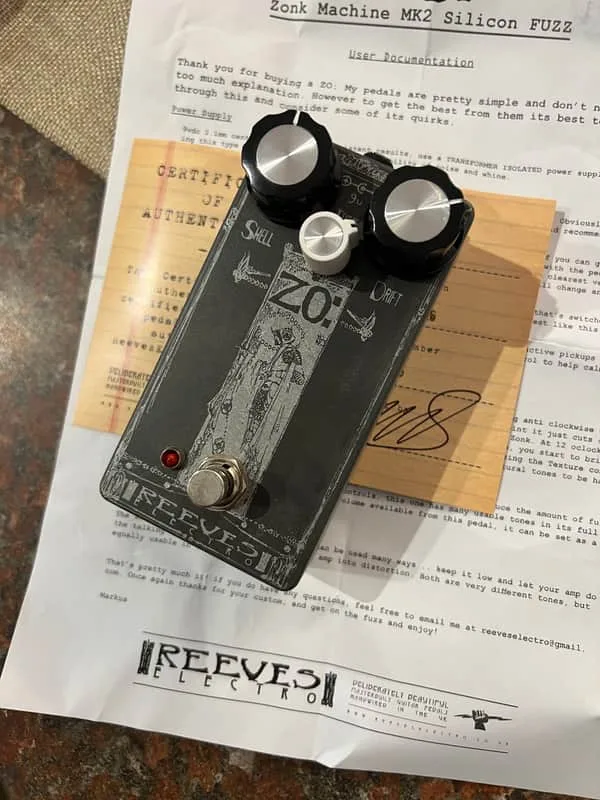
Reeves Electro also builds a related pedal, the Reeves Electro ZO Fuzz, a hand-built silicon fuzz homage to the Zonk Machine MKII, announced in August 2025. The Z1 is the MKI-era counterpart in the range. For more fuzz circuits of every kind, see the Fuzz Pedals type page.
Availability and price
The Z1 S-Type was a limited release: 25 units available on the Reeves Electro webstore at 20:00 hrs BST on 10 October 20262. The price is £475 and equivalent2. For players ordering from the United States, Reeves Electro pays all US and EU tariffs2, so the listed price is not supplemented by an import bill on delivery.
The Z1 S-Type was offered as a run of 25 units2. Reeves Electro's releases typically sell in small limited batches rather than as standing stock, so availability after the drop date depends on whether units remain.
Videos
Mike Hermans
Sasha Ivantic
Jackson Brooksby
Questions
What transistors does the Reeves Electro Z1 S-Type use?
It uses three Mullard/Philips BC108C silicon transistors. Delicious Audio describes them as a matched set of vintage New Old Stock parts, paired with carefully measured components to reconstruct the original three-transistor architecture of the John Hornby Skewes MK1 Zonk Machine. Silicon is the point: the design aims for the aggressive MK1 bite without the temperature-dependent fuzz-out that germanium units are prone to.
How many Z1 S-Type Zonk Machines were made?
Guitar Pedal X reported 25 units available on the Reeves Electro webstore, going on sale at 20:00 hrs BST on 10 October 2026. Like other Reeves Electro releases, it is a small limited run rather than a standing production line.
How much does the Reeves Electro Z1 S-Type cost?
The listed price is £475 and equivalent, as reported by Guitar Pedal X in October 2026. Reeves Electro also pays all US and EU tariffs on the pedal, so buyers in the United States are not billed separately for import duties.
How does a silicon Zonk Machine differ from germanium fuzzes?
The original Zonk Machine, made in the late 1960s by the Italian company Jen Elettronica, used germanium transistors. Germanium fuzzes can behave differently as temperature changes, sometimes losing their fuzz character. The Z1 S-Type uses silicon BC108C transistors instead, which Guitar Pedal X says keeps the circuit more upfront, urgent and vibrant while cleaning up nicely.
Does Reeves Electro cover US tariffs on the Z1 S-Type?
Yes. Guitar Pedal X reports that Reeves Electro pays all US and EU tariffs on the Z1 S-Type, which matters for players ordering the pedal from the United Kingdom to the United States.
Sources (3)
- New Pedal: Reeves Electro Z1 Fuzz, Delicious Audio, 2026-10-09
- Guitar Pedal X, Guitar Pedal X, 2026-10-09
- Creation of Zonk Machine Fuzz, tru-fi.com