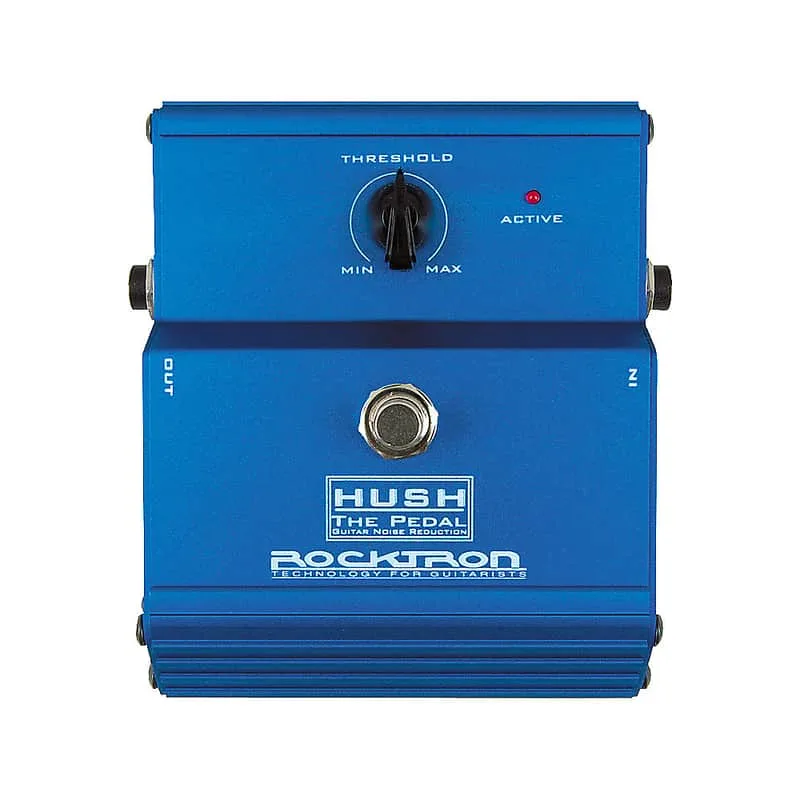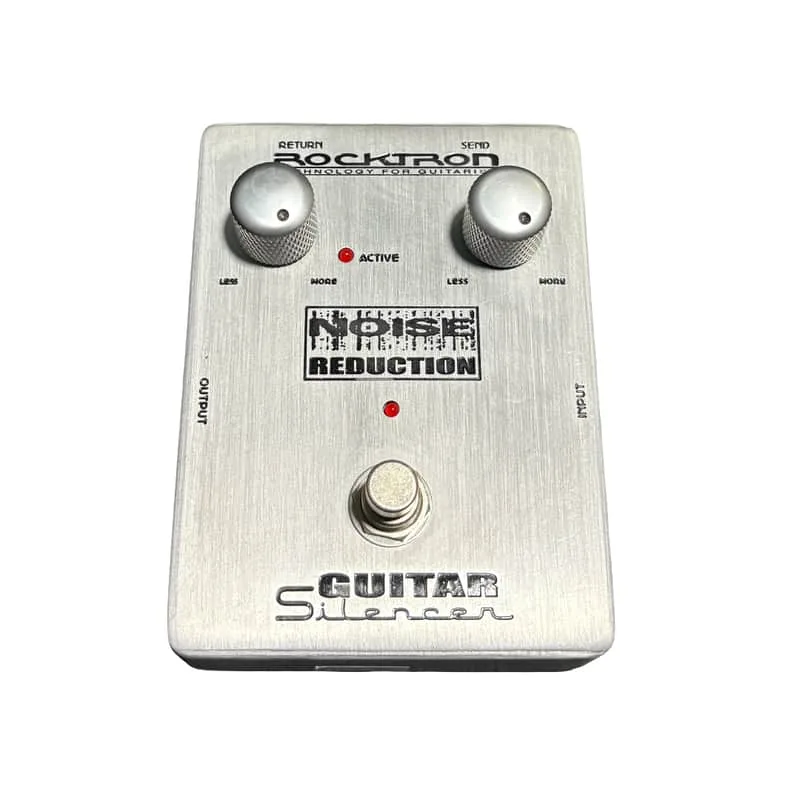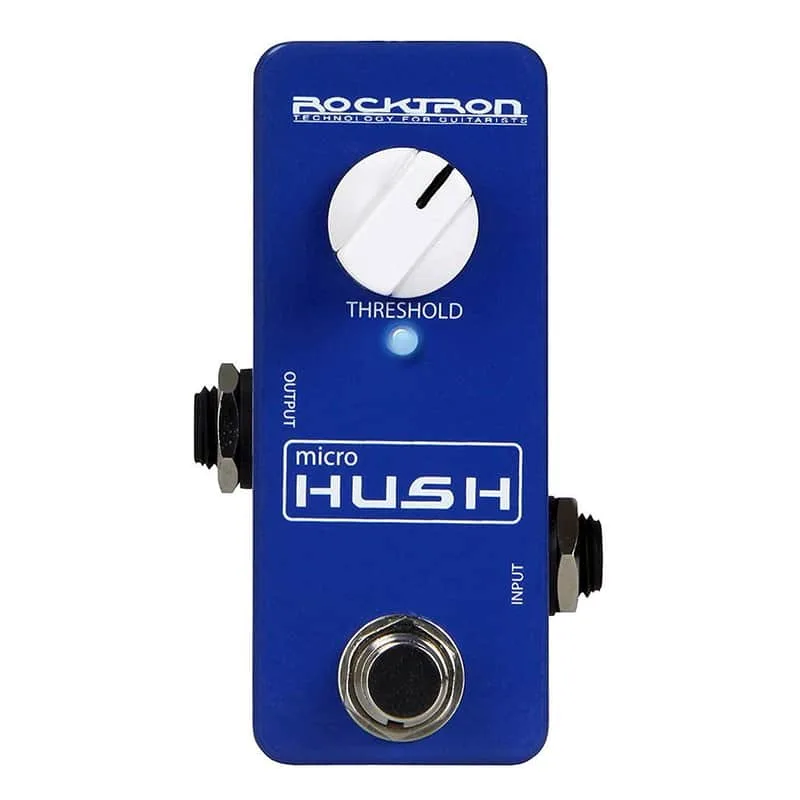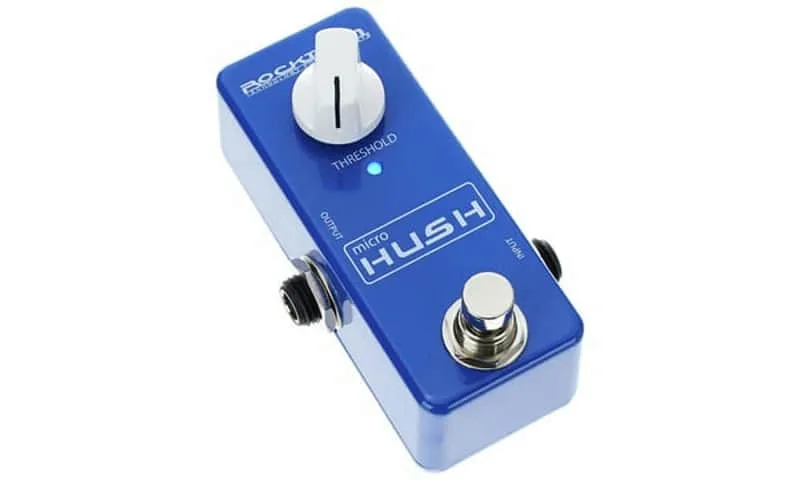

The Rocktron MicroHUSH is a compact noise reduction stompbox that carries the company's HUSH circuit in a micro chassis. Rocktron says it can wipe out hiss, unwanted feedback and pickup buzz by providing up to 65dB of signal cleanup while maintaining your music1. Premier Guitar, in a buying guide on noise gate pedals, describes the category the same way: pedals like this are "designed to wipe out hiss, unwanted feedback, and pickup buzz"2.
What it does: single-ended noise reduction, not a gate
Rocktron draws a clear line between the MicroHUSH and ordinary noise gates. According to the company, the MicroHUSH and other Rocktron HUSH products are "a form of single-ended noise reduction that tracks your si"gnal and pushes the noise floor down, rather than a gate that chops off note ends or ruins sustain1. In practice, that means the circuit works continuously while you play instead of simply muting the signal when you stop.
The MicroHUSH works as a single-ended reducer rather than a gate: Rocktron's instructions are to turn the THRESHOLD control knob until the noise goes away, which smooths out the signal rather than cutting it off1. The pedal's specifications reflect that straightforward design, with an input impedance of 470kΩ, an output impedance of 1kΩ, and a current draw of 15mA1.
Controls
The MicroHUSH keeps things simple with a single control:
| Control | What it does |
|---|---|
| THRESHOLD | Turn until the noise goes away, then adjust to smooth out the signal1 |
Rocktron's own guidance is to "turn the THRESHOLD control knob until the noise goes away"1. With one knob and no other controls, setup is a matter of finding the point where the noise floor drops out without affecting your playing dynamics.
Power and connections
The MicroHUSH does not run on a battery and does not ship with a power supply1.
The pedal draws 15mA and uses a 2.1mm jack with negative tip and positive barrel polarity1. Most standard pedalboard power supplies meet this, but confirm the polarity and current rating of your supply before wiring it into a daisy chain.
Specifications from Rocktron's product page1:
| Specification | Value |
|---|---|
| Input impedance | 470kΩ |
| Output impedance | 1kΩ |
| Maximum input | +5dBu |
| Maximum output | +5dBu |
| Current consumption | 15mA |
| Dimensions | 3 5/8" x 2 1/8" x 2" (92mm x 54mm x 48mm) |
| Weight | 5.3oz (150g) |
Where it goes in a chain and how it is built
Rocktron's placement advice is direct: "Plug the MicroHUSH in AFTER distortion boxes, wahs, noisy vintage effects, or other noisy units"1. The idea is to put the noise reduction downstream of whatever is making the noise, so the cleaned signal is what reaches your amp. For more on how gates and suppressors are placed, see Noise Gate Pedals.
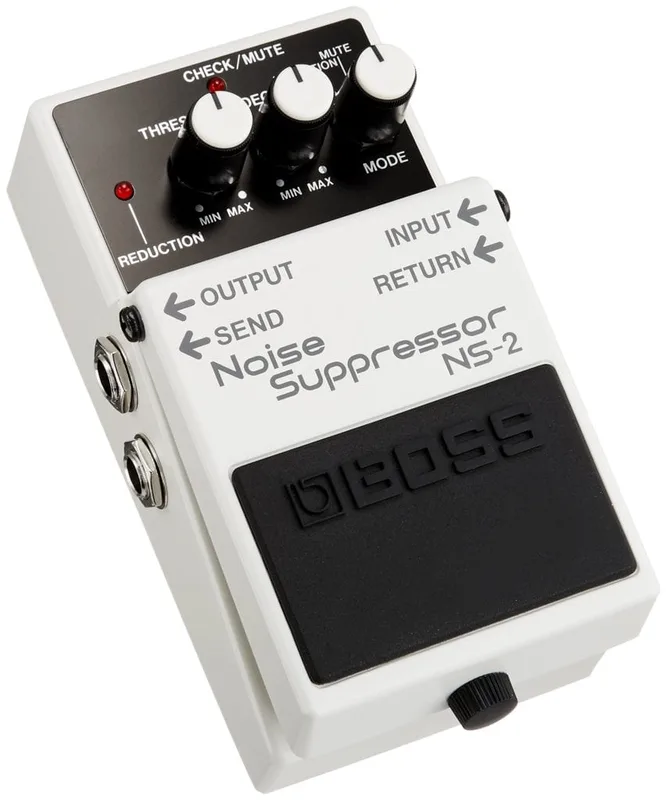
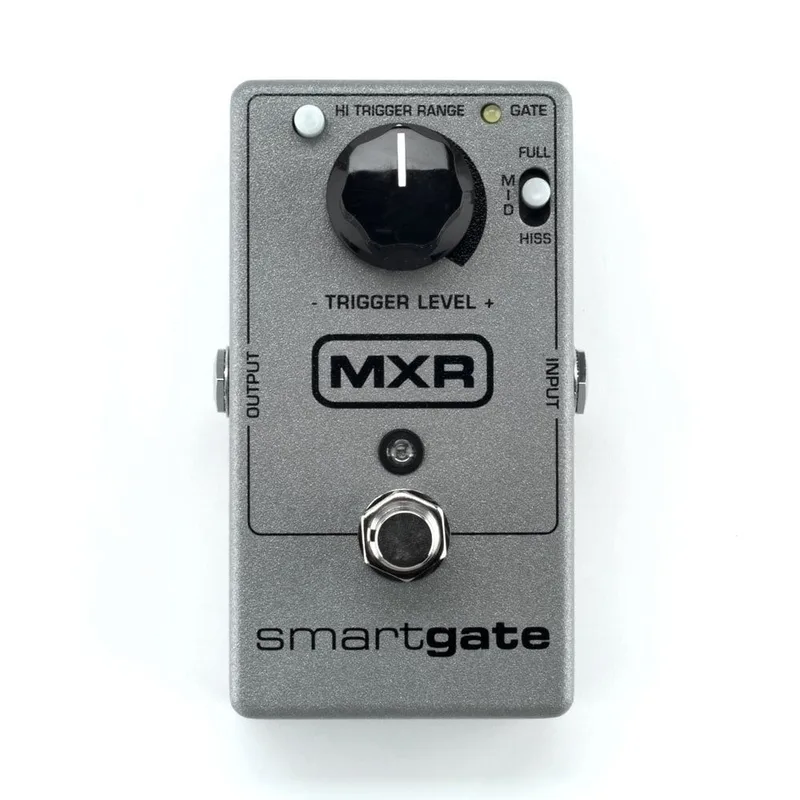
The pedal is built into what Rocktron calls "a compact yet rugged chassis, minimizing the footprint it has on your pedal board"1, and it is true bypass: "when you turn it off, it is out of your signal path!"1. Compared with other compact options such as the Boss NS-2 Noise Suppressor or the MXR Smart Gate, the MicroHUSH's distinguishing feature is the HUSH single-ended reduction circuit rather than a conventional gate.
Price and what reviewers said
Premier Guitar's March 2021 buying guide on noise gate pedals listed the MicroHUSH at $119 street2. The guide groups it with pedals designed to wipe out hiss, unwanted feedback and pickup buzz2.
Videos
Keith Holland Guitars
Questions
Is the Rocktron MicroHUSH true bypass?
Yes. Rocktron states the MicroHUSH is a true bypass pedal, so when it is switched off it is out of your signal path entirely. That means the pedal only affects your tone while it is engaged, and with the THRESHOLD turned down or the pedal off, your guitar signal reaches the amp untouched.
Does the MicroHUSH come with a power supply?
No. Rocktron says the MicroHUSH requires a 9V DC power source that is sold separately, and recommends the Rocktron DC OnTap Universal Power Supply. There is no battery option, so plan on a pedalboard power supply or a dedicated adapter with the correct 2.1mm negative tip, positive barrel connector.
What is the difference between single-ended noise reduction and a noise gate?
A noise gate mutes the signal when you stop playing, which can chop off note endings and hurt sustain. Rocktron describes the MicroHUSH as single-ended noise reduction instead: the circuit tracks your signal and pushes the noise floor down while you play, so notes fade naturally rather than being cut off abruptly.
Where does the MicroHUSH go in a pedal chain?
Rocktron says to plug the MicroHUSH in after distortion boxes, wahs, noisy vintage effects or other noisy units. Those are the pedals that generate hiss and buzz, so placing the MicroHUSH downstream of them lets it clean up everything before it reaches your amp.
What polarity does the MicroHUSH use?
The MicroHUSH uses a 2.1mm barrel connector with negative tip and positive barrel polarity, running on 9V DC. Check that your power supply matches that polarity before plugging in, since a center-positive supply is the opposite convention and is not what the pedal calls for.
Can the MicroHUSH run on a battery?
No. Rocktron's product page lists a 9V DC power source, sold separately, as the way to power the pedal, and recommends the Rocktron DC OnTap Universal Power Supply. There is no battery compartment mentioned, so a power supply is required to use it.
Sources (2)
- MicroHUSH Stomp Box, Rocktron, 2024-08-28
- Tools for the Task: Noise Gate Pedals, Premier Guitar (www.premierguitar.com), 2019-06-14