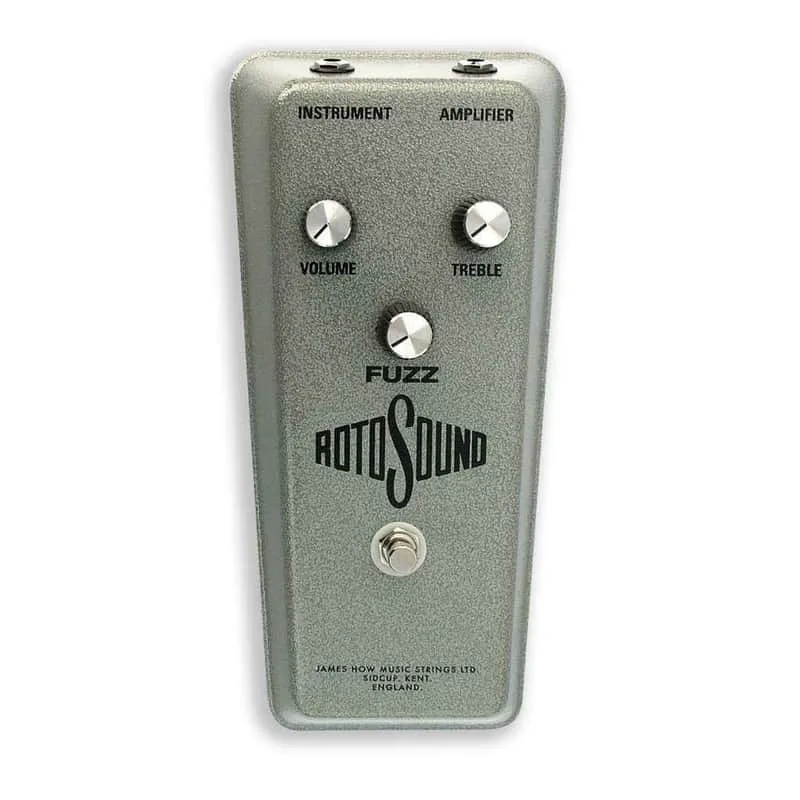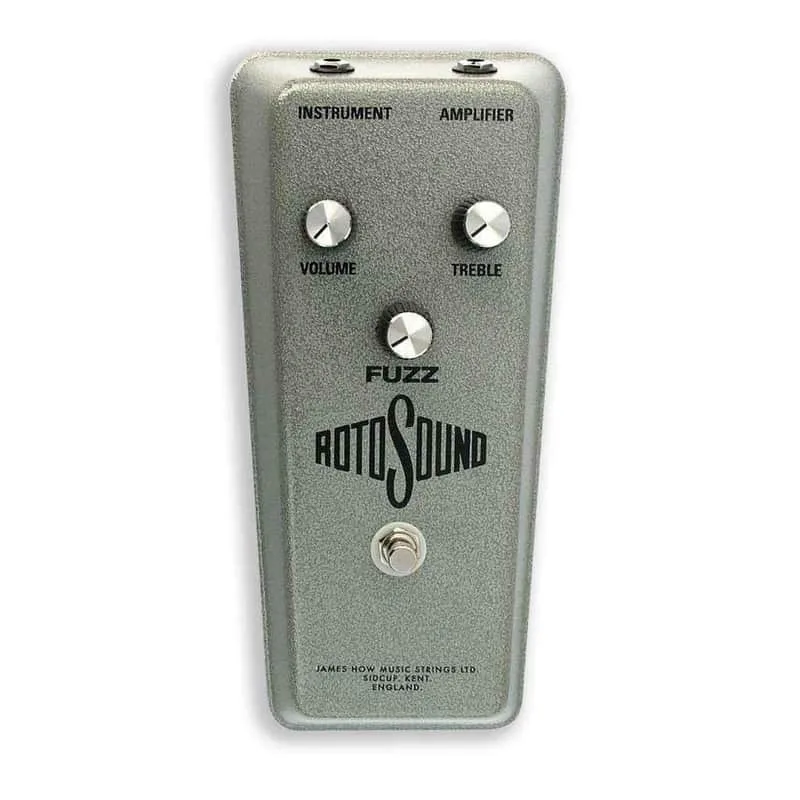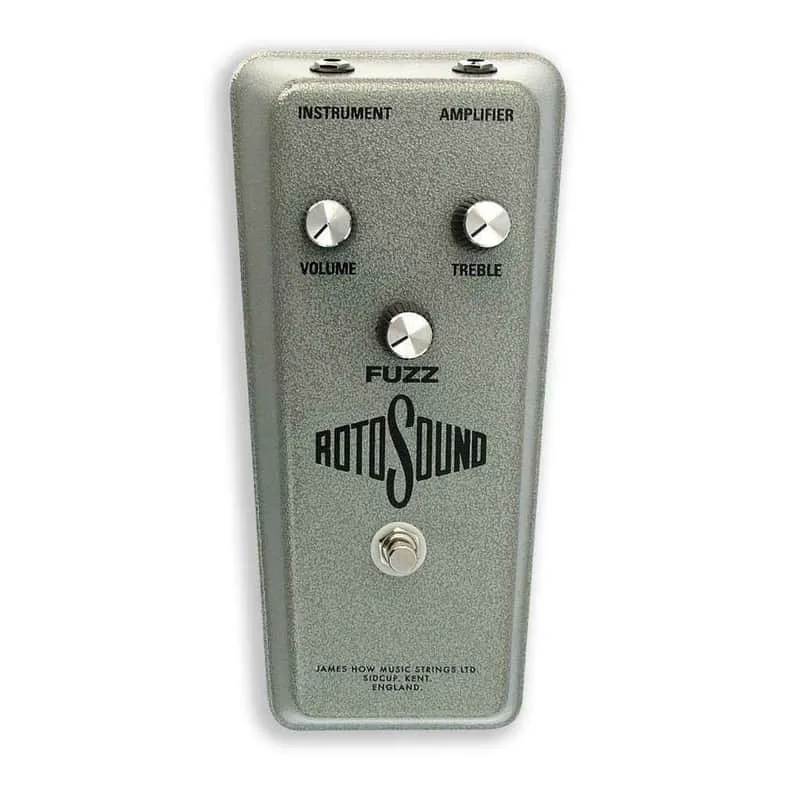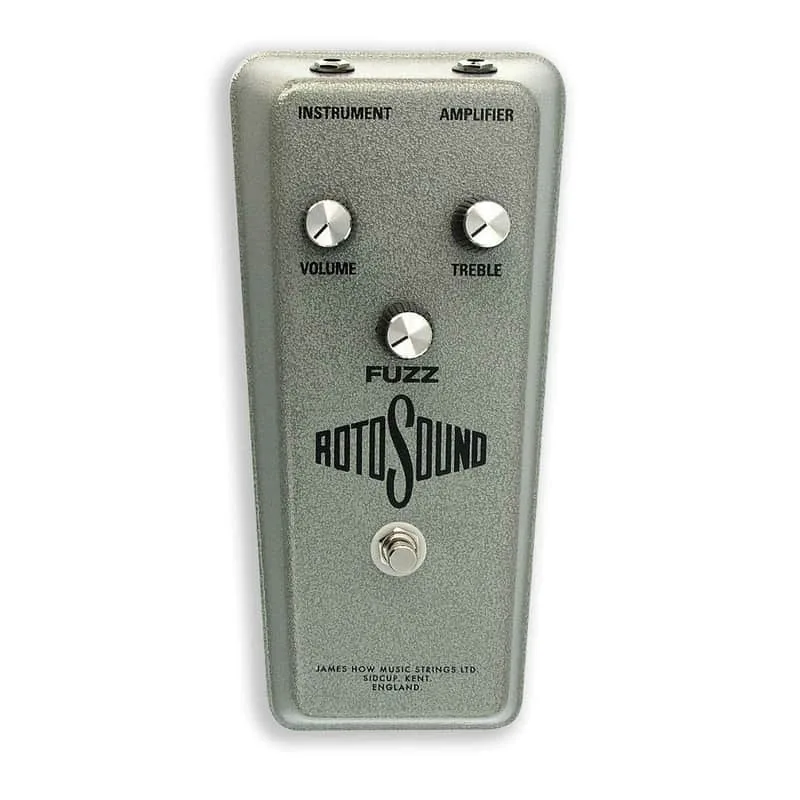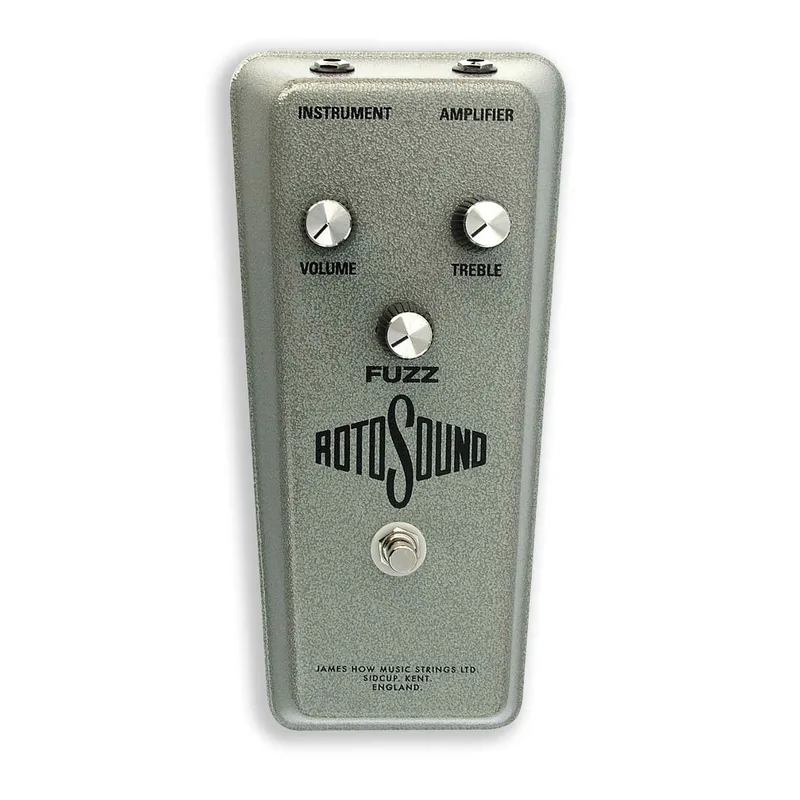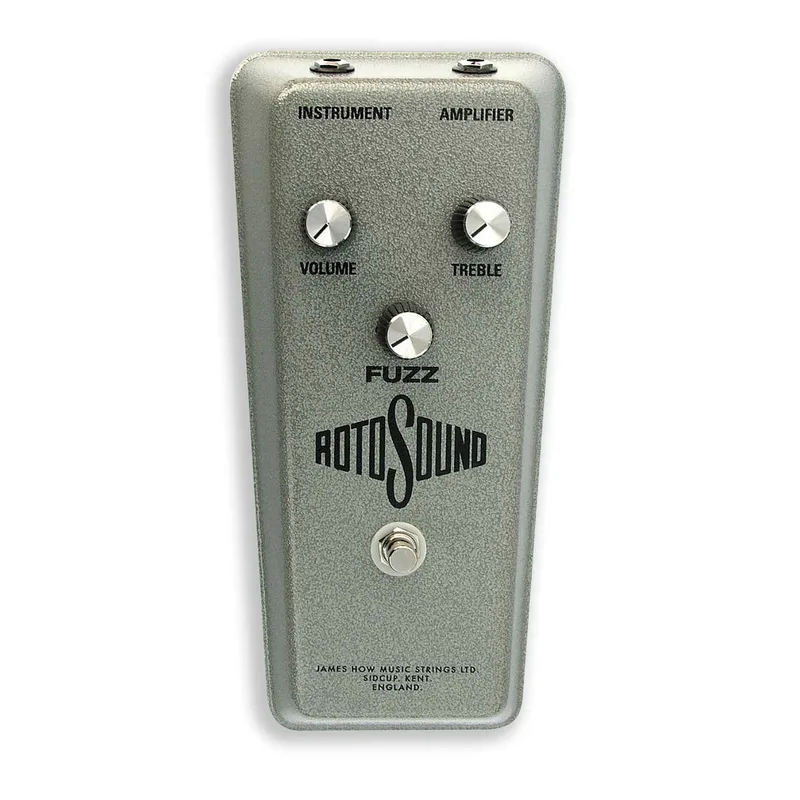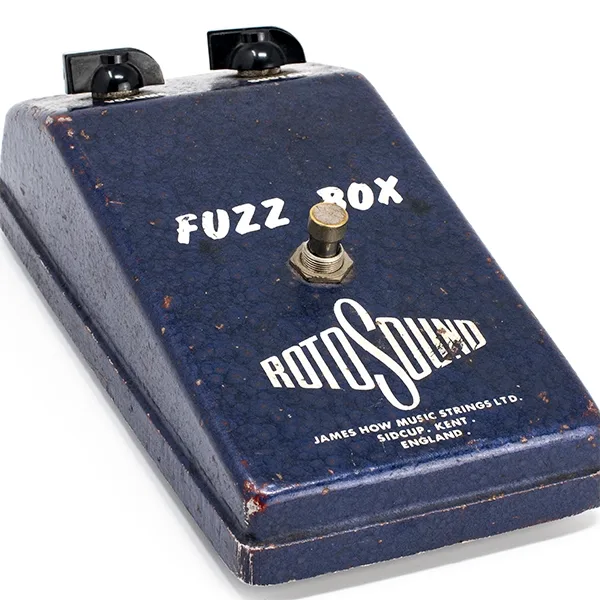
The Rotosound Fuzz Box in the cast metal housing is a British fuzz pedal from the mid to late 1960s, sold under the name of string maker Rotosound but built and supplied by Sola Sound, the firm responsible for the circuitry and for the Tone Bender family of pedals. Between 1966 and 1968 these units were built into large cast aluminum enclosures, and they came with two control knobs1.
Who made it
Although the pedals carry the Rotosound name, the Fuzz Boxes in the cast enclosures were actually supplied to Rotosound by Sola Sound, who were responsible for the circuitry1. That connection matters to players and collectors, because it places these pedals in the same family as the Tone Bender circuits Sola Sound built for other brands.
Blue, gold and silver versions
The cast enclosure Rotosound Fuzz Box went through three known finishes, and the finish lines up with the circuit inside1:
| Version | Approximate date | Finish | Circuit | Transistors |
|---|---|---|---|---|
| Blue | 1966, earliest known | Dark blue hammertone | Sola Sound two-transistor "MK1.5" | Mullard OC751 |
| Gold | Approximately late 1966 | Gold paint | Early version of the Tone Bender Professional MKII, and late-production "MK1.5" examples | Mullard OC751 |
| Silver | 1968 | Silver | Particularly late version of the Tone Bender MKII | Mullard OC81D1 |
The blue version's "MK1.5" circuit was, according to Fuzzboxes.org, "the same circuit that was more famously" used elsewhere in the Sola Sound range1. One surviving blue example has a faint stamp on the inside of its bottom plate listing the Charing Cross Road address of Macari's Musical Exchange, suggesting it was originally sold through Sola Sound's own retail outlet1.
The gold version sits between the other two: gold Fuzz Boxes have been sighted with both late-production examples of the two-transistor "MK1.5" fuzz circuit and relatively early versions of the Tone Bender Professional MKII circuit, so two examples can differ inside1.
Relation to the Tone Bender
For a player tracing the lineage of British fuzz, the Rotosound cast box is effectively a rebadged Sola Sound build. The blue units carry the two-transistor "MK1.5" circuit, the gold units the Tone Bender Professional MKII in an early form, and the silver units a particularly late version of the Tone Bender MKII circuit1. Rotosound later returned to the fuzz pedal with reissues and new designs, including the Rotosound Vintage Fuzz and the Germanium Fuzz, but those are separate products from this 1960s original.
Questions
Who actually made the Rotosound Fuzz Box?
Although the pedals carried the Rotosound name, the cast enclosure Fuzz Boxes were supplied to Rotosound by Sola Sound, who were responsible for the circuitry. Sola Sound was the same firm behind the Tone Bender pedals, which is why the Rotosound versions share circuitry with those better-known units.
What transistors are in the original Rotosound fuzz?
The 1966-era pedals, in both gold and blue versions, used Mullard OC75 transistors. The later silver version, built in 1968, used Mullard OC81D transistors instead. Both are germanium types, which is typical of British fuzz pedals of the period.
How many knobs does the original Rotosound Fuzz Box have?
The cast enclosure Rotosound Fuzz Boxes came equipped with two control knobs. That simple control layout was common on fuzz pedals of the mid to late 1960s.
How is the cast metal Rotosound different from the pressed steel one?
The cast metal version discussed here was built between 1966 and 1968 in large cast aluminium enclosures, finished in dark blue hammertone, gold or silver. Rotosound also sold fuzz boxes in other housings, and the cast aluminium cases are the version collectors associate with the earliest Sola Sound-built units.
Is the Rotosound fuzz related to the Tone Bender?
Yes. The blue version used Sola Sound's two-transistor 'MK1.5' fuzz circuit, the same circuit more famously used elsewhere in the Tone Bender range. Gold versions carried a relatively early version of the Tone Bender Professional MKII circuit, and silver versions a particularly late version of the Tone Bender MKII circuit.
Sources (1)
- Rotosound Fuzz Box • Fuzzboxes, Fuzzboxes.org, 2021-05-19