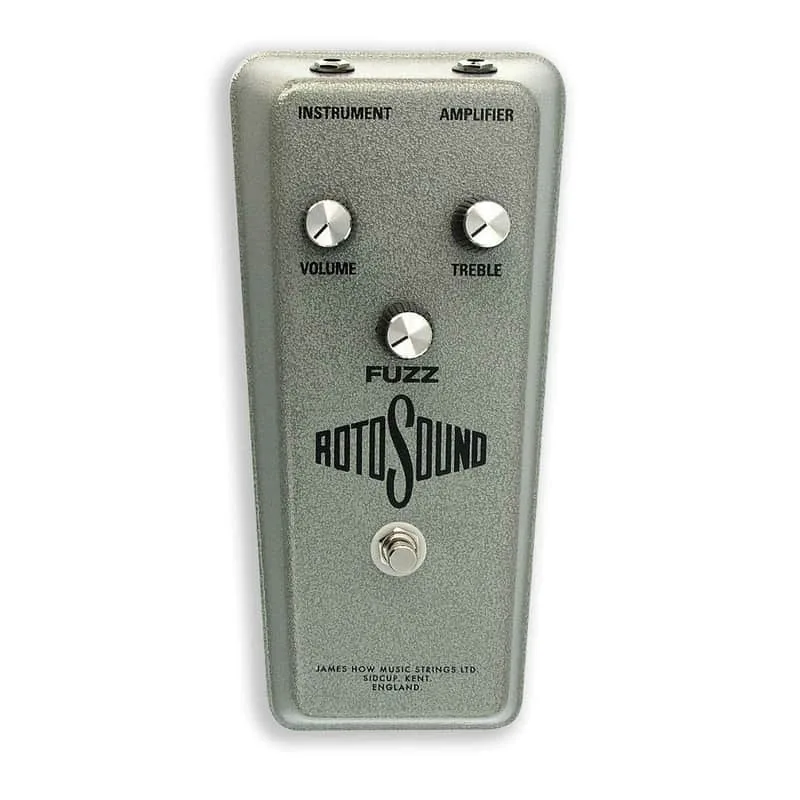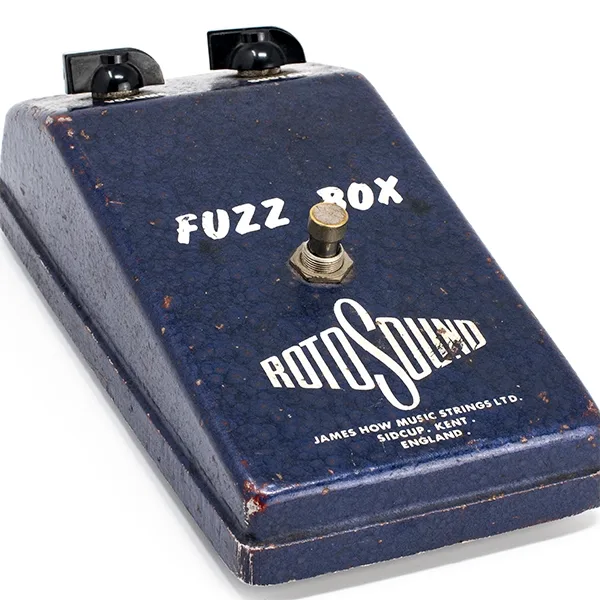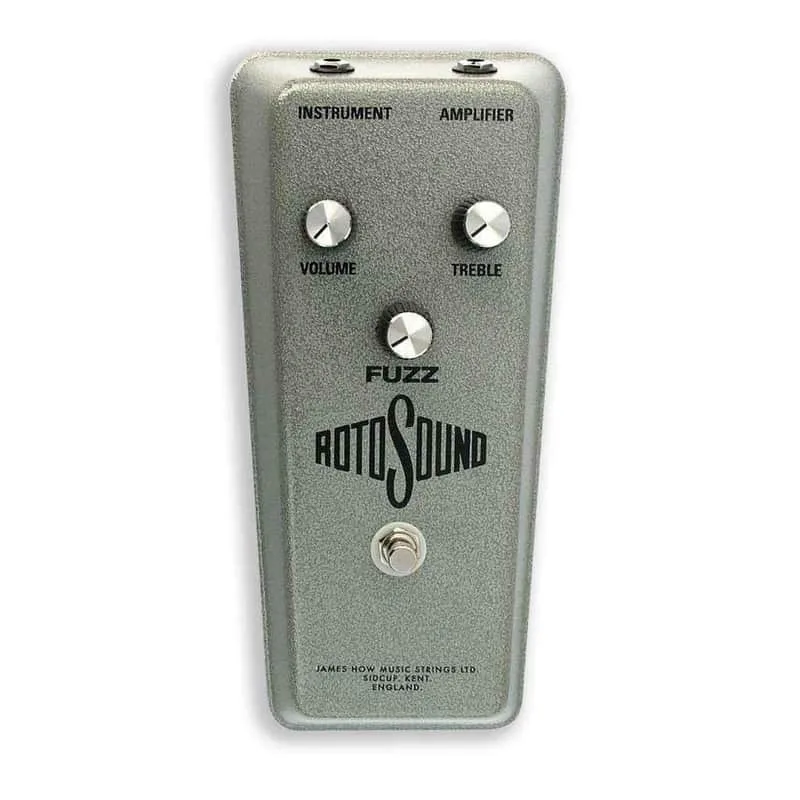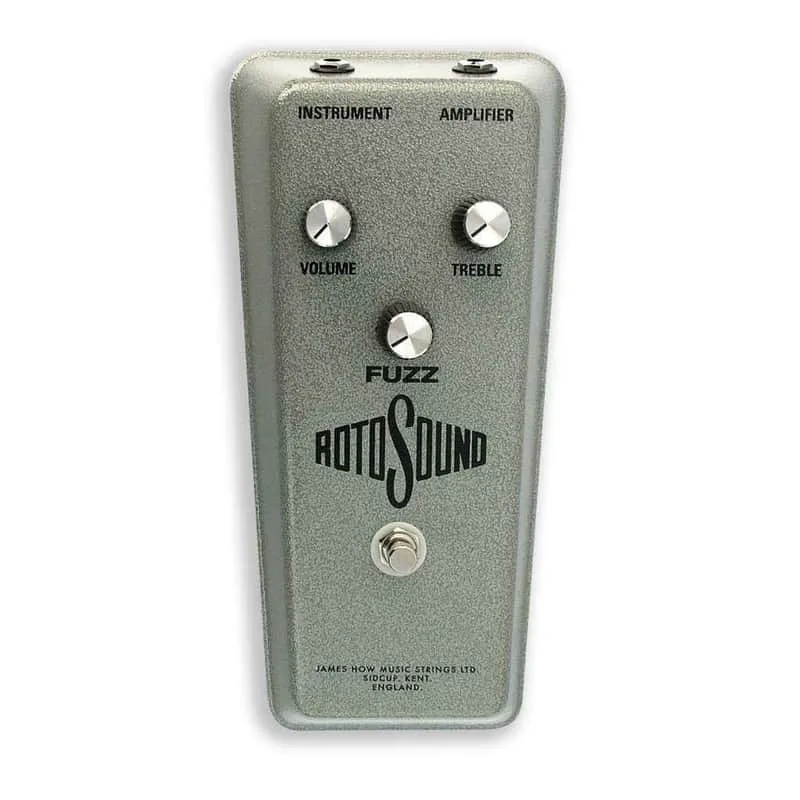


The Rotosound Vintage Fuzz is a three-knob germanium fuzz pedal from Rotosound, the UK string maker better known for bass strings than for effects. The original was built in a limited run in 1967 and never sold widely; the reissue, announced in 2012, reproduces the same essential circuit configuration with modern resistors and capacitors and genuine vintage germanium transistors in the active positions12.
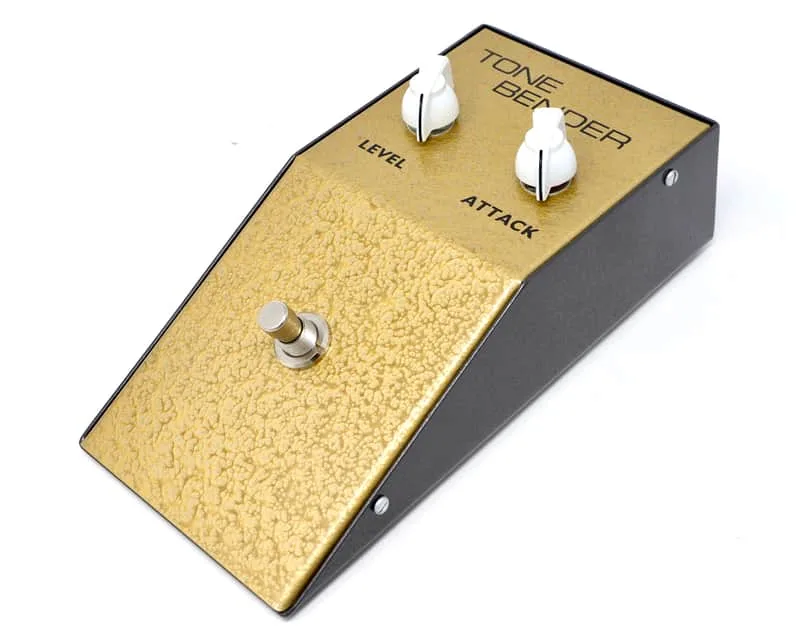
For a player, it is a straightforward vintage-style fuzz: three knobs, a pressed steel box in gloss silver hammer powder coating, and a sound the press described as running from a soft crunch to a gruff growl while keeping the roundness germanium clipping is known for31. It sits in the same British family as the Tone Bender, and Jimmy Page was seen using the Rotosound version of the three-knob Tone Bender in 19694.
What it does: a germanium fuzz from soft crunch to gruff growl
The reissue keeps the character of the original circuit. Premier Guitar's announcement summed up the intent165:
"The new pedal brings yesterday's mojo and tone flavor with the reliability and stability of today's technology."3
The Fuzz control governs the amount of drive, moving from a soft crunch to a gruff growl while retaining what the press consistently called the signature germanium roundness35. That roundness is the quality players usually associate with germanium transistors: a warmer, softer clipping character than the sharper edge of silicon fuzzes. Vintage Guitar magazine confirmed the reissue's clipping type as germanium5.
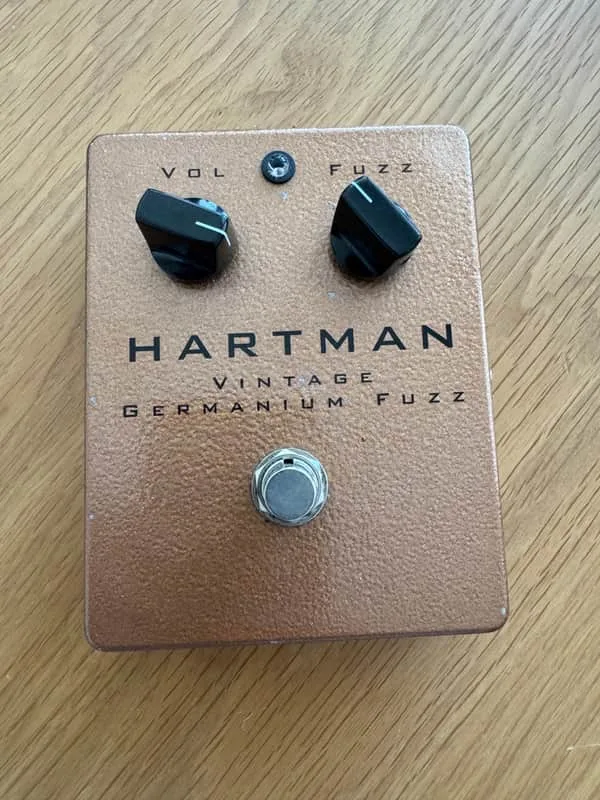
Compared with other vintage-style germanium fuzzes on the market, the Rotosound is notable mainly for its provenance: it is a faithful reissue of a genuinely rare 1960s British pedal, built in the same factory as the original, rather than a modern interpretation. Players looking at the same territory might also compare the Hartman Pedals Vintage Germanium Fuzz, which a Pedal of the Day review described as "trying to create that classic fuzz face sound" with modern, reliable parts127.
The controls: Fuzz, Treble and Volume
Three knobs, matching the original's reputation as one of the easiest effect pedals to use1. What each does, as described in the press coverage:
| Control | What it does |
|---|---|
| Fuzz | Governs the amount of drive, from a soft crunch to a gruff growl, retaining the germanium roundness35 |
| Treble | Varies the ratio of bass to treble, allowing a range from muddy to crisp35 |
| Volume | Alters the output level35 |
The pedal is switched on using dedicated contacts on the instrument input jack, an arrangement Rotosound used to maintain cleanliness of sound35. The reissue adds true bypass switching, which MusicRadar called "a concession to modern technology" not present on the 1960s original26.
Inside the circuit: a Darlington pair driving a germanium fuzz transistor
The circuit, just like the original, uses a Darlington Pair for high gain input, which drives a temperature-compensated fuzz transistor13. A Darlington Pair is a combination of two transistors wired together so that their gains multiply, giving a much higher input gain from a small package; MusicRadar offered it as pub quiz material for exactly this reason2.
The active components are the key to the reissue's claim of authenticity. Guitar World reported that "the important active components being genuine vintage germanium stock"1, and MusicRadar that the pedal is "equipping it with genuine 60s germanium transistors"2. The passive parts are modern: the reissue combines the original circuit configuration with modern resistors and capacitors21. The temperature compensation on the fuzz transistor addresses the classic germanium weakness, sensitivity to heat, which is what makes vintage germanium fuzzes drift as a gig warms up.
History: the 1960s original and the reissue
The original Rotosound fuzz was produced in a limited run in 19672. The prototype pedals were only available in limited numbers and were never released for general sale1, which is why originals are scarce and sought after. When first launched in the UK it was renowned as one of the easiest effect pedals to use1.
The pedals did reach players. Guitar World noted that "these pedals were found all over the place; there's even a picture of [Jimmy Page]" playing one1, and the British Pedal Company's Tone Bender history records that Page can be seen in 1969 using the Rotosound version of the three-knob Tone Bender, the MK34. MusicRadar described the circuit as based on the much-loved Tonebender circuit2.
The reissue came about indirectly. A US-based collector contacted Rotosound in 2010 and sent his original fuzz back to England for examination, which made the project possible2. Rotosound then reinvented the pedal working with Dr. Barry R. Pyatt, described by Guitar World and Guitar Interactive Magazine as a fabled guitar tone tweaker16.
The reissue was announced in March 201261 and was set to ship in November/December 201216, priced at $379 MSRP in the US and £250 RRP in the UK26. It is made at Rotosound's factory in Sevenoaks, Kent, in keeping with the company's tradition of UK manufacturing12. Guitar Interactive later described the reissue as a massive success, following it in 2014 with a wider range of Rotosound pedals8.
The 1960s original was a prototype run never sold through dealers, so any "original" Rotosound Vintage Fuzz offered for sale today is from that limited batch. The 2012 reissue is the version most players will encounter, and it differs from the original in one audible respect: true bypass switching, new on the reissue26.
Videos
Dave Simpson
daCod77
Guitarist
Questions
Is the Rotosound Vintage Fuzz a Tone Bender?
It is based on the Tone Bender circuit. MusicRadar described the reissue as based on the much-loved Tonebender circuit, and the British Pedal Company's Tone Bender history notes that Jimmy Page was seen in 1969 using the Rotosound version of the three-knob Tone Bender, the MK3. So it belongs to that family of British fuzzes rather than being an original Rotosound design.
Did Jimmy Page use a Rotosound fuzz?
Yes, for a brief period. Guitar World reported that the original 1960s prototype pedals turned up in many players' hands, and there is a picture of Jimmy Page playing one. The British Pedal Company's Tone Bender history says he can be seen in 1969 using the Rotosound version of the three-knob Tone Bender.
Is the Rotosound Vintage Fuzz reissue true bypass?
Yes. MusicRadar noted the reissue made a concession to modern technology in the form of true bypass, and Guitar World reported that the true bypass switching was new on the reissue. The pedal is switched on using dedicated contacts on the instrument input jack, which Rotosound used to maintain cleanliness of sound.
Where is the Rotosound Vintage Fuzz made?
In the UK, at Rotosound's factory in Sevenoaks, Kent. Premier Guitar, Guitar World and MusicRadar all reported the reissue being manufactured there, in keeping with Rotosound's tradition of building in Britain, under what the maker described as the strictest quality control.
Who designed the Rotosound fuzz reissue?
Rotosound developed the reissue working with Dr. Barry R. Pyatt, described by Guitar World and Guitar Interactive Magazine as a fabled guitar tone tweaker. The project became possible after a US-based collector contacted Rotosound in 2010 and sent his original fuzz back to England for examination.
Does the reissue use germanium transistors?
Yes. MusicRadar reported it equipped with genuine 60s germanium transistors, and Guitar World said the important active components are genuine vintage germanium stock. The resistors and capacitors are modern, combined with the original 1960s circuit configuration.
Sources (8)
- Rotosound Reissues Vintage Fuzz Pedal Using 1960s Circuit Configuration, Guitar World, 2012-08-30
- Rotosound reissues iconic Vintage Fuzz pedal, MusicRadar, 2012-08-30
- Rotosound Reinvent the Vintage Fuzz Pedal, Premier Guitar, 2012-03-23
- Tone Bender History, britishpedalcompany.com, 1969
- Rotosound Re-Works Vintage Fuzz Pedal, Vintage Guitar magazine, 2012-09-27
- Rotosound Re-invent Legendary Vintage Fuzz Pedal, Guitar Interactive Magazine, 2012-08-31
- Video: Rotosound Announces Reissue of its Classic Vintage Fuzz Pedal | Guitar World, Guitar World, 2012-03-26
- Six New Effects Pedals Released by Rotosound, Guitar Interactive Magazine, 2014-03-03