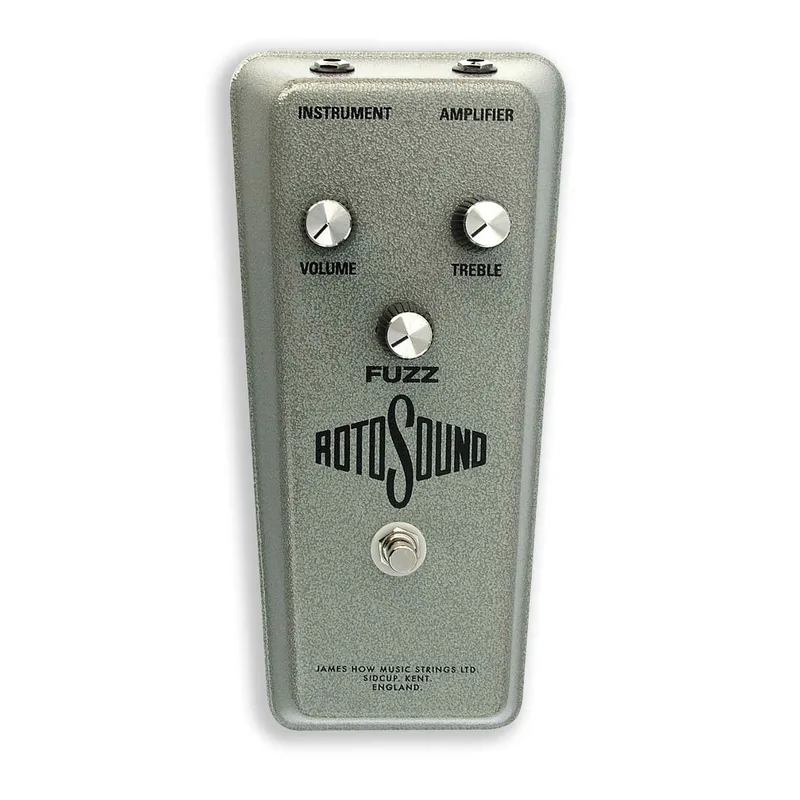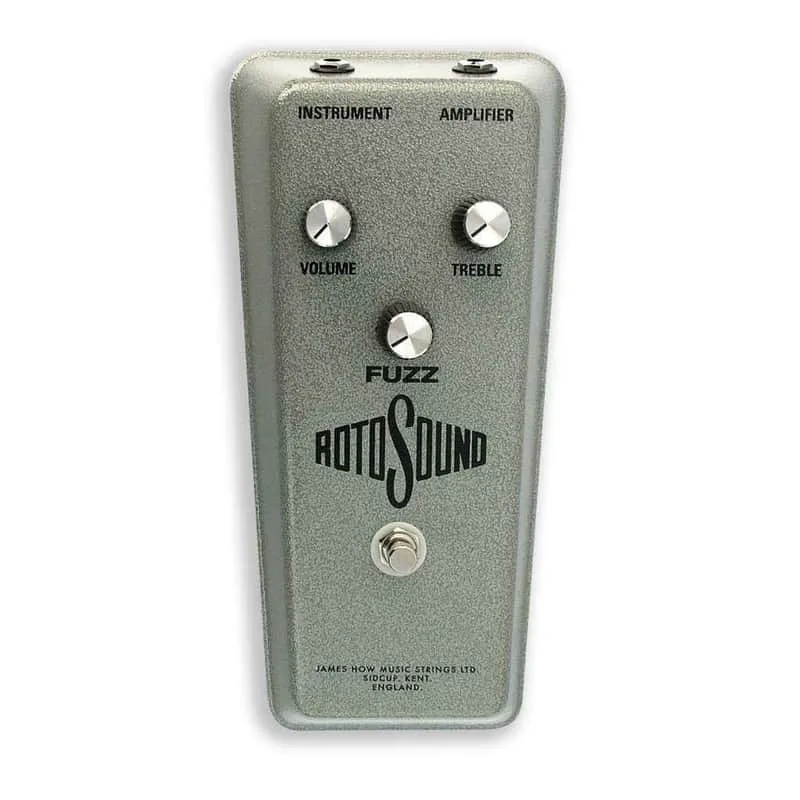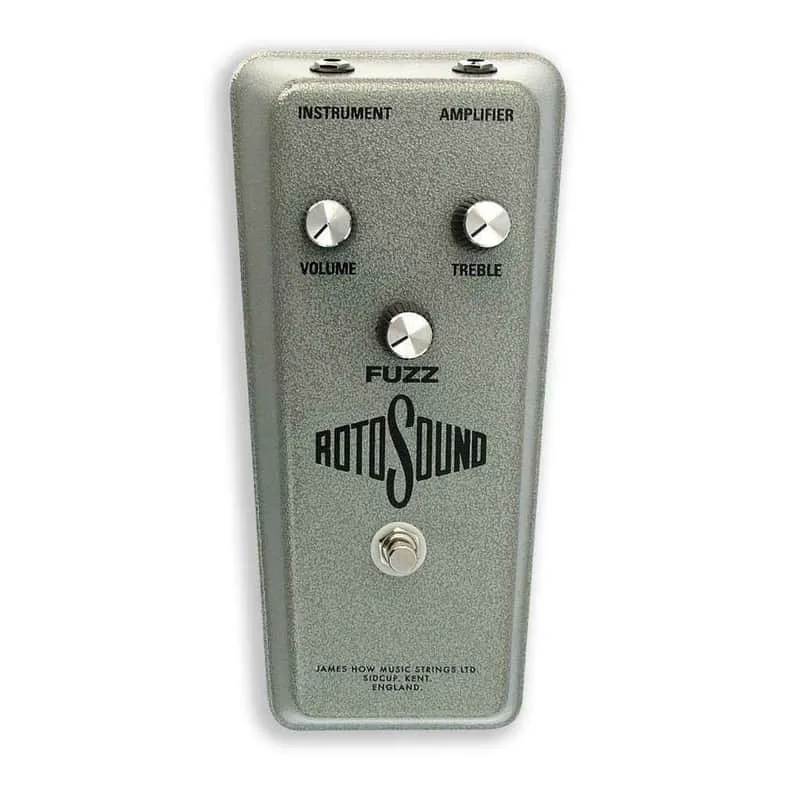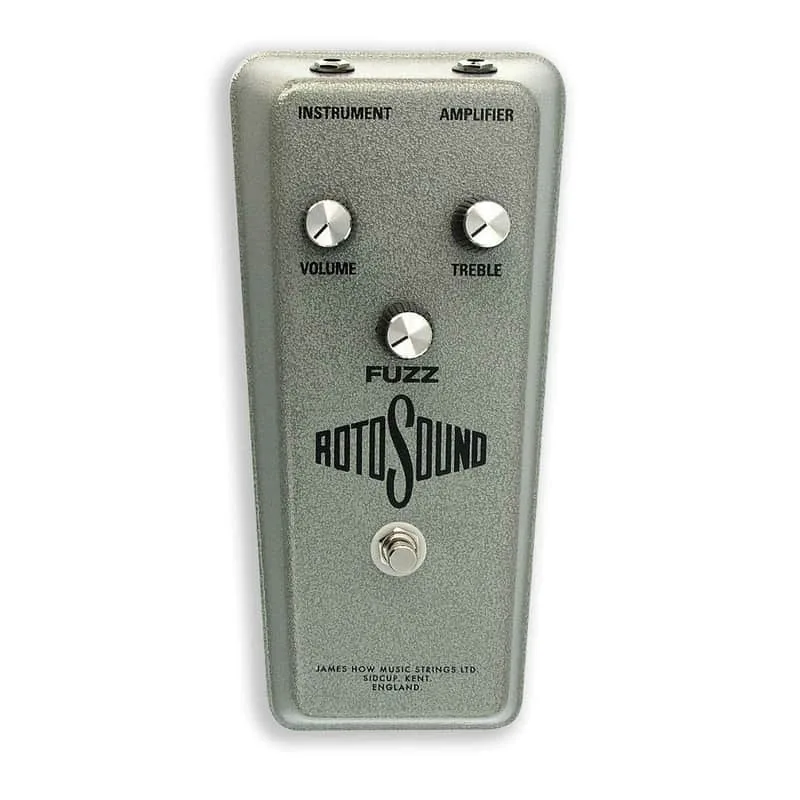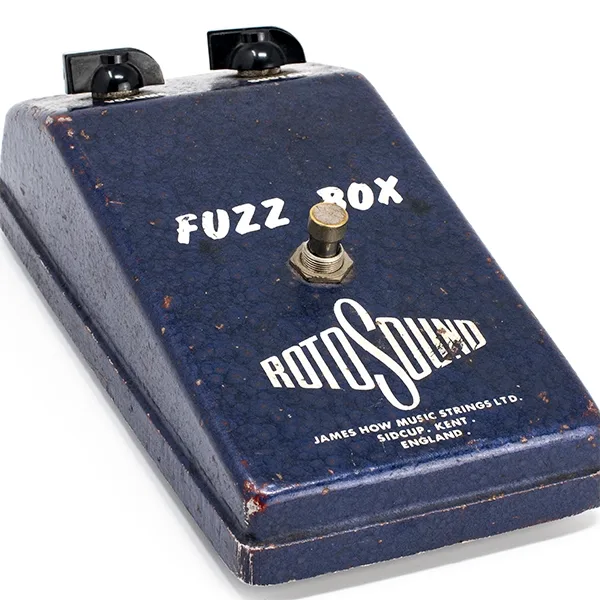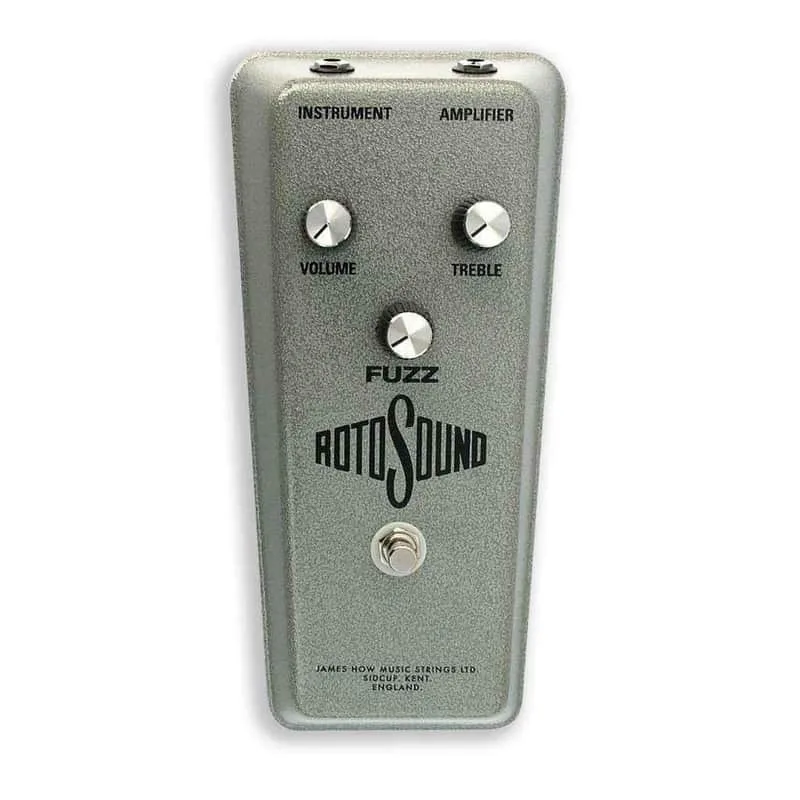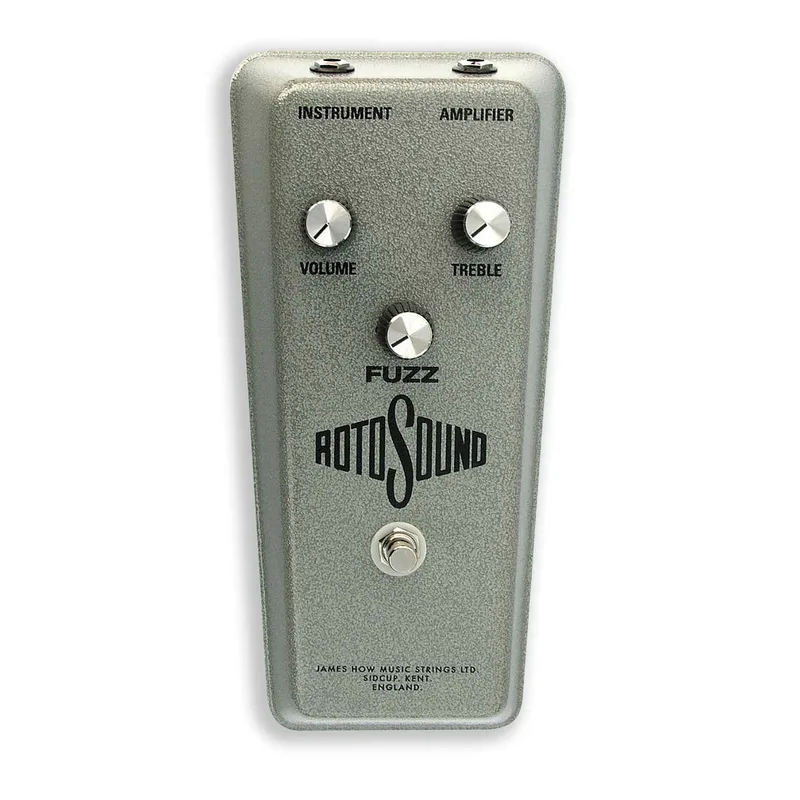


The Rotosound RFB1 is a hand-wired reissue of Rotosound's original 1960s fuzz pedal, a circuit so rare that even the company itself did not have an example to call its own when the reissue project began. The original prototype pedals, produced alongside Solasound Tonebender fuzzes, were only ever available in limited numbers and never released for general sale. The reissue, released in 2012, combines modern resistors and capacitors with original germanium transistors, and Rotosound states it is the only original Rotosound fuzz pedal of the era to be reissued123.
Where it sits on the fuzz spectrum
MusicRadar's reviewer Chris Vinnicombe offered a rough guide to where the RFB1 sits among fuzz pedals: think somewhere between the frying-pan sizzle of a Fuzz Face and the fat sustain of a Sovtek Big Muff, without the Muff's tendency to go missing in a live band mix1. His overall verdict listed amazing vintage and contemporary sounds and robust construction among the reasons to buy1. Despite being a limited-run reissue, he found it no museum piece1.
Controls and circuit
The RFB1 keeps things simple on the surface, with three knobs, but the review found they allow a broad range of tones to be sculpted1.
| Control | What it does |
|---|---|
| Volume | Output level |
| Fuzz | Amount of fuzz distortion |
| Treble | Sits post-fuzz in the circuit; rolling it off does not just reduce high-end, it also adds fatness |
The core tone-generating elements of the original circuit have been retained: a "Darlington Pair" of NOS germanium input transistors driving a third, temperature-compensated "fuzz" transistor, all on a neatly hand-wired board1. Rotosound's product page confirms the pedal combines modern resistors and capacitors with original germanium transistors3. A nod to modernity comes in the shape of true bypass switching1.
History and design
Rotosound is a name always associated with strings, but the company's original fuzz pedal dates from the "Swinging London" era of the 1960s. Fast forward to 2012 and the vintage reissue fuzz pedal, the RFB1, was born, based on a bone-fide Rotosound Fuzz Pedal harking back to that era and dating from the late 1960s2. Dr Barry Pyatt, described by MusicRadar as a gentleman with both the pedigree and experience to oversee the rebirth, was enlisted to work on the reissue within the boundaries of modern safety standards; he is a former BBC electronics engineer12. Rotosound's managing director believes the original was most likely designed by Gary Hurst, and after Rotosound obtained an original model, the reissue work followed from it1.
The RFB1 became the foundation of a wider pedal range: in 2013 MusicRadar reported that six new pedals would join the existing RFB1 Fuzz to bring the full range up to seven pedals, all following the RFB1's design approach of hand-wired builds aiming to replicate the sounds of the '60s2.
Power and practicalities
The RFB1 is battery powered only, and this is the one practical point a player must know before fitting it to a board1.
The RFB1 has no compatibility with an external power supply. MusicRadar's review explains that the nature of the circuit means external power would be a compromise too far, so it cannot be run from a pedalboard power supply or daisy chain. On the plus side, the pedal has a very low current drain, so a single PP3 battery can be expected to survive months of heavy usage1.
The huge, wah-sized molded steel enclosure is extremely robust, but its footprint may deter some players given the current trend toward compact boards1. There is no LED power indicator, though the reviewer noted you sure as hell know when it is switched on1.
Videos
Guitarist
Peter “Danish Pete” Honoré and Rotosound
Guitar Interactive Magazine
Questions
Does the Rotosound RFB1 take a power supply or only a battery?
The RFB1 runs on a single PP3 battery only. MusicRadar's review notes that the nature of the circuit means compatibility with an external power supply would be a compromise too far, so there is no power jack. The pedal's very low current drain means a single PP3 battery can be expected to survive months of heavy usage, which softens the inconvenience for most players.
Is the Rotosound RFB1 true bypass?
Yes. MusicRadar's reviewer described the true bypass switching as a nod to modernity on an otherwise vintage-style pedal, so the RFB1 passes your guitar's signal untouched when it is switched off.
Is the Rotosound RFB1 still in production?
No. Rotosound's own product page lists the RFB1 as discontinued. It was a limited-run reissue from the start, released in 2012, and Rotosound later brought back its full range of vintage pedals in a 2025 reissue series.
Who designed the Rotosound RFB1 reissue?
Dr Barry Pyatt, a former BBC electronics engineer, oversaw the rebirth of the pedal. The original 1960s circuit it is based on was, according to Rotosound's managing director as reported by MusicRadar, most likely designed by Gary Hurst. Rotosound obtained an original model and worked from it to develop the reissue.
Does the Rotosound RFB1 have an LED?
No. The RFB1 has no LED power indicator. MusicRadar's reviewer put it plainly: there may be no LED power indicator on this pedal, but you sure as hell know when it's switched on, a reference to how obvious the fuzz effect is when engaged.
What transistors does the Rotosound RFB1 use?
The RFB1 uses original germanium transistors. MusicRadar's review describes a Darlington Pair of NOS (new old stock) germanium input transistors driving a third, temperature-compensated fuzz transistor, all on a neatly hand-wired board, with the core tone-generating elements of the original circuit retained.
Sources (3)
- Rotosound RFB1 1960s Fuzz Pedal Reissue review, MusicRadar, 2013-04-05
- Rotosound rolls out six new pedals, MusicRadar, 2013-07-17
- RFB1 Rotosound 'Fuzz' Guitar Effects Pedal • Rotosound Music Strings, Rotosound, 2025-06-27