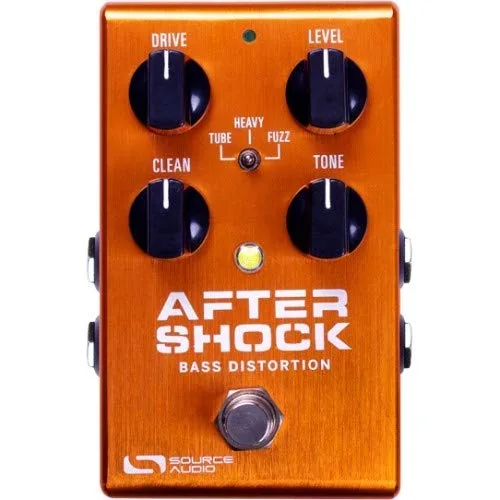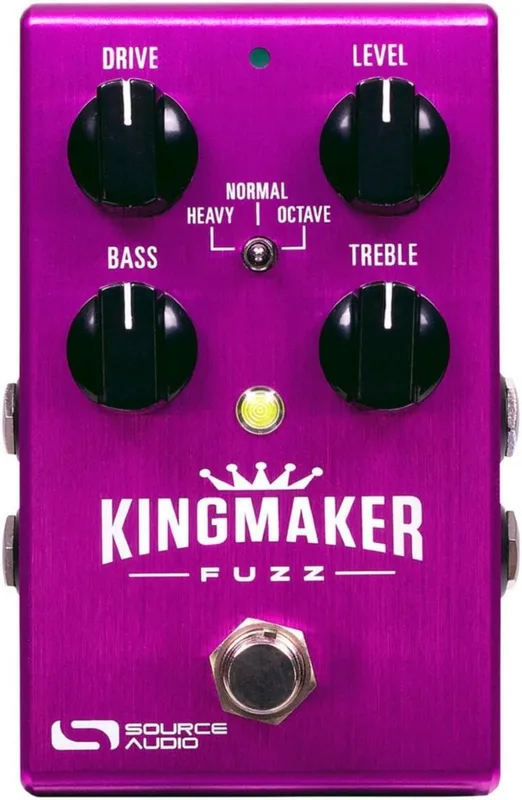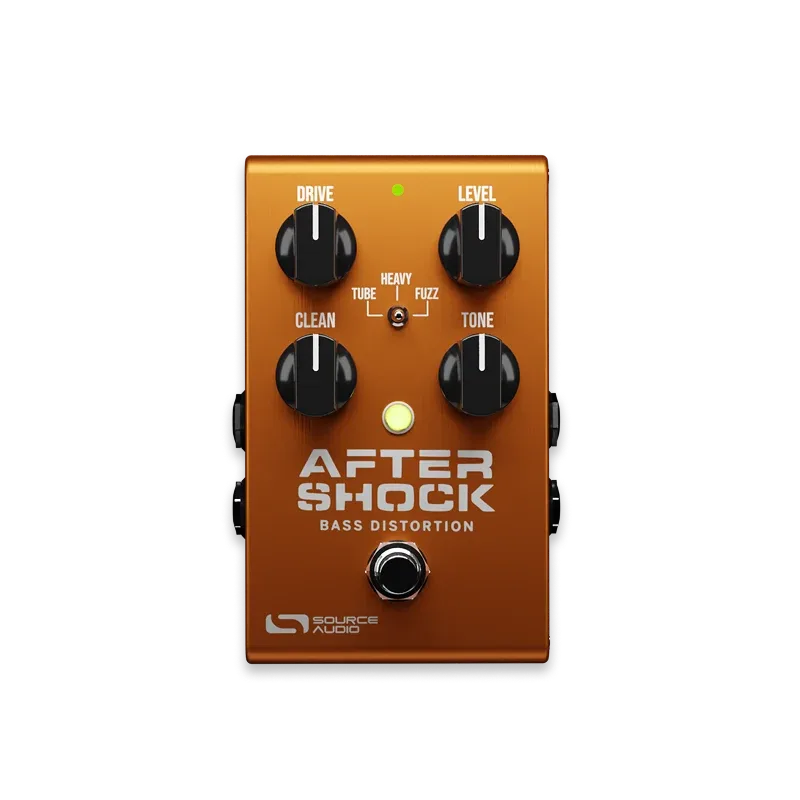


The Source Audio AfterShock Bass Distortion is a bass distortion pedal that, in the maker's words, "spans the gamut of low-end crunch, from smooth and natural overdrive to full-on fuzz attack." It was released on May 12, 2016 as one of three One Series pedals announced by Source Audio, alongside the L.A. Lady Overdrive and Kingmaker Fuzz12. The pedal carries a sale price of $199.00 as listed on the maker's product page2.
Three distortion engines, from overdrive to fuzz
The heart of the AfterShock is its set of three distortion engines, selected with the center toggle2:
| Engine | What it is |
|---|---|
| TUBE | Warm tube overdrive |
| HEAVY | High gain distortion |
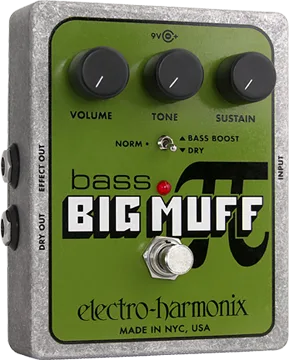
| FUZZ | Based on the Bass Big Muff |
The FUZZ engine's basis in the Bass Big Muff gives the pedal a recognized fuzz voice, while TUBE and HEAVY cover overdrive and high gain distortion2. Premier Guitar's announcement described the pedal as packing "three bass overdrive engines that span the gamut of low-end crunch, from smooth and organic overdrive to full-on fuzz attack"1.
Keeping the low end intact
A Clean Mix control blends a clean signal with the overdriven signal to maintain low-end clarity and bass fundamentals, which matters when a distorted bass tone risks losing its foundation2. Jonathan Graham, writing in Guitar Interactive Magazine's press release, put it this way:
"The Clean knob lets you to mix in just enough clean signal to maintain a rock-solid low-end without compromising the pedal's SONIC GROWL"
Presets, routing and stereo operation
The center toggle offers six slots arranged as two banks of three. Bank 1 (green) works like a standard pedal, while Bank 2 (red) provides three preset slots with fixed settings2.
Beyond the engines, the AfterShock offers advanced signal routing: effects send, multi signal mixing, or mono signal splitting2. It also has stereo inputs and outputs, so you can distort upstream stereo signals, split a mono signal to dual outputs, or use the additional in and out as an external effects loop2.
MIDI, the Neuro Hub and expression
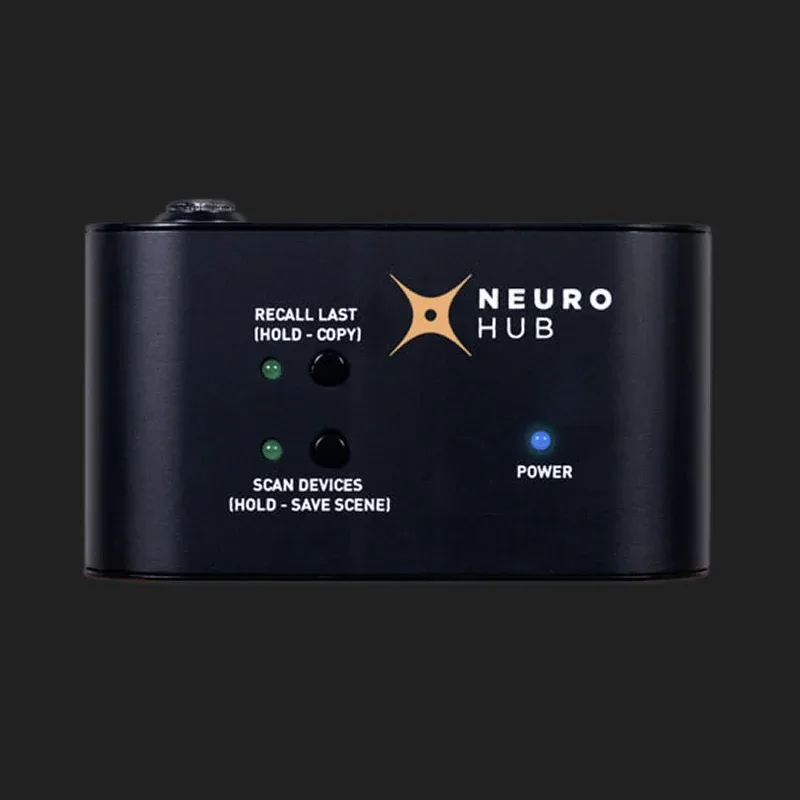
The AfterShock is part of Source Audio's One Series line. Every pedal in that line is compatible with the Neuro Mobile App, a free download for iOS or Android, and is fully MIDI compatible with the Neuro Hub3. The pedal itself features full MIDI capability with PC and CC messages, which Source Audio describes as simple when coupled with the Neuro Hub2.
For expression control, connect the Neuro Hub to any TRS (Tip Hot) expression pedal for on-the-fly control of any adjustable parameter2.
Expression pedal control and MIDI both run through the Neuro Hub, which is a separate unit from the pedal itself23.
Bypass and build
The AfterShock offers what Source Audio calls Universal Bypass: you select between high-quality signal relays for true bypass and transparent buffers for analog bypass, so the pedal can suit either pedalboard approach2. The enclosure is brushed anodized aluminum, and the pedal carries a 2 year warranty2.
Videos
sourceaudioeffects
sourceaudioeffects
sourceaudioeffects
Questions
What are the three engines in the Source Audio AfterShock?
The center toggle selects one of three distortion engines: TUBE, described by Source Audio as a warm tube overdrive; HEAVY, a high gain distortion; and FUZZ, which the maker says is based on the Bass Big Muff. Together they cover the range from smooth overdrive to full-on fuzz.
Which pedal is the AfterShock fuzz engine based on?
Source Audio's product page says the FUZZ engine is based on the Bass Big Muff, the classic bass fuzz circuit, giving the AfterShock a full-on fuzz voice alongside its overdrive and high gain engines.
Is the AfterShock true bypass?
Yes, and more: the AfterShock offers what Source Audio calls Universal Bypass, so you can select between high-quality signal relays for true bypass and transparent buffers for analog bypass, depending on what suits your rig.
Does the AfterShock have MIDI?
Yes. Source Audio says the pedal features full MIDI capability with PC and CC messages, and it works with the Neuro Hub. Every pedal in the One Series line is compatible with the Neuro Mobile App and fully MIDI compatible with the Neuro Hub.
Can you connect an expression pedal to the AfterShock?
Yes, through the Neuro Hub. Source Audio says you can connect the Neuro Hub to any TRS (Tip Hot) expression pedal for on-the-fly control of any adjustable parameter on the pedal.
How many presets does the AfterShock store?
Six. The center toggle offers six slots arranged as two banks of three. Bank 1 (green) works like a standard pedal, while Bank 2 (red) provides three preset slots with fixed settings.
Sources (3)
- Source Audio's New Guitar and Bass Effects Pedals, Premier Guitar, 2016-05-12
- Aftershock Bass Distortion, sourceaudio.net
- AfterShock Bass Distortion: Shake the Foundation, Guitar Interactive Magazine, 2016-05-18