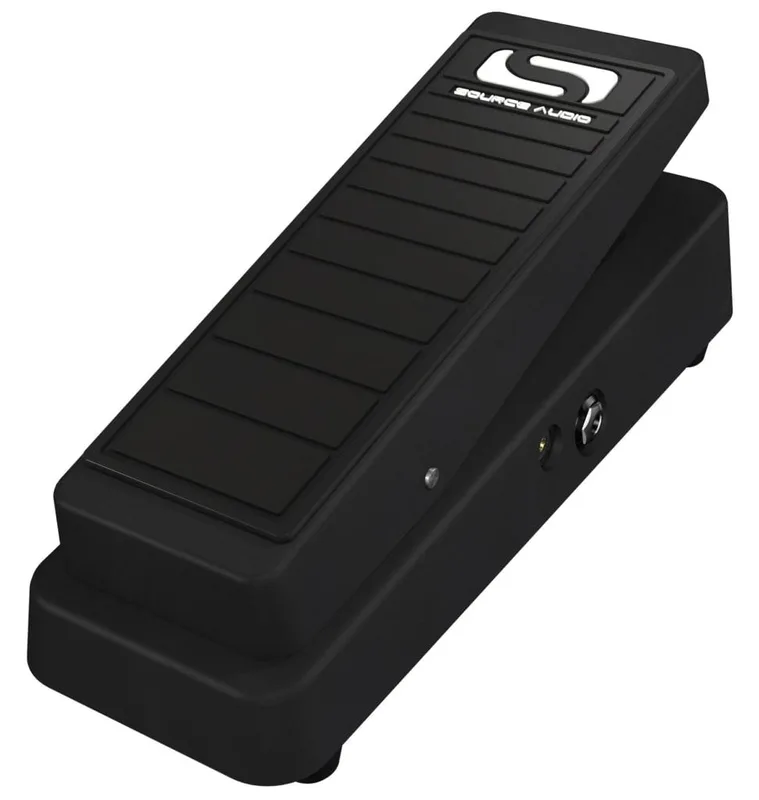


The Source Audio Reflex Universal Expression Controller is a programmable expression pedal: a rocker pedal that, instead of sweeping just one parameter on one pedal, can drive several destinations at once. Released by Source Audio on July 21, 2015, it can simultaneously send up to three standard expression or CV signals, MIDI continuous controller messages, and one of six LFO wave shapes1. Source Audio pitched it at players of guitar, bass, keyboards and computer-based music alike, describing it as "the most powerful and flexible expression pedal system ever conceived"1.
What it does
A conventional expression pedal sends one sweep to one destination. The Reflex treats the rocker as a programmable controller: from the control panel you choose which outputs are active, set the depth and direction of the expression signal, and shape the curve of the tapers12. That last part matters in practice, because a pedal whose taper curve can be programmed can be matched to how a given effect responds, rather than forcing the effect to fit the pedal.
It also generates motion on its own. One of six LFO wave shapes can be assigned, with expression control over LFO depth, speed, or beat division1. Used this way, the Reflex behaves less like a volume pedal and more like a modulation source: the LFO can wobble a filter, a tremolo depth or a delay time in time with the music, and the rocker then controls how much.
The controls and outputs
The output side is where the Reflex separates itself from a standard expression pedal.
| Output | What it does |
|---|---|
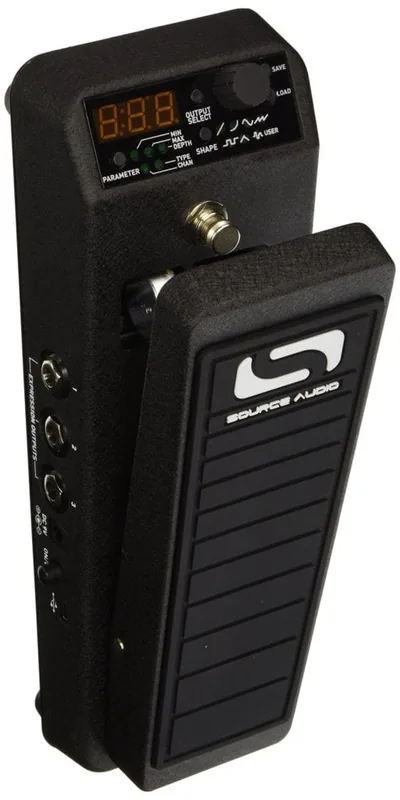
| Three 1/4" expression jacks | Each jack has its own set of DIP switches, so you select individual plug configurations or CV output mode per output1 |
| MIDI 5-pin DIN | Sends MIDI continuous controller messages to MIDI gear1 |
| USB | Works as a class compliant USB-MIDI device with digital audio software, so it can control DAW software13 |
Because each jack has its own DIP switches, the three outputs do not have to match: one can drive a pedal that wants a TRS insert, another a pedal with a tip-only expression input, and a third a synth's CV input, all from the same rocker sweep1. Delicious Audio, writing about pedals for synths with CV I/O, noted the Reflex has three assignable CV outputs and called it "the only guitar-centric three-CV unit on the market"4.
On the control side, the panel programs which outputs are active, the depth and direction of the expression signal, and the curve of the tapers1. The Reflex can save up to 128 pedal configurations, recallable via the onboard controls or external MIDI program change messages1, which Premier Guitar's expression pedal buying guide listed alongside its three expression outs and DAW control over USB as core features3.
Where it came from
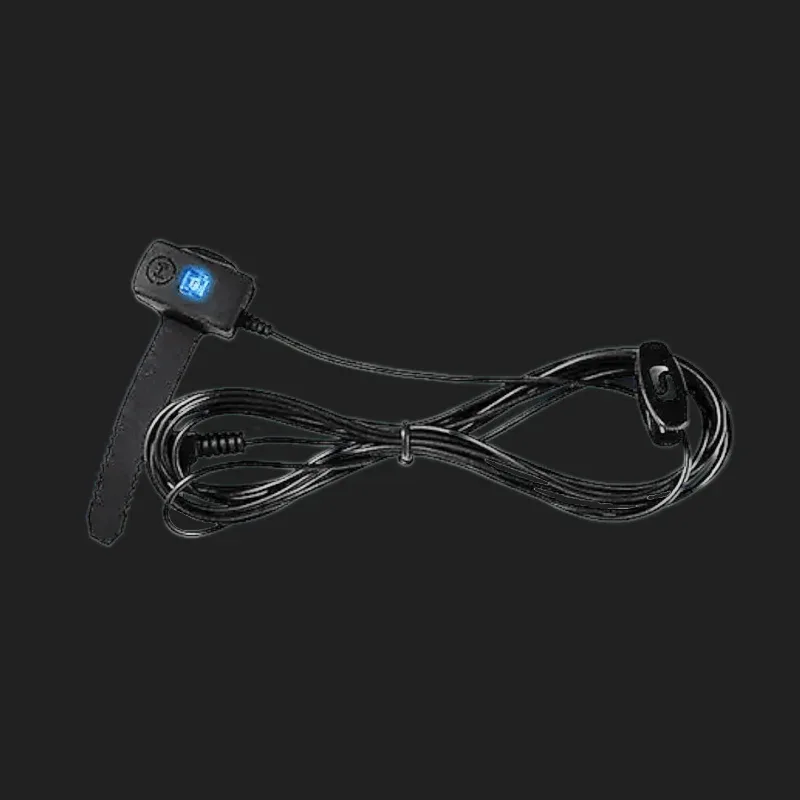
The Reflex was announced on July 21, 2015, at a $219 street price1. Source Audio said the concept had been dreamed up about two years before release1, and tied its design to the company's earlier work: its experience with Hot Hand expression control, the motion-sensing ring controller behind products like the Source Audio Hot Hand 3, had been refined over multiple product generations into "a flexible and powerful approach to interfacing digital controllers with analog expression inputs"1. The Reflex sits in the same lineage as the simpler Source Audio Dual Expression, but where that pedal offers two passive outputs, the Reflex adds programming, MIDI, USB and LFO generation.
Source Audio's CTO Jesse Remignanti called it "the holy grail of expression pedals", citing its variety of options, waveforms and direct MIDI output21.
"REFLEX is the holy grail of expression pedals."
The Reflex had been part of Source Audio's plans since at least January 2015, when MusicRadar reported it among seven new stompboxes the company said would emerge over the following year5.
Videos
sourceaudioeffects
sourceaudioeffects
sourceaudioeffects
Questions
Can the Source Audio Reflex send MIDI CC?
Yes. The Reflex has a MIDI 5-pin DIN connector for sending MIDI continuous controller messages, and a USB port that lets it work as a class compliant USB-MIDI device with digital audio software. So it can drive MIDI-equipped pedals and rack gear directly, and control plugins or DAW software over USB.
How many pedals can the Reflex control at once?
It can send up to three standard expression or CV signals at the same time, one per 1/4 inch output jack, alongside MIDI continuous controller messages and one of six LFO wave shapes. That means three expression-equipped pedals can be swept together, plus anything listening on MIDI.
Does the Reflex output CV?
Yes. Each of its three 1/4 inch jacks has its own set of DIP switches, so any output can be set to a particular plug configuration or switched to CV (Control Voltage) output mode. Delicious Audio called it the only guitar-centric three-CV unit on the market.
How many presets does the Source Audio Reflex store?
Up to 128 pedal configurations. Each one can be recalled from the onboard controls or from external MIDI program change messages, so a full show's worth of expression setups can live in the pedal itself.
When did the Source Audio Reflex come out?
Source Audio announced its release on July 21, 2015, at a $219 street price. The company said the concept had been dreamed up about two years earlier, building on its experience with the Hot Hand expression control system.
Sources (5)
- Source Audio Unveils Reflex Expression Controller, Premier Guitar, 2015-07-21
- Source Audio Releases The Reflex Universal Expression Controller, A Fully Programmable and All-In-One Expression Pedal, Guitar Interactive Magazine, 2015-07-17
- Tools for the Task: Expression Pedals, Premier Guitar, 2017-05-17
- The Best Pedals For Synths With CV In/out In 2022, Delicious Audio, 2020-10-01
- NAMM 2015: 7 new Source Audio stompboxes, MusicRadar, 2015-01-21